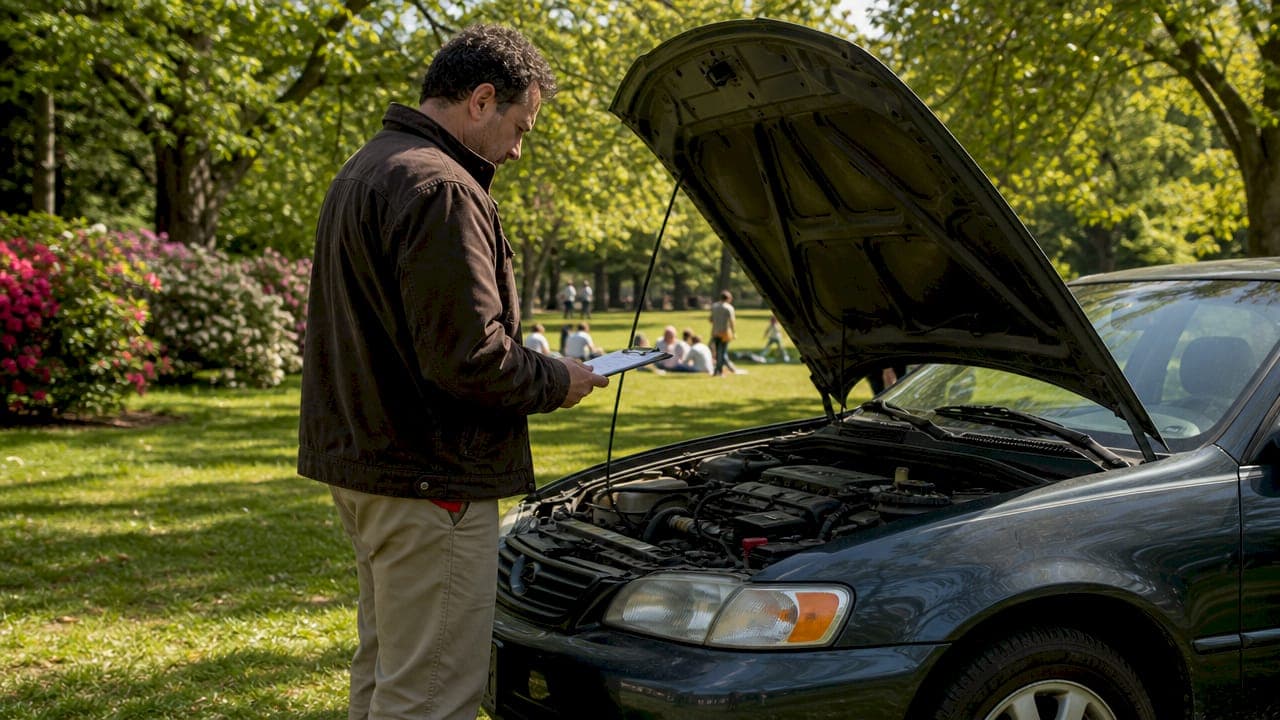
An as-is car sale is defined as a transaction where the buyer purchases the vehicle in its current condition, accepting full financial responsibility for all repairs after the sale closes. No dealer warranty covers the car. No seller guarantee protects you if the engine fails the next morning. The FTC's Used Car Rule (16 CFR Part 455) requires dealers to post a Buyers Guide on every used vehicle, and when the "as-is" box is checked, that document removes dealer liability for every repair from the moment you drive off the lot. Understanding what an as-is vehicle sale means before you sign is the single most important step in protecting your money.
What does an as-is car sale mean legally?
An as-is sale waives both express and implied warranties, including the implied warranty of merchantability and the implied warranty of fitness for a particular purpose. These are the baseline protections federal law normally extends to buyers of goods. When a dealer checks the as-is box on the Buyers Guide, both warranties are disclaimed, and the buyer accepts the vehicle with all known and unknown defects.
That said, as-is status does not strip you of every right. Fraud protections remain fully intact. If a seller deliberately conceals a known defect or lies about the vehicle's condition, the as-is label provides no legal shield. Federal and state laws hold sellers accountable for intentional misrepresentation regardless of what the sticker says.

One lesser-known protection deserves attention. The Magnuson-Moss Warranty Act (15 U.S.C. §2308) allows buyers to restore implied warranty coverage by purchasing a service contract within 90 days of an as-is sale. That single action overrides the warranty disclaimer and reinstates federal protections. Buyers who plan ahead can use this window strategically.
State law adds another layer of complexity. Several U.S. states ban as-is stickers outright or override them with mandatory implied warranties. Rhode Island buyers should verify their state's consumer protection statutes before assuming an as-is sale leaves them without recourse. Understanding your local used car warranty types is worth doing before any purchase.
Pro Tip: Check your state attorney general's website for a plain-language summary of used car consumer protections. Many states publish free guides that explain exactly which as-is disclaimers are enforceable in your jurisdiction.
Key points on warranty status in an as-is sale:
- Express warranties are fully disclaimed when the as-is box is checked.
- Implied warranties of merchantability and fitness are also waived under federal law.
- Fraud and misrepresentation claims survive the as-is disclaimer.
- A service contract purchased within 90 days restores implied warranty coverage.
- State lemon laws generally do not apply to as-is vehicles.
How does the Buyers Guide work in an as-is sale?
The Buyers Guide is a federally mandated document that must appear on the window of every used car a dealer sells. It is not optional, and it is not just a formality. The Buyers Guide becomes part of the sales contract, which means its language carries legal weight equal to anything else you sign at the dealership.
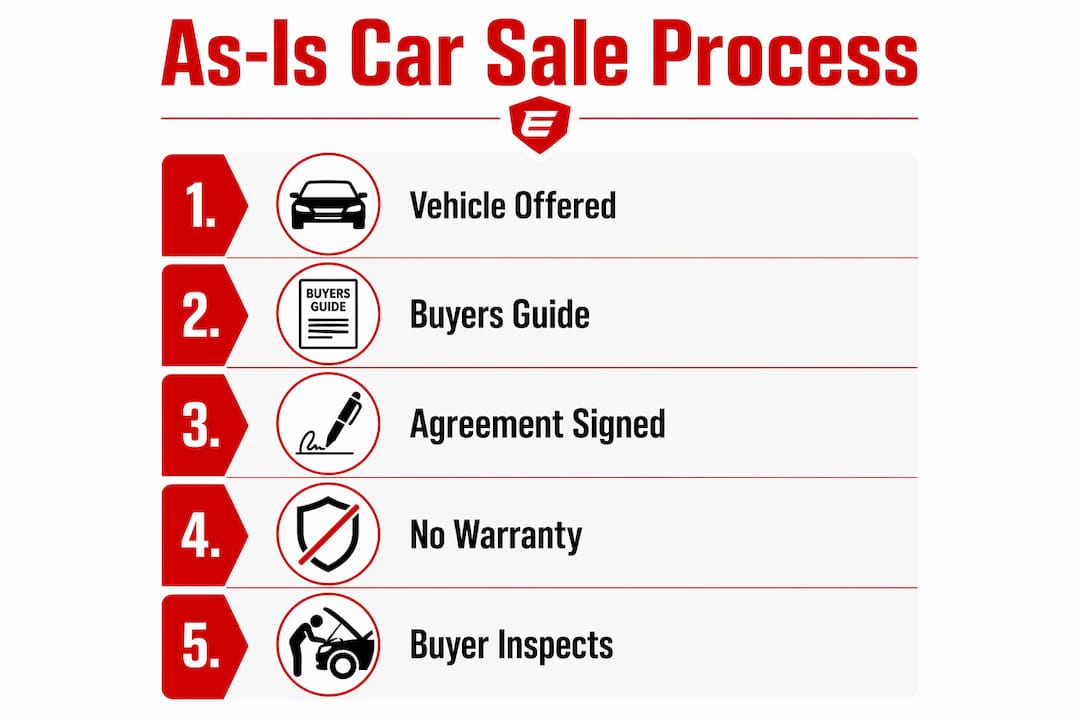
When the "As Is — No Dealer Warranty" box is checked, the dealer disclaims all responsibility for repairs, including catastrophic failures like transmission breakdown or engine seizure. That box, once checked and incorporated into the contract, is legally binding if properly executed. The document you see on the car window must match the document in your final contract. A mismatch between the two can challenge the as-is status in court and may work in your favor.
Reviewing the Buyers Guide carefully before signing is not optional. Here is what to check at the dealership:
- Confirm the "As Is" box is checked or the warranty box is checked. Never assume.
- Read the warranty terms section if a warranty is offered, and note the exact coverage percentage.
- Compare the window Buyers Guide to the copy in your final sales contract word for word.
- Ask the dealer to explain any terms you do not understand before signing.
- Keep your signed copy of the Buyers Guide with your other sale documents permanently.
Pro Tip: Take a photo of the Buyers Guide on the car window before you go inside to negotiate. If the paperwork changes between the lot and the finance office, you have documented proof of the original disclosure.
The Buyers Guide also discloses whether the vehicle comes with a warranty and, if so, what percentage of repair costs the dealer covers. This transparency is the rule's core purpose. Buyers who skip this document often discover too late that verbal promises from a salesperson carry no legal weight. Written contracts prevail over anything said during negotiation.
What are the risks of buying a car sold as-is?
Buying an as-is vehicle carries real financial risk. Hidden defects become your problem the moment the sale closes. There is no repair right, no return option, and no refund mechanism built into an as-is transaction. The FTC's Used Car Rule removes dealer liability for all repairs immediately upon sale, including major mechanical failures.
The most common pitfalls buyers encounter include:
- Hidden mechanical defects. Problems with the engine, transmission, or electrical system may not surface during a test drive. These repairs can cost thousands of dollars.
- Misplaced trust in verbal promises. A salesperson saying "this car runs great" is not a warranty. Only written terms in the contract are enforceable.
- Assuming lemon law coverage applies. Lemon laws protect buyers only when a manufacturer or dealer warranty is present. As-is sales are excluded in most states.
- Skipping the vehicle history report. A vehicle history report from a recognized provider reveals prior accidents, title issues, and odometer discrepancies that a visual inspection cannot catch.
- Ignoring the inspection window. Many buyers feel pressure to decide quickly. That pressure causes them to skip due diligence steps that would have revealed serious problems.
The financial exposure in an as-is purchase is not theoretical. A transmission replacement averages $1,800–$3,400 depending on the vehicle. An engine rebuild can exceed $5,000. When no warranty exists, those costs land entirely on you. Knowing the risks of buying used cars as-is helps you weigh the price discount against the potential repair bill honestly.
How can buyers protect themselves when purchasing an as-is car?
The most effective protection a buyer has is a pre-purchase mechanical inspection. An independent inspection costs $125–$300 and gives a qualified mechanic the chance to identify hidden defects before you commit. That cost is trivial compared to a surprise repair bill after purchase.
Inspection refusal by a dealer is a major red flag. Walk away from any seller who will not allow an independent mechanic to examine the vehicle. Honest sellers have nothing to hide. A dealer who blocks an inspection is signaling that something is wrong.
Beyond the inspection, buyers should take these steps:
- Get everything in writing. Document all seller statements about the vehicle's condition. Written records preserve your rights if a fraud claim becomes necessary later.
- Negotiate the price down. An as-is vehicle carries no warranty, which is a concrete financial risk. Use that fact to negotiate a lower price that reflects what you are accepting.
- Order a vehicle history report. This reveals title problems, prior accidents, service records, and whether the odometer reading is accurate.
- Know your state's laws. Some states provide implied warranty protections that override as-is disclaimers. Rhode Island buyers should confirm their specific rights before signing.
- Spot dishonest dealers early. Learning how to identify an honest dealer before you visit a lot saves time and protects your money.
The table below summarizes the key protective steps and their purpose:
| Protective step | Why it matters |
|---|---|
| Independent mechanical inspection | Uncovers hidden defects before purchase |
| Written documentation of all claims | Preserves fraud claim rights after sale |
| Price negotiation reflecting no warranty | Offsets financial risk of repair costs |
| Vehicle history report review | Reveals title, accident, and odometer issues |
| State consumer law research | Identifies protections that override as-is terms |
Key Takeaways
An as-is car sale removes dealer warranty coverage entirely, but fraud protections and state consumer laws still apply, making pre-purchase inspection and written documentation the buyer's strongest defenses.
| Point | Details |
|---|---|
| As-is defined | Buyer accepts the vehicle in its current condition with no dealer warranty or repair obligation. |
| Buyers Guide is binding | The federally required Buyers Guide becomes part of the sales contract and must match your final paperwork. |
| Fraud protection survives | An as-is label does not protect sellers who conceal defects or misrepresent the vehicle's condition. |
| Inspection is critical | An independent mechanical inspection ($125–$300) is the most effective way to avoid costly surprises. |
| Service contract restores coverage | Buying a service contract within 90 days of an as-is sale reinstates implied warranty protections under federal law. |
What I have learned from years of as-is car sales
The biggest misconception buyers bring to an as-is purchase is that the label means "no rights." That is wrong, and it costs people money. Fraud protections do not disappear because a dealer checked a box on a form. Sellers still owe honest disclosure about serious defects, especially those a buyer cannot discover through a normal inspection.
What the as-is label actually does is shift the burden of discovery onto the buyer. That is why the pre-purchase inspection is not optional. It is the only tool that gives you real information before you commit. I have seen buyers skip the $200 inspection to save time and then spend $4,000 on a transmission three weeks later. The math does not work in their favor.
Price negotiation is the second most underused tool in an as-is purchase. The absence of a warranty is a concrete, quantifiable risk. Use it. A seller asking full market value for an as-is vehicle is asking you to absorb all the risk at full price. That is not a fair deal, and you do not have to accept it.
Document everything. Save every text message, email, and written note from the seller. If a dispute arises later, the written record is what matters in court. Verbal assurances are worth nothing once you sign.
— Elmwood
Used cars at Elmwoodautosalesri: buying with confidence
Elmwoodautosalesri carries a varied inventory of used vehicles in Providence, RI, and the team is available to walk you through every detail of the purchase, including warranty status, inspection history, and financing options.
Every vehicle at Elmwoodautosalesri goes through a thorough inspection before it reaches the lot. The dealership does not rely on commission-based sales tactics, which means you get honest answers about a vehicle's condition rather than pressure to close. Tailored financing options, including buy here, pay here solutions, are available for buyers across a range of credit histories. If you are ready to explore quality used cars with transparent terms, visit Elmwoodautosalesri and speak with a team that puts your confidence first.
FAQ
What does as-is mean when buying a used car?
An as-is sale means the buyer accepts the vehicle in its current condition with no warranty from the seller. All repair costs after the sale become the buyer's responsibility.
Can I sue a dealer after an as-is car purchase?
Yes, if the dealer committed fraud or concealed a known defect. An as-is disclaimer does not protect sellers from misrepresentation claims under federal or state law.
Does a Buyers Guide protect me in an as-is sale?
The Buyers Guide discloses the as-is status and becomes part of your sales contract. It protects you by making the warranty disclaimer legally documented and enforceable.
Are lemon laws applicable to as-is vehicles?
Lemon laws generally do not apply to as-is vehicles. They protect buyers only when a manufacturer or dealer warranty is present at the time of sale.
How much does a pre-purchase inspection cost?
An independent pre-purchase mechanical inspection typically costs $125–$300. It is the most cost-effective way to identify hidden defects before buying an as-is car.