
A BBB rating is a letter grade assigned to car dealerships by the Better Business Bureau, measuring complaint history, transparency, and business integrity as a direct signal of trustworthiness for vehicle buyers. The role of BBB rating car dealer evaluations play in your purchase decision is significant. Buying a used car is one of the largest financial transactions most people make, and BBB ratings carry unusually high weight in automotive retail precisely because of that financial risk. Tools like Google reviews, DealerRater, and CarEdge provide additional layers of verification, but the BBB remains a primary starting point for millions of buyers.
How does the BBB rating system work for car dealerships?
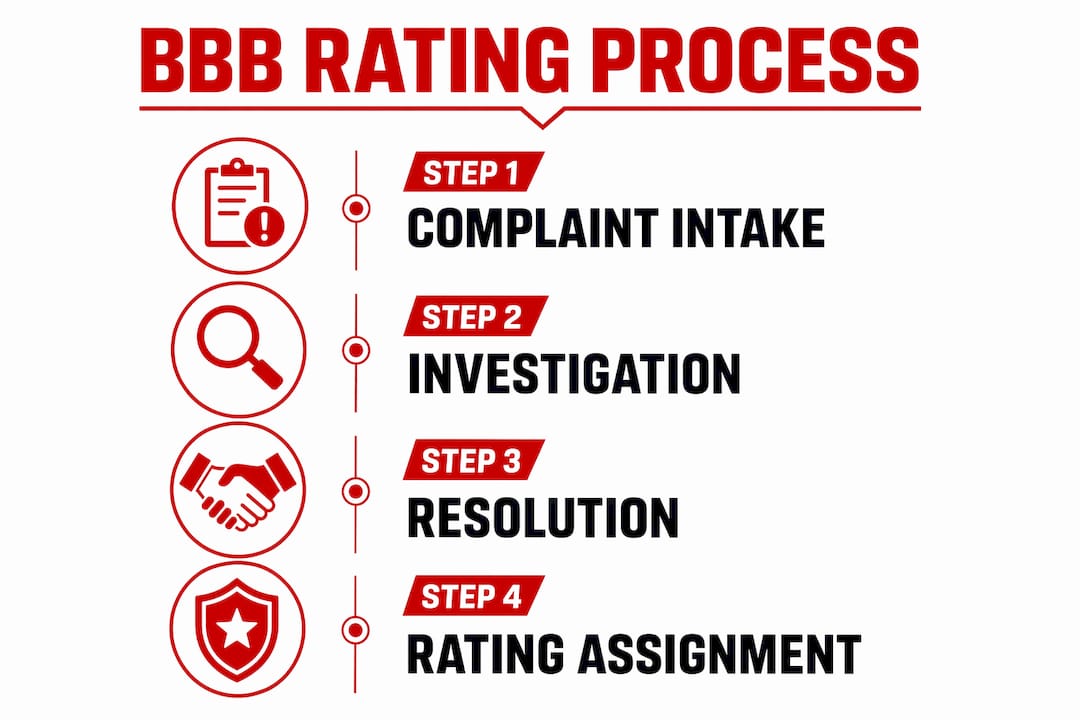
The BBB grades car dealerships on a scale from A+ to F, using a point system that evaluates 13 weighted factors. Understanding what drives each grade helps you read a dealer's profile accurately, not just glance at the letter.
The BBB evaluates factors including complaint volume, how quickly complaints are resolved, whether the business responded at all, any government actions against the dealer, and how long the business has been operating. Transparency in business practices and licensing compliance also factor into the score. Each element carries a different weight, and the final score determines the letter grade.
BBB grades range from A+ to F, with the numeric thresholds below giving you a clear picture of what each grade actually represents:
| BBB Grade | Score Range | Consumer Recommendation |
|---|---|---|
| A+ | 97–100 | Strong trust signal; proceed with confidence |
| A | 94–96.99 | Reliable; minor issues unlikely |
| B+ | 90–93.99 | Acceptable threshold; review complaints closely |
| B | 80–89.99 | Caution advised; check complaint resolution |
| C or lower | Below 80 | Significant concerns; verify independently |
| F | 0–59.99 | Avoid or conduct extensive due diligence |
A B+ grade is the generally accepted threshold for reliability in automotive retail as of Q2 2026. Anything below that warrants a deeper look at the complaint section before you set foot on the lot.
Pro Tip: When reading a BBB profile, check the date of the most recent complaint and the date of the dealer's response. A professional response within 30 days signals active complaint management. A complaint with no response at all is a stronger red flag than the complaint itself.
The complaint section of a BBB profile tells you far more than the letter grade alone. A dealer with 15 complaints and 15 professional resolutions is often more trustworthy than a dealer with zero complaints and no verifiable history. Volume of complaints in a high-traffic dealership is expected. What matters is how the business handles them.
What are the limitations of BBB ratings for car dealers?
BBB accreditation is a paid membership, not an earned certification. This distinction matters more than most buyers realize.
A dealership pays an annual fee to become BBB accredited. That fee grants the right to display the BBB seal and can influence how prominently the business appears in BBB search results. Some excellent dealers opt out of accreditation entirely, either because they find the cost unjustified or because they rely on other reputation channels. The absence of a BBB accreditation badge does not mean a dealer is untrustworthy.
Common misconceptions buyers carry into their research include:
- Accreditation equals quality. It equals membership. A dealer can pay for accreditation and still have unresolved complaints.
- No BBB listing means a bad dealer. Many smaller, high-integrity dealerships simply have not enrolled.
- A high star rating on BBB equals a high letter grade. Star ratings come from consumer reviews. Letter grades come from the BBB's own evaluation criteria. These are separate scores.
- One complaint means avoid the dealer. A single resolved complaint at a high-volume dealership is normal. Context matters.
The complaint resolution history is a more meaningful trust indicator than the accreditation badge itself. A dealer who responds professionally and resolves issues demonstrates accountability. That behavior predicts how they will treat you if something goes wrong after your purchase.
Buyers should also recognize that the BBB is a private nonprofit organization. It does not have regulatory authority over dealerships. Filing a complaint with the BBB is different from filing with your state's Attorney General or the Federal Trade Commission, both of which carry legal weight.
How do BBB ratings compare to other verification tools?
BBB ratings are one piece of a larger verification picture. Relying on a single source for a decision as large as a vehicle purchase leaves gaps in your research.
| Source | Focus Area | Key Trust Signal |
|---|---|---|
| BBB | Complaint history, business ethics | Letter grade + complaint resolution |
| Google Reviews | Overall customer experience | Star rating + review recency |
| DealerRater | Sales and service experience | Verified purchase reviews |
| CarEdge Transparency Index | Pricing fairness | Out-the-door price accuracy |
CarEdge's Transparency Index grades dealerships A through F based on verified real-world quotes, measuring whether the price you see matches the price you pay. This is a buyer-centric metric that BBB ratings do not capture. A dealer can have an A+ BBB grade and still quote inflated out-the-door prices. CarEdge fills that gap directly.
Google reviews provide volume and recency that BBB profiles sometimes lack. A dealership with 800 Google reviews averaging 4.6 stars over the past six months tells a current story. BBB complaint data can lag, especially if a dealer recently changed ownership or management.
DealerRater focuses specifically on the car buying and service experience, with verified purchase reviews that carry more weight than anonymous submissions. The platform separates sales reviews from service reviews, which is a critical distinction. Mixing sales and service reviews creates misleading impressions. A dealer might excel at the sales process but have a poor service department, or vice versa.
The strongest research approach triangulates across at least three sources: BBB for complaint history and business ethics, Google for recent volume and sentiment, and CarEdge or DealerRater for pricing transparency and verified purchase feedback. No single source gives you the full picture.
How can consumers use BBB ratings when choosing a car dealer?
Using BBB data effectively requires a structured approach, not a quick glance at the letter grade. Follow these steps before committing to any dealership.
- Check the BBB grade. Confirm it is B+ or higher. If it falls below that threshold, proceed only with additional verification.
- Read the complaint section in full. Look at the nature of complaints, not just the count. Repeated complaints about the same issue (bait-and-switch pricing, undisclosed vehicle history) signal a pattern.
- Check complaint response dates. A professional response within 30 days is the standard. Unanswered complaints are a serious warning sign.
- Search your state's Attorney General database. Experts recommend fewer than 3 AG complaints in the past year as an acceptable threshold. AG complaints carry legal weight that BBB complaints do not.
- Check recent reviews from the last six months. Older reviews may not reflect current ownership or staff. Recency matters for used car dealerships especially.
- Cross-reference with CarEdge or DealerRater for pricing transparency and verified purchase feedback.
Red flags that should stop your research and prompt deeper investigation include: a BBB grade of B or lower with unresolved complaints, multiple AG complaints in the past 12 months, a pattern of complaints about undisclosed vehicle conditions, and no response to any complaints in the BBB profile.
Pro Tip: When reading reviews, filter specifically for sales reviews versus service reviews. A dealer with glowing sales reviews but poor service reviews is fine if you are buying and never returning for maintenance. If you plan to use their service department, those service reviews carry equal weight. Tools like DealerRater make this separation easy.
Pricing transparency tools like CarEdge complement your BBB research by confirming whether the dealer's advertised prices reflect what you will actually pay. You can also explore used car buying value guides to understand how to combine BBB data with pricing research for a complete picture of dealer fairness.
Key takeaways
A dealership's BBB complaint resolution record is a stronger trust signal than its accreditation status or letter grade alone.
| Point | Details |
|---|---|
| BBB grade threshold | B+ or higher is the accepted reliability standard for car dealerships in 2026. |
| Accreditation is paid | BBB accreditation is a membership fee, not a quality certification; absence does not mean poor trust. |
| Complaint response matters | A professional response within 30 days to complaints signals accountability more than a clean record. |
| Triangulate your sources | Combine BBB data with Google reviews, DealerRater, and CarEdge for a complete dealer assessment. |
| Separate review types | Sales reviews and service reviews reflect different experiences; read both before deciding. |
Why BBB ratings still matter, but not in the way most buyers think
Here is what years of watching buyers make decisions has taught me: most people check the BBB grade, see an A or A+, and stop there. That is the wrong way to use the tool.
The letter grade is a summary. The complaint section is the story. I have seen dealerships with A+ grades that had three unresolved complaints sitting in their profile, each one ignored for months. I have also seen dealers with B+ grades who responded to every complaint within a week, offered genuine resolutions, and earned repeat customers because of it. The grade alone does not tell you which type of dealer you are dealing with.
BBB accreditation as a paid membership is a reality that more buyers need to understand. Some of the most trustworthy independent dealers in Providence and across Rhode Island simply do not pay for BBB membership. That does not make them less reliable. It makes the BBB an incomplete picture on its own.
What I recommend to every buyer is this: use the BBB as your first filter, not your final answer. Check the complaint section carefully. Then layer in Google reviews for recency, DealerRater for verified purchase feedback, and CarEdge for pricing honesty. Understanding customer service standards at dealerships gives you a benchmark for what professional complaint handling actually looks like.
The dealers worth your business are the ones who treat a complaint as an opportunity to demonstrate integrity, not a problem to ignore. That behavior shows up in the BBB profile if you know where to look.
— Elmwood
See how Elmwoodautosalesri approaches transparency and trust
Elmwoodautosalesri holds a strong BBB rating and maintains an open complaint resolution record that you can verify directly on the BBB website. As a Providence, RI dealership built on no-commission sales and thorough vehicle inspections, Elmwoodautosalesri puts the practices described in this article into daily practice. Every vehicle goes through a state inspection before it reaches the lot, and financing options including buy here, pay here solutions are available for buyers across the credit spectrum. You can start your purchase process through Elmwoodautosalesri's digital retail platform, which includes Capital One Digital Retail tools for a transparent, convenient buying experience. Check the BBB profile, read the reviews, and see the difference a trustworthy dealer makes.
FAQ
What does a BBB rating mean for a car dealership?
A BBB rating reflects a dealership's complaint history, transparency, and responsiveness on a scale from A+ to F. It is a trust signal, not a government certification, and should be read alongside the complaint resolution record.
Is BBB accreditation required for a dealer to be trustworthy?
No. BBB accreditation is a paid membership, and many high-integrity dealers choose not to participate. Evaluate complaint resolution history rather than accreditation status alone.
What BBB grade should i look for when choosing a car dealer?
A grade of B+ or higher is the generally accepted reliability threshold for car dealerships. Grades of B or lower with unresolved complaints warrant significant caution before proceeding.
How do i check a car dealer's BBB profile effectively?
Go to bbb.org, search the dealership by name and location, and navigate directly to the complaint section. Check complaint dates, response dates, and resolution status rather than focusing only on the letter grade.
Are BBB ratings enough on their own to evaluate a car dealer?
No. Experts recommend combining BBB data with Google reviews, DealerRater verified purchase feedback, Attorney General complaint records, and CarEdge pricing transparency scores for a complete picture.