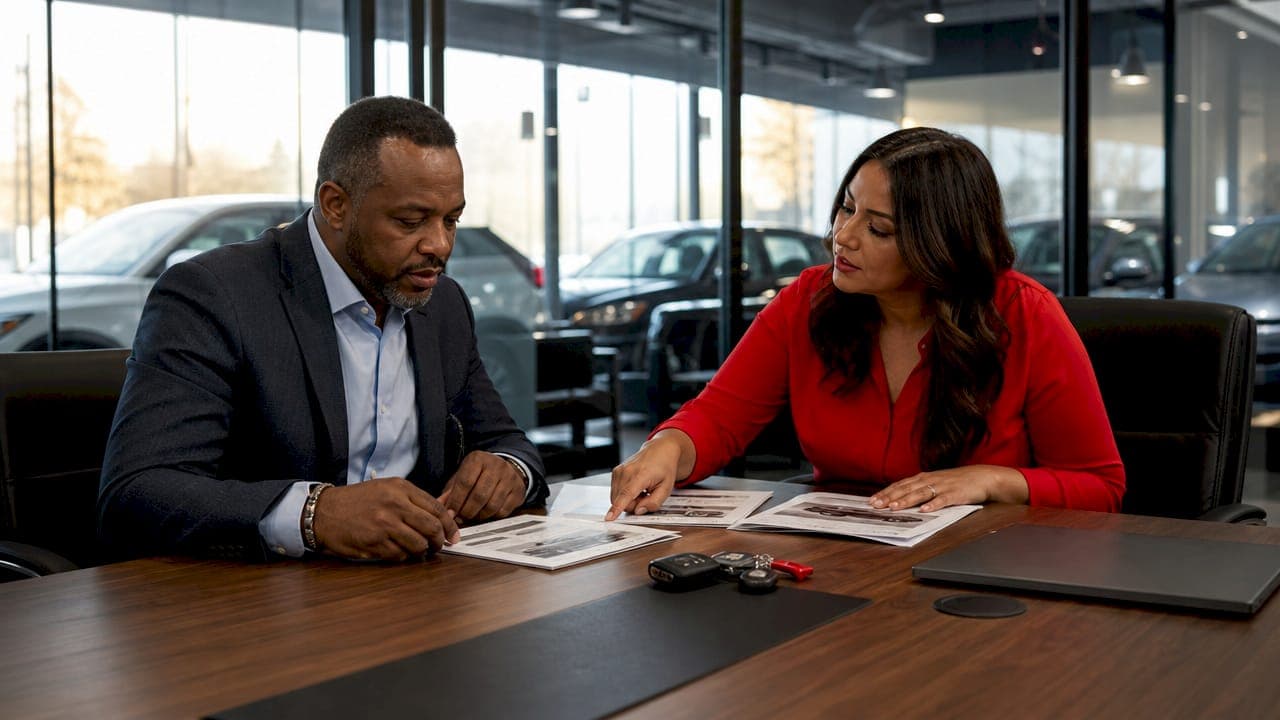
Negotiating a trade-in offer at a dealership is defined as the process of securing the highest possible value for your current vehicle by treating it as a transaction entirely separate from your new car purchase. Consumer Reports confirms that separating these two deals prevents dealers from shifting profit between them, which is the single most effective trade-in negotiation strategy available to car owners. The industry term for your vehicle's worth in this context is Actual Cash Value, or ACV, and understanding it gives you a clear baseline before you walk into any showroom. Dealers operate as wholesale buyers, not retailers, so their first offer always reflects a margin built in for their benefit. Knowing this from the start puts you in a far stronger position.
What preparatory steps should you take before negotiating your trade-in?
Preparation is the foundation of every successful trade-in negotiation. Car owners who arrive with documented market data consistently receive stronger offers than those who rely on guesswork.
Research your vehicle's market value first. Use reputable valuation tools to establish a realistic price range for your specific make, model, year, mileage, and condition. Cross-reference multiple sources to identify where the market actually sits, not where you hope it sits. Understanding how used car pricing works based on age, condition, and mileage gives you a credible number to defend.

Gather multiple written quotes before visiting any dealership. Online car-buying platforms and other dealerships will provide trade-in estimates, often within minutes. Written offers serve as direct leverage when you sit across from an appraiser. A dealer who knows you have a competing written offer has a concrete reason to improve their number.
Timing your trade-in matters more than most car owners realize. Q1 and Q2 are historically the strongest periods for trade-in values, as used car demand trends higher in those months. That means january through june is your window to capture peak market pricing. For a deeper look at how seasonality affects your vehicle's worth, the guide on why timing matters when selling a used car is worth reading before you schedule any appraisal.
Organize your documentation. Bring your maintenance records, original window sticker, and any receipts for recent service work. These documents support your claim that the vehicle has been well maintained and can justify a higher ACV.
| Preparation step | Why it matters |
|---|---|
| Research market value | Establishes a defensible baseline before any offer is made |
| Collect written quotes | Creates direct leverage with competing dealerships |
| Check seasonal timing | Q1 and Q2 historically produce stronger trade-in values |
| Gather maintenance records | Demonstrates vehicle care and supports a higher ACV claim |
| Review original window sticker | Confirms trim level and factory options that affect valuation |
Pro Tip: Never clean up or repair cosmetic damage before the appraisal without first calculating whether the repair cost will actually increase your offer. Dealers factor reconditioning internally, so a $400 paint touch-up rarely adds $400 to your offer.
How do dealers appraise trade-in vehicles?
Dealers appraise trade-ins as wholesale buyers, not as private party sellers. Their offer reflects resale potential and current market demand, with a profit margin built in from the start. That margin covers reconditioning, carrying costs, and auction risk if the vehicle does not sell quickly on their lot.
The difference between ACV and dealer allowance is a critical concept to understand. Dealer allowance can be inflated by manufacturer incentives or internal accounting adjustments, which can make your trade-in appear more valuable on paper than it actually is in cash terms. Always ask the appraiser to state your ACV directly, not just the allowance figure.
Reconditioning costs are factored into every offer before you see a number. Dealers handle reconditioning internally and deduct estimated labor and parts from your offer. This is why fixing cosmetic or mechanical issues before trading in rarely pays off dollar for dollar. A dealer who plans to spend $800 on reconditioning will deduct that amount regardless of whether you already addressed half of it.
One tactic that catches many car owners off guard is the key retention move. Dealers keeping your keys during the appraisal is a deliberate psychological strategy. It reduces your perceived ability to leave, which shifts bargaining power toward the dealer. Recognizing this tactic is the first step to neutralizing it.
Pro Tip: When the appraiser takes your keys, ask for them back before any negotiation begins. A simple, polite request is all it takes. Keeping your keys in hand preserves your ability to walk away at any moment.
What are the best negotiation tactics to maximize your trade-in value?
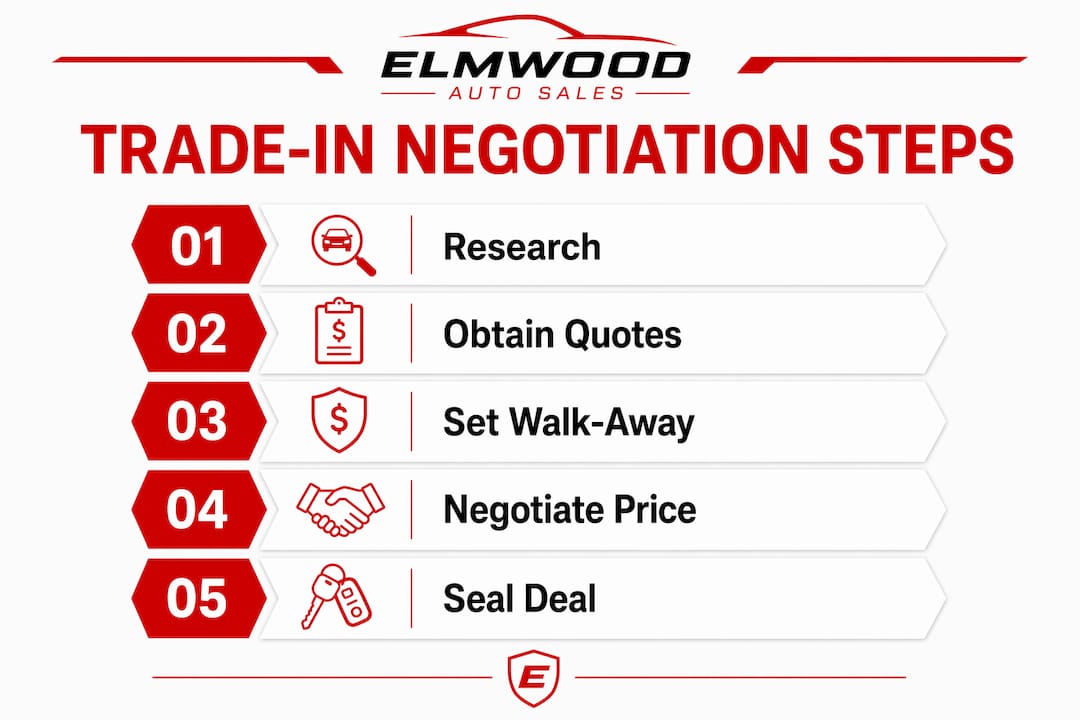
The most effective approach to getting the best trade-in value is a structured, sequential negotiation. Follow these steps in order and do not skip ahead.
- Negotiate the new car price first. Agree on the out-the-door price for your new vehicle before you mention your trade-in. Treating the trade-in as a separate transaction prevents dealers from adjusting one number to compensate for movement in the other.
- Present your written competing offers. Once the new car price is locked, introduce your trade-in and immediately show your documented quotes. A written offer from another source is the strongest single piece of leverage you have.
- Ask targeted questions rather than making demands. Instead of saying "I want more," ask "What would need to be different about my vehicle for you to offer $X?" This forces the appraiser to justify their number and often reveals room to move.
- Decline the first offer without apology. The first offer is rarely the best offer. A calm, direct response such as "I appreciate the number, but I have written offers above this. Can you do better?" signals that you are informed and not in a hurry.
- Request the offer in writing with a time guarantee. Written offers with conditional language protect you from last-minute changes at the finance desk. Ask for the offer to be valid for at least 48 hours.
- Be prepared to walk away. The power to walk away is your most reliable defense against a low offer. Dealers know that a buyer who leaves may not return, and that knowledge alone often produces a better number.
"The moment you show urgency or attachment to closing the deal today, you hand the dealer significant leverage. Patience is a negotiation strategy."
Pro Tip: Set a personal walk-away number before you arrive. Write it down. When the dealer's offer falls below that number, leave. You can always return. Dealers call buyers back far more often than most car owners expect.
What common mistakes should you avoid when negotiating your trade-in offer?
Several avoidable errors consistently reduce trade-in value or weaken a buyer's negotiating position. Recognizing them in advance keeps you in control.
Revealing your trade-in too early is the most common mistake. If you mention your trade-in before the new car price is settled, the dealer can bundle both numbers into a single monthly payment discussion. That bundling obscures where the money is actually going.
Spending money on pre-trade-in repairs without calculating the return is a frequent and costly error. Fixing cosmetic or mechanical issues before trading in rarely increases the offer by the same amount you spent. Dealers plan to recondition the vehicle themselves and price that into their offer regardless.
Accepting the first offer without questioning it signals to the dealer that you did not research the market. Every first offer has room built in. Asking "Is that your best number?" costs nothing and occasionally produces an immediate improvement.
Letting the dealer hold your keys without a signed agreement removes your ability to leave freely. Key retention during appraisal is a documented tactic. Always ask for your keys back before negotiation begins.
Ignoring state trade-in tax credits is a financial mistake that compounds over time. Many states allow buyers to pay sales tax only on the difference between the new car price and the trade-in value. That credit can save hundreds of dollars and makes a lower trade-in offer less damaging than it first appears.
Making emotional decisions based on attachment to your vehicle or frustration with the process leads to poor outcomes. Rely on your documented market data and written offers. Numbers, not feelings, win negotiations.
Key takeaways
Separating your trade-in negotiation from the new car purchase is the single most effective way to maximize your vehicle's value at any dealership.
| Point | Details |
|---|---|
| Separate the transactions | Negotiate new car price first, then introduce your trade-in to prevent profit-shifting. |
| Prepare with written offers | Collect competing quotes before arriving; written offers are your strongest leverage tool. |
| Time your trade-in | Q1 and Q2 historically produce higher used car values, so plan your trade accordingly. |
| Understand ACV vs. allowance | Ask for your Actual Cash Value directly to detect inflated allowance figures. |
| Walk away when needed | Leaving the dealership is a legitimate tactic that frequently produces a better offer. |
What I have learned from watching trade-in deals go wrong
After years of working in the used car market in Providence, I have seen the same pattern repeat itself. A car owner arrives with a clean vehicle, a fair expectation, and no written documentation. The dealer makes a low offer. The buyer, not wanting to start over, accepts it. The deal closes, and the buyer leaves $1,000 to $2,000 short of what the market would have supported.
The fix is not complicated. Preparation and separation are the two disciplines that change outcomes. Car owners who research their ACV, collect written competing offers, and negotiate the new car price before mentioning their trade-in consistently do better. Not slightly better. Meaningfully better.
The walk-away tactic is the one most people resist because it feels confrontational. It is not. It is simply the honest signal that you have options. Dealers respond to options. A buyer with a written offer from another source and the willingness to use it holds real power in that room.
My honest advice: treat your trade-in like a separate sale, because it is one. Document everything, stay calm, and never let urgency push you into a number you did not research.
— Elmwood
Trade-in support at Elmwoodautosalesri
Car owners in Providence who want a transparent trade-in experience have a straightforward option at Elmwoodautosalesri. The team at Elmwoodautosalesri does not use commission-based sales tactics, which means the appraisal conversation stays honest from the start.
Elmwoodautosalesri handles title processing, paperwork, and the full trade-in appraisal in one place, reducing the back-and-forth that makes the process frustrating at larger dealerships. For car owners who need financing options alongside their trade-in, including solutions for a range of credit histories, Elmwoodautosalesri offers tailored programs designed to fit real budgets. If you are ready to get a fair, documented offer on your current vehicle, Elmwoodautosalesri is a reliable starting point.
FAQ
How do I negotiate a trade-in offer at a dealership?
Negotiate the new car price first, then introduce your trade-in as a separate transaction. Bring written competing offers and be prepared to decline the first appraisal number.
When is the best time to trade in my car?
Q1 and Q2 historically produce higher trade-in values due to stronger used car demand. Trading in between january and june gives you the best chance of a favorable market offer.
Should I repair my car before trading it in?
Generally, no. Pre-trade-in repairs rarely increase the offer dollar-for-dollar because dealers factor reconditioning costs into their appraisal regardless of work you have already done.
What is the difference between ACV and dealer allowance?
Actual Cash Value is the true wholesale worth of your vehicle. Dealer allowance can be inflated by incentives and internal accounting, so always ask for your ACV directly to understand the real offer.
Can a trade-in save me money on sales tax?
Yes. Many states apply sales tax only to the difference between the new car price and your trade-in value, which can save you hundreds of dollars at the point of sale.