
Selling a car privately is defined as a direct transaction between you and a buyer, typically yielding more money than a dealer trade-in. The private-party value premium runs 12–18% above what dealers offer, which translates to roughly $2,200 more on a typical used car sale. That gap sounds decisive, but state sales tax credits, loan payoffs, and the time you invest can shift the math significantly. A true sell vs trade-in car comparison requires looking at net return, not just the sticker difference. This guide walks you through every factor so you can make the call with confidence.
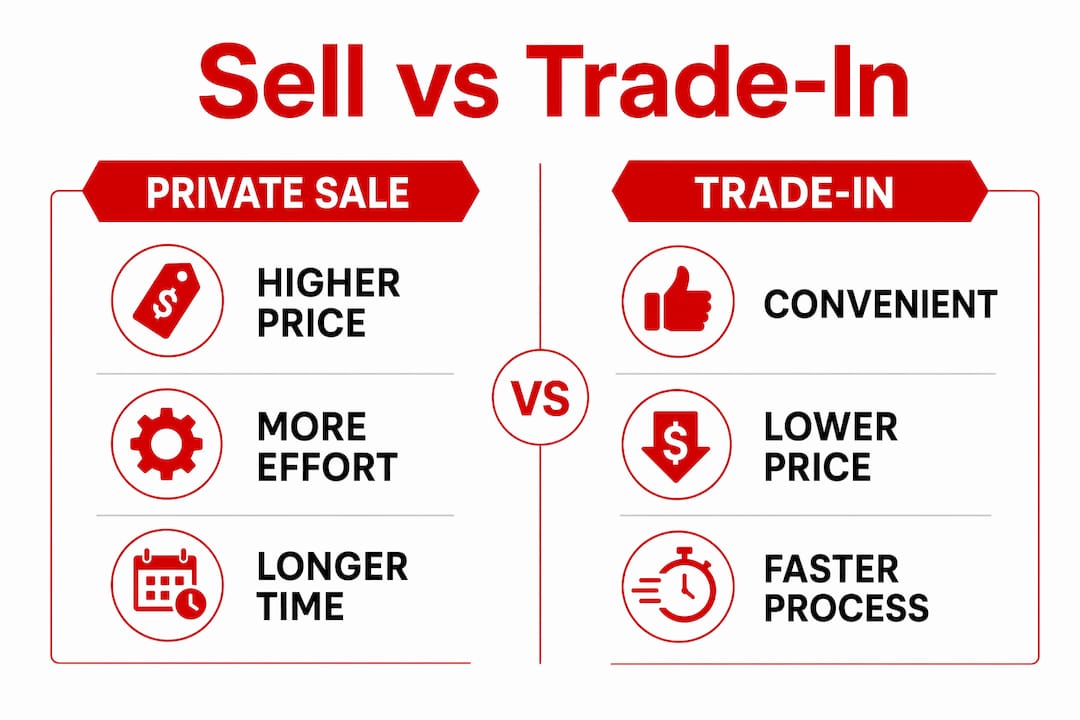
How do you accurately compare selling privately vs trading in?
The financial gap between private sales and trade-ins is real, but the net difference depends on several variables beyond the headline number. Dealers discount trade-in offers by 18–22% below private-party market value to cover resale prep, holding costs, and profit margin. On a $20,000 vehicle, that discount alone creates a $3,000–$5,000 gap between what a private buyer pays and what a dealer offers.
Calculating your true net return
Start with a realistic private-party value using tools like Kelley Blue Book or NADA Guides. Then subtract listing fees, any detailing or repair costs, and the time value of the process. For a trade-in, subtract the dealer's discount from that same private-party value, then add back any state sales tax credit you would receive on a new vehicle purchase.
State-specific tax credits change the equation meaningfully. In states that offer a trade-in tax credit, you pay sales tax only on the difference between your new car's price and your trade-in value. A $12,000 trade-in on a new vehicle purchase can save you $840 in sales tax, which closes part of the private-sale premium gap. States like California, Hawaii, and Maryland do not offer this credit, which means private sales yield better net returns for roughly 60% of U.S. drivers.
Handling a remaining loan balance
A loan payoff adds another layer. In a private sale, you must pay off the remaining loan balance before or at the time of transfer, which requires coordinating with your lender and the buyer simultaneously. Rolling negative equity into a new loan during a trade-in simplifies the transaction but increases your total loan cost over time. If your payoff amount exceeds your car's value, a private sale may leave you writing a check at closing, while a trade-in rolls that shortfall forward.
Pro Tip: Use a side-by-side valuation tool to enter both your private-party estimate and your trade-in quote, then factor in your state's tax rate and any loan balance. The net figure, not the gross offer, is what you actually pocket.
| Scenario | Private Sale | Trade-In |
|---|---|---|
| Gross value on $20,000 car | $20,000 | $15,000–$17,000 |
| State tax credit (if applicable) | None | Up to $840+ |
| Loan payoff coordination | Required upfront | Rolled into new deal |
| Listing and prep costs | $200–$500 typical | None |
| Net advantage | Higher gross return | Lower effort, tax savings |
What are the time, effort, and risk differences?
The convenience gap between car selling options is wider than most owners expect. A typical private sale takes 6–10 hours of active work across listing, buyer communication, test drives, and paperwork. A trade-in takes roughly one afternoon at the dealership.
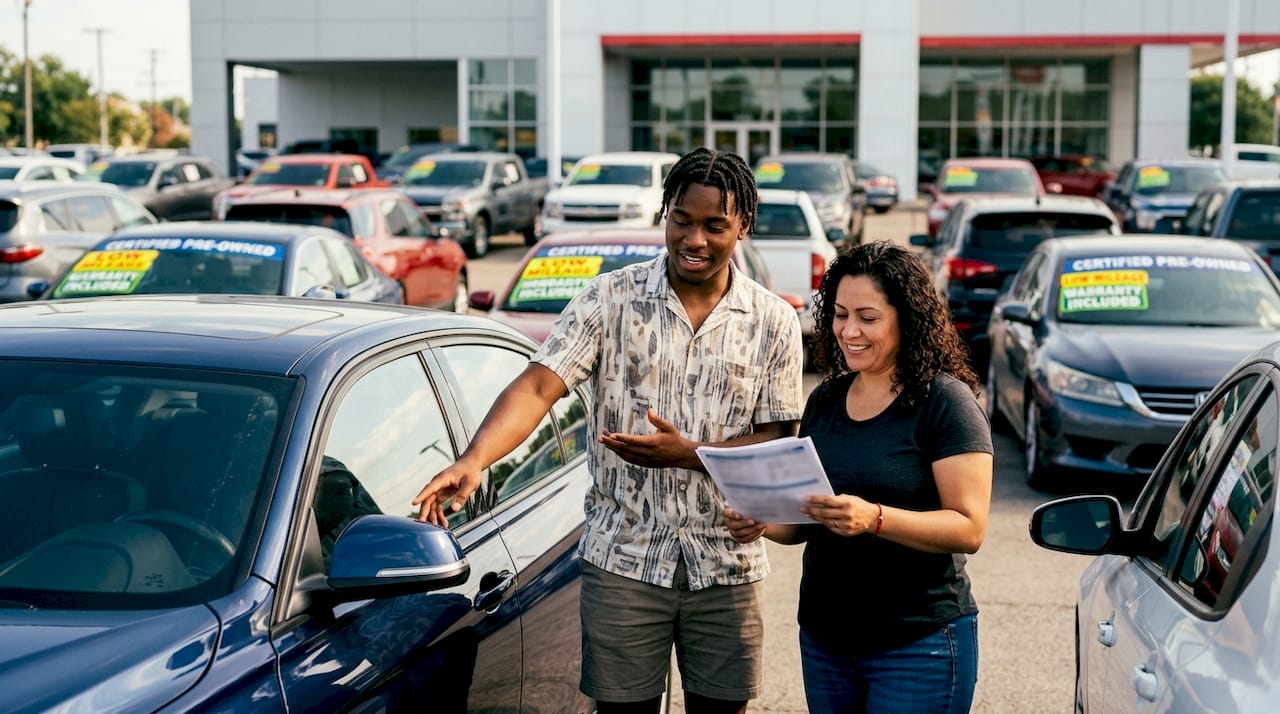
What private sales actually require
The private sale process involves more steps than most owners anticipate:
- Pricing research: Pulling comps from multiple sources and setting a competitive price takes 1–2 hours.
- Listing creation: Writing a clear description, photographing the car in good light, and posting to platforms like Facebook Marketplace or Craigslist takes another hour.
- Buyer screening: Responding to inquiries, filtering serious buyers from tire-kickers, and scheduling test drives adds several hours over days or weeks.
- Test drives and negotiation: Meeting buyers, supervising drives, and negotiating in person requires time and patience.
- Paperwork and title transfer: Completing the bill of sale, signing the title, and notifying your state DMV must happen promptly to avoid liability.
Scam risks in private sales
Private sales carry real fraud risk. Safe payment practices include accepting only cash, verified wire transfers, or cashier's checks confirmed at the bank teller window before handing over the keys. Personal checks and payment apps like Venmo or Zelle carry reversal risk and should not be accepted for vehicle sales. Meet buyers at a bank or a busy public location, never at your home address.
"Dealers leverage your emotional investment on-site to offer lower trade-in values. Walking in with a competing written offer from an instant-buy service changes the entire negotiation dynamic." — Trade In vs. Sell Your Car Separately
A trade-in eliminates all of these friction points. The dealer handles the title, the loan payoff coordination, and the paperwork in a single transaction. That convenience has real value, especially if your time is limited or your vehicle has title complications.
When does trading in make more financial sense?
Trading in beats a private sale in specific, predictable situations. The trade-in tax credit is the most common reason. If you live in a state that applies the credit and you are buying a vehicle at the same time, the tax savings can offset a significant portion of the private-sale premium.
Situations where trade-in wins
High-mileage vehicles and cars with mechanical issues often fetch lower private-party offers because individual buyers are more risk-averse than dealers. A dealer absorbs that risk as part of their business model. If your car needs $1,500 in repairs to sell privately at full value, a trade-in that avoids those costs may net more after expenses.
Dealer loyalty programs add another layer. Some dealers offer above-market trade-in values to retain customers who are buying their next vehicle on the same lot. Elmwoodautosalesri, for example, provides transparent appraisals without commission-based pressure, which means the offer you receive reflects actual market value rather than a lowball designed to be negotiated up.
Title and loan complexity
Vehicles with salvage titles, rebuilt titles, or active liens are significantly harder to sell privately. Buyers in private transactions often walk away from title complications that a dealer handles routinely. If your car carries a lien, the loan payoff process in a private sale requires your lender to release the title directly to the buyer or through an escrow arrangement, which adds days or weeks to the transaction.
| Condition | Better option | Reason |
|---|---|---|
| Clean title, low mileage | Private sale | Maximizes gross return |
| Active lien or negative equity | Trade-in | Dealer handles payoff directly |
| State with trade-in tax credit | Trade-in (if buying new) | Tax savings close the gap |
| High mileage or mechanical issues | Trade-in | Avoids repair costs and buyer hesitation |
| State without tax credit (CA, HI, MD) | Private sale | No offsetting tax benefit |
How to sell your car privately, step by step
A well-executed private sale starts with accurate pricing. Pull values from at least two sources and price your car at the lower end of the range if you want a faster sale, or at the midpoint if you can wait two to four weeks. Check used car pricing factors like trim level, regional demand, and recent comparable sales in your area.
- Set a realistic price. Use Kelley Blue Book and NADA Guides to establish a private-party value range. Adjust for your car's actual condition, not the condition you wish it were in.
- Prepare the vehicle. A professional detail costs $100–$200 and consistently returns more than its cost in buyer perception. Fix minor issues like burned-out bulbs or cracked trim that signal neglect.
- Take quality photos. Shoot in daylight, on a clean background, covering all four exterior angles, the interior, the dashboard, and the odometer. Listings with clear photos receive significantly more inquiries.
- Write an honest description. Include the year, make, model, trim, mileage, service history, and any known issues. Transparency builds trust and filters out buyers who would walk away after inspection anyway.
- Screen buyers before meeting. Ask about financing status and seriousness before scheduling a test drive. Serious buyers answer directly. Vague responses often signal time-wasters or scammers.
- Meet safely. Choose a bank parking lot or a busy public space. Bring a friend if possible. Never hand over the keys before payment is confirmed.
- Accept verified payment only. Cash or a cashier's check verified at the issuing bank are the only safe options. Complete the bill of sale, sign the title over correctly, and notify your state DMV the same day.
Pro Tip: Timing your sale to late winter or early spring, when tax refunds increase buyer budgets, can add several hundred dollars to your final sale price.
Key Takeaways
Private sales yield more gross return than trade-ins, but state tax credits, loan complexity, and time investment determine which option actually puts more money in your pocket.
| Point | Details |
|---|---|
| Private-sale premium | Private sales average $2,200 more than trade-ins, with values 12–18% above dealer offers. |
| Tax credit impact | Trade-in tax credits in eligible states can save $840 or more, narrowing the private-sale advantage. |
| Time investment | A private sale typically requires 6–10 hours of active work versus one afternoon for a trade-in. |
| Loan and title complexity | Active liens and title issues favor trade-ins, where dealers handle payoff and paperwork directly. |
| Multiple appraisals matter | Getting competing trade-in quotes before negotiating improves your final offer by $500–$1,500. |
What I've learned after years of watching sellers leave money on the table
The biggest mistake I see is treating this as a binary choice made once, without preparation. Sellers walk into a dealership without a competing offer, accept the first number, and leave $1,000 or more on the table. The fix is simple: get at least two written appraisals before you step onto any lot. Instant-buy services like CarMax often quote $500–$1,500 above a dealer's initial trade-in offer, and that written quote becomes your floor in any negotiation.
The private sale premium is real, but it is not free money. You earn it with your time, your patience, and your willingness to manage risk. For a clean, low-mileage vehicle in a state without a trade-in tax credit, the math almost always favors selling privately. For a high-mileage car with a lien in a tax-credit state, the trade-in often wins on net return once you account for everything.
What I tell every seller: know your honest dealer options before you commit to either path. A transparent appraisal from a no-pressure dealer gives you a reliable baseline. From there, the decision becomes straightforward math rather than guesswork.
— Elmwood
Elmwoodautosalesri can help you get a fair value for your car
Elmwoodautosalesri offers transparent, no-pressure trade-in appraisals at their Providence, RI dealership, giving you a reliable market-based offer without commission-driven tactics. Whether you are weighing a trade-in against a private sale or need help understanding your vehicle's current value, their team provides honest guidance at every step.
Elmwoodautosalesri handles all trade-in paperwork, loan payoff coordination, and title transfers in a single transaction, saving you the time and risk of a private sale. Their buy here, pay here financing options also make it easy to roll your trade-in value directly into your next vehicle purchase. Visit Elmwoodautosalesri to request your appraisal and see their current inventory of quality, inspected used vehicles.
FAQ
How much more does a private sale earn than a trade-in?
Private sales average $2,200 more than dealer trade-in offers, with private-party values running 12–18% above what dealers typically pay.
Do trade-in tax credits make trading in worth it?
In states that offer a trade-in tax credit, the savings can reach $840 or more on a qualifying purchase, which significantly narrows the financial advantage of selling privately.
How long does a private car sale take?
A typical private sale requires 6–10 hours of active work spread across listing, buyer communication, test drives, and paperwork completion.
What payment methods are safe in a private car sale?
Accept only cash or a cashier's check verified at the issuing bank. Personal checks and payment apps carry reversal risk and should not be used for vehicle transactions.
Should I get multiple trade-in quotes before going to a dealer?
Getting competing appraisals before negotiating improves your final offer. Written quotes from instant-buy services often exceed initial dealer offers by $500–$1,500 and give you real negotiating leverage.