
Used car pricing is a structured, data-driven process that layers market data, vehicle condition, and dealer costs to produce the number you see on a listing. Tools like Kelley Blue Book and the Manheim Used Vehicle Value Index give buyers a reliable starting point, but the final price reflects far more than a single guide estimate. Understanding how used car pricing works puts you in control before you ever set foot on a lot. This guide breaks down every layer of the used car valuation process so you can negotiate with confidence.
How used car pricing works: the baseline market value
Every used car price starts with a baseline market value derived from real transaction data. Kelley Blue Book's Fair Market Range is updated at least weekly using dealership transactions, auction sales, and online listings. It also adjusts for mileage, condition, options, and local market conditions. That means the KBB value for a 2021 Honda Civic in Providence, RI will differ from the same car listed in Phoenix, AZ.
The baseline splits into two distinct price tiers that buyers should understand:
- Wholesale value is what a dealer pays at auction to acquire the vehicle. This is the floor of the pricing structure.
- Retail value is the price a dealer lists for consumers. It sits above wholesale to cover costs and profit.
- Fair Market Range from KBB sits between these two points. It reflects what real buyers have recently paid in your area.
KBB's price data is a dynamic guide, not a fixed number. Prices shift with ZIP code and season, so a car priced fairly in october may carry a different value by march when demand patterns change.
Pro Tip: Always enter your actual ZIP code when using KBB or NADA. Regional price differences can be significant, and a national average will not reflect what dealers in your local market are actually charging.
What vehicle-specific factors affect the used car valuation process?
Once a baseline exists, vehicle-specific factors adjust the price up or down. The used car valuation process accounts for condition, mileage, trim level, and optional features as the primary adjusters.
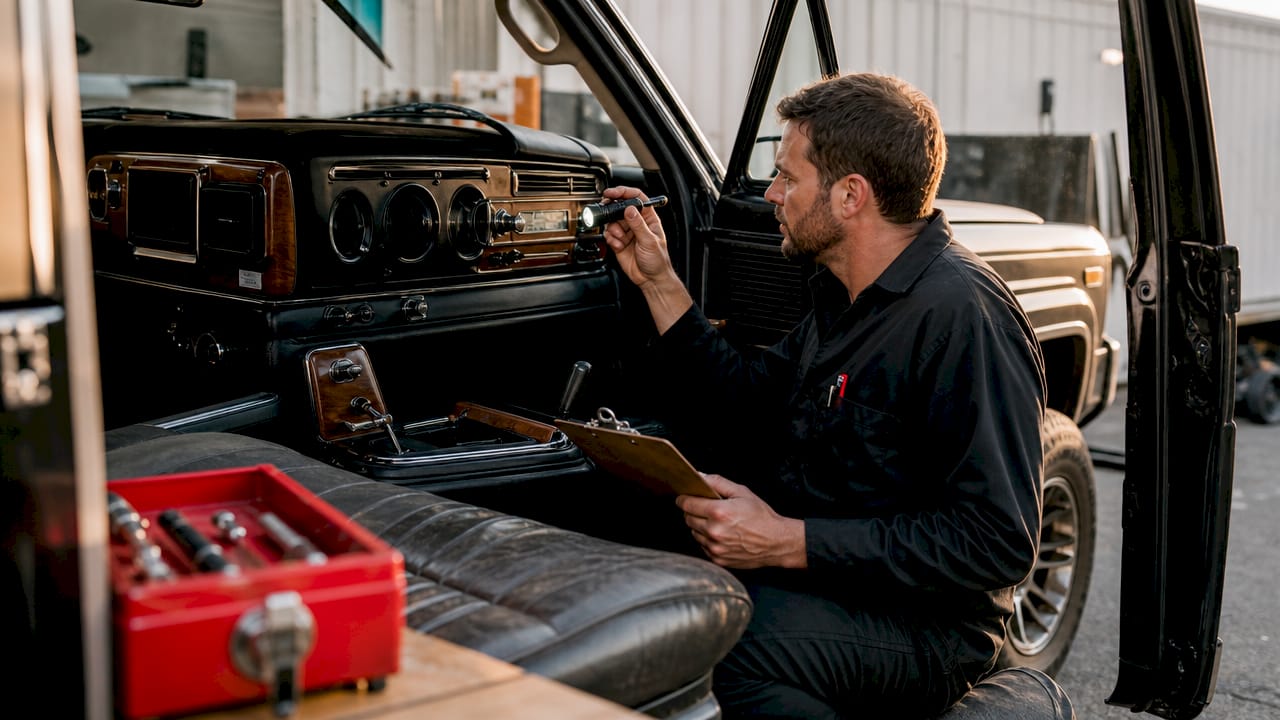
Condition is the single largest variable. A vehicle with accident history, deferred maintenance, or worn interior components loses value sharply. NADA valuation guides use defined condition classes and adjust values significantly for documented issues or high mileage. A car rated "good" versus "excellent" can carry a price difference of several hundred to several thousand dollars on the same model.
Mileage follows a predictable depreciation curve, but the drop accelerates past certain thresholds. A vehicle at 80,000 miles depreciates faster per mile than one at 30,000 miles. High mileage signals more wear on drivetrain components, which buyers and dealers both price in.
Optional features and trim packages add measurable value. A base trim Chevrolet Equinox and a fully loaded Premier trim of the same year are not the same vehicle for pricing purposes. Leather seats, a sunroof, advanced safety packages, and technology upgrades all shift the valuation upward.
Vehicle history reports from services like Carfax verify the condition assumptions behind any asking price. A clean history report supports the seller's condition claim. A report showing multiple accidents or title issues justifies a lower offer.
Pro Tip: Pull a vehicle history report before you negotiate, not after. Condition discrepancies found during inspection are your strongest negotiation tools, but only if you document them before making an offer.
How do dealer costs and pricing strategy determine the asking price?
Dealers do not price cars based on market value alone. Dealer pricing reflects acquisition cost, reconditioning expenses, local competition, and profit targets layered on top of the baseline market value.
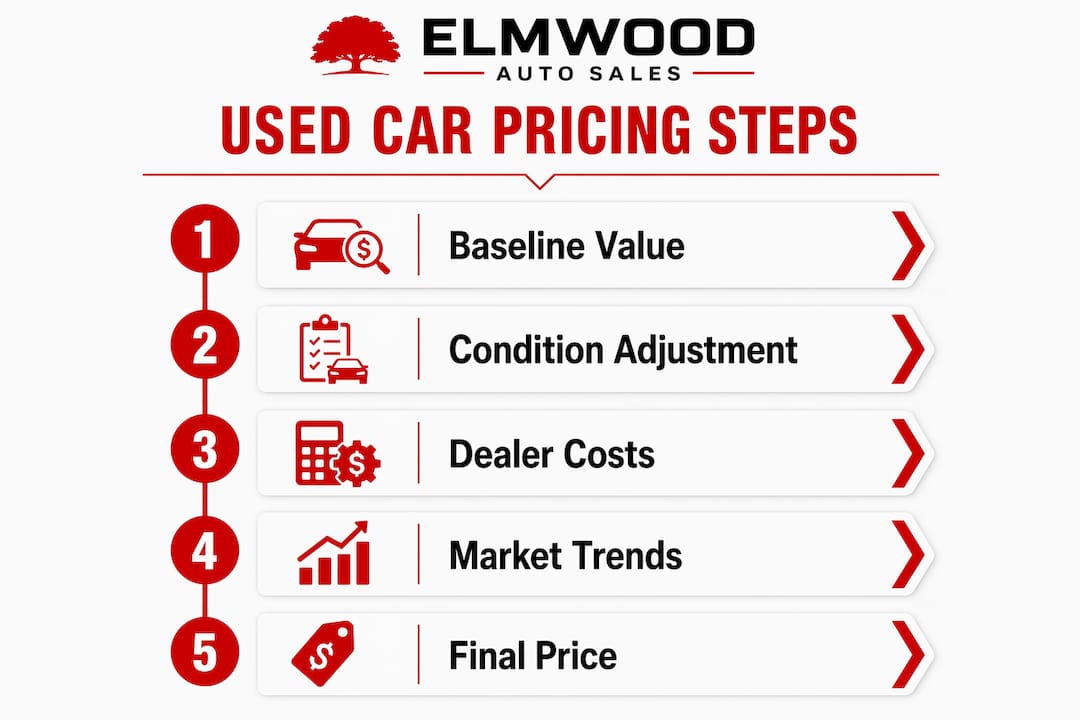
The process works in a defined sequence:
- Acquisition cost: The dealer buys the vehicle at auction or takes it as a trade-in. This is the true cost floor.
- Reconditioning: The dealer invests in repairs, detailing, state inspection, and any needed mechanical work before the car goes on the lot.
- Competitive positioning: The dealer checks regional comparables and prices the vehicle to move within a target number of days.
- Profit margin: A markup above total costs produces the listed asking price.
List pricing is influenced more by acquisition cost plus reconditioning and local competitive strategy than by the dealer's upfront cost alone. A car bought cheaply at auction may still carry a high asking price if local demand is strong and comparable inventory is thin.
Dealers also use inventory turnover targets to guide pricing adjustments. A car sitting on the lot past its target days gets a price reduction. That pattern creates real negotiation opportunity for buyers who track how long a specific vehicle has been listed.
Understanding how dealership inventory is sourced gives you a clearer picture of why two similar cars at two different dealers can carry very different prices.
How do supply, demand, and market trends impact used car pricing in 2026?
Supply and demand are the most powerful short-term forces on used car prices. The start of 2026 saw 49 days' supply with retail prices rising 1% year over year. Constrained supply pushes prices up because dealers have fewer vehicles competing for the same pool of buyers.
The Manheim Used Vehicle Value Index tracks wholesale price trends and signals where retail prices are heading. MMR data for may 2026 showed prices for 3-year-old vehicles decreased 1.3%, with sales conversion at 59.9%. A conversion rate below 60% means more than four in ten vehicles at auction did not sell. That signals softening wholesale demand, which eventually flows into lower retail prices.
| Market Signal | What It Means for Buyers |
|---|---|
| Rising days' supply | More inventory, more dealer flexibility on price |
| Falling Manheim Index | Wholesale prices dropping, retail reductions likely to follow |
| Low sales conversion rate | Weak auction demand, dealers may accept lower offers |
| Rising retail prices YOY | Tight supply, less negotiation room |
Seasonality also shapes pricing in ways most buyers overlook. Trucks and SUVs spike in late fall and winter in northern markets like Rhode Island. Convertibles and sports cars peak in spring. Buying a truck in february rather than october can produce a meaningfully lower price on the same vehicle.
"Dealers anchor prices off wholesale auction indices, adjusting retail prices when wholesale values depreciate. Savvy buyers time purchases after documented price drops in the Manheim Index."
Regional variation adds another layer. A pickup truck priced at one level in Providence may carry a different value in a rural market where truck demand is higher. Local comparables always outweigh national averages when you are negotiating a specific deal.
How can buyers use valuation tools and comparables to negotiate used car prices?
Effective negotiation requires more than a single KBB estimate. Carfax Deals recommends building a defensible price range using multiple credible data points. That means triangulating across retail guides, wholesale indices, and local sold comparables before you make an offer.
A practical approach uses three data sources together:
- KBB Fair Market Range for the retail baseline in your ZIP code
- Manheim or auction data for the wholesale floor that anchors dealer acquisition cost
- Local active listings on platforms like AutoTrader or Cars.com for real-time competitive context
Comparables must closely match year, model, trim, options, and condition to carry weight in a negotiation. Mismatched comps get dismissed as apples-to-oranges by dealers. A base trim comparison against a fully loaded vehicle will not move a dealer's price.
Negotiation should focus on the out-the-door price, not the sticker or listing price. The out-the-door number includes taxes, title, registration, and dealer fees. Two dealers with the same listing price can produce very different final costs once fees are added. Always ask for the complete out-the-door figure before comparing offers.
Negotiation success is often linked to demonstrating that the vehicle has been on the lot longer than comparable vehicles. A car sitting 45 days past its typical turnover target signals weaker retail demand. That gives you a factual, non-confrontational reason to offer below asking price.
Pro Tip: Use the timing of your purchase strategically. End-of-month visits often find dealers more willing to negotiate as they work toward monthly sales targets.
Key takeaways
Used car pricing is a layered process: baseline market value, vehicle-specific adjustments, dealer costs, and real-time supply and demand all combine to produce the final asking price you negotiate against.
| Point | Details |
|---|---|
| Baseline starts with market data | KBB and Manheim provide the foundation; always use your local ZIP code for accuracy. |
| Vehicle condition drives adjustments | Condition class, mileage, and options can shift value by thousands of dollars on the same model. |
| Dealer costs layer on top | Acquisition, reconditioning, and margin all sit above market value in the asking price. |
| Market timing creates opportunity | Falling Manheim Index values and rising days' supply signal better negotiation conditions. |
| Triangulate before negotiating | Combine KBB, wholesale data, and local comps to build a defensible offer price. |
What I've learned about used car pricing after years in the Providence market
Most buyers walk into a negotiation anchored to a single number from one valuation tool. That is the most common and most costly mistake I see. KBB is a strong starting point, but it is one data point in a larger picture. Dealers build their prices from acquisition cost up, not from a guide estimate down. When you understand that structure, you stop arguing about the sticker and start asking the right questions about what the dealer actually paid and how long the car has been sitting.
The buyers who negotiate the best deals are the ones who arrive with printed comparables, a vehicle history report, and a clear out-the-door target. They are not aggressive. They are prepared. A dealer who sees a buyer with three matched comparables and a documented inspection finding has very little room to dismiss the offer. That is not pressure. That is information.
The 2026 market offers real opportunity. Wholesale prices showed softening in may 2026, and conversion rates at auction were below 60%. Those numbers flow downstream into retail pricing. Buyers who track the Manheim Index and understand what it signals can time their purchases to coincide with price corrections. That kind of market awareness used to be exclusive to dealers. Now the data is public, and buyers who use it have a genuine edge.
— Elmwood
Transparent pricing and financing at Elmwoodautosalesri
Elmwoodautosalesri makes the used car valuation process straightforward for buyers in Providence and across Rhode Island. Every vehicle on the lot goes through a thorough inspection before it is listed, so the condition you see matches the price you are quoted.
Elmwoodautosalesri offers digital retail tools and financing options through Capital One, giving buyers a clear picture of their total out-the-door cost before they visit the lot. For buyers with a range of credit histories, tailored financing solutions including buy here, pay here options are available. Elmwoodautosalesri's no-commission sales approach means the focus stays on finding the right vehicle at a fair price. You can also review used car value guides to sharpen your market knowledge before you shop.
FAQ
What is the most reliable tool to determine used car price?
Kelley Blue Book's Fair Market Range is the most widely used retail baseline. Cross-checking it against NADA and local active listings gives you the most accurate picture of what a specific vehicle is worth in your market.
How does mileage affect the used car valuation process?
Mileage reduces value along a depreciation curve that steepens past high-use thresholds. NADA and KBB both adjust valuations sharply for vehicles with above-average mileage relative to their model year.
What does the Manheim Index tell buyers about used car pricing?
The Manheim Used Vehicle Value Index tracks wholesale price trends at auction. When the index falls, retail prices typically follow within weeks, signaling a better time to buy.
Why should negotiation focus on the out-the-door price?
The out-the-door price includes all taxes, fees, and dealer charges. Two dealers with identical listing prices can produce very different final costs, so comparing out-the-door totals is the only accurate way to evaluate competing offers.
How do used car pricing factors differ by season?
Demand for trucks and SUVs rises in fall and winter in northern markets, pushing prices up. Buying off-season for a specific vehicle type, such as a convertible in october or a truck in february, can produce a lower price on the same vehicle.