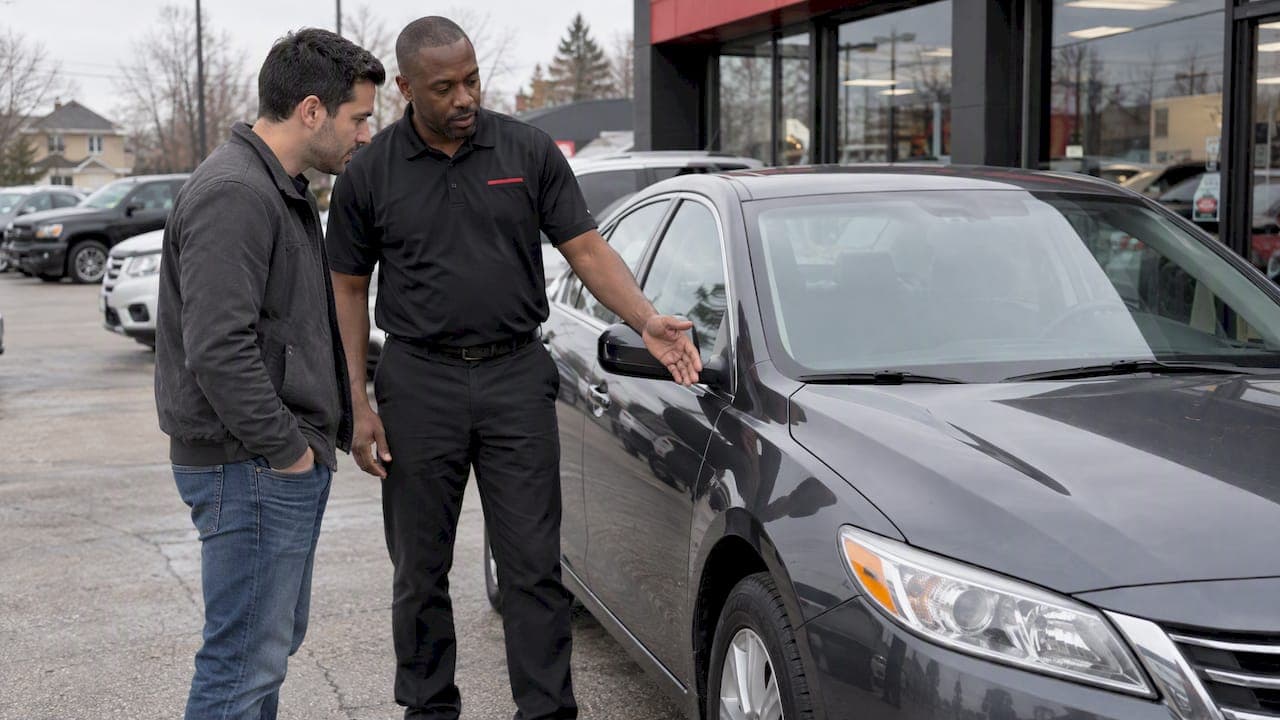
Yes, you can use your tax refund to buy a car, and for most people the strongest move is to treat it as a down payment, not as the whole purchase price. The refund lowers the amount you finance, can help a lender say yes, and still leaves room for the costs that arrive on the day you drive off. This guide shows how to divide it, what Rhode Island adds to the bill, and which tax breaks for vehicles apply to used-car buyers and which do not.
TL;DR
- The average refund was $3,512 as of March 27, 2026, which is usually a down payment, not a full used-car budget.
- A bigger down payment lowers your loan-to-value ratio, which matters most if your credit is less than perfect.
- In Rhode Island, set aside the 7% sales tax right away. It is due by the 20th of the month after purchase.
- The $10,000 vehicle loan interest deduction covers new vehicles only, and the used clean vehicle credit ended for vehicles acquired after September 30, 2025.
- Keep part of the refund in savings for insurance, registration and the first repair.
Table of Contents
- Is a tax refund enough to buy a car?
- What are the smartest ways to put a refund toward a car?
- How should you divide a $3,500 refund?
- What does Rhode Island add to the cost of buying a car?
- Is there a tax deduction for buying a car?
- What mistakes should you avoid?
- Does the time of year matter?
- What does a low-pressure purchase look like?
- How can Elmwood help you use your refund?
- FAQ
- Sources
Is a tax refund enough to buy a car?
For most buyers, not by itself. The IRS reported an average refund of $3,512 as of March 27, 2026, according to Insurance.com. The Tax Foundation's weekly tracking showed averages running roughly 10% to 11% above 2025 during the season, so many households have a bit more to work with than last year. Even so, an average refund covers a modest down payment on most used vehicles, not the full price of a reliable one.
That is not a problem. A refund is a one-time lump sum, and the best use of a lump sum is the part of the purchase that costs you the most over time: the amount you borrow. Every dollar you put down is a dollar that does not accrue interest for the length of the loan.
What are the smartest ways to put a refund toward a car?
There are several, and they are not mutually exclusive. Insurance.com lists using it as a down payment, buying a cheaper used car, paying down an existing loan, or prepaying car insurance. Here is how each works in practice.
Use it as a down payment
This is the standard choice. A larger down payment lowers the monthly payment and reduces your loan-to-value ratio, the size of the loan compared with what the car is worth. Lenders look closely at that ratio, especially for buyers with less-than-perfect credit, because a lower ratio means less risk for them. In some cases it is the difference between a denial and an approval.
Buy a less expensive car and skip the loan
If your refund plus savings reaches the price of a dependable older sedan or SUV, paying cash avoids interest entirely. The tradeoff is that older vehicles may need maintenance sooner. Our guide to the true cost of owning a used car versus a new one walks through those numbers.
Pay off existing debt first
Financial professionals note that using the refund to pay off high-interest debt is just as valid as a down payment. If a credit card charges more interest than your auto loan would, clearing the card can improve your monthly cash flow and your credit profile before you apply for financing.
Prepay a year of insurance
Paying a full year of car insurance up front can earn a paid-in-full discount, which Insurance.com says averages around 9% according to industry reports. It also removes one monthly bill. Ask your insurer whether it offers this before you count on it.
How should you divide a $3,500 refund?
Here is a worked example for a Rhode Island buyer. The numbers are an illustration, not a quote, and your own costs will differ.
Say your refund is $3,500 and you are considering a used vehicle priced at $12,000 with no trade-in.
| Item | Amount |
|---|---|
| Refund | $3,500 |
| Rhode Island sales tax at 7% of $12,000 | $840 |
| Emergency buffer kept in savings | $500 |
| Left for the down payment | $2,160 |
The sales tax figure comes from the state's 7% rate on dealer purchases. Registration fees and insurance come on top of this, so the buffer matters. You may also be able to roll the tax into financing, but that increases what you borrow, so ask how the deal is structured before you sign.
If you have a trade-in, the math improves. Rhode Island subtracts trade-in allowances from the taxable price on passenger vehicles bought from a dealer, so a $3,000 trade-in on that same $12,000 car would mean tax on $9,000, or $630.

What does Rhode Island add to the cost of buying a car?
Three things: sales tax, registration and inspection. Plan for all three before you decide how much of the refund goes down.
Sales tax
For new or used passenger vehicles bought from a dealer, Rhode Island charges 7% of the purchase price minus trade-in and other allowances. To avoid late charges, the tax must be paid by the 20th of the month following the month of purchase, even if the vehicle is not yet registered. The state's motor vehicle tax regulation also covers the due date. The simplest habit is to set that 7% aside the day you close the deal. Our Rhode Island car sales tax guide has a dealer checklist.
Private sales work differently. For vehicles seven years old or less, the DMV says tax is 7% of the NADA Clean Retail book value or the sale price, whichever is greater. A cheap private-party deal on a newer car can therefore carry more tax than you expect.
Registration and paperwork
Registration costs are separate from the sales tax. We break them down in our guide to 2026 Rhode Island registration fees and paperwork, which uses an estimate of $103.50 as a starting point.
Inspection
Rhode Island requires vehicle inspections, and the fee and rules are laid out in our explainer on the $55 inspection. A thorough pre-sale inspection by the seller helps you avoid buying a car that will fail it.
Is there a tax deduction for buying a car?
This is where many shoppers get confused, and where the people-also-ask questions about a "$10,000 deduction" come from. Here is what applies.
The vehicle loan interest deduction
For tax years 2025 through 2028, you can deduct up to $10,000 a year in interest on a qualified passenger vehicle loan, according to IRS Topic No. 505. The vehicle must be new, the debt must be incurred after December 31, 2024, and final assembly must have taken place in the United States. The deduction phases out for taxpayers with modified adjusted gross income over $100,000 ($200,000 for joint filers). It is a deduction on interest, not a rebate on the price, and the IRS's Publication 6126 describes it as applying to new personal vehicles. If you are shopping for a used vehicle, it does not apply to you.
The used clean vehicle credit
The Used Clean Vehicle Credit was limited to qualified plug-in electric or fuel cell vehicles, with income limits, a $25,000 sale price cap and a licensed-dealer requirement. It is unavailable for vehicles acquired after September 30, 2025, so it will not help a purchase made today. If you are curious about electric models you may see on the used market, a Canadian directory has a Tesla recall and trim guide that is a useful reference for what to check, though its repair-shop listings cover Alberta, not Rhode Island.
The sales tax deduction
You can deduct state and local sales tax on a vehicle purchase only if you itemize and your sales taxes exceed what you would deduct through state and local income tax. For most people who take the standard deduction, this does not change anything. A tax preparer or the IRS's own guidance can tell you which route fits your return.
What mistakes should you avoid?
Spending the whole refund on the down payment. A car purchase brings immediate costs: insurance premiums, registration and possible title fees. Kelley Blue Book experts advise keeping part of the refund in savings so you are not drained to the last dollar.
Treating the refund as a windfall. KBB's advice is to use the refund as a tool, not as a lottery win, and to run a total cost of ownership estimate that includes maintenance, insurance and depreciation before you commit. A payment that fits this month's cash flow can still be too much over four or five years.
Forgetting the tax deadline. Many Rhode Island buyers assume the 7% is only due at registration. The state says it is due by the 20th of the month after purchase, and missing it brings penalties and interest on top of the tax.
Skipping the vehicle history. A bigger down payment does not fix a bad car. Always ask for a vehicle history report. Our vehicle history report articles explain what to look for.

Does the time of year matter?
Refunds arrive mostly from February through April, and many shoppers go to dealerships at the same moment. That means you may see more foot traffic, but it does not change the rules for your deal. What matters more is that you know your numbers before you walk in: your refund amount, your sales tax, your budget for the monthly payment, and what your trade-in is worth. If you are ahead of the rush, you will have more time to compare vehicles and ask questions.
What does a low-pressure purchase look like?
We are a used car dealership in Providence, and we do not use commission-based sales tactics. Here is our point of view on using a tax refund for a car.
We see the refund as a decision about structure, not a spending spree. The buyers who are happiest a year later usually did three things: they kept a small cushion, they set aside the 7% Rhode Island sales tax immediately, and they chose a vehicle that fit their budget with room to spare. A reliable used car with a sensible payment beats a nicer one that stretches every month.
We also know a down payment helps most when credit is limited. Lenders weigh how much you are putting down, and a larger one can improve how the application looks. That is why our financing is tailored to different credit profiles, including buy here, pay here options, and why we encourage you to bring your refund amount into the conversation early. Every vehicle we sell goes through a thorough inspection, and we would rather explain the full cost of a car than have you discover it later.
— Elmwood
How can Elmwood help you use your refund?
If you are planning around a refund, start with the numbers. You can apply for used car financing online to see options that fit your credit, browse our used cars, trucks, SUVs and vans, or use our Car Finder if you have a specific vehicle in mind. If you have a car to trade, our trade-in page explains how to sell or trade it, and a trade-in can also reduce your taxable price in Rhode Island. We do not publish prices for financing, so ask us for the details that apply to you.
FAQ
Can I use my tax refund to buy a car?
Yes. Your refund is your money once it reaches you, and you can spend it on a vehicle however you like. Most buyers use it as a down payment, which lowers the financed amount and can improve approval odds. Set aside the sales tax and some savings first.
Is there an IRS $10,000 deduction for a vehicle?
There is a deduction of up to $10,000 per year for interest on a qualified vehicle loan, but only for new vehicles with final assembly in the United States and loans taken out after December 31, 2024. It phases out above $100,000 of modified adjusted gross income ($200,000 for joint filers). Used vehicles do not qualify, according to IRS Topic No. 505.
How much of my refund should go toward the down payment?
There is no fixed rule. A practical approach is to subtract the 7% sales tax and a savings cushion for insurance and registration, then put the rest down. If you carry high-interest debt, compare the interest you would save by paying it off first. A tax professional or a nonprofit credit counselor can help if your situation is complicated.
When do I pay Rhode Island sales tax on a car?
By the 20th of the month following the month of purchase, even if you have not registered the vehicle yet, according to the Rhode Island DMV. Late payment brings penalties and interest. Ask your dealer to confirm how and where to pay.
Sources
- How to buy a car with your tax refund, Insurance.com
- How Should I Use a Tax Refund to Buy a New Car? Kelley Blue Book
- Tracking Three IRS Datapoints to Watch During the 2026 Tax Filing Season, Tax Foundation
- Topic no. 505, Interest expense, IRS
- Publication 6126, IRS
- Used Clean Vehicle Credit, IRS
- Sales Tax, Rhode Island DMV
- Motor Vehicle and Non-Motorized Vehicle Taxes (280-RICR-20-70-28), Rhode Island Department of State