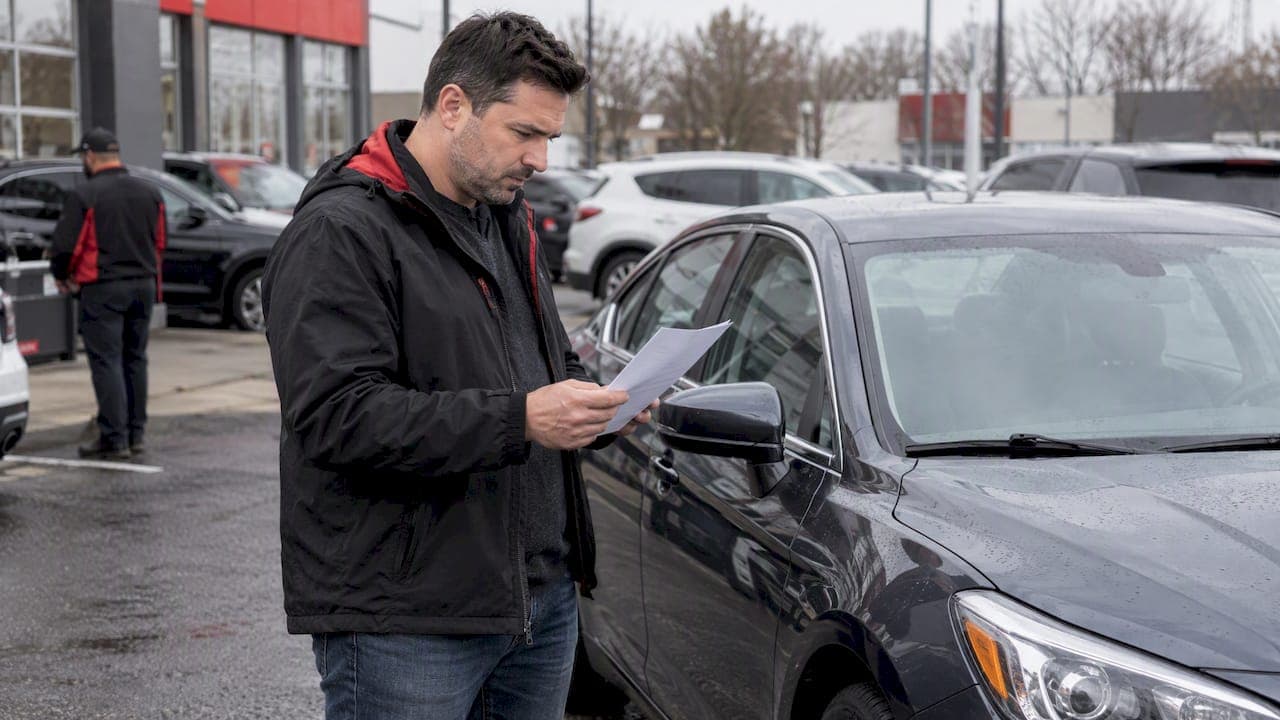
Yes, in most cases you can trade in a leased car, but you must settle the lease payoff (or arrange a buyout) and confirm how any positive or negative equity will be handled. Before anything else, request a written payoff quote from your lessor, check whether your lease permits a third-party buyout, and gather trade-in estimates from more than one dealer. A written payoff and a written offer protect you from surprises later.
TL;DR:
- Your lease may restrict third party buyouts to you, so review the purchase option and early termination clauses before asking a dealer to handle it.
- Dealer buyout quotes may differ from lessee payoff figures and often expire within 10 to 14 days, so get both in writing with expiration dates.
- CFPB found negative equity rolled into 12% of pilot transactions; paying the gap upfront avoids adding old debt and interest to your next loan.
- Buying the lease yourself before trading can add sales tax, title, and registration fees, so weigh those costs against any equity you expect to keep.
- Before ending early, compare offers and termination liability with scheduled return costs, including mileage and wear charges; strong used car values can favor trading.
Table of Contents
- How leases differ from ownership and why that matters for trade-ins
- How trading in a leased car actually works (dealer and lessor steps)
- Payoff, buyout, and early termination: the costs to expect
- Positive vs negative equity: what each means and common dealer outcomes
- When it makes sense to trade in a leased car (timing and rules of thumb)
- Step-by-step checklist: how to trade in your leased car
- When you bring a leased vehicle to us, we help track down the exact payoff figure in writing and walk you through an out-the-door price before you commit to anything. We confirm how any negative equity gets handled before you sign.
- Comparison of leasing a new vehicle vs buying used with trade-in proceeds
- Tax implications or credits when trading in a leased vehicle
- A practical viewpoint on when to trade in a leased car
- Bringing us your lease paperwork gets you a clear, written payoff verification and a trade-in appraisal without delays. We offer financing options and confirm how any deficiency gets handled before you sign anything.
- FAQ
- Sources
How leases differ from ownership and why that matters for trade-ins
When you lease a car, the leasing company, not you, holds the title. You're the lessee with the right to drive and eventually return or buy the vehicle, but the lessor remains the legal owner throughout the contract. That distinction shapes everything about trading in a leased vehicle: a dealer can't simply give you a check for your car the way they would if you owned it outright. They have to deal with your lessor first.
Your lease agreement sets the residual value, the amount the lessor expects the car to be worth at lease end, and it typically includes a purchase option letting you or sometimes a third party buy the vehicle at that price. Some contracts explicitly allow a dealer to execute that buyout on your behalf; others restrict the purchase option to the lessee only, which can complicate a direct trade-in.
Because these terms vary by leasing company and even by contract, reading the actual clauses on early termination and purchase options matters more than general assumptions about leasing a trade-in. A quick read of your agreement tells you whether you're looking at a straightforward trade-in or a more layered process involving a lessee buyout first.
How trading in a leased car actually works (dealer and lessor steps)
Once you decide to trade in a leased vehicle, the dealer typically requests a payoff or buyout figure directly from your lessor. That number reflects what it costs to satisfy the lease, including the remaining balance and residual value. The dealer then compares that payoff to what they're willing to pay for the car, called the realized value. If the trade-in offer exceeds the payoff, you have positive equity to apply toward your next purchase. If it falls short, you're looking at a deficiency that needs to be addressed before the deal closes.
There are generally two routes for the actual buyout. In the first, the dealer pays the lessor directly and takes title to the vehicle, rolling the transaction into your new purchase. In the second, you buy out the lease yourself, take title in your name, and then sell or trade the car as you would any owned vehicle. The first route is usually faster and simpler. The second gives you more control but adds sales tax, title fees, and registration costs that can eat into any equity you expected to walk away with.

Timing matters here more than most buyers expect. Dealer buyout quotes are frequently valid for only a short window, often 10 to 14 days, and the figure a dealer receives for a third-party buyout can differ from the payoff amount quoted directly to you as the lessee. Insist on getting both numbers in writing before you commit to anything, and don't let a verbal estimate stand in for a confirmed figure. For more on how to approach these conversations at the dealership, see our guide on negotiating a trade-in offer.
Payoff, buyout, and early termination: the costs to expect
The single most useful document you can bring to a trade-in conversation is a written payoff quote. Contact your lessor directly and ask specifically for the dealer or third-party buyout figure, since this can differ from the amount quoted to you as the lessee. CFPB guidance recommends getting this number in writing and confirming it with an expiration date before you start comparing trade-in offers.
Early termination liability, what you owe if you end the lease before its scheduled conclusion, is typically made up of several line items. According to Federal Reserve guidance on leasing, these commonly include a termination fee, unearned rent, administrative charges, vehicle recovery costs, and the difference between the residual value and the realized value of the car at termination. U.S. Bank's breakdown of early termination costs illustrates how these pieces stack up in a sample calculation, showing that total liability can be substantial depending on how much time remains on the lease and how the car's market value compares to its residual.
Two cautions are worth repeating. First, a dealer buyout amount for a third party often differs from your own payoff figure as the lessee, and it may only be valid for a brief period. Second, if your lease prohibits third-party buyouts outright, you may need to buy out the lease yourself first, register the vehicle in your name, and then trade or sell it. That path works, but sales tax and title fees can consume much of the equity you were counting on.
Positive vs negative equity: what each means and common dealer outcomes
Once the dealer has your payoff figure and their own trade-in valuation, the math determines what happens next. If your car is worth more than the payoff, you have positive equity, and that surplus typically gets applied as a down payment toward your next vehicle. Some dealers will offer a cash difference instead, though policies vary.
Negative equity works the other way: your payoff exceeds what the car is worth on trade. When that happens, dealers generally handle it one of a few ways:
- Roll the deficiency into your new auto loan, which increases your total borrowed amount and the interest you'll pay over time.
- Ask you to pay the difference in cash at signing to clear the old balance before the new contract starts.
- Decline the trade-in altogether if the gap is too large relative to the new vehicle's value.
Rolling negative equity forward deserves real caution. CFPB data from its auto finance data pilot found that 12% of transactions in the pilot involved negative equity being rolled into a new loan, a practice the bureau warns increases total debt and can leave consumers more underwater on their next vehicle than they were on the last one. Before agreeing to anything, ask the dealer exactly how they plan to handle a deficiency and get that answer in writing on the sales contract itself, not just verbally. Our breakdown of what negative equity on a car means walks through the concept in more detail if you're unfamiliar with the term.
When it makes sense to trade in a leased car (timing and rules of thumb)
Timing often decides whether a trade-in makes financial sense. Compare what you'd owe in end-of-lease charges, excess mileage fees, wear-and-tear penalties, against the early termination liability and trade-in offers available to you right now. If the two numbers are close, the simpler path usually wins.
Market conditions matter too. When used-car values are strong, it's more common to see positive equity build up near the end of a lease term, since the car may be worth more on the open market than its contracted residual value. When values soften, returning the vehicle to the lessor as scheduled is often the more straightforward choice.
A simple checklist helps clarify the decision: Do you have clear positive equity? Is any deficiency small enough to cover comfortably? Do you genuinely need a different vehicle now, rather than waiting out the lease term?
Step-by-step checklist: how to trade in your leased car
Following a consistent process protects you from the most common pitfalls in this transaction.
- Locate your lease agreement and identify the early termination and purchase option clauses, along with your lessor's contact information.
- Request an official payoff or buyout quote from your lessor, specifically asking for the dealer or third-party buyout figure, and get it in writing with a clear expiration date.
- Collect at least two trade-in estimates from different dealers, and consider an independent appraisal if the values you're getting vary widely.
- Ask each dealer directly how they'll handle any deficiency between payoff and trade-in value, and insist that promise appear on the written sales contract.
- Before signing anything, confirm the old lease payoff has actually been paid and that your new financing contract doesn't quietly fold old debt into the new loan without clear disclosure.
Pro Tip: Get the lessor's payoff quote in writing before you discuss new-vehicle pricing with any dealer, so a generous-sounding trade-in offer can't be used to mask a higher price on the car you're buying.
Our post on getting a written payoff and out-the-door price before you trade in covers this process in more depth.
When you bring a leased vehicle to us, we help track down the exact payoff figure in writing and walk you through an out-the-door price before you commit to anything. We confirm how any negative equity gets handled before you sign.
Comparison of leasing a new vehicle vs buying used with trade-in proceeds
If you're ending one lease and deciding what comes next, the choice often comes down to leasing again versus buying a used vehicle with your trade-in equity applied as a down payment.
Leasing another new vehicle keeps monthly payments relatively predictable and puts you back in a newer car with current safety and technology features, but you restart the cycle of mileage limits, wear-and-tear rules, and no ownership equity at the end. Any positive equity from your outgoing lease typically reduces your new lease's monthly payment rather than building toward ownership.
Buying a used vehicle with your trade-in proceeds applied as a down payment moves you toward ownership instead. You stop accumulating lease restrictions, you can drive as many miles as you want, and once the loan is paid off, the car is fully yours with no residual value calculation hanging over it. A used purchase also tends to carry a lower overall monthly payment than financing a comparable new car, since you're not paying for the steepest part of the depreciation curve.
The better fit depends on how you drive and how long you plan to keep a vehicle. If you value predictable payments and a car that's always relatively new, another lease might suit your pattern. If you'd rather build equity and avoid mileage math altogether, applying your trade-in proceeds toward a used vehicle, with a trade-in appraisal to confirm your starting number, is often the more straightforward path.

Tax implications or credits when trading in a leased vehicle
One practical benefit of trading in a vehicle, leased or owned, is that many states apply sales tax only to the difference between the new vehicle's price and your trade-in value, rather than taxing the full purchase price. This can meaningfully reduce the sales tax due on your next vehicle when you have positive equity to apply.
The specifics of how this trade-in tax credit applies, and whether it extends the same way to a lease buyout followed by a sale, depend on your state's own tax code. Because rules and rates vary and change over time, confirm the current treatment with your state's department of revenue or motor vehicle division before assuming a particular tax outcome applies to your transaction. A dealer handling your trade-in should also be able to walk you through how the tax calculation applies to your specific deal at the time of sale.
A practical viewpoint on when to trade in a leased car
In our experience, trading in a leased vehicle makes the most sense when you have clear positive equity or a deficiency small enough to handle transparently, never one you're hoping to quietly roll forward. Always get the payoff and the dealer's plan for any deficiency in writing before you sign anything. Keep every document and request written confirmation at each step. It's the simplest way to avoid an unpleasant surprise down the road.
— Elmwood
Bringing us your lease paperwork gets you a clear, written payoff verification and a trade-in appraisal without delays. We offer financing options and confirm how any deficiency gets handled before you sign anything.
Bring your payoff letter and any written offers you've already collected, and we'll confirm the dealer buyout procedure and give you an accurate out-the-door number. Start with our trade-in page to request an appraisal, or browse our current inventory to see what your equity could go toward.
If your leased vehicle has little or no remaining value, perhaps due to significant mechanical issues or damage, a junk car buyer may be a better fit than a traditional trade-in; services like Cincinnati's junk car buying program handle vehicles in any condition with free towing in that area.
FAQ
Should you ever trade in a car for a lease?
Trading an owned or financed car toward a new lease can work well if you have positive equity, since that amount typically reduces your new lease's monthly payment. If you have negative equity, rolling it into a lease increases your payment and total cost, so it's worth confirming the payoff and equity handling in writing first.
Is it easy to trade in a leased vehicle?
The process is manageable but has more steps than trading in an owned car, since the dealer must first get a payoff or buyout quote from your lessor. Having your payoff figure and lease documents ready ahead of time makes the process considerably smoother.
What is the $3,000 rule for cars?
There's no official or universal rule tied to car trade-ins or leasing; it's not a standard defined by the Federal Reserve or CFPB. If you've heard of such a rule, it likely refers informally to specific dealer or lender policies on rolling negative equity into financing, so ask the dealer directly what their policy is.
Is it possible to trade in my leased car early?
Yes, most leases allow early termination through a trade-in, but you'll need to settle the early termination liability, which can include fees, unearned rent, and the gap between residual and realized value. Getting a written payoff quote and comparing it against dealer offers tells you whether trading in early makes financial sense in your situation.