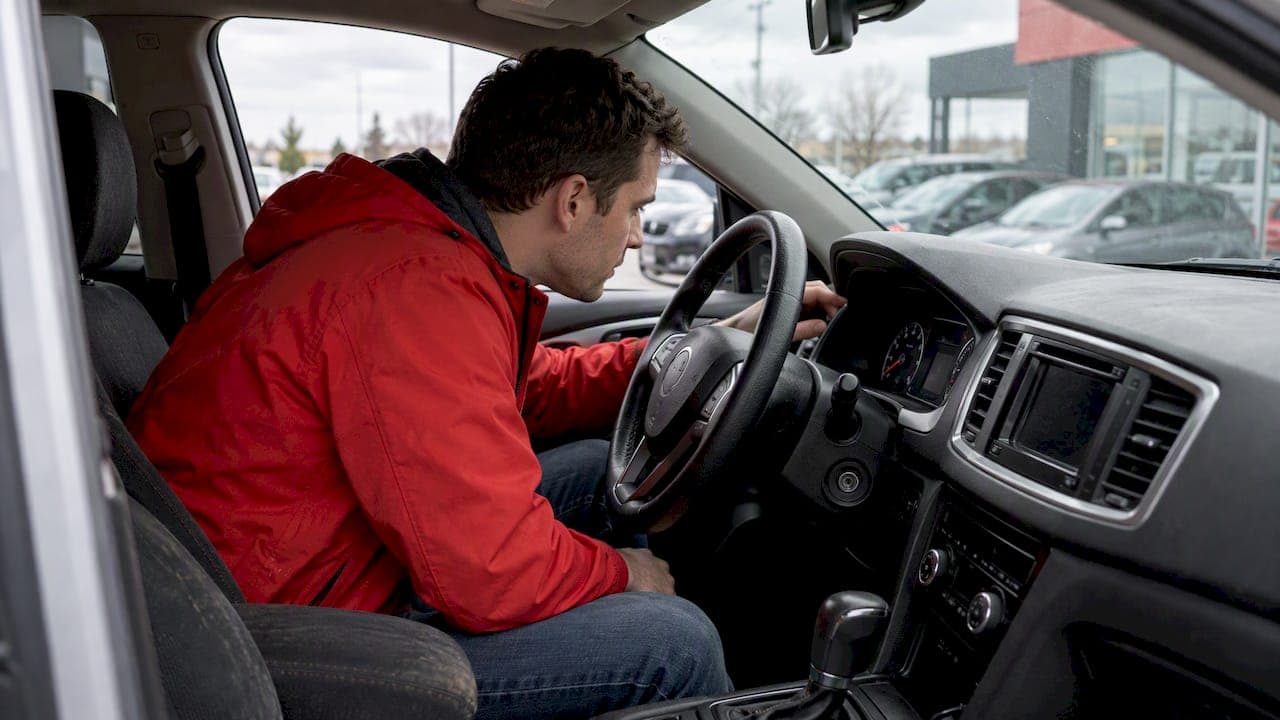
Yes, reliable warning signs exist, and you can catch most odometer rollback schemes before you sign anything. Run a VIN-based history report through NMVTIS and get an independent inspection, the two steps NHTSA recommends first. Digital odometers can be harder to spot than old mechanical ones, but evidence usually survives in maintenance records or hidden vehicle modules, which is exactly where our own inspection process starts.
TL;DR:
- Mileage discrepancies often appear in maintenance records, hidden modules, or physical wear mismatched with car age and claimed low mileage.
- Cross-referencing VIN history reports, NMVTIS data, and service records is essential to uncover hidden odometer rollback signs.
- Physical inspection should focus on driver contact points, tire wear, and interior components, which rarely match artificially low odometer readings.
- Digital odometer tampering can be detected through onboard modules like engine control or ABS that store true mileage data.
- Selling a vehicle with a rolled-back odometer is illegal under federal law and authorized agencies strongly encourage reporting suspected fraud.
Table of Contents
- Top warning signs that suggest odometer rollback
- How to verify mileage with VIN checks and maintenance records
- Physical inspection checklist buyers and mechanics should perform
- Electronic and mechanic checks that can reveal hidden tampering
- Legal consequences and how to report suspected odometer rollback
- Our perspective on inspections and transparency
- How we help you avoid odometer fraud
- FAQ
- Sources
Top warning signs that suggest odometer rollback
A rolled-back odometer rarely hides every clue. Wear patterns on the parts a driver touches most, the paperwork trail, and even the seller's attitude all tend to tell a different story than the number on the dashboard.
- Physical wear mismatches: worn pedal rubber, a glossy or frayed steering wheel, a sagging driver-seat bolster, or thin carpet on a car claiming low mileage.
- Dashboard tampering clues: loose or missing screws around the instrument cluster, scratched trim, or a warped bezel that does not sit flush.
- Title-record red flags: a brand reading "odometer not actual," unexplained gaps between title transfers, or mileage that drops between owners.
- Service-history gaps: missing maintenance logs, oil-change stickers with inconsistent dates, or receipts that skip years of expected upkeep.
- Seller behavior: pressure to close quickly, refusal to allow an independent inspection, or no vehicle history report offered at all.
A seller who resists basic verification is often telling you more than the odometer is. We have found that honest sellers rarely object to a buyer double-checking the numbers; for more on how to read seller behavior, see our guide on how to spot an honest used car dealer.
Pro Tip: Compare the car's age against typical annual mileage as a quick gut check; a wide gap between the two is reason to dig deeper, a rule of thumb Tennessee's consumer protection office recommends to shoppers.

How to verify mileage with VIN checks and maintenance records
A single document rarely proves fraud on its own, but cross-referencing several usually does.
- Pull a VIN-based history report and compare every recorded mileage entry against the odometer in front of you.
- Run an NMVTIS consumer check, the national system linking state title agencies, salvage yards, and insurers; a flag reading "odometer not actual" demands immediate follow-up.
- Match title entries to service records, oil-change stickers, and dealer stamps to confirm the mileage climbed steadily over time.
If any of these sources disagree with each other:
- Document every discrepancy in writing, including dates and screenshots.
- Request an independent inspection before moving forward.
- Refuse to complete the sale until the numbers reconcile.
A VIN check also surfaces unrelated safety issues worth knowing before you buy, which our open recall check guide walks through in ten minutes.
Physical inspection checklist buyers and mechanics should perform
A short walk-around, done carefully, often confirms or contradicts an odometer reading faster than any document.
- Check driver-contact surfaces: pedal pads, armrest, steering wheel, and seat bolster should show wear consistent with the claimed mileage.
- Inspect the tires: look at tread depth, manufacture date codes, and whether all four match; mismatched or newer tires on a low-mileage car raise questions.
- Examine the windshield and undercarriage: pitting, rust, and suspension wear should roughly track the odometer's story.
- Look around the instrument cluster: scratched screws, cut retaining clips, or trim that does not sit flush suggest someone has been inside it.
- Get a written inspection report that includes module reads whenever something looks off, rather than relying on a visual check alone.
This kind of walk-through is close to what we do during every test drive, and it pairs well with the frame-damage checks described in our guide to serious structural wear.
Electronic and mechanic checks that can reveal hidden tampering
Resetting a digital odometer does not erase every trace of real mileage. Several onboard modules, including the engine control unit, transmission controller, and ABS module, often store mileage-related data that a technician can pull and compare against the dashboard reading, a cross-check that mechanics and fraud investigators rely on when paperwork alone is not conclusive.
- An OBD-II reader and manufacturer-specific software can extract module mileage and event logs during a pre-purchase inspection.
- Forensic signs on the cluster itself, like disturbed screw heads or a connector that looks recently handled, often confirm what the module data suggests.
- Module storage varies by make and model, so a qualified technician checking transmission, ABS, and body-control modules can triangulate true usage even when the dashboard has been altered.
Pro Tip: Ask for a module-level mileage read as a specific line item on any pre-purchase inspection; a vague "we checked the odometer" is not the same thing.
Legal consequences and how to report suspected odometer rollback
Federal law treats odometer tampering as a serious offense, not a minor paperwork error. Under 49 U.S.C. § 32703, disconnecting, resetting, or altering an odometer, or selling devices built to do it, is illegal, with civil penalties reaching up to $10,000 per violation and as much as $1,000,000 for a related series of violations. The Department of Justice has prosecuted rollback schemes that defrauded hundreds of buyers, resulting in prison sentences and restitution orders.
If you suspect fraud:
- Report it to your state's consumer protection or motor vehicle enforcement agency.
- File a tip with NHTSA and check the vehicle's NMVTIS record for a formal brand.
- Keep every VIN report, inspection report, message with the seller, title document, and bill of sale.
- If you already bought the car, act quickly: these records are what make restitution or legal action possible.
Our perspective on inspections and transparency
Every vehicle we offer goes through a free history report and a thorough mechanical inspection before it reaches our lot, because a buyer should never have to take an odometer reading on faith. We encourage you to ask any dealer, including us, for documentation and to request an independent inspection before signing anything. Dealers who welcome that scrutiny are the ones protecting your side of the deal, not just closing theirs.
— Elmwood
How we help you avoid odometer fraud
We provide free vehicle history reports and written inspection reports on the cars we sell, so the verification steps in this article are part of how we work. That means the VIN checks, title comparisons, and physical inspections described above are not extra homework for you, they are part of what we hand you before you decide.
- Review a free vehicle history report before you commit to a vehicle.
- Request a written inspection report, including module-level checks where relevant.
- Schedule a test drive and inspection to see the car and its paperwork side by side.
If you would rather start by browsing inspected inventory, our full selection is available at Elmwood Auto Sales.
This article is general information, not a substitute for advice from a qualified financial advisor. Consult a qualified financial professional about your own circumstances before acting on anything here.
FAQ
Is it illegal to sell a vehicle with a rolled back odometer?
Yes. Federal law prohibits disconnecting, resetting, or altering an odometer, and selling a vehicle with a knowingly false reading can expose the seller to civil penalties of up to $10,000 per violation under NHTSA's interpretation of federal odometer law.
Should I buy a car with an odometer rollback?
No reputable buyer should proceed once rollback is confirmed, since the true mileage and condition become unreliable and the sale may involve an illegal act under federal law. Walk away and report the finding to your state enforcement agency and NHTSA.
Is odometer rollback a felony?
Odometer tampering carries civil penalties and can also lead to criminal prosecution in larger schemes, as shown in a Department of Justice case that resulted in a prison sentence and restitution for defrauding hundreds of buyers. Whether a specific case is charged as a felony depends on the scale of the scheme and the jurisdiction prosecuting it.
Why would a car have an odometer rollback?
Sellers roll back odometers to make a car appear to have fewer miles than it actually does, which raises its resale value and hides wear that would otherwise lower the price. NHTSA notes that detecting this is harder with digital odometers, since the visible number can be changed even though mileage history survives in other places.
Sources
Start with NHTSA's odometer fraud guidance for detection tips and reporting steps, then run a check through NMVTIS for national title and odometer history. DOJ enforcement cases show how seriously these violations are prosecuted.
- Odometer fraud | NHTSA
- NMVTIS consumer information
- Captured fugitive sentenced to prison for rolling back odometers in scheme that defrauded hundreds of car buyers | DOJ