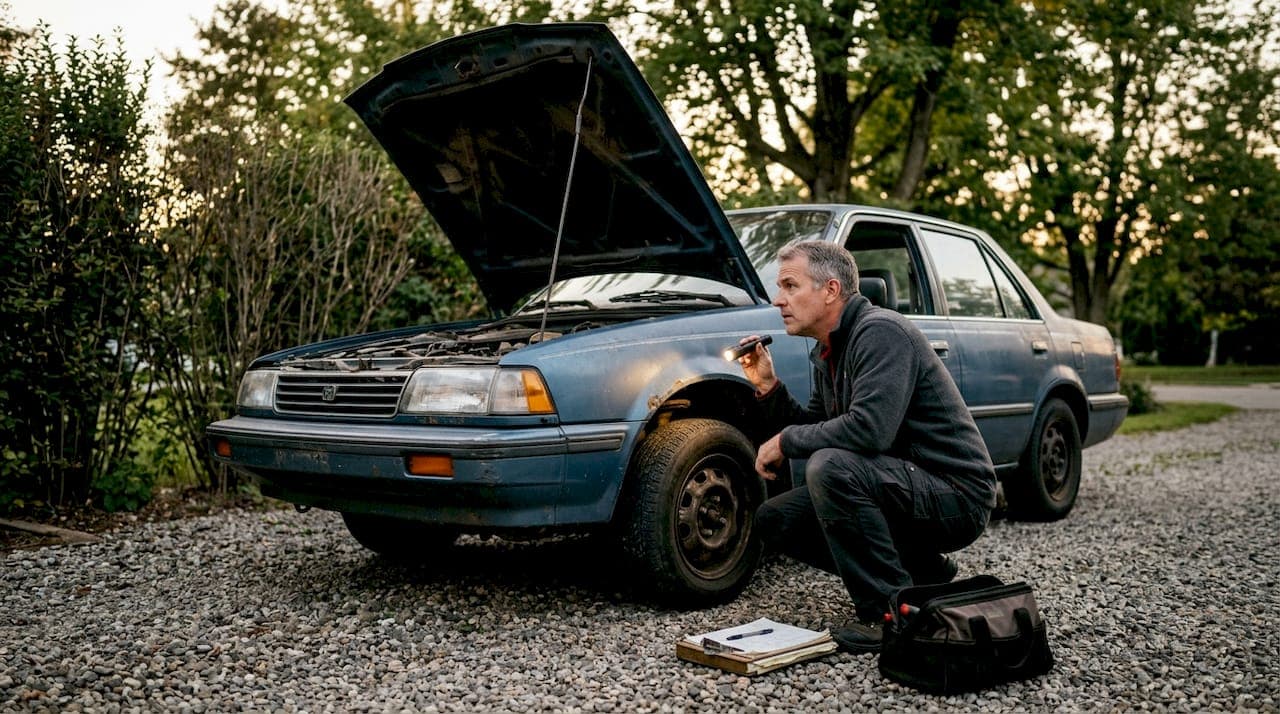
High mileage used cars carry a significantly higher risk of mechanical failure, unexpected repair costs, and multi-system breakdowns than lower mileage vehicles. For first-time buyers working with a tight budget, that risk is not abstract. A single major repair can wipe out the savings you thought you made on the purchase price. Understanding the dangers of high mileage cars before you sign anything is the most financially sound move you can make.
The industry standard definition of a high mileage vehicle is one that has crossed 100,000 miles. At that threshold, major maintenance becomes inevitable, and budgeting for repairs shifts from optional to necessary. Vehicles older than 10 years are twice as likely to need roadside assistance and four times more likely to be towed compared to newer models. That statistic alone tells you the financial exposure is real and measurable.
Why avoid high mileage used cars: the core failure patterns
High mileage vehicles fail in predictable ways. Inspection data shows that 45% have tire issues, 30% show suspension problems, and 25% carry engine faults, and these defects frequently occur at the same time. That overlap matters because fixing one system often reveals problems in another, turning a $600 repair into a $2,500 job.
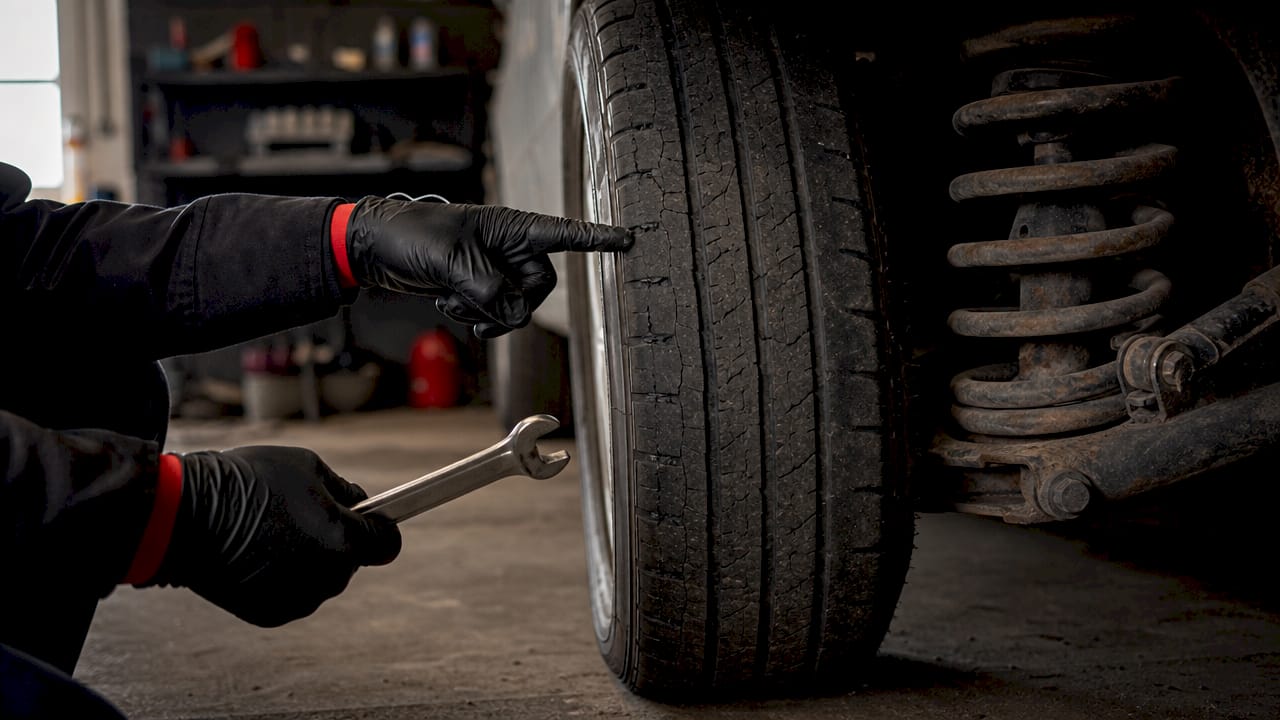
The timing belt is one of the most dangerous failure points in high mileage cars. On interference engines, a snapped timing belt causes the pistons and valves to collide, destroying the engine. Reactive timing belt repair costs $3,000–$8,000, while proactive replacement runs $500–$1,200. That cost gap is the clearest example of why deferred maintenance on a high mileage car compounds into financial damage.
Other common high mileage car problems include:
- Worn suspension bushings and ball joints, which affect steering and safety
- Cracked or brittle rubber hoses, including coolant and vacuum lines that degrade with age regardless of miles
- Transmission wear, which can require a full rebuild costing $2,000–$4,000
- Brake system fatigue, including rotors, calipers, and brake lines that corrode over time
- Electrical gremlins, including failing sensors and aging wiring that become harder to diagnose
Pro Tip: Before viewing any high mileage car, pull a vehicle history report through a service like Carfax or AutoCheck. A clean title with no accident history does not guarantee mechanical soundness, but a salvage title or repeated odometer discrepancies are immediate red flags.
Does mileage alone determine a used car's reliability?
Mileage read in isolation is a poor measure of a vehicle's true condition. Maintenance history and driving environment predict remaining vehicle life far more accurately than the odometer reading alone. A 120,000-mile car with full service records and highway miles can outlast an 80,000-mile car that spent its life in stop-and-go city traffic with no documented maintenance.
Three factors matter more than the number on the odometer:
- Highway vs. city miles. Highway driving puts less stress on the engine, brakes, and transmission than city driving. A car used primarily for highway commuting accumulates miles faster but wears out more slowly per mile.
- Documented service history. Oil changes, fluid flushes, and scheduled maintenance performed on time are the strongest predictor of remaining engine life. A car without service records forces you to assume the worst.
- Age of rubber and plastic components. Hoses, seals, belts, and gaskets degrade with time, not just mileage. Age-related material breakdown means a 12-year-old car with 70,000 miles may need the same rubber component replacements as a 10-year-old car with 130,000 miles.
The 100,000-mile psychological barrier is real in the market. Prices drop sharply once a car crosses that threshold, which creates the illusion of a deal. The risks of used cars with high mileage do not disappear because the price is lower. They simply shift from the seller to you.
Understanding the difference between a certified pre-owned vehicle and a standard used car becomes especially relevant here. Certified pre-owned programs require documented inspections and often include limited warranties, which reduces the guesswork around maintenance history.
How do you calculate the true cost of a high mileage car?
The sticker price of a high mileage car is not the total cost. Hidden and recurring maintenance expenses compound quickly once you account for everything a worn vehicle needs.
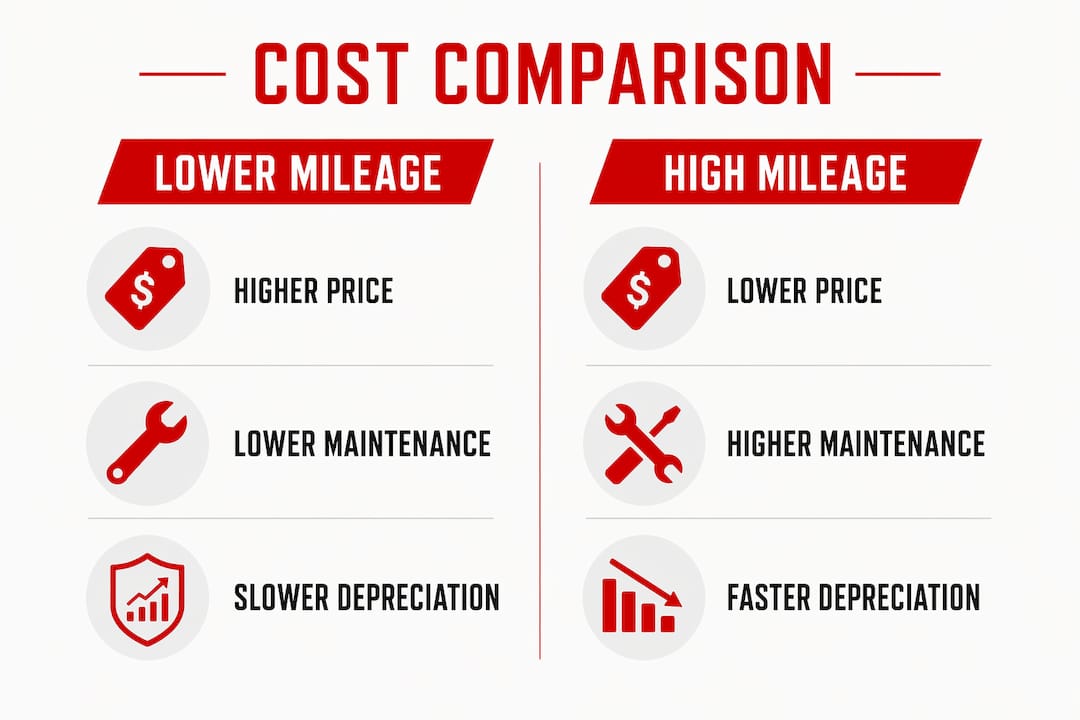
| Cost category | Lower mileage vehicle | High mileage vehicle |
|---|---|---|
| Purchase price | Higher upfront | Lower upfront |
| Annual repair costs | Lower, fewer worn parts | Higher, multiple systems aging |
| Timing belt replacement | May not be due yet | Often overdue or unknown |
| Depreciation rate | Moderate | Minimal, already depreciated |
| Warranty availability | Manufacturer or CPO options | Limited, often none |
Depreciation is the one genuine financial advantage of a high mileage car. The steepest value loss has already happened, so you will not lose much more on resale. That benefit disappears quickly, though, if repair costs eat into your savings within the first year of ownership.
Extended warranties for high mileage cars generally offer poor value. Consumer Reports advises setting aside a dedicated repair fund instead, because warranty exclusions on pre-existing wear items often leave buyers paying out of pocket anyway. A repair fund of $1,500–$2,500 gives you more flexibility than a warranty contract with fine-print limitations.
Pro Tip: When budgeting for a high mileage purchase, add 15–20% of the purchase price as a repair reserve before you finalize the deal. If that number makes the car unaffordable, the car is unaffordable.
For buyers weighing their options, a guide to used cars under $10,000 can help identify lower mileage vehicles in the same price range that carry less financial risk.
What steps should first-time buyers take before purchasing?
A pre-purchase inspection by an independent mechanic is the single most effective step a first-time buyer can take. Service history and mechanical inspections are the primary tools for reducing uncertainty when buying a high mileage car. A qualified mechanic can identify worn components, fluid leaks, and structural issues that are invisible during a test drive.
Watch for these specific red flags during your evaluation:
- Warning lights on the dashboard, including the check engine light, ABS warning, or traction control indicator
- Uneven tire wear, which signals suspension or alignment problems that go beyond a simple tire replacement
- Rust on the frame or undercarriage, especially relevant in Rhode Island and other northeastern states where road salt accelerates corrosion
- Soft or spongy brakes, which indicate worn pads, air in the lines, or failing calipers
- Excessive oil consumption or visible smoke from the exhaust, which points to engine wear
High mileage cars require budgeting for wear-related replacements like suspension bushings, hoses, and coolant system components that fail due to age, not just accumulated miles. Build that cost into your offer price, not your post-purchase budget.
Pro Tip: Ask the seller for the last three oil change receipts. If they cannot produce them, treat the maintenance history as unknown and price your offer accordingly.
Learning how to spot an honest used car dealer is equally important. A transparent dealer will welcome an independent inspection and provide full vehicle history documentation without hesitation.
Key Takeaways
High mileage used cars carry compounding financial risks that first-time buyers must evaluate through maintenance history, inspection results, and total cost of ownership, not purchase price alone.
| Point | Details |
|---|---|
| 100,000 miles is a cost threshold | Major maintenance becomes unavoidable past this point; budget accordingly before buying. |
| Multi-system failures are common | 45% of high mileage cars show tire issues, 30% suspension faults, and 25% engine problems simultaneously. |
| Mileage alone misleads buyers | Maintenance history and driving conditions predict reliability better than the odometer reading. |
| Skip extended warranties | A dedicated repair fund of $1,500–$2,500 delivers better value than most high mileage warranty contracts. |
| Independent inspection is non-negotiable | A pre-purchase mechanic inspection is the most reliable way to uncover hidden repair costs. |
What I have learned from watching buyers choose high mileage cars
Most first-time buyers focus on the monthly payment or the sticker price and treat mileage as a secondary detail. That is the wrong order of priorities. The cars that cause the most financial pain are not the ones with the highest prices. They are the ones with the lowest prices and the highest mileage, purchased without an inspection or a repair budget.
I have seen buyers walk away from a $7,500 car with solid service records because it had 105,000 miles, then purchase a $5,500 car with 98,000 miles and no documentation. Six months later, the second buyer is dealing with a failed transmission and a repair bill that exceeds what they saved on the purchase. The odometer did not cause that outcome. The missing maintenance history did.
My honest advice is this: prioritize service records over mileage numbers. A car that has been maintained consistently at 110,000 miles is a safer financial bet than a neglected car at 75,000 miles. Look for vehicles where the previous owner treated maintenance as a priority, not an inconvenience. Those cars exist at every price point, and they are worth the extra time it takes to find them.
— Elmwood
Elmwoodautosalesri helps buyers find reliable used vehicles in Providence
Buying a used car in Rhode Island does not have to mean accepting unknown risks. Elmwoodautosalesri inspects every vehicle before it reaches the lot, so you know what you are getting before you commit.
Every car at Elmwoodautosalesri comes with transparent vehicle history documentation and has passed a thorough safety and reliability inspection. For buyers who need flexible payment options, financing solutions include buy here, pay here programs that work across a range of credit histories. The team at Elmwoodautosalesri does not work on commission, which means the advice you receive is focused on finding the right car for your budget, not closing a sale. Visit the lot or browse the inventory online to find quality used vehicles without the uncertainty that comes with high mileage unknowns.
FAQ
What mileage is considered high for a used car?
A used car is generally considered high mileage once it exceeds 100,000 miles. At that point, major maintenance items become due and repair costs increase noticeably.
Should I buy a high mileage car if the price is low?
A low price does not offset high repair risk. Factor in the cost of a pre-purchase inspection and a repair reserve of $1,500–$2,500 before deciding if the deal is genuinely affordable.
Why do high mileage cars fail more often?
Wear accumulates across multiple systems simultaneously. Inspection data shows that 45% of high mileage vehicles have tire issues, 30% have suspension problems, and 25% carry engine faults, often at the same time.
Is a high mileage car with good service records worth buying?
Yes, documented maintenance history significantly improves reliability forecasting. A well-maintained car at 110,000 miles is often a safer purchase than a neglected car at 80,000 miles.
Are extended warranties worth it for high mileage cars?
Consumer Reports advises against extended warranties for high mileage vehicles. Setting aside a dedicated repair fund gives you more flexibility and typically better value than a warranty with broad exclusions.