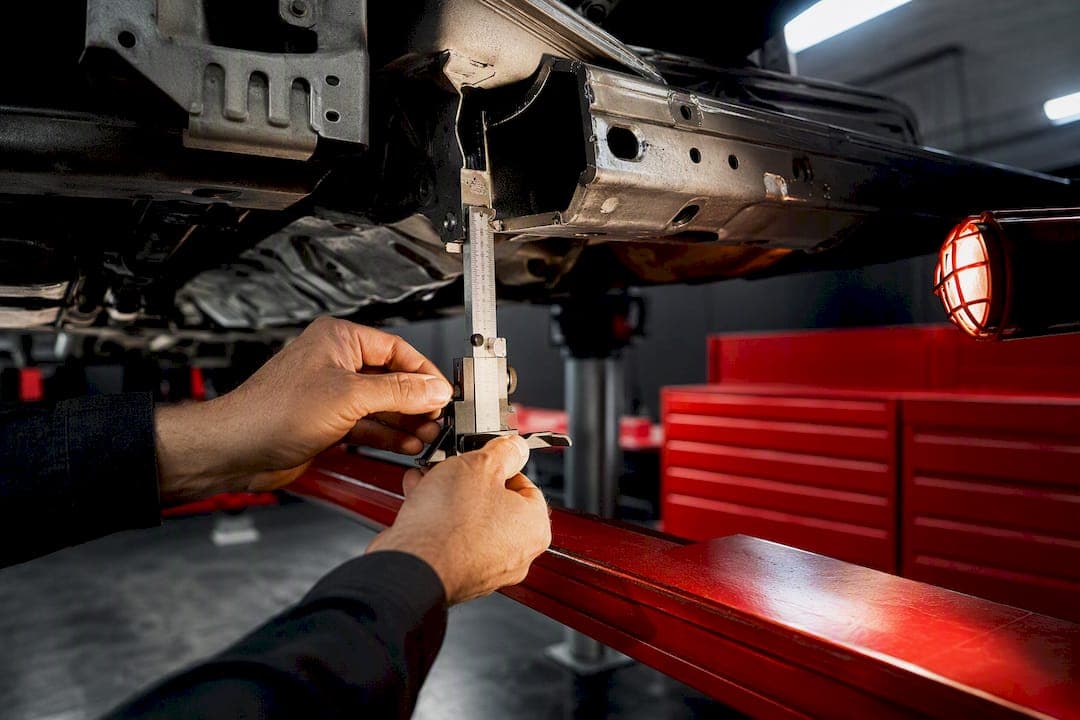
A car with a bent frame usually gives itself away through a cluster of clues, not one dramatic moment. Persistent steering pull after an alignment, uneven tire wear, mismatched panel gaps, and doors that won't latch cleanly are the strongest frame damage signs to watch for. If you notice two or more together, schedule a professional frame measurement right away, since a bent frame can compromise crash protection.
TL;DR:
- Persistent steering pull and uneven tire wear after an alignment often indicate a bent frame, especially if multiple symptoms are present.
- Visible clues such as mismatched panel gaps, creases near wheel wells, and inconsistent paint or undercoating suggest recent repairs and possible structural damage.
- Driving symptoms like a constant drift, unsettled handling, and crab walking footage strongly imply frame misalignment, especially if they persist despite adjustments.
- Small displacement measurements around 3 millimeters can significantly alter suspension geometry and cause ongoing alignment issues, hinting at underlying frame damage.
- Professional laser or computerized measurement is essential for accurate detection, and insurers typically consider repair or total loss based on detailed reports of the frame's condition.
Table of Contents
- Frame Damage Signs You Can Spot on a Walkaround
- Driving Symptoms That Point to Frame Damage
- What Uneven Tire Wear and Repeat Alignment Problems Reveal
- How to Document and Test Your Car Before Visiting a Shop
- What a Professional Frame Inspection Actually Involves
- Safety Risks and How Insurers Typically Handle Frame Damage
- Your Next Steps If You Suspect Frame Damage
- Elmwood's Perspective: Why We Inspect Before We Sell
- Ready to Have a Vehicle Checked? Book a Test Drive at Elmwood
- Sources
Frame Damage Signs You Can Spot on a Walkaround
Start outside the car, in daylight, with the tires straight ahead. Structural problems tend to leave visible fingerprints on the body even before you turn the key.
Walk the perimeter and look at how each panel meets its neighbor. A car built correctly has consistent, even gaps between the hood, fenders, doors, and trunk lid. When a frame shifts, those gaps widen on one side and narrow on the other, and you'll sometimes see creases or subtle buckling near the wheel wells or rocker panels.
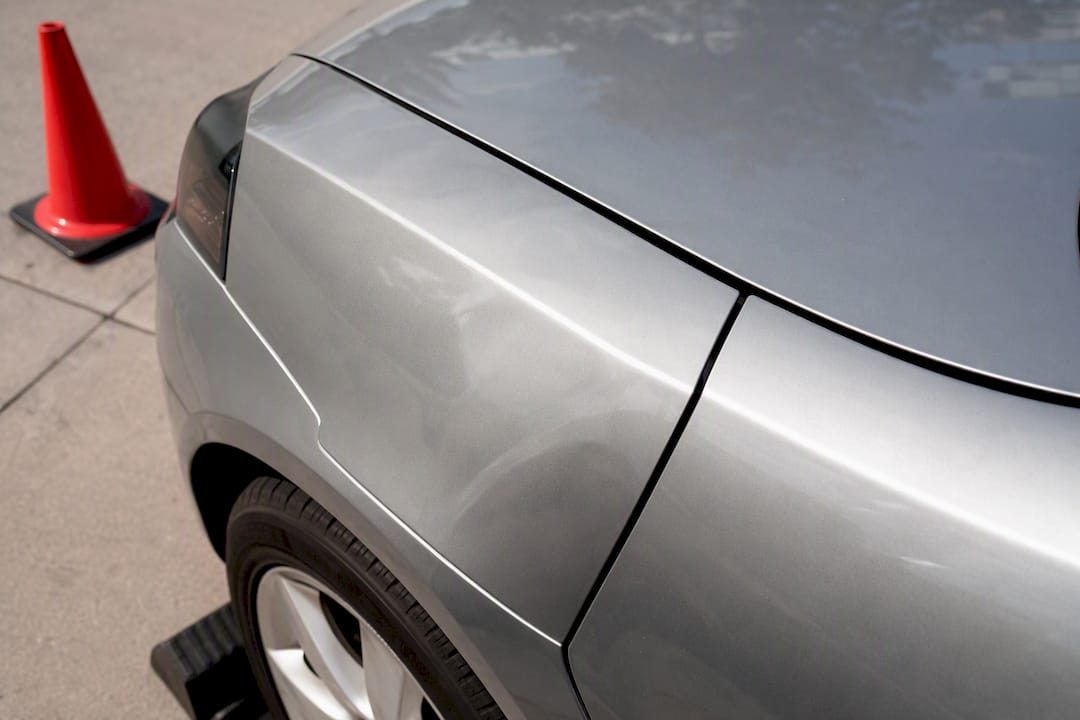
Check the moving parts, too. Doors, the hood, and the trunk should close with a single confident push, not a shove. If any of them stick, scrape against the frame, or need extra force to latch, the opening itself may have racked out of square. Kelley Blue Book notes that doors and trunks that don't close smoothly, alongside new rattles and odd tire wear, are among the clearest visible signs a vehicle is carrying structural damage.
Look at the bumper, headlight, and taillight alignment from a few steps back. One side sitting noticeably lower or deeper than the other often points to a frame that's absorbed an impact unevenly. Fresh paint that doesn't quite match the factory color, or undercoating that looks newer or thicker in patches, can also signal a repair the seller didn't mention.
Document everything before you talk numbers with a seller, an insurer, or a repair shop:
- Photograph each panel gap straight on and from an angle, in good light.
- Get close shots of the undercarriage and any visible mounting points.
- Note the odometer reading and date on every photo set.
- Photograph both sides of the car so a technician can compare left to right.
These photos become useful evidence the moment you need a second opinion.
Driving Symptoms That Point to Frame Damage
Some of the most reliable clues show up only once you're moving. A frame that's slightly out of square rarely announces itself with a warning light, it just makes the car behave a little wrong.
- Persistent pull to one side. If the car drifts left or right even after a fresh alignment, and the steering wheel sits off-center when driving straight, the frame itself may be skewed rather than just the suspension settings.
- Floaty or unsettled handling. A car that feels vague over bumps, or that developed new rattles and squeaks right after a collision, is often compensating for a structure that no longer holds its shape.
- The observer test. Have a passenger stand safely off the road and watch your tire tracks as you drive past at a steady speed. Rear wheels that don't track directly behind the front wheels suggest what technicians call a "crab walk," a sign the frame's geometry has shifted.
- The wet-tire track test. Drive through a puddle, then continue onto dry, flat pavement, and check whether the rear tire tracks line up with the front ones or veer off to one side.
One symptom alone might mean something minor. Two or more together raise the odds you're dealing with a real structural issue.
What Uneven Tire Wear and Repeat Alignment Problems Reveal
Tires are honest. They wear the way the car actually sits and steers, not the way the spec sheet says it should. Watch for:
- Cupping or scalloped wear patterns across the tread.
- Wear concentrated heavily on the inner or outer edge of one tire.
- A localized bald spot that doesn't match the wear on the other tires.
The math behind it: a displacement of just 3 millimeters at a suspension mounting point can alter caster and camber enough to cause a persistent steering pull and speed up tire wear on one side.
That's a small number with a big effect, since it takes only a slight shift to change how the whole suspension geometry sits. It also explains a pattern many shops see: a customer pays for an alignment, drives away satisfied, and returns weeks later with the same pull. When an alignment simply won't hold no matter how many times it's adjusted, that's usually a sign the problem lives in the frame itself, not in the adjustable suspension components a standard alignment can fix.
How to Document and Test Your Car Before Visiting a Shop
A little homework before you book an appointment saves time and often saves money, since a shop can diagnose faster when you arrive with organized evidence instead of a vague complaint.
- Photograph panel gaps, the undercarriage, and any accessible mounting points, keeping the lighting consistent across shots.
- Keep a simple log: the date, your speed, and the exact circumstance each time you notice pulling, vibration, or a new noise.
- Run the wet-tire track test on a straight, flat stretch of pavement, then have someone repeat the observer test at highway speed.
- Compare tire wear across all four tires side by side, ideally with the car on level ground.
Pro Tip: Check for inconsistent undercoating, welds that look too clean or non-factory, and seams that appear shaved smooth. These are classic signs of a hidden prior repair, and sellers who skip disclosure count on buyers never looking this closely.
Bring your notes and photos with you. A technician who can see when a symptom started and how it's progressed has a far easier time isolating the cause.
What a Professional Frame Inspection Actually Involves
Visual checks and driving tests get you most of the way there, but they can't replace instrumented measurement. Technicians typically start with an electronic pre-scan that pulls stored fault codes, which can flag a crash-related event even when no warning light ever came on.
From there, a shop will often remove interior or underbody panels to inspect areas a walkaround can't reach, because not all structural damage is visible from the outside. The core of the process is laser or computerized frame measuring, which checks dozens of factory reference points against OEM tolerances, often down to the millimeter.
A displacement far from the point of impact can still register on the measurement report, which is exactly why shops check the whole structure instead of just the damaged-looking area.
Key parts of the process include:
- Electronic pre-scan for stored fault codes.
- Panel or trim removal to expose hidden structural areas.
- Laser or frame-rack measurement against factory specifications.
- A written report comparing actual measurements to tolerance ranges.
That written report becomes the basis for what happens next, whether that's a repair estimate or an insurance decision.
Safety Risks and How Insurers Typically Handle Frame Damage
A misaligned frame doesn't just feel wrong to drive, it can change how airbags and crash sensors respond and reduce braking stability in a way you won't notice until you need those systems most.
Insurers weigh this heavily. When repair costs, guided by that laser measurement report, approach or exceed the vehicle's value, a total-loss declaration often follows. A clear, documented report tends to move that conversation along faster and with less back-and-forth than a dispute based on guesswork.
A few practical rules to follow:
- Stop driving if handling feels unpredictable or unsafe in any way.
- Otherwise, limit trips to what's necessary to reach a shop for diagnosis.
- Keep your symptom log and photos with you for the inspection.
- Ask directly whether the measurement report supports repair or points toward a total loss.
Your Next Steps If You Suspect Frame Damage
Move through this in order, whether you're troubleshooting your own car or vetting one you're about to buy:
- Photograph the car and keep a written log of every driving symptom you notice.
- Order a VIN history report to check for a prior total-loss or structural-damage flag before you buy.
- Book a professional frame measurement and get a written repair scope before deciding anything.
- If you're buying from a dealer, ask directly for the inspection report and any warranty disclosures.
Elmwood's Perspective: Why We Inspect Before We Sell
Every vehicle on our lot goes through a thorough inspection before it ever reaches a customer, and we back that with free vehicle history reports so buyers aren't guessing about a car's past. If you're evaluating a car anywhere, ask the seller for the inspection paperwork. A seller confident in their car will hand it over without hesitation.
— Elmwood
Ready to Have a Vehicle Checked? Book a Test Drive at Elmwood
Elmwood Auto Sales gives you something most used car lots won't: a straightforward look at a vehicle's condition before you ever sign paperwork, with no commission-driven pressure pushing the conversation. Every car we sell goes through a thorough inspection, and we pair that with free vehicle history reports so you can see accident and title history for yourself before you decide.
If you're bringing in a car you already own to check for frame damage signs, or you want to look at a vehicle from our inventory, bring your photos and symptom log along. It helps our team zero in on what to check first and gives you a faster, more useful answer. We also offer tailored financing, including buy here, pay here options, for a range of credit histories. Schedule a test drive with Elmwood Auto Sales in Providence and get a straight answer on the vehicle you're considering.
Sources
- Identifying Frame and Unibody Damage After an Accident
- Car Frame Damage 101: Detection and Repair
- Hidden frame damage
- Car frame damage: How to know if it happens and what to do