
Negotiating a used car price is defined as the process of using market data, vehicle history, and inspection findings to reach a final purchase price below the dealer's asking price. Buyers who prepare correctly can save $2,400 or more on a single transaction. These negotiate used car price tips apply whether you are buying from a large lot or a small independent dealer in Rhode Island. The difference between paying sticker price and walking away with a real discount comes down to preparation, patience, and knowing exactly which tactics to use before you step onto the lot.
What preparation is essential before negotiating used car prices?
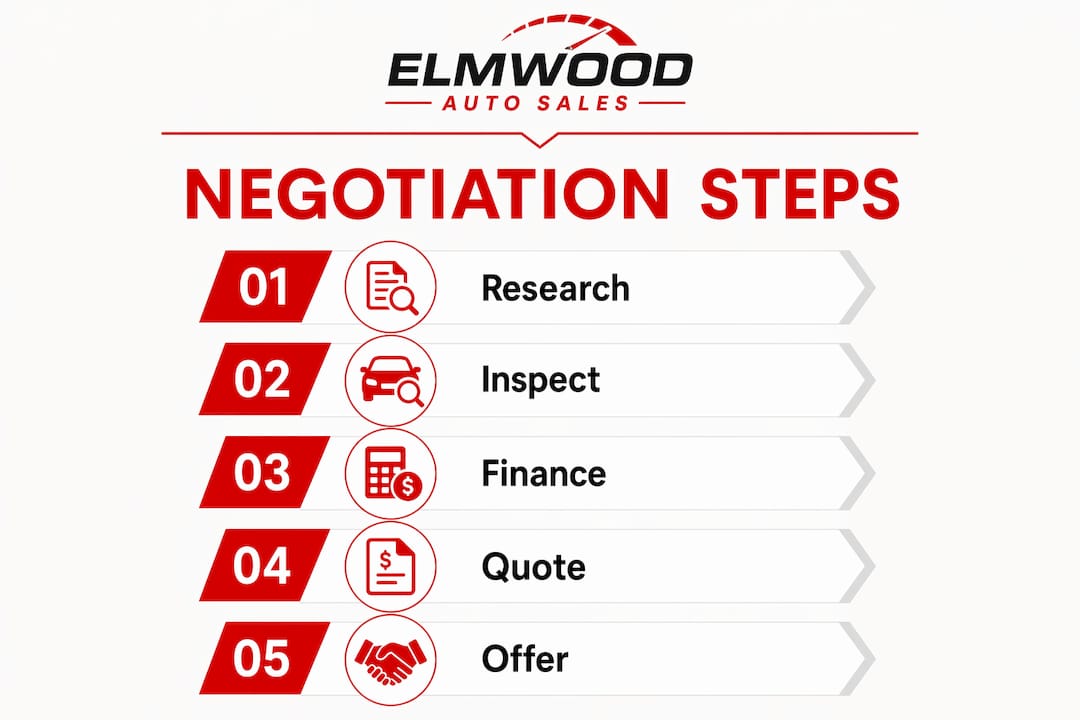
Preparation is the single most powerful negotiate used car price tips strategy available to any buyer. Dealers negotiate every day. You do not. Closing that experience gap requires specific research completed before you ever contact a seller.
Research fair market value first. Tools like Kelley Blue Book, Edmunds, and CarGurus publish real transaction data for specific makes, models, trim levels, and mileage ranges. Pull values from at least two of these sources and print or screenshot the results. That printed data becomes your opening argument at the table.

Obtain a vehicle history report. A Carfax or AutoCheck report reveals accident history, title status, odometer readings, and service records. A clean report supports the asking price. A report showing prior accidents or title issues gives you documented grounds to push the price down. Never skip this step on a used vehicle.
Schedule a pre-purchase inspection. An independent mechanic's inspection costs $100–$150 and can uncover brake wear, suspension problems, or deferred maintenance the seller has not disclosed. Every repair item the mechanic identifies is a line item you can use to justify a lower offer. Sellers who refuse to allow an inspection are signaling a problem.
Get pre-approved financing before you shop. Walking in with a pre-approved loan from your bank or credit union removes one of the dealer's most effective tools. Dealers often profit on financing, so arriving with your own rate gives you a baseline and keeps the conversation focused on vehicle price rather than monthly payments.
Collect competing quotes by email. Requesting best out-the-door prices from five local dealers simultaneously produces 3–7% lower quotes than walk-in negotiation. Email creates a paper trail, removes time pressure, and forces dealers to compete on price before you visit anyone in person.
Pro Tip: Ask each dealer for the full out-the-door price in writing, including all taxes, fees, and documentation charges. That number is the only figure worth comparing across dealers.
For a deeper look at how pricing actually works before you negotiate, the 2026 buyer's pricing guide from Elmwoodautosalesri breaks down how dealers set asking prices and where room to negotiate typically exists.
How should first-time buyers approach initial offers?
The opening offer sets the tone for every exchange that follows. First-time buyers most often make the mistake of starting too close to the asking price, which signals that they will accept a minimal discount.
-
Start at 10–15% below the asking price. Opening at this range establishes credible leverage without insulting the seller. It leaves room for both sides to move and still land at a price that represents real savings.
-
Focus on the out-the-door price, not monthly payments. The Federal Trade Commission advises buyers to negotiate total cost first before discussing financing. Monthly payment framing lets dealers hide fees, extend loan terms, or shift profit into the financing package.
-
Never reveal your maximum budget. Sharing your ceiling gives the dealer a target. State what you are willing to pay for the vehicle, not what you can afford to spend overall.
-
Anchor every offer with printed data. Place your Kelley Blue Book printout or comparable listings on the table when you make an offer. Market data and inspection reports turn negotiation into a fact-based dialogue rather than a guessing match. Sellers find it much harder to dismiss a number when you have documentation supporting it.
-
Use inspection findings as objective bargaining points. If the mechanic found $600 in needed repairs, present that estimate and ask for the repair cost to be deducted from the price. This approach is specific, reasonable, and hard to argue against.
Pro Tip: Bring a printed list of three comparable vehicles currently for sale in your area. When a dealer resists your offer, point to the list and ask what makes this vehicle worth more than those alternatives.
What negotiation tactics and communication techniques boost success?
Effective car price negotiation relies as much on communication style as on data. The way you respond to a counteroffer often matters more than the number itself.
Use silence deliberately. After you state your offer, stop talking. Silence after an offer compels the dealer to fill the pause, often with a concession or useful information about their flexibility. Most buyers feel uncomfortable with silence and rush to soften their own offer. Resist that impulse.
Separate every negotiation into three distinct transactions. Vehicle price, trade-in value, and financing are three separate deals. Mixing them together lets dealers shift profit between categories without you noticing. Agree on the vehicle price first, then address the trade-in, then discuss financing as a final step.
Signal readiness without showing desperation. Saying "I am ready to buy today if we can agree on price" creates urgency for the dealer without revealing that you must have this specific car. Desperation is the buyer's biggest weakness. Calm confidence is the strongest position.
Walking away is not a failure. It is the most powerful tool a buyer carries into any negotiation. Dealers follow up with improved offers within 24–48 hours when a serious buyer leaves without a deal. The willingness to walk away signals that you have options and will use them.
Leverage simultaneous dealer inquiries. When you have competing quotes from multiple dealers, mention that you are evaluating several options. You do not need to name specific dealers. Simply stating that you have other offers on the table shifts the dynamic and encourages the dealer to sharpen their price.
How to handle common challenges and errors during negotiation?
Even well-prepared buyers run into friction during the bargaining process. Knowing the common pitfalls in advance keeps you from losing ground when the conversation gets difficult.
Avoid emotional attachment to a specific vehicle. The moment a seller senses you have fallen in love with a car, your leverage drops. Keep your tone neutral and your options open throughout every conversation.
Watch for resistance to inspections or price transparency. A seller who refuses a pre-purchase inspection or will not provide a vehicle history report is a red flag. Transparent sellers welcome scrutiny because it builds trust. Resistance usually means there is something to hide.
Understand the limits of certified pre-owned vehicles. Certified pre-owned programs often carry fixed or near-fixed pricing. The certification adds value, but it also reduces room to negotiate on price. Focus your bargaining on fees, added accessories, or warranty terms instead of the base price in these cases.
Confirm like-for-like comparisons. Accurate price comparisons require matching mileage, trim level, condition, and vehicle history. Presenting a lower-priced vehicle with 40,000 more miles as a direct comparison weakens your argument. Dealers will point out the difference immediately, and your credibility suffers.
Manage pushback on repair costs. When you present inspection findings, some sellers will dispute the repair estimates or minimize the issues. Respond by offering to get a second mechanic's opinion before proceeding. That response signals seriousness and often prompts the seller to reconsider their position rather than risk losing the deal.
For buyers who also plan to trade in a vehicle, understanding how to negotiate your trade-in separately from the purchase price is a critical step that most first-time buyers overlook.
Key Takeaways
Effective used car negotiation requires preparation, data, and the confidence to walk away when the deal does not meet your standards.
| Point | Details |
|---|---|
| Research before you arrive | Pull values from Kelley Blue Book and Edmunds, and collect competing quotes by email before visiting any dealer. |
| Start 10–15% below asking | Opening low gives both sides room to move and protects your final savings target. |
| Focus on out-the-door price | Negotiate the total cost first; never let the conversation shift to monthly payments until price is agreed. |
| Use inspection findings | A $100–$150 pre-purchase inspection produces documented repair items that justify specific price reductions. |
| Walk away when needed | Leaving without a deal often triggers a better offer from the dealer within 24–48 hours. |
What I have learned from watching buyers negotiate every day
Most first-time buyers walk in thinking negotiation is about being aggressive. It is not. The buyers who consistently get the best prices are the ones who are calm, prepared, and genuinely willing to leave. Preparation removes the stress because you already know what the car is worth before anyone says a word.
The single most common mistake I see is buyers mixing up the vehicle price with the monthly payment. A dealer can make a $3,000 overcharge disappear inside a 72-month loan and the buyer never notices. Keep those conversations completely separate, every time.
Walking away is the part that feels hardest for first-time buyers. Nobody wants to leave a car they like. But the willingness to walk is what makes every other tactic work. Without it, the dealer knows you will eventually accept their terms. With it, you become the buyer they want to close before you go to someone else.
Patience is the real skill here. The buyers who rush because they need a car this weekend pay more than the buyers who are willing to take another week. If you can slow down, you will almost always save money.
— Elmwood
Elmwoodautosalesri makes the process straightforward
Applying these bargaining strategies works best when the dealership you are working with values transparency from the start. Elmwoodautosalesri in Providence, RI operates without commission-based sales tactics, which means the conversations stay honest and focused on finding the right vehicle at a fair price.
Every vehicle at Elmwoodautosalesri goes through a thorough inspection before it reaches the lot, so the history and condition are already documented. Tailored financing options are available for a wide range of credit histories, including buy here, pay here solutions. If you are ready to put these tips to work with a dealer who meets you halfway, browse the current inventory or reach out to the team directly at Elmwoodautosalesri.
FAQ
How much can I realistically save by negotiating a used car price?
Informed buyers can save an average of $2,400 by negotiating 5–12% off the asking price. The exact amount depends on the vehicle, the dealer, and the strength of your preparation.
What is the best opening offer for a used car?
Start at 10–15% below the dealer's asking price. This range establishes credible leverage without being dismissive and leaves room for both sides to reach a fair number.
Should I negotiate price or monthly payments?
Always negotiate the total vehicle price first. The Federal Trade Commission advises buyers to agree on total cost before discussing financing, since monthly payment framing can obscure the true cost of the vehicle.
Does walking away actually work?
Leaving without a deal typically prompts dealers to follow up with a better offer within 24–48 hours. Walking away signals that you have other options and are not under pressure to buy immediately.
How do I use a vehicle inspection to negotiate a lower price?
Present the mechanic's written findings and the estimated repair costs to the seller. Documented repair items give you a specific, fact-based reason to request a price reduction that is difficult for the seller to dismiss.