
A certified pre-owned (CPO) vehicle is a used car that has passed a manufacturer-mandated multi-point inspection, carries a manufacturer-backed warranty, and meets strict age and mileage requirements before being sold. The certified used car benefits explained in this guide cover everything from warranty structure to financing advantages, so you can decide whether the premium is worth it for your budget. CPO programs from brands like Toyota and Honda give buyers a level of protection that standard used cars simply do not offer. For first-time buyers and budget-conscious shoppers, understanding these advantages can mean the difference between a confident purchase and a costly mistake.
What are the key benefits of certified used cars?
Certified used cars deliver four core advantages over standard used vehicles: extended warranty coverage, rigorous pre-sale inspections, access to manufacturer-subsidized financing, and protection from steep new-car depreciation.

The warranty alone sets CPO vehicles apart. Most 2026 CPO programs include a two-tier structure: a 12-month/12,000-mile bumper-to-bumper coverage period and extended powertrain protection up to 7 years or 100,000 miles from the original sale date. That powertrain coverage is the part most buyers underestimate. Engine and transmission repairs are among the most expensive fixes a car owner can face, and CPO coverage absorbs that risk directly.
The inspection process is equally significant. CPO vehicles go through a multi-point inspection that checks mechanical systems, safety components, and cosmetic condition before certification is granted. CPO certifications reduce time spent arranging independent inspections and negotiating post-sale issues by offering a baseline quality assurance. That matters especially for buyers who do not have a trusted mechanic on speed dial.
On the financial side, CPO buyers avoid the 20–30% depreciation hit that new car owners absorb in the first year. They also gain access to manufacturer-subsidized financing rates that run 3 to 5 percentage points lower than standard used car loans. That spread can translate into hundreds of dollars saved over a typical loan term.
Additional perks often bundled into CPO programs include:
- Roadside assistance for the duration of the warranty period
- Free vehicle history reports through services like Carfax or AutoCheck
- Complimentary maintenance visits for the first year
- Exchange or return policies within a limited window after purchase
Pro Tip: Ask the dealer to show you the completed inspection checklist before signing anything. A reputable CPO program will have a printed report with every item checked and initialed by a certified technician.
How does CPO warranty coverage actually work?
CPO warranty coverage operates on a two-tier model, and knowing the difference between the tiers protects you from surprises after the sale.
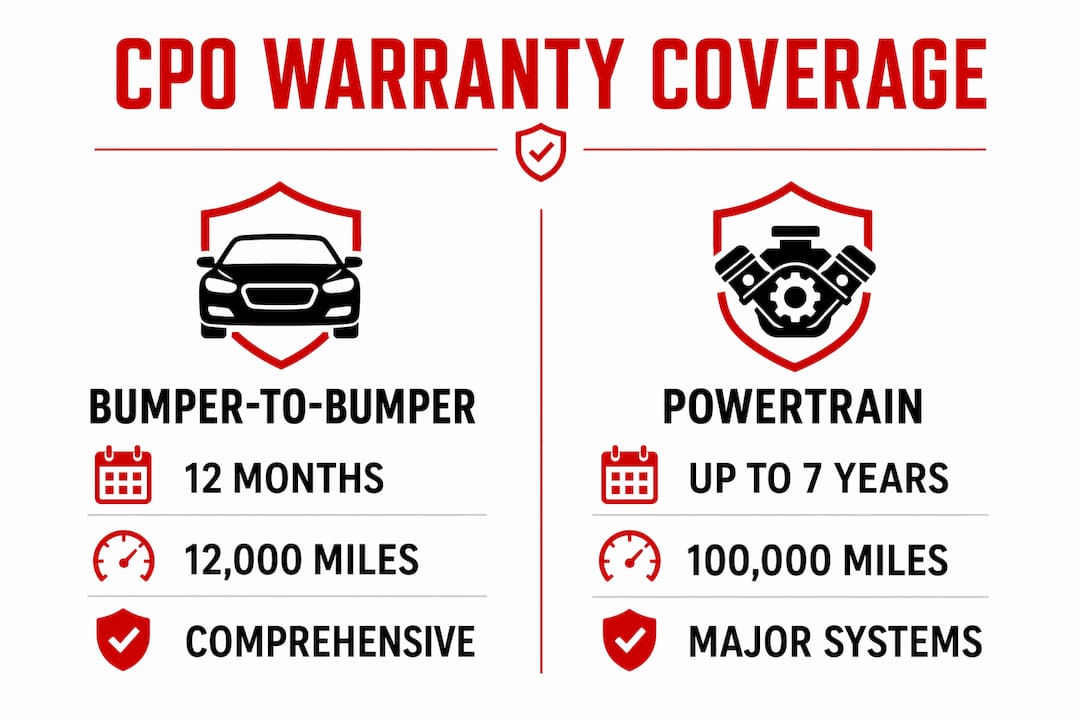
The first tier is bumper-to-bumper coverage. This covers most mechanical and electrical components across the vehicle for a shorter period, typically 12 months or 12,000 miles. The second tier is powertrain coverage, which focuses on the engine, transmission, and drivetrain. Powertrain coverage can extend up to 7 years/100,000 miles from the original sale date, not the date you buy the CPO vehicle. That distinction matters. If the car was first sold three years ago, you may have four years of powertrain coverage remaining, not seven.
| Coverage Type | Typical Duration | What It Covers |
|---|---|---|
| Bumper-to-bumper | 12 months / 12,000 miles | Most mechanical and electrical systems |
| Powertrain | Up to 7 years / 100,000 miles | Engine, transmission, drivetrain |
| Roadside assistance | Matches warranty period | Towing, lockout, flat tire service |
| Independent warranty | Varies by provider | Varies widely, often limited |
Not all CPO programs are equal. Toyota and Honda provide more comprehensive inspection standards and more generous warranty terms than many other manufacturers. Luxury brands sometimes offer impressive warranty lengths, but their repair costs when coverage lapses can be significantly higher. Understanding warranty coverage types before you commit to a specific brand's CPO program is a smart step.
Pro Tip: Always check the warranty start date, not just the duration. A CPO car with "7-year powertrain coverage" may only have 2–3 years remaining if the original sale was several years ago.
What financial factors determine if a CPO is worth the cost?
The CPO premium is real. CPO vehicles cost $1,000 to $4,000 more than comparable non-certified used cars. Whether that premium pays off depends on three variables: how you finance the purchase, how long you keep the car, and which brand you choose.
Financing through the manufacturer's captive lender is the clearest path to recovering the premium. Manufacturer-subsidized financing rates can neutralize or exceed the upfront CPO premium cost over the loan term. A 3–5% lower APR on a $20,000 loan over 60 months produces meaningful savings that offset a $2,000 premium. If you plan to pay cash or finance through an outside bank, the math changes considerably.
Here is a straightforward way to evaluate your situation:
- Calculate the premium. Compare the CPO price to a similar non-certified vehicle of the same year, make, model, and mileage.
- Check the manufacturer's financing rate. Compare it to your bank or credit union's current used car rate.
- Estimate your ownership period. If you plan to keep the car for 2–3 years, the warranty coverage aligns well. If you plan to keep it for 8 years, the warranty expires long before you sell.
- Factor in the brand's repair history. CPO programs deliver the highest return for luxury and high-repair-cost brands, less so for historically reliable makes like Toyota Corolla or Honda Civic.
- Review total cost of ownership. Add insurance, registration, expected maintenance, and fuel costs to the purchase price before comparing options.
The value of CPO warranties depends on keeping the car during the active warranty period. Long-term owners who keep a vehicle well past warranty expiration see less financial benefit from the premium they paid upfront. Buyers who plan to trade in within 3–4 years, while coverage is still active, extract the most value. You can also explore used car financing options to understand how different loan structures affect your total cost.
What are the real limitations of certified used cars?
CPO certification is not a guarantee of perfection. Certification is a screening tool, not an absolute assurance that every mechanical component is flawless. Buyers who treat the CPO badge as a substitute for due diligence often end up disappointed.
The most common misconceptions about CPO vehicles include:
- Certification means the car has zero mechanical issues. It means the car passed a minimum standard inspection, not that it is problem-free.
- All CPO programs are equivalent. Program rigor varies significantly by manufacturer and by the individual dealer performing the inspection.
- Warranty coverage is unlimited. Every CPO warranty has exclusions, deductibles, and mileage caps that buyers must read carefully.
- A CPO car does not need an independent inspection. This is the most costly assumption a buyer can make.
"CPO's certification is only as reliable as the dealer performing it. It is a screening tool that does not guarantee every mechanical component is flawless." — CarBuzz
An independent pre-purchase inspection (PPI) costs $150–$250 and is recommended even for CPO vehicles. The selling dealer's technicians perform the certification inspection, which creates an inherent conflict of interest. A third-party mechanic has no stake in the sale and will give you an unbiased assessment. That $200 investment can reveal issues the certification missed and save you thousands in repairs.
Vehicle history reports through Carfax or AutoCheck are also non-negotiable. A CPO badge does not erase a flood title or a prior accident. Read the fine print on the warranty contract before signing, and ask specifically what is excluded.
How to decide if a certified used car fits your budget and needs
The right choice depends on your specific situation, not a universal rule. Work through these six questions before committing to a CPO purchase.
- What is your mechanical knowledge? Buyers without the ability to evaluate a car's condition independently benefit most from CPO's built-in inspection and warranty structure. CPO serves as a paid risk-reduction tool for buyers who lack the expertise or time for thorough vehicle inspections.
- How are you financing? If you qualify for manufacturer CPO financing, the lower APR can offset the premium. If you are paying cash or using an outside lender, the financial case weakens.
- How long will you keep the car? Buyers who keep the vehicle within the active warranty window extract the most value. Owners who plan to hold the car for 8 or more years will outlast the coverage.
- Which brand are you considering? Toyota and Honda CPO programs offer strong inspection standards and generous terms. Research the specific program before assuming all CPO badges carry equal weight.
- What is your risk tolerance? A standard used car at a lower price point may make sense if you have an emergency fund for repairs. CPO makes sense if an unexpected $3,000 repair would create financial hardship.
- Have you compared total cost of ownership? A $1,500 CPO premium on a vehicle with a 4% lower APR and zero repair costs in year one often beats a cheaper non-certified car with a $1,800 repair in month six.
For a deeper look at how certified vehicles compare to new ones on value and depreciation, the used car vs. new car comparison guide covers the full picture.
Key Takeaways
Certified pre-owned vehicles deliver the most financial value when paired with manufacturer financing, kept through the active warranty period, and purchased from brands with strong CPO program standards.
| Point | Details |
|---|---|
| Warranty structure matters | CPO programs offer two tiers: bumper-to-bumper and powertrain coverage up to 7 years/100,000 miles. |
| Financing drives value | Manufacturer-subsidized rates 3–5% lower than standard loans can offset the $1,000–$4,000 CPO premium. |
| Certification has limits | CPO is a screening tool, not a guarantee; always get an independent inspection for $150–$250. |
| Brand choice affects ROI | Toyota and Honda CPO programs offer stronger terms; luxury brands carry higher post-warranty repair risk. |
| Ownership horizon is key | Buyers who keep the car within the warranty window extract the most value from the CPO premium. |
What I have learned about CPO vehicles after years in the used car business
CPO programs genuinely help first-time buyers, but not for the reasons most people assume. The warranty matters, yes. The inspection matters too. But the real value for most buyers is the confidence to move forward on a purchase without second-guessing every rattle and squeak for the next three years. That peace of mind has real financial weight when you factor in the stress and time cost of dealing with unexpected repairs.
The financial math favors CPO most clearly when you use manufacturer financing. I have seen buyers pay the full CPO premium in cash and then wonder why the numbers did not add up. The premium and the subsidized rate are designed to work together. Separate them and you are paying for a warranty and an inspection checklist, which is useful but not transformative.
My honest advice: do not skip the independent inspection just because the car has a CPO badge. The certification is performed by the dealer selling the car. That is not a conspiracy, it is just a structural reality. A $200 third-party inspection is cheap insurance. And always read the warranty exclusions before you sign. The fine print on deductibles and excluded components varies more than most buyers realize.
— Elmwood
How Elmwoodautosalesri helps first-time buyers find the right vehicle
Elmwoodautosalesri is a premier used car dealership in Providence, RI, built around a no-pressure buying experience and transparent vehicle inspections. Every car on the lot meets strict safety and reliability standards before it reaches a customer.
Elmwoodautosalesri offers tailored financing options, including buy-here-pay-here solutions for buyers across a range of credit histories. The team does not work on commission, which means the advice you get is focused on your needs, not a sales quota. Whether you are comparing certified pre-owned options or exploring used car inventory for the best fit, Elmwoodautosalesri provides the guidance and transparency that first-time buyers deserve. Visit the dealership or reach out online to start the conversation.
FAQ
What does certified pre-owned mean for a used car?
A certified pre-owned vehicle has passed a manufacturer-mandated multi-point inspection, meets specific age and mileage requirements, and carries a manufacturer-backed warranty. The certification is issued by the manufacturer, not just the dealer.
Is a certified used car worth the extra cost?
A CPO vehicle is worth the premium when you finance through the manufacturer's program and keep the car within the active warranty period. The 3–5% lower APR on manufacturer financing often offsets the $1,000–$4,000 price difference over the loan term.
Do I still need an inspection if the car is CPO certified?
Yes. An independent pre-purchase inspection costing $150–$250 is recommended even for CPO vehicles, since the certification is performed by the selling dealer's technicians and sets only minimum standards.
How long does a CPO warranty last?
Most 2026 CPO programs offer 12 months or 12,000 miles of bumper-to-bumper coverage and up to 7 years or 100,000 miles of powertrain coverage from the original sale date. Remaining coverage depends on when the car was first sold.
Which car brands have the best CPO programs?
Toyota and Honda are recognized for comprehensive inspection standards and generous warranty terms in their CPO programs. Luxury brands often offer longer warranty durations but carry higher repair costs once coverage expires.