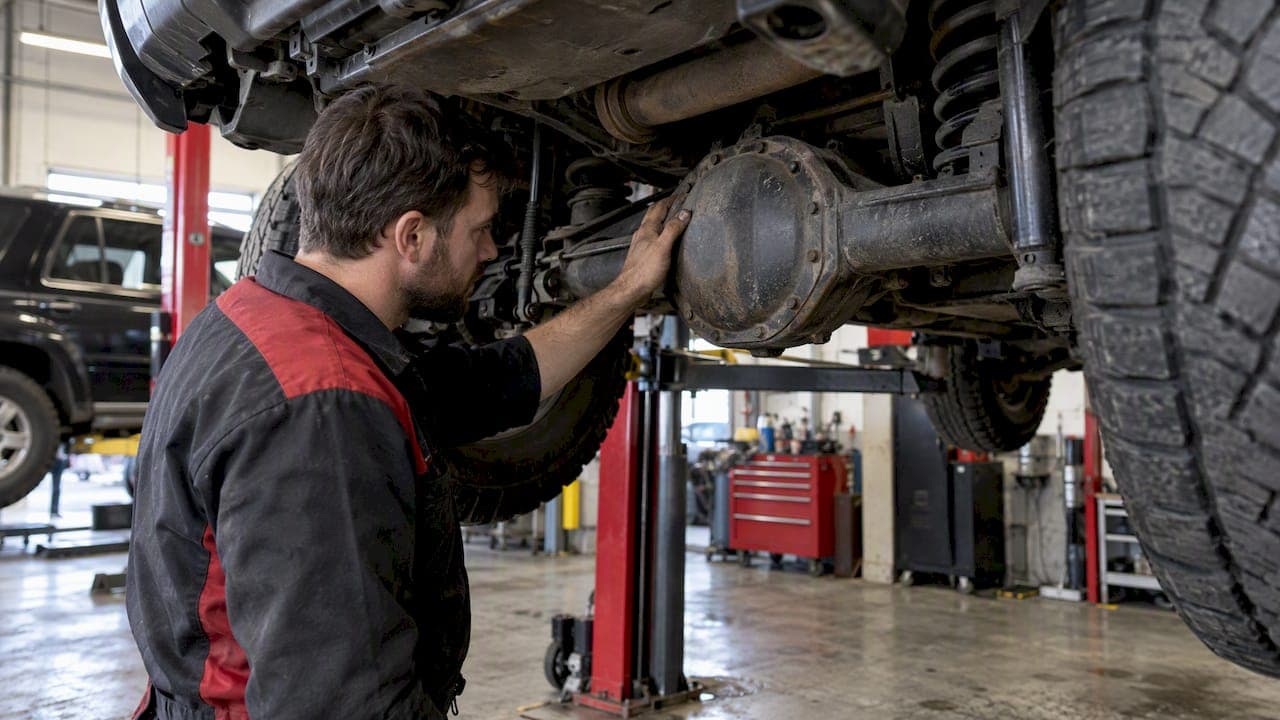
A locking differential forces both wheels on an axle to turn together so the wheel with traction can move the vehicle when the other wheel has little or no grip. The main benefit is simple: you keep moving forward over rocks, mud, or ruts where an open differential would leave you stuck. The tradeoff is that locked axles can affect steering feel, add tire wear, and should stay off high-traction pavement.
TL;DR:
- Selectable lockers suit vehicles that split time between pavement and trails because they remain open until engaged, then can be switched off on pavement.
- For rain, light snow, or occasional gravel, a limited slip differential or traction control usually handles moderate wheelspin without a full locker.
- Automatic lockers provide consistent traction without driver input, but can add noise and alter steering feel even at low speeds.
- Follow the owner's manual for engagement speed limits; locking the front axle may disable ABS or hill descent control on some vehicles.
- When inspecting a used vehicle, verify clean engagement, request installation and service records, and check for turning bind, drivetrain noise, or uneven tire wear.
Table of Contents
- What Is a Locking Differential, Really?
- How Locking Differentials Work: Engagement Methods and Driveline Effects
- Choosing the Right Locker Type for How You Drive
- Locker vs. Limited-Slip vs. Electronic Traction Control
- Using a Locker Safely: Rules, Cautions, and Upkeep
- Inspecting a Used Vehicle With a Locker: Our Checklist
- What We See When Inspecting Lockers on Trade-Ins
- FAQ
- Sources
What Is a Locking Differential, Really?
An open differential sends power to both wheels on an axle but allows them to spin at different speeds, which is what lets your car turn corners smoothly. The problem shows up off-road: if one wheel loses contact with the ground or hits loose dirt, an open diff sends most of its torque to that spinning wheel, leaving the other one, the one with actual grip, without enough power to move you. A locking differential solves this by forcing both wheels to rotate at the same speed once engaged, which pushes torque to whichever wheel can actually use it.

Think of it like two people carrying a stretcher. An open differential lets each person walk at their own pace, fine on flat ground, but if one person's foot slips, the stretcher goes nowhere useful. A locked differential ties their steps together so they move as one unit regardless of footing.
A few basics worth knowing before you shop:
- An open differential splits torque evenly but can't force a low-traction wheel to share the load.
- A locked axle sacrifices some turning smoothness in exchange for guaranteed power delivery to both wheels.
- Lockers only matter when traction is uneven between the left and right wheels on the same axle.
How Locking Differentials Work: Engagement Methods and Driveline Effects
Manufacturers and aftermarket builders lock an axle in several ways, each suited to different budgets and use cases.
- Mechanical lever or cable systems let the driver manually engage the locker from inside the cabin.
- Air or hydraulic lockers use compressed air or fluid pressure to engage the locking mechanism on demand.
- Electromagnetic lockers (eLockers) use a solenoid and electric signal, common on factory off-road trims.
- Lunchbox lockers replace internal differential parts without swapping the whole carrier, a budget-friendly upgrade.
- Spools eliminate the differential action entirely, locking the axle permanently.
Automatic lockers engage and disengage based on torque or wheel speed differences without driver input, while selectable lockers require you to flip a switch or pull a lever. According to Jalopnik, lockers deliver a real traction advantage but come with a learning curve: engaging a locker, especially on the front axle, increases steering effort and can cause the vehicle to push or understeer through turns. You may also notice scuffing noises as the tires fight the locked axle during slow, tight maneuvers.
Pro Tip: Engage selectable lockers only after you've slowed down, since shifting into lock at speed can strain the mechanism and surprise you with sudden steering resistance.
Choosing the Right Locker Type for How You Drive
Not every locker suits every vehicle or driving style. Matching the type to your use case matters as much as understanding how it works.
- Automatic lockers deliver strong, consistent traction without any driver input, making them a solid pick for dedicated off-road rigs, though they can be noisy and alter steering feel even at low speeds.
- Selectable lockers, whether air-actuated or electromagnetic, behave like an open differential until you flip them on, which makes them the better choice for vehicles that split time between pavement and trail.
- Lunchbox or bolt-in lockers offer a cost-effective way to add locking capability using your existing carrier, though they depend on the strength of the factory housing and may not suit heavy-duty towing or extreme rock crawling.
- Spools lock the axle permanently and never unlock, which is why Motor Trend notes they're generally unsuitable for street use given the cornering stress they place on tires and driveline components.
Locker vs. Limited-Slip vs. Electronic Traction Control
Not every traction problem calls for a full locker. Limited-slip differentials bias torque toward the wheel with more grip but never fully lock the axle together, which keeps handling closer to normal and reduces the tire chirp you'd get from an open diff spinning one wheel. Electronic traction control takes a different approach, applying the brakes to a spinning wheel so torque transfers to the one with traction, and it works well for moderate slip on wet roads or light snow.
Where each tool shines depends on the terrain:
- Rock crawling or wheel-lift situations, where one tire leaves the ground entirely, call for a true locker.
- Daily driving in rain, light snow, or occasional gravel is usually well handled by a limited-slip differential or traction control alone.
- Deep mud or extreme off-camber trails often exceed what traction control can manage, since brake-based systems can overheat or lag under sustained slip.
Motor Trend describes limited-slip as the practical middle ground for daily drivers, while lockers and spools serve dedicated off-road builds where guaranteed torque delivery outweighs ride comfort.
Using a Locker Safely: Rules, Cautions, and Upkeep
Engaging a locker at the wrong time or speed can cause more problems than it solves. A few ground rules keep things safe:
- Engage lockers cautiously, following the vehicle owner's manual, and never while cornering hard.
- Favor selectable lockers for mixed-use vehicles so you can switch back to open-diff behavior the moment you're back on pavement.
- Never drive extended distances on a locked axle over dry pavement, since the tires will fight each other and strain the driveline.
Owner's manuals for vehicles with factory lockers often specify exact engagement speed limits and note that locking the front axle may disable ABS or hill descent control while engaged. Following those published limits protects both the mechanism and your safety on the trail, according to Wikipedia's overview of locking differentials, which confirms lockers can be engaged mechanically, hydraulically, electrically, or automatically based on torque and speed thresholds.
Routine maintenance matters just as much as correct engagement. Many locker types benefit from professional installation, and gear oil should be checked on a regular schedule since locked mechanisms place extra stress on internal components. If you hear grinding, clunking, or binding when turning, that's a sign the differential needs inspection before it fails. A shop like Integrity Auto's differential service can diagnose wear specific to your drivetrain, and matched tire wear plays a role too, which our AWD maintenance guide covers in more detail.
Inspecting a Used Vehicle With a Locker: Our Checklist
When we evaluate a used vehicle with a locking differential, we look past the sales pitch and check the mechanics directly. Our inspection priorities include:
- Confirming the locker type and verifying it engages and disengages cleanly without delay or grinding.
- Requesting service or installation records, especially for aftermarket lunchbox or air lockers that depend on proper setup.
- Checking for driveline binding during a test turn and inspecting tires for uneven wear patterns that suggest the locker was left engaged on pavement.
- Listening closely during a test drive for clunks or whines when the locker engages, a step covered in our test drive checklist.
We ask sellers to document any professional installation and recent differential service before we stand behind a vehicle, because a locker installed without care can mask bigger drivetrain issues.
What We See When Inspecting Lockers on Trade-Ins
Aftermarket lockers on trade-ins vary widely in quality. Improper installation or missed gear oil changes can lead to premature wear or noise. That's why we insist on verified installation records and a full drivetrain inspection before any vehicle with a locker goes back on our lot. It protects the next buyer and keeps our inventory honest.
— Elmwood
FAQ
How fast can I drive with diff lock on?
Engage a locker cautiously and follow the vehicle owner's manual. Avoid using it on dry pavement. Check your specific owner's manual, since engagement speed limits vary by vehicle.
When should I use my locking differential?
Use a locker when one wheel loses traction entirely, such as during wheel lift over rocks, deep mud, or ruts where an open differential would leave you stuck. Switch it off once you're back on a surface with consistent grip on both sides.
Is diff lock better than 4x4?
They solve different problems: four-wheel drive sends power to all four wheels, while a locker ensures both wheels on one axle turn together even if one loses grip. Many off-road vehicles use both together for maximum traction in tough terrain.
Can you turn on diff lock while driving?
Selectable lockers can often be engaged while moving, but only at low speeds and ideally when wheels aren't under heavy load or mid-turn. Engaging at higher speeds or while cornering can strain the mechanism and affect steering control.