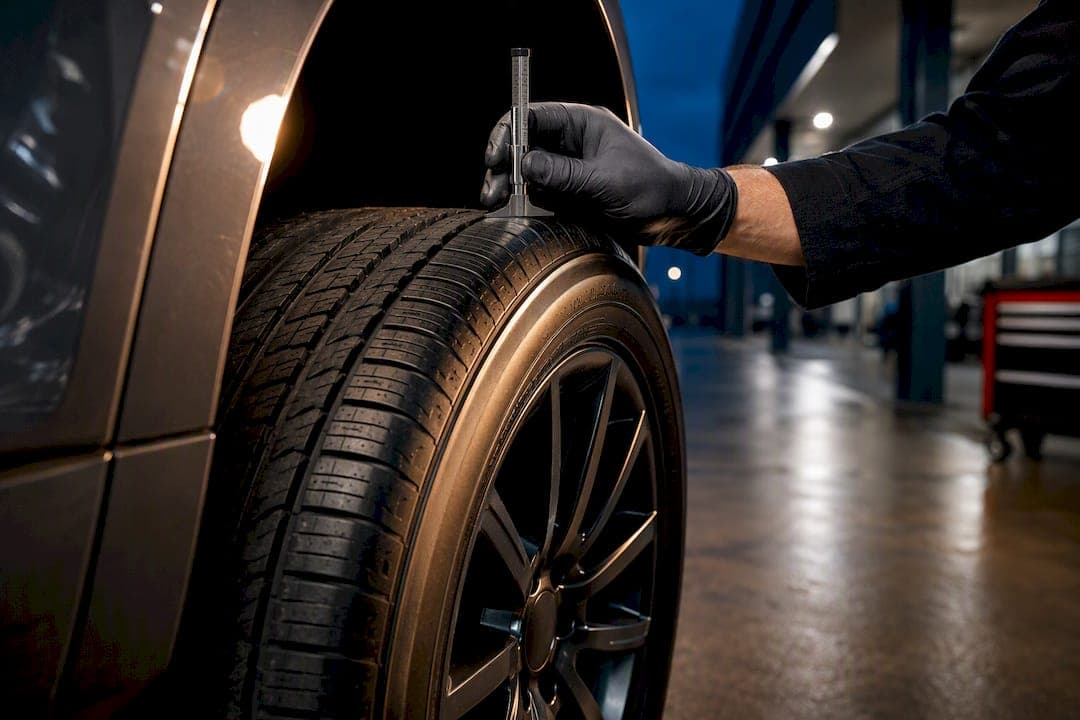
AWD usually costs more to own and maintain than a comparable 2WD vehicle. The main reasons are extra drivetrain parts and fluids, higher fuel use, and stricter tire requirements. The most expensive failures to watch for involve the transfer case, differential, and power transfer unit. The single best way to avoid those repairs is frequent tire rotation with matched tire circumferences across all four wheels.
TL;DR:
- AWD vehicles can cost about $750 more in fuel over five years compared to 2WD models, primarily due to extra drivetrain weight and increased drag.
- Extra components like transfer cases and differentials require regular fluid changes, with repairs potentially reaching up to $9,000 for comprehensive replacements.
- Proper tire maintenance, including rotations every 5,000 to 7,500 miles and tire shaving when needed, significantly reduces the risk of drivetrain failure.
- Severe driving conditions like towing or off-road use can shorten AWD component life, requiring more frequent inspections and fluid changes.
- For most city or highway drivers, a 2WD vehicle with good winter tires offers a more economical and less maintenance-intensive alternative.
Table of Contents
- How AWD affects ownership costs: fuel, parts, and complexity
- What a typical AWD maintenance schedule looks like
- Common expensive AWD repairs with realistic cost ranges
- Tires and AWD: rotation, matching, and the shaving shortcut
- Towing, off-roading, and city driving change your service intervals
- A preventative checklist to bring to your mechanic
- Getting a real repair estimate and deciding on a warranty
- Is AWD worth the extra cost?
- Elmwood Auto Sales: inspected AWD vehicles without the guesswork
- Sources
- FAQ
How AWD affects ownership costs: fuel, parts, and complexity
AWD systems add weight and moving parts compared to a 2WD setup: a transfer case, extra driveshafts, and sometimes a separate rear differential or power transfer unit. Every one of those parts needs fluid, wears over time, and can eventually fail. That added weight also affects fuel economy, since the engine works harder to move a heavier vehicle and to power a second set of driven wheels.
One estimate puts the five-year fuel penalty for AWD versus 2WD at around $750 for a typical sedan, a figure that adds up alongside higher tire wear and the occasional drivetrain repair.
Where AWD earns its cost is traction on snow, ice, or loose gravel. That benefit does not change the fact that tires remain the most important, and most frequently needed, maintenance item on any AWD vehicle:
- Extra components (transfer case, differentials, driveshafts) mean more fluid changes and more parts that can wear out.
- Added weight and drivetrain drag reduce fuel economy compared to a 2WD version of the same model.
- Traction benefits come with a tradeoff: tires wear faster and must be replaced and matched more carefully.
AWD's five-year fuel penalty runs about $750 for a typical sedan, a cost that stacks on top of tire and drivetrain maintenance rather than replacing it.
What a typical AWD maintenance schedule looks like

Most AWD maintenance follows the same routine as any other vehicle, with a few extra items layered in as the car ages. Oil changes, tire rotations, and brake inspections happen on the same schedule your owner's manual already lists for the base vehicle. The AWD-specific items show up later and less often, but they carry a bigger price tag if skipped.
A practical way to think about the schedule:
- Oil and filter changes and brake inspections follow the standard interval in your owner's manual, typically every 5,000 to 10,000 miles.
- Tire rotation should happen every 5,000 to 7,500 miles to keep circumference matched across all four tires.
- Transfer case, differential, and power transfer unit fluids usually get checked around 30,000 to 60,000 miles and changed on a schedule set by the manufacturer.
Your owner's manual is the final word here, and it usually separates "normal" service intervals from "severe usage" intervals. Reading both matters more for AWD than for 2WD, since the shortened severe-duty schedule specifically targets the extra drivetrain hardware.
Common expensive AWD repairs with realistic cost ranges
A handful of AWD-specific failures account for most of the expensive repair bills owners face, and the range between a minor fix and a full replacement is wide.
- Transfer case seal or minor repairs often run a few hundred dollars, while full replacement typically falls between $2,000 and $9,000 depending on the vehicle and parts availability.
- Differential rebuilds or replacements vary widely, with limited-slip or electronically controlled units generally costing more than a basic open differential.
- PTU and electronic module failures often show up as unusual noise, vibration, or a drivetrain warning light, and repair costs depend heavily on whether the part is sourced new or used.
- Luxury and performance trims tend to carry higher parts costs across all of these repairs, simply because the components are less common and less interchangeable between models.
Transfer case replacement commonly ranges from $2,000 to $9,000, with one survey putting the average closer to $3,360. That gap between a seal repair and a full replacement is the reason preventative fluid changes and tire matching matter so much: catching a problem early is almost always cheaper than replacing the whole unit.
Labor rates, parts sourcing, and whether the shop is a dealer or an independent all move the final number, but the pattern holds across most AWD vehicles: the transfer case and differential are where the real money goes.

Tires and AWD: rotation, matching, and the shaving shortcut
Uneven tire circumference forces the AWD system to work overtime, since the drivetrain constantly compensates for wheels spinning at slightly different speeds. Over time, that mismatch overheats the transfer case or differential fluid and can lead to the kind of failure described above. Rotating tires on schedule is the cheapest insurance available against that outcome.
- Rotate all four tires every 5,000 to 7,500 miles to keep tread depth, and therefore circumference, close across the set.
- When you only need to replace one tire, ask about tire shaving before buying a full set: a shop shaves the new tire's tread to match the depth of the other three, typically for $25 to $35 plus the cost of the tire.
- Shaving works best when the remaining tires are about half worn, around 6/32 inch of tread, since shaving a nearly new tire wastes too much usable tread.
A shaved tire carries less remaining life than a new one and some tire warranties treat shaving as a modification, so confirm coverage before choosing that route. For most AWD owners, it is a sound way to avoid replacing four tires when three still have plenty of life left.
Pro Tip: Ask your tire shop to measure and record tread depth at every rotation so you catch a mismatch before it becomes a drivetrain problem.
Towing, off-roading, and city driving change your service intervals
Owner's manuals define "severe usage" as frequent towing, off-road driving, extended idling, or short trips in stop-and-go traffic, and AWD components wear faster under all of those conditions than they do on steady highway miles.
- Power transfer units, transfer cases, and differentials should be inspected more often under towing or off-road use, since heat and load both increase.
- Wheel bearings and axle seals deserve extra attention on vehicles used off-road, where dirt and water intrusion are more common.
- A reasonable rule of thumb is cutting AWD fluid change intervals roughly in half under consistent severe duty, though your specific manual's severe-usage table is the better reference.
- City-only driving with frequent short trips can also shorten intervals, since fluids never reach full operating temperature long enough to clear moisture and condensation.
A preventative checklist to bring to your mechanic
A short list of questions and inspection points can catch most AWD problems before they turn into a $2,000 repair.
- Ask for the exact fluid specification used in the transfer case and differential, since substituting a universal fluid is a common cause of early failure.
- Request tread-depth readings on all four tires at every rotation, not just a visual check.
- Ask whether the transfer case or differential has ever leaked or been topped off, since a slow leak is often the first sign of a bigger problem.
- Review the vehicle's full service history for gaps longer than the manufacturer's recommended interval.
| Checklist item | Why it matters |
|---|---|
| Correct fluid spec on file | Wrong fluid is a common cause of internal drivetrain damage |
| Tread depth on all four tires | Mismatched circumference stresses the transfer case |
| Leak or top-off history | Early sign of transfer case or differential wear |
| Full service record | Gaps in service often precede expensive failures |
Before buying a used AWD vehicle, ask for a written inspection report rather than a verbal assurance. Elmwood Auto Sales runs a multi-point inspection on every vehicle it sells, and its test drive checklist covers the cold-start and brake symptoms that often point to drivetrain trouble.
Getting a real repair estimate and deciding on a warranty
A phone quote rarely tells the whole story on an AWD repair. Get three estimates, ask each shop for a parts and labor breakdown, and check whether the repair falls under your factory powertrain warranty before paying out of pocket.
- Compare at least two independent shops against one dealer quote, since parts markup and labor rates vary widely between them.
- Confirm your vehicle's remaining powertrain warranty mileage and whether transfer case or differential failures are covered.
- An extended warranty can pay off on models with a known history of transfer case or module failures, but read the coverage limits and exclusions closely before buying one.
- Vehicle age and mileage push cost estimates higher, since parts availability drops and labor time often increases on older platforms.
Readers weighing whether a warranty is worth the cost on a specific repair risk can compare the warranty price against the realistic repair range covered above before deciding.
Is AWD worth the extra cost?
AWD earns its keep in snow, ice, or gravel country, and for drivers who tow or drive rural roads regularly. For everyone else, especially city and highway commuters, a 2WD vehicle with good winter tires is usually the more economical choice. AWD rewards owners who stay disciplined about tire rotation and fluid changes, and punishes those who do not.
— Elmwood
Elmwood Auto Sales: inspected AWD vehicles without the guesswork
Buying a used AWD vehicle comes with real questions about drivetrain condition, and Elmwood Auto Sales builds its process around answering them honestly rather than rushing a sale. Every vehicle goes through a multi-point inspection before it reaches the lot, and the low-pressure, commission-free sales approach means no one is pushing you toward a car that has not been checked.
- Ask about a vehicle's transfer case and differential fluid history before buying, and request the inspection report directly.
- Use the car finder service if you want a specific AWD model or trim with documented service history.
- Explore financing options or ask about warranty coverage to help manage the risk of a larger AWD repair down the road.
If you are ready to see inspected AWD inventory in person, book a test drive at Elmwood Auto Sales and ask the team directly about a vehicle's drivetrain history.
Sources
The cost ranges and guidance above draw on AAA's Your Driving Costs study for maintenance and tire cost comparisons, Consumer Reports on tire shaving as a cost-saving alternative, ConsumerAffairs on transfer case repair pricing, and Michelinman on the fuel economy impact of AWD. For a deeper look at how AWD interacts with braking systems, see this technical overview of AWD and brakes.
- AWD winter driving and tire safety — Michelinman
- Transfer case repair cost — ConsumerAffairs
- Do you really need to replace all four tires on an AWD car? — Consumer Reports
FAQ
Are AWD cars expensive to maintain?
AWD vehicles typically cost more to maintain than comparable 2WD models because of extra drivetrain fluids, parts, and tire wear. The biggest expenses come from occasional transfer case or differential repairs rather than routine service, so staying current on fluid changes and tire rotation keeps the gap manageable.
Is AWD high maintenance?
AWD requires more attention than 2WD, mainly around tire matching and drivetrain fluid changes, but it does not need constant special service. The extra maintenance is mostly preventative: rotate tires on schedule and follow the fluid change intervals in your owner's manual.
What are the downsides of AWD?
The main downsides are higher purchase and maintenance costs, reduced fuel economy, and stricter tire care requirements compared to 2WD. Estimates put the added fuel cost around $750 over five years for a typical sedan, on top of more frequent tire wear.
Is AWD more expensive on gas?
Yes, AWD vehicles generally use more fuel than a 2WD version of the same model because of added weight and drivetrain drag. One estimate places that penalty at roughly $750 in extra fuel costs over five years for a typical sedan.