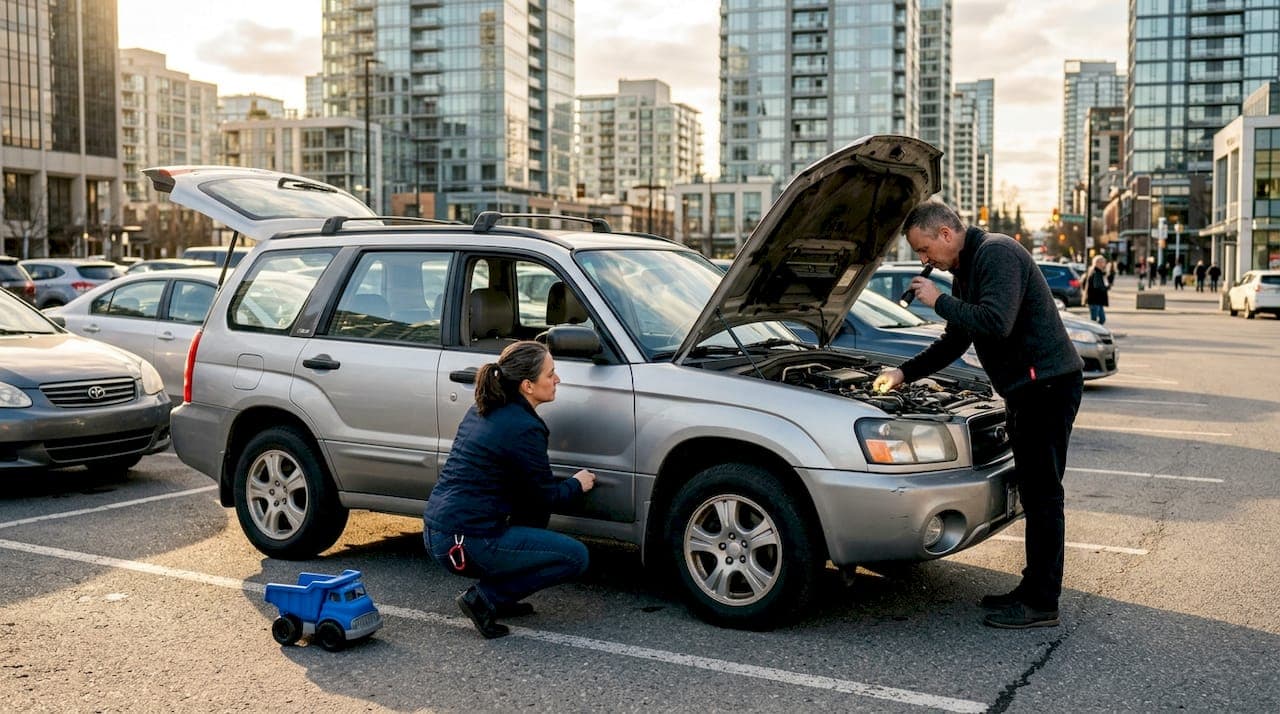
A used SUV buying checklist for families is a practical tool that confirms your vehicle meets essential safety, space, and reliability standards before you sign anything. The best used SUVs for families combine IIHS Top Safety Pick+ ratings, three-row seating flexibility, and total ownership costs that fit a real family budget. In 2026, updated IIHS rear-passenger injury metrics and stricter side-impact barrier requirements have raised the bar for what counts as a safe family vehicle. Skipping a structured checklist means risking expensive surprises after the purchase, from hidden mechanical failures to outdated safety systems that no longer meet current standards.
1. What safety features and certifications must families verify?
Safety is the non-negotiable starting point on any family SUV buying guide. The 2026 IIHS testing standards now include stricter rear-passenger injury metrics and more robust side-impact barriers, meaning older ratings may no longer reflect current protection levels. A used SUV should carry an IIHS Top Safety Pick+ designation or an NHTSA 5-star overall rating to qualify as genuinely safe for children and adults.
Beyond ratings, verify that these active safety systems are present and functional:
- Automatic emergency braking (AEB): Reduces collision risk at low and highway speeds.
- Blind-spot monitoring: Critical for lane changes with a full vehicle load.
- Lane-keeping assist: Helps prevent drift during long family road trips.
- Rear cross-traffic alert: Protects children and pedestrians when reversing.
Child-seat compatibility deserves its own check. LATCH anchor accessibility varies widely across trims and model years, so physically test the anchors with your actual car seat before committing. Pull the vehicle's recall history through the NHTSA database and confirm all open recalls have been completed and documented.
2. How to assess space, seating, and cargo for your family

Passenger capacity and real-world cargo usability differ significantly from what a spec sheet shows. A two-row SUV suits families of four with moderate gear, while a three-row configuration becomes necessary for carpools, sports equipment, or a family of five or more. The key question is whether the third row actually fits adults or only works for small children.
Test these points physically during your inspection:
- Fold and unfold the third row to check ease of access and floor clearance.
- Load a stroller into the cargo area with the third row up to confirm real usability.
- Sit in the second row with a rear-facing infant seat installed to measure legroom impact.
- Check that all seat-folding and sliding mechanisms operate without binding.
Published cargo volume figures rarely account for the awkward shapes of family gear. A vehicle with 84 cubic feet of maximum cargo space may still struggle with a double stroller if the load floor is high or the opening is narrow. Walk through your actual weekly use cases: school runs, grocery trips, weekend travel, and sports carpools. The right configuration is the one that handles all of them without compromise.
3. What mechanical checks protect families from costly repairs?
Mechanical condition is where many family buyers make their most expensive mistakes. A thorough inspection catches problems that a clean exterior and low odometer reading can easily hide.
Start under the hood. Check the oil filler cap for milky or foamy residue, which signals a blown head gasket. Interior wear reveals true mileage more reliably than the odometer: worn steering wheels, shiny pedal surfaces, and cracked seat bolsters all suggest over 100,000 miles regardless of what the dash displays. Inspect the frame rails for rust, weld repairs, or misaligned body panels that indicate prior collision damage.
During the test drive, listen actively. Suspension clunks and driveline noises at low speed point to worn struts, ball joints, or CV axles. These are safety-critical components, and ignoring them increases braking distances and reduces vehicle control. Test the brakes with a firm stop from 40 mph on an empty road to feel for pulling, pulsing, or extended stopping distance.
For AWD and 4WD models, engage the drivetrain system in a safe, low-speed environment and listen for binding, hopping, or grinding. Transfer case and differential repairs rank among the most expensive fixes on a used SUV, often exceeding $2,000.
Pro Tip: Turn off the radio and roll down the windows during the test drive. Most mechanical noises only reveal themselves at specific speeds or over rough pavement, and they disappear under music.
4. How to check electronics, infotainment, and comfort features
Electronics failures are among the most common post-purchase complaints on used family SUVs. The fix is simple: test everything at once. Running all power features simultaneously reveals alternator or battery strain that individual tests miss. Flickering displays, a slow power liftgate, or heated seats that take too long to warm up all indicate pending electrical repairs.
Work through this sequence during your inspection:
- Activate heated front and rear seats simultaneously.
- Open and close the power liftgate while the infotainment system plays audio.
- Test rear climate controls and confirm airflow from second and third-row vents.
- Plug a device into every USB port, including rear-seat ports, to confirm charging output.
- Check sunshades, sliding window shades, and any rear entertainment screens for smooth operation.
Infotainment responsiveness matters more than most buyers expect. A sluggish or frozen screen on a long trip with children in the back creates real frustration. Confirm that Apple CarPlay and Android Auto connect without errors, since software updates on older systems are not always available.
5. What financial factors should families weigh before buying?
The sticker price is only one part of the total cost of owning a used SUV. Focusing solely on purchase price while ignoring repair, insurance, and fuel costs leads to budget problems within the first year of ownership. Luxury trims with panoramic roofs, air suspension, and premium audio systems carry significantly higher repair costs than base or mid-level trims.
Hybrid SUVs offer a clear financial advantage for families with high annual mileage. Hybrid family SUVs save $500 to $1,000 in annual fuel costs compared to gas-only equivalents, and models like the Toyota Highlander Hybrid typically recoup their price premium within two to three years. That savings compounds meaningfully over a five-year ownership period.
Before finalizing any purchase, budget for near-term maintenance items:
- Tires: A full set on a mid-size SUV runs $600 to $1,000 installed.
- Brakes: Front and rear replacement typically costs $400 to $700.
- Timing belt or chain service: Required on many engines between 60,000 and 100,000 miles.
Pro Tip: Request the full service history and cross-reference it with the odometer. A vehicle with documented oil changes every 5,000 miles at a dealership costs less to own than one with a clean exterior and no paper trail.
A pre-purchase independent inspection by a third-party mechanic costs $100 to $200 and regularly uncovers frame misalignment, flood damage, or deferred maintenance that dealership walkthroughs miss. That report also gives you negotiation leverage on price.
6. How to evaluate vehicle history and ownership records
A vehicle history report is a required step in any checklist for buying SUVs, not an optional extra. Services like Carfax and AutoCheck compile title records, accident reports, odometer readings, and service history into a single document. A clean title with consistent mileage progression and documented service intervals is the baseline you need.
Watch for these red flags in any history report:
- Salvage or rebuilt title: Indicates the vehicle was declared a total loss by an insurer.
- Multiple owners in a short period: Suggests recurring problems that previous owners could not resolve.
- Odometer rollback flags: Mileage inconsistencies between reported readings.
- Flood or fire damage notation: These vehicles carry long-term electrical and structural risks.
Cross-reference the report with the physical vehicle. A report showing no accidents alongside mismatched paint, uneven panel gaps, or overspray on trim pieces means the damage was either unreported or repaired without an insurance claim. Both scenarios reduce the vehicle's value and reliability. The certified pre-owned vs. used car distinction matters here: certified pre-owned vehicles carry manufacturer-backed inspections and extended warranties that standard used vehicles do not.
7. Questions to ask the dealer before you commit
Asking the right questions before signing protects your family from avoidable problems. The goal is to get specific, documented answers rather than verbal reassurances.
Ask the dealer directly:
- Has this vehicle passed a state inspection within the last 30 days?
- Are there any open recalls, and have all previous recalls been completed?
- What does the dealer warranty cover, and for how long?
- Can I take the vehicle to an independent mechanic for a pre-purchase inspection?
- What financing options are available, including buy-here-pay-here programs for varied credit histories?
A dealer who resists the independent inspection question is a dealer worth walking away from. Identifying an honest used car dealer starts with transparency on these basic questions. Dealerships that operate without commission-based sales pressure, like Elmwoodautosalesri in Providence, RI, give you the space to ask every question without feeling rushed toward a decision.
Key Takeaways
A reliable used SUV purchase for families requires verifying safety ratings, inspecting mechanical condition, testing all electronics, and calculating total ownership costs before signing.
| Point | Details |
|---|---|
| Verify 2026 safety ratings | Confirm IIHS Top Safety Pick+ or NHTSA 5-star rating and check all open recalls. |
| Test space with real gear | Load your actual stroller and car seats during inspection to confirm practical fit. |
| Inspect mechanicals actively | Listen for suspension and drivetrain noises during a test drive, not just at idle. |
| Calculate total ownership cost | Add fuel, insurance, tires, and near-term repairs to the sticker price before deciding. |
| Get an independent inspection | A third-party mechanic check costs $100–$200 and uncovers issues dealerships miss. |
What I've learned from watching families buy used SUVs
The families who walk away happiest are the ones who bring their actual gear to the test drive. Not a mental checklist of gear. The stroller. The diaper bag. The soccer equipment. Watching a vehicle fail the cargo test in the parking lot saves weeks of regret.
The second pattern I see repeatedly: buyers who fixate on the lowest purchase price end up spending more within 12 months. A $3,000 savings on a vehicle with worn brakes, aging tires, and no service history evaporates fast. Total cost of ownership is the only number that matters for a family vehicle used daily.
Third-party inspections are the single most underused tool in the used SUV buying process. Experts consistently recommend independent pre-purchase inspections as the best way to avoid surprises, yet most buyers skip them to save $150. That decision regularly costs thousands.
Hybrid SUVs deserve more serious consideration than most family buyers give them. The fuel savings are real, the reliability record on models like the Toyota Highlander Hybrid is strong, and the environmental benefit is a genuine plus for families thinking long term. The price premium on a used hybrid is smaller than most people expect, and the payback period is shorter than most people realize.
Use the checklist. Bring the gear. Get the inspection. Those three habits separate confident buyers from frustrated ones.
— Elmwood
Elmwoodautosalesri: family-ready used SUVs in Providence, RI
Families in Rhode Island looking for a reliable used SUV have a straightforward next step.
Elmwoodautosalesri carries a wide selection of inspected, family-ready used SUVs with transparent vehicle history reports and no commission-based sales pressure. Every vehicle goes through a thorough inspection before it reaches the lot, so you spend your time evaluating fit rather than chasing down hidden problems. Financing options include tailored programs and buy-here-pay-here solutions for a range of credit histories. Browse the current inventory and connect with a team that answers every question on your checklist directly and honestly.
FAQ
What safety rating should a used family SUV have?
A used family SUV should carry an IIHS Top Safety Pick+ rating or an NHTSA 5-star overall rating. The 2026 IIHS standards include stricter rear-passenger and side-impact criteria, so verify the rating applies to the specific model year you are considering.
How do I check if a used SUV has hidden mechanical problems?
Listen for suspension clunks and driveline noises during an active test drive, and check the oil filler cap for milky residue that signals head gasket failure. A third-party pre-purchase inspection by an independent mechanic catches frame damage and flood history that visual checks miss.
Are hybrid SUVs worth buying used for families?
Yes. Hybrid family SUVs save $500 to $1,000 annually in fuel costs compared to gas-only equivalents, and the price premium on used models is typically recovered within two to three years of ownership.
What documents should I request when buying a used SUV?
Request the vehicle history report, full service records, recall completion documentation, and the current state inspection certificate. Gaps in service history or unresolved recalls are negotiating points and potential deal-breakers.
How do I know if a used SUV's odometer is accurate?
Interior wear is a reliable indicator of true mileage. Worn pedal surfaces, a shiny steering wheel, and cracked seat bolsters on a vehicle showing low mileage suggest the odometer does not reflect actual use.