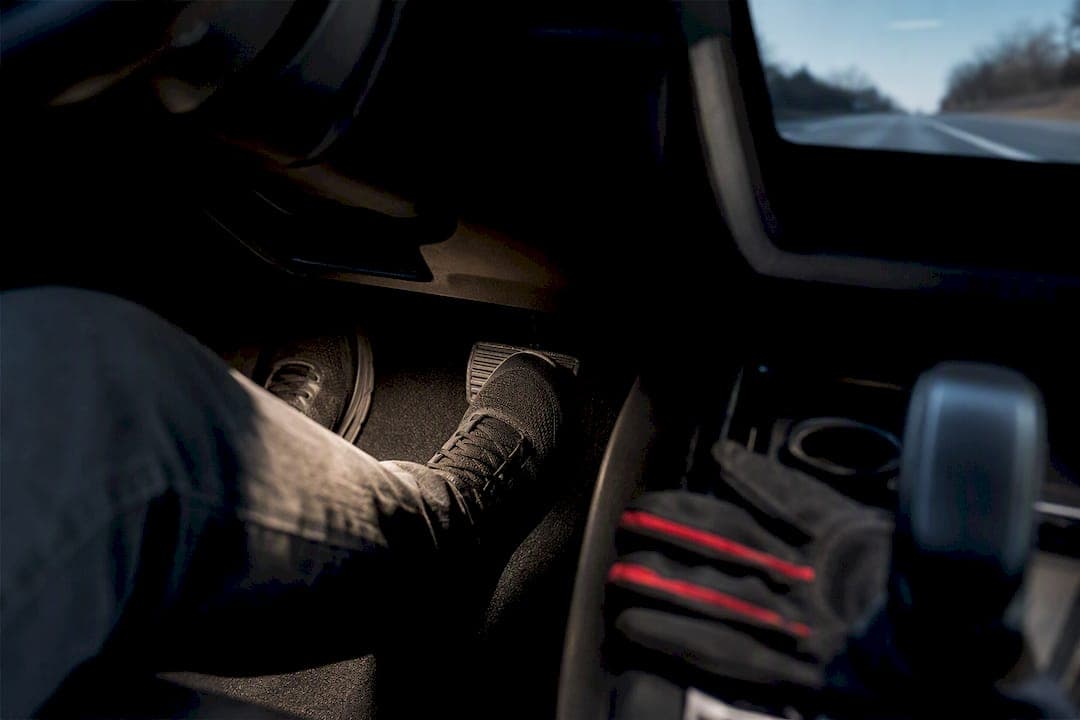
A proper test drive runs at least 15 to 30 minutes over a mix of parking lot, city, and highway driving, and it never starts with a warm engine. Three things decide whether you buy: mechanical behavior on cold start and under braking, how the car fits your body and sightlines, and whether the tech and safety features actually work the way the seller claims. Skip any of the three, and you're gambling.
TL;DR:
- Cold-start tests are essential to reveal rough idling, unusual sounds, or smoke that could indicate engine problems.
- Inspecting the vehicle's exterior, including panel gaps, paint, and rust, can uncover previous collision repairs or corrosion.
- Conducting a 15 to 30-minute drive over varied conditions helps detect transmission, suspension, and steering issues that short drives miss.
- Testing safety features like adaptive cruise control and backup cameras, along with pairing your phone, ensures they work reliably before purchase.
- Be wary of sellers who resist longer test drives or refuse the suggested route, and always obtain a vehicle history report for context.
Table of Contents
- What to Bring on a Test Drive Checklist
- Exterior Walk-Around: What to Check Before You Start the Engine
- Interior Checks: Comfort, Controls, and Everyday Fit
- Cold-Start and Parking-Lot Checks That Reveal Hidden Problems
- On-Road Checklist: City and Highway Driving Tests
- Test Drive Checklist for Tech and Safety Features
- Test Drive Red Flags and What to Do Next
- How Elmwood's Inspection Policy Backs Up This Checklist
- What This Checklist Comes Down To
- Schedule Your Test Drive at Elmwood Auto Sales
- Sources
- FAQ
What to Bring on a Test Drive Checklist
Preparation determines how much useful information you get in a limited window. Bring a valid driver's license, since most sellers and every licensed dealer will require it before handing you keys. Pack your phone with a charging cord, a notes app or notepad, and if you can manage it, a second set of eyes.
- Your driver's license and proof of insurance, in case the seller asks
- A phone and USB cable (plus a USB-C adapter if your phone needs one) to test connectivity
- A notepad or notes app to log impressions immediately, not from memory later
- A trusted friend who can watch for smoke, noises, or dashboard warnings while you focus on driving
- Items you actually carry daily, like a car seat, gym bag, or dog crate, to test real cargo fit
When you call to schedule, ask for the exact trim and engine you'll be driving, not just the model name, and request 15 to 30 minutes minimum rather than a quick loop around the block. Late-afternoon appointments let you check headlights and interior lighting in both daylight and dusk conditions, which matters more than most buyers realize. Tell the seller your preferred route in advance so nobody's surprised when you head for the highway.
Exterior Walk-Around: What to Check Before You Start the Engine
Walk the entire perimeter in daylight before you touch the ignition. Panel gaps that are wider on one side, paint that doesn't quite match between adjacent panels, or overspray on trim and rubber seals usually point to prior collision repair.
- Check panel gaps and paint consistency across doors, fenders, and the hood
- Look for rust starting at wheel wells, rocker panels, and the trunk seam
- Inspect tires for uneven wear patterns, which can signal alignment or suspension issues
- Check under the vehicle where it's parked for fresh fluid spots or drip marks
- Open and close every door, the hood, and the trunk to confirm smooth operation
- Test all exterior lights, including turn signals and reverse lights, with the engine off
A cracked headlight lens or foggy taillight is cheap to fix. A rippled panel next to straight ones is a story you want the seller to explain before you go any further.
Interior Checks: Comfort, Controls, and Everyday Fit
Adjust the seat, steering column, and mirrors the way you actually drive, not how the last person left them. If you can't get comfortable in the driveway, you won't get comfortable on your commute either.
- Set the seat and mirrors, then check headroom and forward/side sightlines for blind spots
- Run the HVAC through heat and AC, cycle the infotainment system, and roll every window up and down
- Test every door lock and note any dashboard warning lights that appear at startup
- Load in the stroller, golf clubs, or whatever you actually carry regularly instead of trusting the spec sheet
- Sniff for musty odors that suggest water intrusion, and check seat bolsters and pedal wear for signs the odometer doesn't match the mileage
Families cross-shopping SUVs should pay extra attention to third-row access and cargo width; a family SUV checklist can help you compare specific models side by side.
Cold-Start and Parking-Lot Checks That Reveal Hidden Problems
Ask to see the car before anyone starts it. A cold start exposes rough idling, blue or white exhaust smoke, and odd knocking sounds that a warmed-up engine can mask entirely, which is exactly why sellers sometimes run the car before you arrive.
- Arrive early and ask that the engine be cold. Listen for rough idle, unusual noise, or smoke on startup.
- If the seller allows it, pop the hood and look for fluid leaks, corroded battery terminals, or a dipstick reading that's dark and low.
- In the parking lot, turn the wheel lock to lock and check for excessive play or resistance.
- Shift into reverse and listen for a clunk as the drivetrain takes up slack, a common sign of worn mounts or driveline components.
- Press the brake pedal firmly while stopped; it should feel solid, not soft or sinking.
- Test wipers, hazards, and the horn before you ever leave the lot.
Pro Tip: Text the seller the night before and ask them not to start or warm up the car before you arrive. A seller who resists this simple request is telling you something.
On-Road Checklist: City and Highway Driving Tests
This is where the car either earns your trust or loses it. Plan a route that covers stop-and-go traffic, a stretch of rough pavement, and enough highway to reach at least 55 miles per hour, and don't settle for less than 15 minutes behind the wheel.
- Accelerate from a complete stop and note hesitation, and try a rolling merge onto the highway to test passing power
- Pay attention to automatic transmission shifts; they should be smooth, not jerky, delayed, or accompanied by a lurch
- Brake firmly from higher speed on an empty stretch and check for pulling to one side or a pulsing pedal
- Take your hands lightly off the wheel on a straight, flat road to see if the car drifts
- Drive over rough pavement and a speed bump to listen for suspension clunks or rattles
Once you're at highway speed, go quiet. Turn off the radio and listen. Unbalanced tires and driveline wear tend to reveal themselves specifically at speed, not in the parking lot. A minimum drive of 15 to 30 minutes covering these different conditions is the baseline recommendation from major buying guides, and shorter drives simply don't surface enough data points to trust your decision.
If you're testing an EV, hybrid, or plug-in hybrid, pay close attention to how regenerative braking feels underfoot and try switching between drive modes, since these systems behave differently from a standard gas engine and affect daily comfort more than most buyers expect.
Test Drive Checklist for Tech and Safety Features
Pair your phone by cable first, then try Bluetooth separately, since a car that handles one poorly but not the other tells you something about the infotainment system's age or update history. Test Apple CarPlay or Android Auto by actually starting a navigation route, not just glancing at the home screen.
- Pair your phone via cable and Bluetooth, then run a real navigation route
- Try voice commands and confirm the touchscreen responds without lag
- Test adaptive cruise control, lane-keep assist, blind-spot warnings, and rear cross-traffic alert if equipped
- Check the backup camera and any 360-degree view for clarity and lag
- Put on polarized sunglasses and check whether the display stays legible
Ask whether driver-assist features can be adjusted or turned off entirely. Some systems are helpful; others nag constantly, and you deserve to know which kind you're buying before you sign anything.
Test Drive Red Flags and What to Do Next
Certain problems are dealbreakers, not negotiating points. Others are simply information you used to decide your next move.
- Walk away from transmission slipping, severe pulling under braking, visible smoke, active fluid leaks, or major electrical failures like a dashboard that won't fully light up.
- Treat a reluctant seller as a warning sign. If someone refuses a reasonable test drive length or route, that reluctance is itself worth noting.
- When the car passes your checks but you still have questions, schedule a pre-purchase inspection. A mobile mechanic service can inspect the vehicle at the seller's location before you commit.
- Pull a vehicle history report to cross-reference accident records, title status, and service history against what you observed.
- Log your notes right after each drive, especially if you're comparing multiple vehicles, since details blur fast once you're behind a different wheel an hour later.
How Elmwood's Inspection Policy Backs Up This Checklist
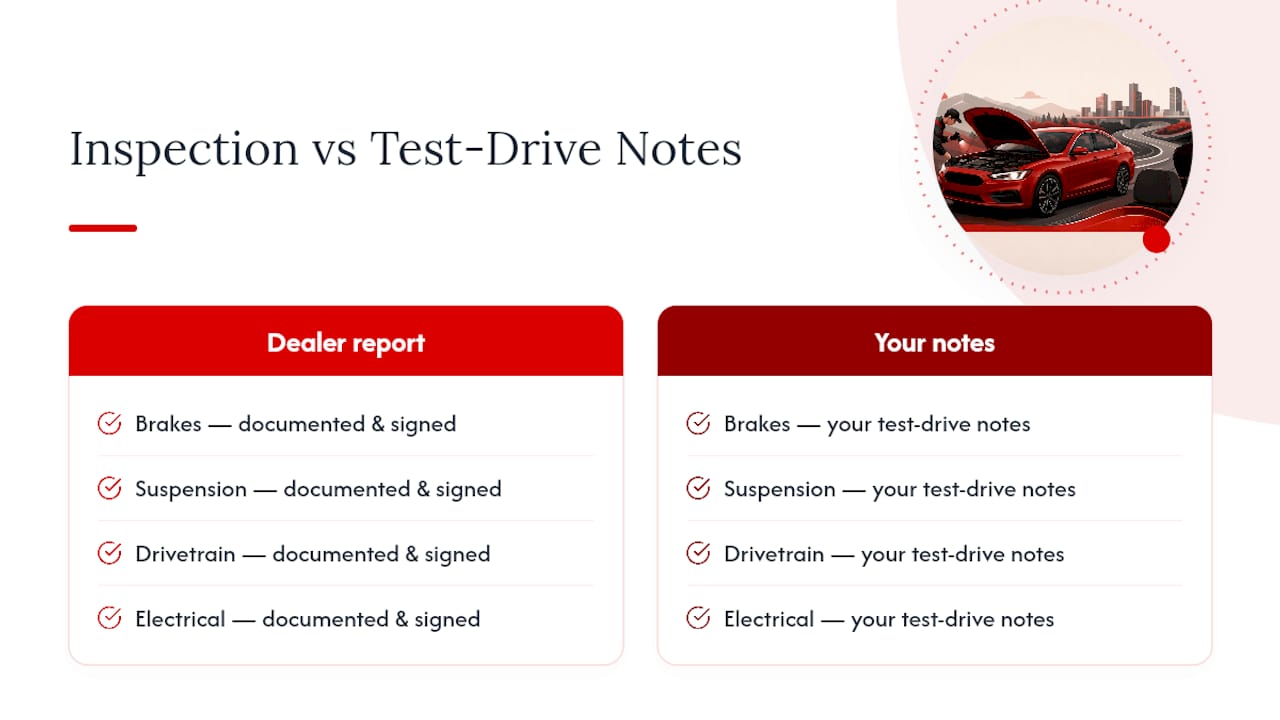
Every vehicle at the dealership goes through a documented, signed inspection before it reaches the lot, covering the same mechanical territory this checklist asks you to test yourself: brakes, suspension, drivetrain, and electrical systems. Our test-drive approach is low-pressure by design, and we'll hand you the inspection report on request so you can compare our findings against your own notes from the drive.
What This Checklist Comes Down To
If you only trust two things, trust the cold start and the transmission behavior under load. Write your notes down within minutes of parking the car, not after you've driven three more. And if a seller balks at giving you extra time, ask for a longer or overnight test drive anyway.
— Elmwood
Schedule Your Test Drive at Elmwood Auto Sales
This dealership provides a signed inspection report you can review before you start the vehicle, backed by a low-pressure buying process without sales quotas pushing the conversation.
That means the cold-start check, the undercarriage inspection, and the brake test this checklist walks you through have often already been documented by our team, and you're welcome to ask for that report the moment you arrive. If financing is part of your plan, we work with a range of credit histories through tailored financing options built around your situation rather than a one-size approval model. Looking for a specific make or body style we don't currently have on the lot? Our Car Finder service can track one down. Ready to put a vehicle through its paces yourself? Book a test drive at our Providence location and bring this checklist with you.
Sources
- Test-Driving a Car: A Checklist — Kelley Blue Book
- How to Test-Drive a New or Used Car — Consumer Reports
- Used Car Test Drive Checklist: 15-Minute Procedure — Dr. Vin
- How to test-drive a car — Mazda USA
FAQ
What Should I Check During a Test Drive?
Focus on cold-start behavior, brake feel, steering response, transmission shift quality, and how the tech and safety features work in practice. A drive of at least 15 to 30 minutes across city streets, rough pavement, and highway speed gives you enough exposure to catch most real problems.
What Is the $3,000 Rule for Cars?
This isn't a standard or documented rule from any major buying guide, so treat any version you hear with caution. If someone cites it to you, ask them to explain the specific reasoning rather than accepting it as an established figure.
What Are the 5 C's of Safe Driving?
Definitions of this phrase vary depending on the source, and there's no single agreed-upon list backing it. Rather than relying on an unverified acronym, focus on the concrete checks in this guide: cold start, controls, cargo fit, comfort, and connectivity.
What Questions Should I Ask During a Car Test Drive?
Ask about accident history, why the current owner is selling, whether the car has a service record, and whether the seller will allow a pre-purchase inspection. At Elmwood, you can also ask to see the signed inspection report directly.
How Long Should a Test Drive Last?
Plan for a minimum of 15 to 30 minutes, long enough to cover parking-lot maneuvers, stop-and-go traffic, and a stretch of highway. Anything shorter rarely surfaces transmission or suspension issues that only appear once the car is warmed up and moving at speed.