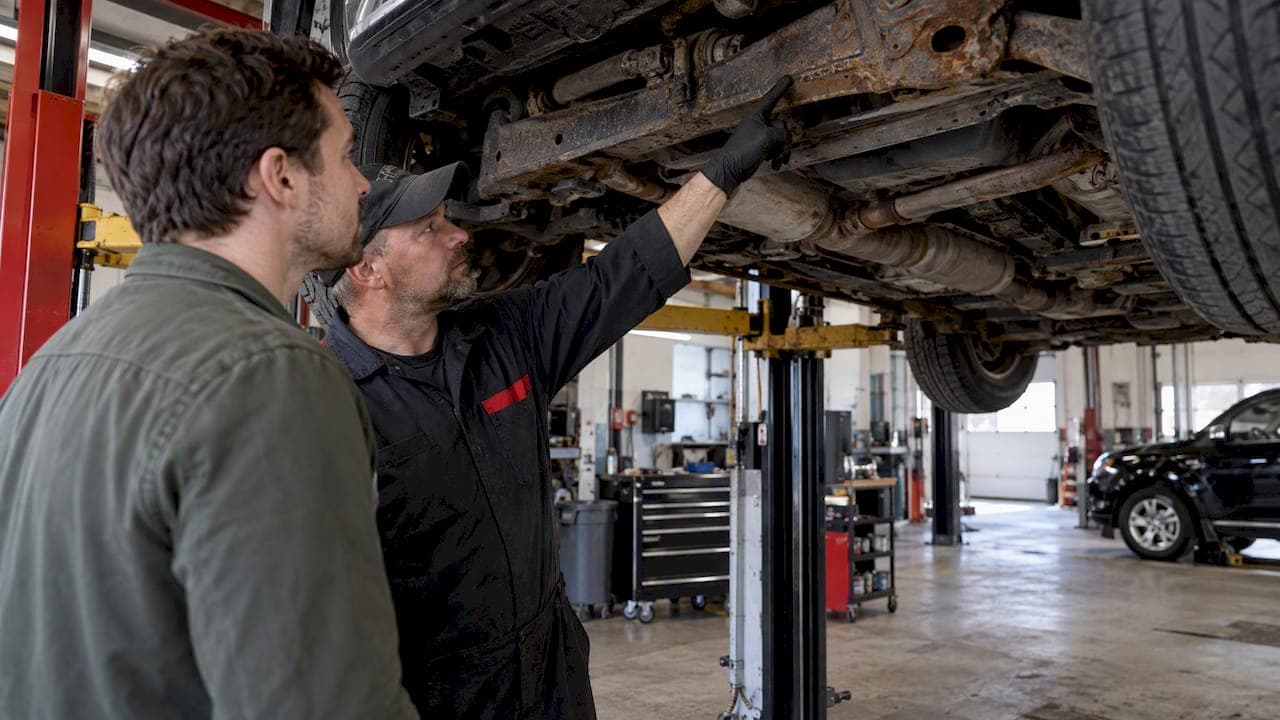
Visible surface rust on a wheel well or a brake rotor usually is not a dealbreaker, but rust on a sill, frame rail, or suspension mount is a different story entirely. If you spot corrosion in those structural areas, stop the deal, document what you see with photos, and get an independent pre-purchase inspection with a written report before you pay a dollar. The FTC advises buyers to request a mechanic-chosen inspection even when the seller hands you paperwork of their own.
TL;DR:
- Rust on structural components like sills, frame rails, or suspension mounts warrants a thorough inspection or walk-away decision, as it can indicate safety risks.
- A 15-20 minute walkaround focusing on wheel arches, sills, trunk seams, and visible frame rails can reveal early corrosion, but a lift inspection provides definitive certainty.
- Using a flashlight, mirror, and magnet helps identify hidden issues or repairs, while photos with scale aid mechanics in evaluating the severity of rust.
- A pre-purchase inspection typically costs between $249 and $449, offering detailed, VIN-specific reports and repair estimates that strengthen negotiation leverage.
- Dealers performing documented multi-point inspections and sharing photos increase transparency, but independent inspections remain the best way to verify a vehicle's structural integrity.
Table of Contents
- Priority Inspection Checklist for a 15 to 20 Minute Walkaround
- Bring a Flashlight, Mirror, and Magnet to the Viewing
- Reading the Signs: Surface Rust Versus Structural Rust
- When to Book a Pre-Purchase Inspection and What It Should Cost
- Turning Inspection Results Into Negotiation Leverage
- What a Transparent Dealer's Inspection Process Looks Like
- See How Elmwood Handles Inspections and Financing
- Sources
- FAQ
Priority Inspection Checklist for a 15 to 20 Minute Walkaround
A focused walkaround, done in daylight, covers the spots most likely to show early corrosion. Work through these areas in order and you will catch most warning signs before you ever open the hood.
- Wheel arches: Run your hand along the inner fender lip, where road salt and moisture collect first.
- Lower door edges and sills: Crouch down and check the rocker panels beneath each door, since this is a common spot for bubbling paint.
- Tailgate opening and trunk lip: Look at the seam where the trunk lid meets the body, a frequent trap for standing water.
- Visible frame rails and crossmembers: From ground level, look under the front and rear bumpers at any exposed metal rail.
- Exhaust welds and brake or fuel lines: Light surface flaking on an exhaust hanger is common, but flaking near a line joint deserves a closer look.
- Engine bay and strut towers: Check where the shock mounts meet the body, since corrosion here can affect suspension geometry.
- Trunk spare well and floor pans: Pull back the trunk liner and check the metal beneath the spare tire.
- Seat belt anchor points: Check the floor and pillar bolts where the belts attach, since these carry real crash loads.
Some of what you find will be cosmetic. Surface rust on a brake disc after a rainy night or light flaking on an outer exhaust shell rarely signals a bigger problem, according to independent rust inspection guidance. Corrosion on sills, frame rails, or anchor points sits in a different category because those parts carry structural and safety loads, and a used-car checklist from Liberty CDJR recommends treating any rust near these points as a reason to look closer rather than walk away immediately.
Bring a Flashlight, Mirror, and Magnet to the Viewing
A handful of inexpensive tools let you see and test things a casual glance will miss.
- Use a flashlight and a small inspection mirror to light up wheel well cavities and look up into undercuts you cannot reach with your eyes alone.
- Run a small magnet over suspect panels; a magnet that will not stick usually means thick body filler is hiding a patch or repair underneath.
- Gently press on any paint blister or flaking patch with a fingertip to check whether the metal underneath feels solid or gives way.
- Skip aggressive probing, scraping, or picking at paint you do not own, since that crosses from inspection into damage.
- Take photos of anything that looks off so you have a record to bring to a mechanic or use in negotiation later.
Pro Tip: Photograph suspect areas next to something for scale, like a coin or your hand, so a mechanic reviewing the photo later can judge the size of the problem.
Never crawl under a car on a sloped driveway or with it resting on anything less than a proper lift or jack stands. If you want a real look at the underbody, ask the seller for a lift inspection or book an independent pre-purchase inspection instead.

Reading the Signs: Surface Rust Versus Structural Rust
Not every orange patch means trouble, but knowing which ones do is the whole point of the exercise.
- Light surface rust on exposed bolts, brake rotors, or exhaust tips is common and usually cosmetic.
- Rust inside hollow sills, rocker panels, frame rails, or around suspension and seat-belt mounts often signals structural weakening that needs expert evaluation.
- Blistered or bubbling paint over a seam can mean rust is already forming underneath, even if the surface looks intact.
- Undercoating that looks patchy, fresh, or mismatched in color compared to the rest of the underbody can indicate a prior repair meant to hide corrosion.
- Bolts or fasteners with overspray on them suggest a panel was removed and repainted, which is worth asking about directly.
- A dull or hollow sound when you tap lightly on a rocker panel, compared to a solid door panel nearby, can point to rust eating away the metal from inside.
A vehicle history report is not a substitute for a hands-on look, since it usually does not list mechanical or structural problems at all, according to the FTC. The FTC's Buyers Guide specifically lists frame cracks, corrective welds, and rust-through among the defects buyers should watch for. If you see any of the subtler clues above, take photos, note the location, and insist on a lift-based inspection before moving forward.
When to Book a Pre-Purchase Inspection and What It Should Cost
A standing inspection can only tell you so much. Hollow sills, frame rails, and the underside of crossmembers hide their worst damage from view, which is why a lift-based pre-purchase inspection (PPI) is the only reliable way to confirm what you suspect.
- Require the VIN on the report so the inspection is tied to the exact car you are buying, not a generic checklist.
- Ask for photos of the underbody, especially any area flagged for corrosion or prior repair.
- Get an explicit frame and undercarriage assessment, not just a general pass or fail note.
- Request written repair estimates for anything found, so you have real numbers to work with.
Typical PPI pricing runs about $249 to $449, with lift-based undercarriage inspection and full frame documentation usually included in the higher tiers, according to Vehicle Inspectors. That range buys real peace of mind on a purchase that will otherwise cost thousands. If a seller or dealer refuses to allow an independent inspection of their choosing, treat that refusal itself as a warning sign worth walking away from.
Turning Inspection Results Into Negotiation Leverage
A documented PPI report is not just reassurance, it is a tool. Written repair estimates give you a specific dollar figure to ask for off the price, or grounds to request the seller fix the issue before you sign anything. Vehicle Inspectors notes that a documented inspection commonly saves buyers real money when it catches a major problem before purchase.
- Dealers are required to display a Buyers Guide on used vehicles, but that sticker does not replace an independent mechanical inspection.
- Run a VIN-based vehicle history report and check safercar.gov for any open safety recalls before you finalize anything.
- Review how "as-is" language in a sales contract affects your protections, since it changes what you can do after the sale.
- If a PPI turns up frame rust-through or compromised seat-belt anchors, treat that as a safety issue serious enough to walk away, not just negotiate around.
What a Transparent Dealer's Inspection Process Looks Like
Some used car dealers perform a thorough multi-point inspection before vehicles reach the lot as part of a low-pressure buying approach built around straightforward information rather than sales pressure. A transparent dealer might document that process in a way similar to an independent PPI: with a signed report tied to the VIN, photos of notable issues, and explicit notes on the underbody and frame rather than a vague "passed inspection" checkbox. That kind of documentation is what turns a dealer's claim into something a buyer can actually verify, and it is the standard we think every used car buyer deserves to ask for, regardless of where they shop.
— Elmwood
See How Elmwood Handles Inspections and Financing
If you would rather skip the flashlight-and-magnet routine, Elmwood Auto Sales in Providence puts every vehicle through a 150-point inspection before it goes up for sale, so you are working from documentation rather than guesswork from the first conversation.
- Browse our inspected inventory of sedans, SUVs, trucks, and certified pre-owned vehicles.
- Use our Car Finder tool if you have a specific model or budget in mind.
- Apply for financing that works with a range of credit histories, including buy here, pay here options.
- Get a vehicle appraisal or start a trade-in if you are selling as you buy.
When you are ready to see a car in person, you can book a test drive and ask to review the inspection report on the spot.
Sources
FAQ
How do I inspect a used car for rust myself?
Check the wheel arches, door sills, rocker panels, trunk lip, and visible frame rails with a flashlight and mirror, looking for bubbling paint or flaking metal. This walkaround takes about 15 to 20 minutes and catches most visible warning signs, though hollow sills and frame rails often need a lift inspection to assess fully.
What is the $3,000 rule for cars?
This is not an official rule from any regulatory body, and definitions vary among buyers and mechanics. A common informal version suggests walking away if a used car's needed repairs would cost more than a set dollar threshold relative to its value, but there is no standardized figure or source behind it.
How much does a rust check cost?
A dedicated rust check on its own is not typically sold separately, but a full pre-purchase inspection that includes underbody and frame assessment runs about $249 to $449 depending on the tier, according to Vehicle Inspectors. Higher tiers include lift-based inspection and photo documentation of the frame and undercarriage.
Is it legal to sell a car with a rusted frame?
Laws vary by state and situation, and a seller generally cannot misrepresent a vehicle's condition or conceal a known safety defect. The FTC's Buyers Guide lists frame cracks and rust-through among the defects dealers must address in required disclosures, so ask to see that documentation and consult your state's consumer protection office for specifics.
Should I walk away if I find rust on a used car?
Not automatically. Surface rust on brake rotors or an exhaust shell is often cosmetic and not a reason to pass on the car, while rust in sills, frame rails, or seat-belt anchor points calls for an independent pre-purchase inspection before you decide anything.