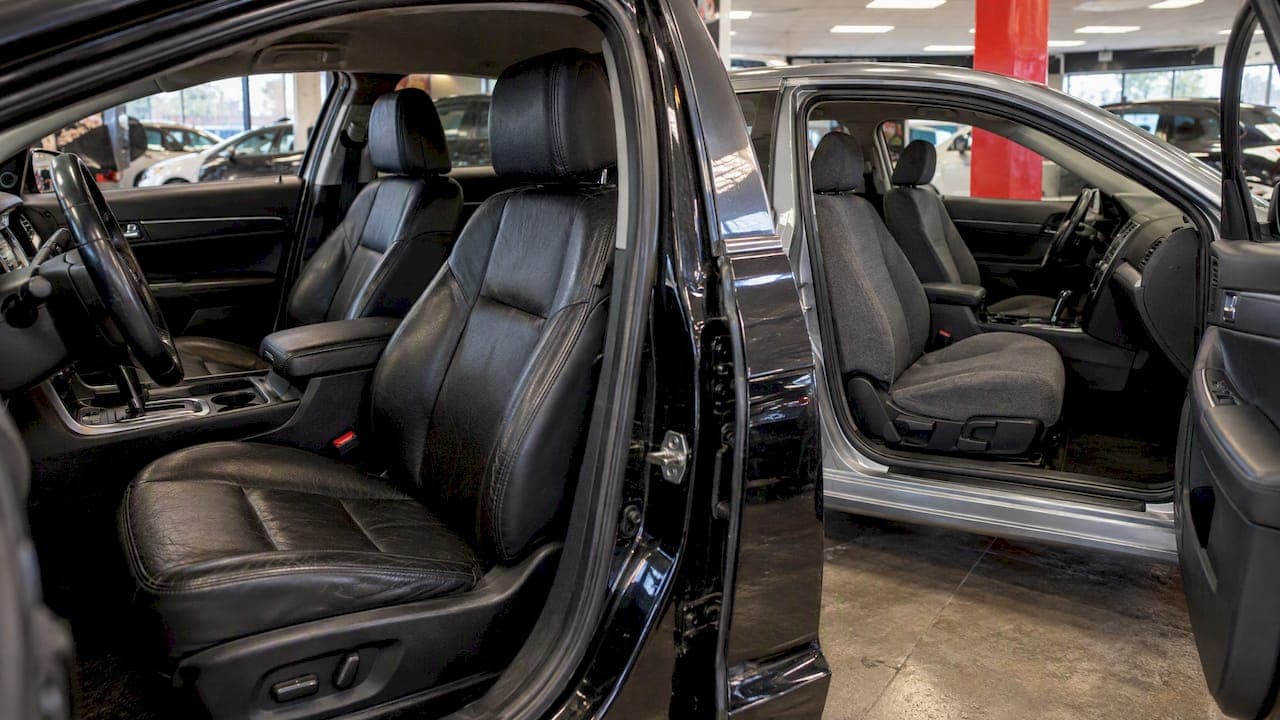
Leather is the better pick if you want easy wipe-clean upholstery and a more upscale look, and you are willing to condition it and live with hot and cold surfaces. Cloth is the better pick if you want a lower price, a seat that is comfortable in every season and less slippery, and you don't mind vacuuming and the occasional stain treatment. For most used car shoppers, the right answer depends less on which material is "best" and more on your climate, your passengers and how you use the car. Here is how the two compare, so you can decide before you start test driving.
TL;DR
- Leather wipes clean more easily and resists absorbing spills and odors, but it needs regular cleaning and conditioning.
- Cloth usually costs less, stays comfortable in extreme temperatures and grips you better in turns, but it stains and holds odors more readily.
- Leather can get uncomfortably hot in summer and cold in a New England winter. Cloth does not have that problem.
- Condition matters more than material on a used car: well-kept cloth beats a cracked leather seat every time.
- Inspect the seats in person, in daylight, before you buy, and ask about the vehicle's history.
Table of Contents
- What are the main differences between leather and cloth seats?
- Which is more comfortable, leather or cloth?
- Which is easier to clean and maintain?
- How long do leather and cloth seats last?
- How much more do leather seats cost?
- Do leather seats help resale value?
- What are the downsides of leather seats?
- Which seats suit which kind of driver?
- What should you check on used leather or cloth seats?
- Our perspective: choose the car first, then the seats
- Find your next vehicle at Elmwood Auto Sales
- FAQ
- Sources
What are the main differences between leather and cloth seats?
The core trade-off is price and comfort against cleaning and polish. According to Progressive's comparison of leather and cloth car seats, leather is a premium, generally more expensive option that is easier to clean, while cloth usually costs less and needs only vacuuming and washing.
There are a few other differences worth knowing:
- Grip. Cloth is generally less slippery than leather. Consumer Guide notes that this extra friction helps keep you and loose objects in place during driving maneuvers.
- Allergens. Leather is less likely to hide allergens, which can matter if someone in your household has allergies or respiratory issues, according to AutoZone.
- Looks. Leather reads as premium. Cloth reads as practical, and modern cloth comes in plenty of patterns and textures.
- Environmental footprint. The same AutoZone guide points out that natural-fiber cloth is often a more sustainable choice, because leather tanning uses significant water and chemicals.
None of these differences makes one material a clear winner. They simply point to different buyers.
Which is more comfortable, leather or cloth?
It depends on the weather and on you. Cloth tends to feel the same in July as in January. Leather does not.
Progressive says leather seats get uncomfortably cold or hot in extreme winter and summer temperatures. Rhode Island gives you both. A leather seat that sat outside on a January morning feels stiff and cold until the heater catches up, and a dark leather seat in a parked car in August can be unpleasant to climb into, especially in shorts.
Consumer Guide goes further: in extreme cases, leather surfaces exposed to high solar heat can reach temperatures that pose a risk of burns, a danger cloth does not share. If you have kids who climb into the back seat on their own, that is worth thinking about. A sunshade and a quick touch test before buckling a child in are simple safeguards.
Quality also matters. Consumer Guide says cheap leather can be hard and uncomfortable, while pricier leather can be soft. Some people find cloth contours to the body better and feels more broken in, and that is a common opinion among drivers who have owned both.
Two features change the comfort equation:
- Heated seats. Many vehicles that come with leather also offer seat heaters, which take the sting out of a cold leather seat. If you want leather in a New England winter, check that the heaters work when you test drive.
- Ventilated seats. These are less common, but they help with summer heat on leather.
If neither feature is on the car, cloth is usually the more comfortable everyday choice.
Which is easier to clean and maintain?
Leather is easier to clean day to day, but it asks for periodic care. Cloth is more forgiving of neglect in some ways and less so in others.
Progressive explains that leather does not absorb spills or odors as readily, so a surface mess can be cleaned up fast. Cloth is more prone to stains and odors, and those can be hard to remove once they set. The seat cover specialists at Seat Cover Solutions describe the reason: cloth is porous and can absorb liquids and odors, while leather is surface-sealed, so spills usually sit on top long enough to wipe up.
How do you care for cloth seats?
Cloth care is mostly routine:
- Vacuum regularly, including the seams where crumbs collect.
- Spot clean spills quickly, blotting rather than rubbing.
- Consider a deeper cleaning now and then. One guide notes that many manufacturers recommend annual steam cleaning, so check your owner's manual for what your vehicle's maker advises.
How do you care for leather seats?
Leather needs regular cleaning and conditioning, plus protection from the sun. Seat Cover Solutions notes that conditioning and UV protection help prevent drying and cracking. Consumer Reports says plain Ivory soap and water will do the trick on leather, so you don't need a cabinet full of products.
A few cautions apply to both materials. Consumer Reports warns that bleach, hydrogen peroxide and ammonia-based cleaners can damage car upholstery, so keep them away from your seats. Test any new cleaner on a hidden spot first.
If you would rather follow a step-by-step routine, this interior detailing checklist covers the order to clean surfaces, seats and carpets, including leather cleaning and conditioning.
For germs, Consumer Reports quotes Jeff Stout of Yanfeng saying isopropyl alcohol is a safe way to kill germs on car interior surfaces. Even so, check your manual before using it on leather or fabric you care about.
How long do leather and cloth seats last?
With proper care, leather generally edges out cloth on durability, according to Progressive. Cloth stains and odors can be difficult to remove, and that is often what makes a cloth interior look worn before it actually is.
Some industry sources put numbers on this. Seat Cover Solutions says leather seats can keep their structural strength for 8 to 12 years with proper conditioning, while cloth seats often show thinning, stretching and seam fatigue between 5 and 8 years. Treat these as rough guides from a seat cover retailer, not guarantees. The real lifespan of any seat depends on how many people sat in it, how often, in what climate and with what care.
Leather has its own weak spots. It can crack, fade or peel when it is exposed to heat and UV without protection, and Consumer Guide says leather that is never conditioned can harden and crack. Keys, belt buckles, tools and pet claws can cut or scratch it. Cloth wears differently: it thins at the bolsters where you slide in and out, and it can fray or snag.
The practical takeaway for a used car: ask how the car was stored and used. A garage-kept vehicle with cloth seats can be in far better shape than a sun-baked one with leather.
How much more do leather seats cost?
Leather is typically offered as an upgrade, and in many vehicles it comes only on higher trim levels. Progressive describes it as the more expensive option, and Consumer Guide describes leather as a premium choice that adds to the price of a new vehicle.
The good news for used car shoppers is that you are not paying the original option price. By the time a vehicle is a few years old, depreciation has already absorbed much of the extra cost. That means a used vehicle with leather can sit closer in price to its cloth-seat sibling than it did on the showroom floor. If you are weighing a used car against a new one overall, our guide to the true cost of owning a used car vs. a new car walks through the numbers beyond the seats.
Don't pay a large premium for leather you may not value. Compare comparable vehicles, and decide whether the material is worth the difference to you.
Do leather seats help resale value?
Sometimes, but less than most people expect. Consumer Guide says leather may help recoup some of its cost at resale, but most used car buyers want a reliable vehicle at a low price, and few will pay hundreds of dollars extra for leather.
What tends to matter more at trade-in is condition, mileage, maintenance records and keeping original equipment intact. Our article on why original parts matter for resale value explains this in more detail. If you plan to trade in down the road, a clean, uncracked interior of either type helps. You can compare your options in our guide to selling vs. trading in your car.
What are the downsides of leather seats?
If you are leaning toward leather, these are the things to plan for, and each has a simple fix:
- Temperature swings. Leather gets hot in summer and cold in winter. Use a sunshade, park in shade or a garage when you can, and look for heated seats.
- Upkeep. It needs regular cleaning and conditioning. Set a reminder every few months.
- Sun damage. UV can fade and crack it. Conditioners with UV protection and window tint can help.
- Cuts and scratches. Keep keys, tools and sharp items off the seats, and use a pet blanket if you drive with a dog.
- Slipperiness. It offers less grip than cloth in hard turns, which most drivers never notice day to day.
These are manageable, and plenty of drivers happily live with leather for a decade or more.
Which seats suit which kind of driver?
Use your own routine as the guide.
Families with young kids. Spills, crumbs and car sickness favor leather for cleanup. Hot summer seats favor cloth, or leather with shade. Many families land on leather in the front and a good sunshade in the back.
First-time buyers on a budget. Cloth usually means a lower price, and a clean cloth interior is easy to keep that way with a vacuum and seat protection. Spend the difference on a vehicle with better mechanical condition.
Pet owners. Leather wipes off fur and drool more easily, but claws scratch it. Cloth holds hair and odors. A washable seat cover works with either.
Commuters. If you spend an hour a day in the car, comfort across the seasons matters. Cloth is steady, and leather with heated seats is excellent in winter.
Allergy sufferers. Leather is less likely to hide allergens, per AutoZone. Talk to your doctor if allergies are a serious concern.
Ride-share or work trucks. Whatever gets the most traffic and spills is best served by the easiest-to-clean surface. That usually points to leather or a rugged vinyl-style finish, if it is offered.

What should you check on used leather or cloth seats?
When you look at a used car, the seats tell you a lot about how the car was treated. Go through this checklist in daylight:
- Bolsters. The outer edges of the driver's seat wear first. Look for cracks, creases that have turned to splits, or thinning fabric.
- Seams. Check for popped stitching in both leather and cloth.
- Surface texture. Leather that feels dry, stiff or shiny in patches has probably not been conditioned. Cloth that looks pilled or shiny is worn.
- Smell. Musty or smoky odors are hard to remove from cloth. A lingering smell can also point to moisture in the carpet.
- Stains and sun fade. Compare the top of the seatback with the shaded areas.
- Seat controls. Test the power adjustments and heaters, and operate every seat position.
- Rear seats. Check the back, where kids and pets sit. Wear is often hidden there.
No interior inspection replaces a mechanical one. A beautiful seat is no help if the car underneath is not sound, so ask for the vehicle history report and a full inspection summary on any vehicle you are considering.
Our perspective: choose the car first, then the seats
We see a lot of used buyers walk in sure that they want leather and walk out with a cloth-interior vehicle they love, and the reverse. Our view is simple: the best seat is the one in a vehicle that is mechanically sound, fairly priced and fits your budget.
That is why our process starts with a thorough inspection of every vehicle we sell, not with the upholstery. Seats are easy to clean, cover or condition. A tired transmission or a questionable frame is not. We also don't work on commission, so when you ask us whether a leather interior is worth the extra money on a particular car, you get a straight answer rather than a pitch.
Our advice, based on how most local drivers use their vehicles: if you commute, drive with kids, or keep a car for years, think about how the seats will feel in January and in August, and whether you will actually do the care. If you will condition leather and shade it, it is a great choice. If you won't, a well-kept cloth interior will serve you better and cost less. And if your credit is a worry, don't let seat material stand between you and a reliable vehicle. We work with buyers across a range of credit histories, including buy here, pay here options.
— Elmwood
Find your next vehicle at Elmwood Auto Sales
Whether you want leather or cloth, we can help you find an inspected vehicle that suits your budget. Browse our used cars, trucks, SUVs and vans in Providence, or tell us what you are looking for and let our Car Finder do the searching.

If financing is the question, you can start with our used car financing application. Have a car to trade? We can appraise your trade-in so you know where you stand before you shop.
FAQ
Are leather seats worth it in a used car?
They can be, if you value easy cleanup and a premium feel and will condition them regularly. Because depreciation has already absorbed much of the original option price, a used car with leather is often a better value than the same car new. Check the condition of the bolsters and seams before you pay extra for it.
Are cloth seats more comfortable than leather?
Many drivers think so, mainly because cloth does not get as hot or as cold. Progressive notes that leather can be uncomfortable in extreme temperatures, while cloth stays steady. Heated or ventilated leather seats can close that gap.
Which lasts longer, leather or cloth?
With proper care, leather generally edges out cloth on durability, according to Progressive. Leather that is never conditioned or is left in strong sun can crack, though, and a well-kept cloth seat can outlast a neglected leather one. Care and storage matter as much as the material.
Do leather seats hold resale value better?
Leather may help recoup a little of its cost, but Consumer Guide notes that few used buyers pay hundreds extra for it. Condition, mileage and maintenance history usually carry more weight. A clean interior of either type helps at trade-in.
Can I switch from cloth to leather later?
Yes, though it is rarely cheap. Upholstery shops and seat cover makers offer leather replacements and covers. Compare that cost with simply buying a vehicle that already has the interior you want.
Sources
- Leather vs. Cloth Car Seats | Progressive
- Cloth vs. Leather: Which Is Best for You? | Consumer Guide
- Cloth Vs. Leather Car Seats: What's Best for Your Ride? | AutoZone
- Cloth vs. Leather Car Seats: Durability, Repair Costs, & More | Seat Cover Solutions
- How to Clean Your Car's Interior | Consumer Reports
- How to Rid Your Car of Odors and Smells | Consumer Reports