Yes, original parts matter for resale value. Using OEM parts for safety- and structure-critical repairs generally preserves what a buyer or appraiser will pay for your car, while undocumented aftermarket work on the same systems tends to lower it. That's the short version. The longer version is that resale value depends less on the sticker price of a part and more on what you can prove about it.
Three things protect your value right now: keep any replaced factory parts in storage until the deal closes, get itemized repair invoices with part numbers, and use certified shops for installation. If cost pushes you toward aftermarket parts, limit the damage by sticking to reputable brands with documented fitment, and saving every receipt.
- Store the original part, even if it seems useless
- Request a detailed invoice, not a vague summary
- Choose a certified shop for anything structural or safety-related
Pro Tip: Take dated photos of the damage and the repair before the shop closes up the panel. Appraisers trust a paper trail more than a verbal explanation.
Key Takeaways
Documented OEM repairs on safety and structural components protect resale value, while undocumented or poorly fitted aftermarket work tends to lower buyer offers.
| Point | Details |
|---|---|
| Keep original parts | Store replaced factory parts and label them until any sale or trade-in is final. |
| Prioritize high-impact repairs | Spend on OEM quality for structural panels, airbags, ADAS sensors, and drivetrain work. |
| Check your lease or policy | Leases often require OEM parts, and insurance LKQ language may not cover the price difference. |
| Document everything | Itemized invoices with part numbers matter more to appraisers than the part brand itself. |
| Trade in with proof | Elmwood Auto Sales credits documented OEM repairs and service records during appraisal. |
Table of Contents
- How Original Parts Affect Resale Value
- Which Parts Actually Move the Needle on Resale
- Insurance, Leases, and Safety Rules You Should Know
- When Aftermarket Parts Won't Hurt Your Resale Value
- Your Post-Repair Checklist for Protecting Value
- The Real Numbers Behind OEM Parts and Resale
- Get a Fair Trade-In Estimate Backed by Real Inspection Standards
- Frequently Asked Questions
- Sources
How Original Parts Affect Resale Value
Appraisers and dealers don't inspect every bolt. They look for patterns that predict hidden risk, and repair history is one of the strongest patterns available. A vehicle history report that shows documented, OEM-aligned repairs builds buyer trust; one that shows unexplained bodywork or missing records invites a lower offer, even if the actual repair was solid.
Fit, finish, and safety system integrity work as proxies for overall condition. A door that closes with a slightly different sound, a panel gap that's a few millimeters off, or a sensor that wasn't recalibrated after a bumper swap all signal to a trained eye that something was replaced. Appraisers translate that signal into a dollar deduction, sometimes without ever mentioning parts directly.
- Documented OEM repairs support trade-in offers closer to book value
- Visible fit issues or unexplained gaps trigger automatic scrutiny
- Vehicle history platforms flag non-OEM repairs and can lower final offers even when the part functions fine
Buyers rarely ask "was this an OEM headlight?" They ask "what else don't I know about this car?"
Which Parts Actually Move the Needle on Resale
Not every part carries equal weight with an appraiser. Spending on OEM quality matters most where safety, structure, or drivability is involved, and matters far less on parts nobody will ever inspect closely.
High-impact parts include structural body panels, airbags and crash sensors, ADAS cameras and radar units, major drivetrain components, and any frame repair. These get scrutinized because they affect crash performance and because certified repair procedures exist specifically to protect them.
Medium-impact parts cover headlights, taillights, bumpers, and paint-matched body panels. Buyers notice these visually, and a poor color match or misaligned bumper reads as a red flag even when the underlying repair was fine.
Low-impact parts are filters, bulbs, wiper blades, and minor interior trim. These rarely change a buying decision because they're consumable by nature. Nobody negotiates $500 off a car because the cabin air filter is aftermarket.
Insurance, Leases, and Safety Rules You Should Know
Insurance policies often use the term "Like Kind and Quality," or LKQ, to describe acceptable replacement parts. LKQ language allows insurers to specify aftermarket parts that match OEM specs, but it doesn't guarantee OEM parts unless your policy includes an OEM endorsement. Without that endorsement, you typically pay the price difference if you insist on factory parts.
Lease agreements raise the stakes further. Most lessors expect OEM-aligned repairs, and using aftermarket parts without approval can trigger turn-in penalties that cost more than the repair savings ever did.
Pro Tip: If you lease, call your lessor before authorizing any bodywork. A five-minute call can prevent a surprise charge at turn-in.
On the regulatory side, NHTSA guidance warns repairers against making required safety systems inoperative during a repair. That standard exists because a poorly matched part can quietly disable a crash sensor or airbag trigger, which is exactly the kind of hidden risk that tanks resale value later.
- LKQ language permits aftermarket parts unless your policy has an OEM endorsement
- Leases commonly require OEM parts or manufacturer-aligned equivalents
- FMVSS compliance depends on repairs that don't disable required safety devices
When Aftermarket Parts Won't Hurt Your Resale Value
Not every non-OEM part is a liability. In enthusiast markets, documented upgrades like a quality performance exhaust or a premium audio system can add recognized value, especially when the upgrade is well known in truck and performance circles and properly installed.
The difference comes down to fit and documentation. A reputable aftermarket brand, installed by a professional and backed by a receipt, reads very differently to an appraiser than a bargain part with no paperwork. Aftermarket parts can run 30 to 50% cheaper than OEM, but that savings evaporates fast if the part fails or throws off a sensor calibration.
- Documented performance upgrades can add value in enthusiast markets
- Poor fit, mismatched paint, or recurring failures actively hurt resale
- Any part touching ADAS calibration should be OEM or certified-equivalent
Pro Tip: Keep the box, the receipt, and the brand name for any aftermarket upgrade. "I don't remember" is the phrase that costs you money at trade-in.
Your Post-Repair Checklist for Protecting Value
After any collision or major part replacement, a short paper trail now saves you money later.
- Store the original part and label it with the date and repair shop name
- Collect an itemized invoice listing part numbers, labor, and shop certification
- Take before-and-after photos of the damage and the finished repair
- Request OEM parts for anything safety- or structure-related, and confirm who pays the difference
- Add an OEM parts endorsement to your insurance policy if you drive a newer or leased vehicle
- Use a certified collision shop for ADAS recalibration after any bumper, windshield, or camera-adjacent repair
- Keep every document together for future vehicle history reports and buyer requests
Pro Tip: Create a single folder, physical or digital, for every repair record on the car. When it's time to sell or trade in, that folder is worth real money.
How to Spot Genuine OEM Parts and Verify the Paperwork
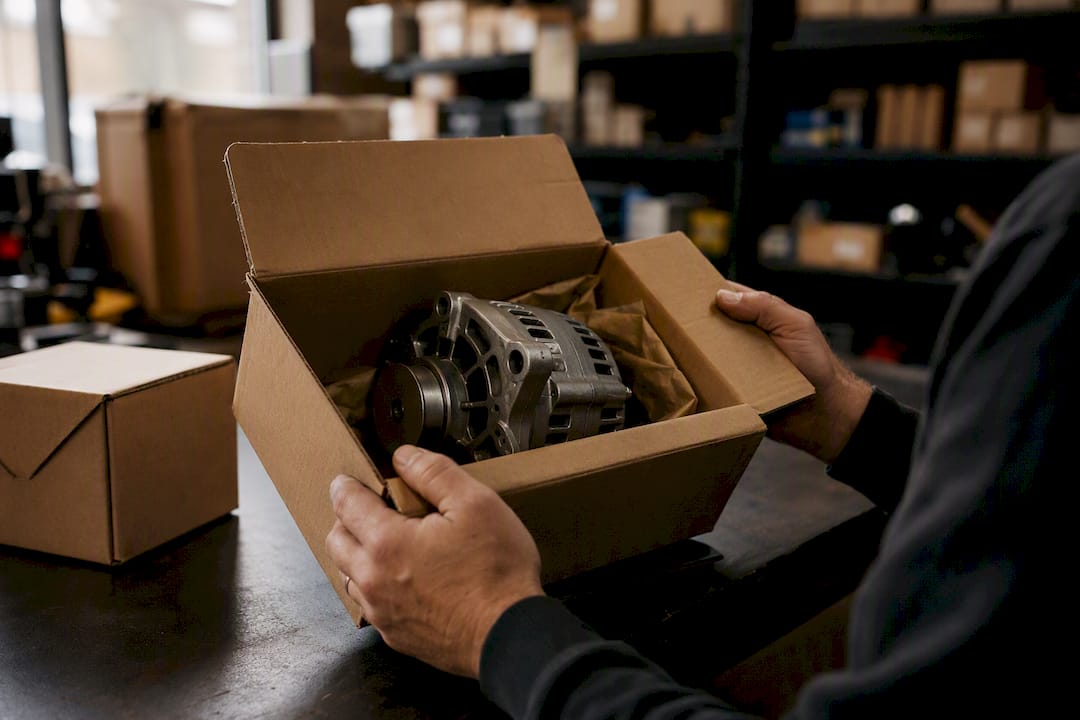
OEM parts usually carry a manufacturer logo and a part number printed directly on the component or its packaging. You can cross-reference that number against your VIN through a dealer parts department to confirm it matches your exact model and trim.
A trustworthy invoice should list the part number, an OEM label or manufacturer name, labor charges, and the shop's certification. Dealers and appraisers weigh this documentation heavily. Retaining original parts and paperwork remains the single most consistent trust signal buyers look for.
The Real Numbers Behind OEM Parts and Resale
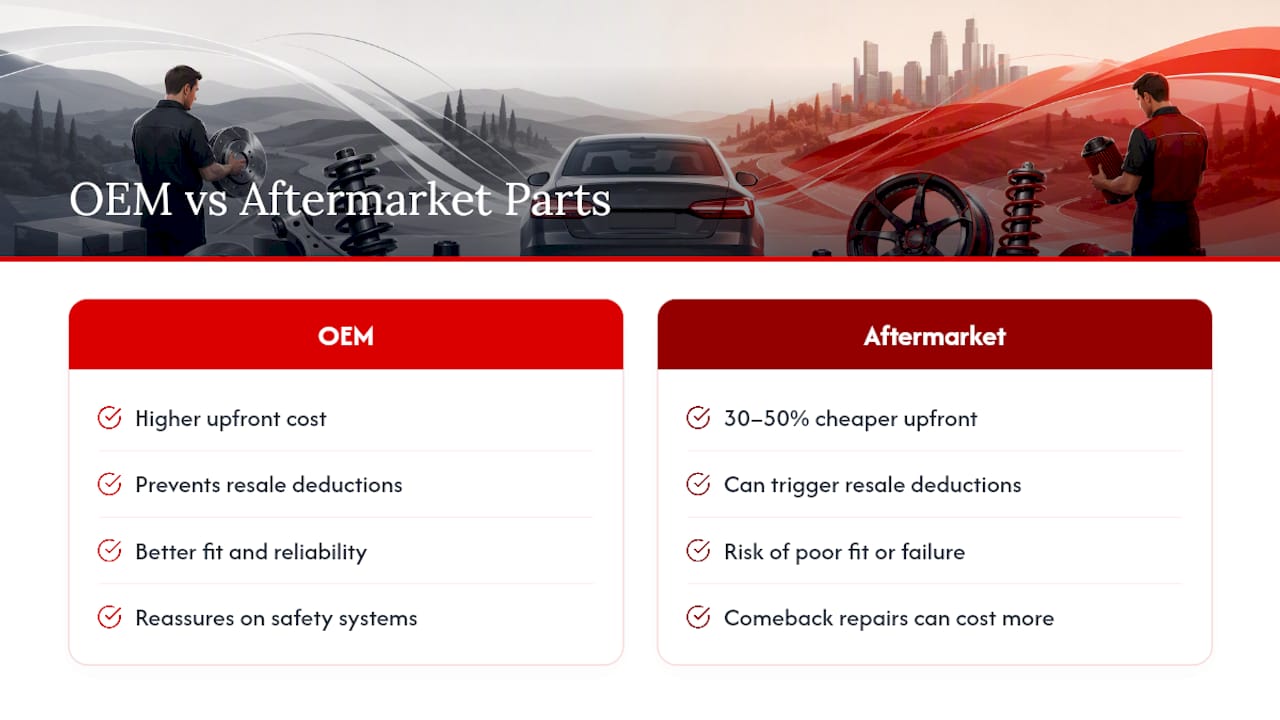
OEM parts typically cost 20 to 50% more than aftermarket equivalents, largely because they require model-specific engineering and testing that generic parts skip. That premium is where most owner-insurer disputes start.
Trade sources tracking collision-repair outcomes report that vehicles repaired with OEM parts tend to need fewer secondary repairs than those repaired with aftermarket components, and that documented OEM repairs often carry a resale premium at trade-in. NHTSA's guidance reinforces why this matters mechanically, not just financially: a repair that leaves a required safety system compromised creates liability long before it affects a sale price.
- OEM premium: roughly 20 to 50% above aftermarket pricing
- Insurers often default to LKQ parts unless an OEM endorsement is in place
- Documented OEM repairs correlate with fewer comebacks and stronger resale offers
A dealer's view on parts, inspections, and trade-ins
When we appraise a trade-in at Elmwood, complete service records and OEM-documented repairs move the needle immediately. A folder full of invoices tells us more than a spotless exterior ever could. Our inspection standards exist specifically to catch what documentation might miss, which protects both our buyers and the value you bring in.
Get a Fair Trade-In Estimate Backed by Real Inspection Standards
Most dealerships glance at your car for five minutes and hand you a number. Elmwoodautosalesri does the opposite: our appraisal team reviews your repair documentation and inspects the vehicle thoroughly, so a well-maintained car with OEM repairs gets credited for it instead of guessed at.
If you've kept your invoices, original parts, and service records, you're already ahead of most trade-ins we see. Bring that paperwork with you and it becomes part of the conversation, not an afterthought. Our trade-in process is built around documentation, not pressure tactics, and our low-pressure buying philosophy means you'll get a straightforward number without a sales script attached.
Ready to see what your car is actually worth? Book a test drive or trade-in appraisal at Elmwood Auto Sales and bring your repair records with you.
Frequently Asked Questions
Do original parts increase value, or just prevent it from dropping? Mostly the second. OEM parts rarely add value beyond a factory-condition car's baseline, but they help you avoid the deductions that come with visible or documented non-OEM repairs.
Why use OEM parts if aftermarket is so much cheaper? Aftermarket parts can run 30 to 50% cheaper upfront, but poor fit or premature failure often erases that savings, especially on safety-related components where a comeback repair costs more than the original premium.
Does resale value and authenticity matter for every car, or mainly luxury vehicles? It matters for every car, but the effect is strongest on newer, leased, and high-value vehicles, where buyers and lessors expect factory-original condition and penalize deviations more heavily.
What's the real impact of original parts on resale for an older, high-mileage vehicle? Smaller, but not zero. Mileage and overall condition dominate value on older cars, though documented OEM repairs on safety systems still reassure buyers and support a stronger trade-in offer.
Sources
- 30122 make inoperative — NHTSA interpretation
- OEM vs. Aftermarket Parts: How Your Choice Affects Safety, Costs, and Resale
- Genuine OEM parts vs aftermarket: the real impact on safety and claims