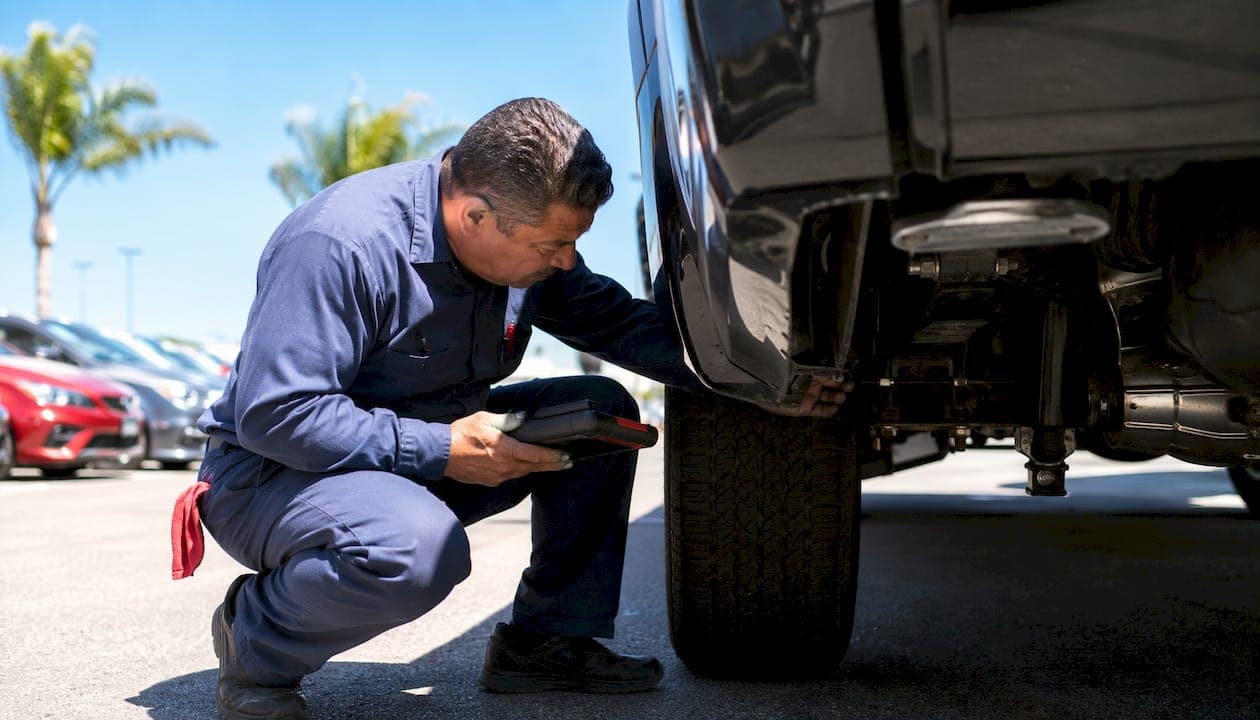
A dealership vehicle inspection is a standardized, multi-point examination that verifies a used car's safety, drivability, and documented repairs before it reaches the sales lot. Every reputable dealer runs each vehicle through a structured checklist covering mechanical systems, safety components, and documented history before offering it for sale.
What you should know at a glance:
- Checklist scope: Engine, brakes, tires, electrical, steering, suspension, interior, and exterior are all evaluated, with VIN logging and odometer verification at intake.
- Verification steps: A diagnostic trouble-code scan (OBD-II), road test, and NHTSA recall check confirm safety and drivability beyond what a visual inspection can catch.
- Trust signals: An itemized inspection report, lot-certification sticker, and documented reconditioning, like what Elmwood Auto Sales provides, give buyers written proof of what was checked and corrected.
Table of Contents
- What does the dealership vehicle inspection process actually check?
- How is a dealership inspection performed, step by step?
- What should you look for in the inspection report?
- Dealership inspection vs. independent inspection: which do you need?
- How long does an inspection take, and what does it cost?
- What does Elmwood Auto Sales check, and why does it matter?
- What should you expect after the sale?
- Key Takeaways
- The inspection report tells you more than you think
- Inspected and certified used cars at Elmwood Auto Sales
- Useful sources and tools for verifying inspection facts yourself
What does the dealership vehicle inspection process actually check?
A thorough vehicle inspection checklist covers every major system on the car. Here is what buyers should expect to be evaluated:
- Engine and fluids: Oil level and condition, coolant, brake fluid, power steering fluid, belts, and hoses
- Transmission: Fluid condition, shift quality, and signs of slippage or delay
- Brakes and ABS: Pad thickness, rotor condition, brake lines, and ABS warning light status
- Steering and suspension: Tie rods, control arms, strut condition, and steering play
- Tires and wheels: Tread depth, even wear patterns, sidewall condition, and matching sizes
- Electrical and battery: Battery load test, charging system output, all lights, and warning indicators
- Interior safety: Airbag system status, seat belts, horn, wipers, and all power accessories
- Exterior body and glass: Panel condition, paint consistency, windshield integrity, and all exterior lights
- Undercarriage: Frame condition, rust, exhaust system, and fluid leaks
Inspection depth varies by format. A 6-point quick check is used for lot screening. A 23-point routine check covers the most common service items. A 100-point or 222-point comprehensive inspection is what used-car buyers should expect before purchase, since it includes OBD-II diagnostics, road-test documentation, and a full underbody review.
Pro Tip: Ask the dealer specifically which point-level inspection was performed. A 100+ point inspection with a documented OBD-II scan and road-test notes is the minimum you should accept for a used vehicle purchase.
How is a dealership inspection performed, step by step?
Understanding the workflow helps you ask the right questions and recognize when a step was skipped.
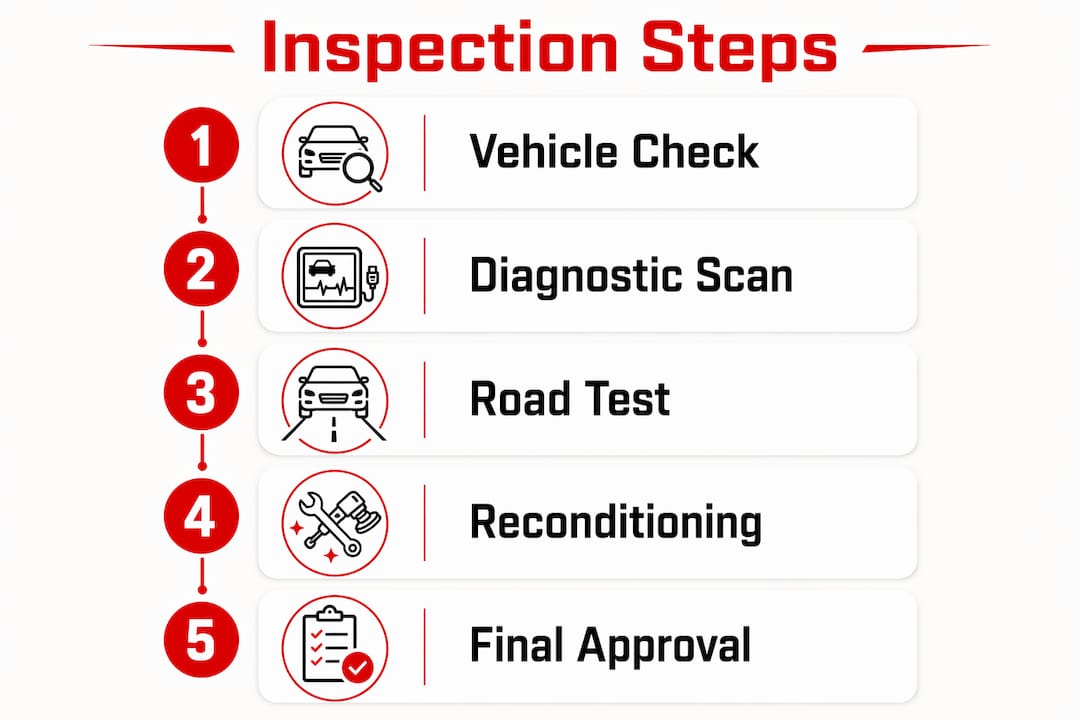
- Lot intake: The VIN is logged, the odometer is recorded, and any customer-reported concerns are noted. This creates the paper trail that follows the vehicle through every subsequent step.
- Initial walkaround: Technicians check fluid levels, tire condition, exterior lights, and visible body damage. This quick pass flags obvious issues before the car goes on the lift.
- Mechanical diagnostics: An OBD-II scan reads any stored or pending trouble codes. The battery and charging system are load-tested. Brake pad thickness is measured. Suspension components are inspected for wear or play.
- Underbody and lift inspection: With the vehicle raised, technicians check the frame for damage or rust, inspect the exhaust system, look for fluid leaks, and examine the undercarriage. Some manufacturer PDI procedures require model-specific steps at this stage, such as checking oil at operating temperature or deactivating transport mode.
- Road test: The technician drives the vehicle to evaluate steering response, acceleration, braking performance, and transmission behavior. Noise, vibration, and harshness (NVH) findings are recorded.
- Reconditioning and repairs: Items flagged during inspection are either reconditioned (detailing, minor cosmetic work) or repaired (brake replacement, fluid flush). Completed repairs are documented with parts and labor records.
- Final certification: The technician signs off on an itemized report. A lot-certification sticker or written certificate is issued, and the vehicle is cleared for sale.
A thorough inspection workflow logs VIN and odometer, records findings at each stage, and uses digital tools to attach visual proof, making the documentation easier to review and harder to dispute.

What should you look for in the inspection report?
The inspection report is your written record of what was found and fixed. A complete report includes:
- VIN and current odometer reading
- Technician name or initials and inspection date
- Itemized findings for each system (pass, advisory, or fail)
- OBD-II trouble codes, if any were present
- Road-test notes covering NVH, braking, and transmission behavior
- Completed repairs with parts used and labor performed
- Photos or video of flagged items
Digital Vehicle Inspections (DVIs) attach photos and videos directly to the report, giving buyers visual confirmation of both the problem and the repair. Shops using DVIs average a higher repair order value compared to those not using them, reflecting more thoroughly documented repairs being approved and completed, a gap that reflects how much more thoroughly documented repairs get approved and completed.
Before signing anything, verify that every flagged item either shows a completed repair or a written disclosure. Ask for before-and-after photos on any bodywork. Confirm that the NHTSA recall check was run and that any open campaigns were completed.
Pro Tip: Request a digital copy of the inspection report and keep it with your purchase paperwork. If a warranty claim comes up later, that report is your baseline for what the dealer knew at the time of sale.
Dealership inspection vs. independent inspection: which do you need?
Dealership inspections offer real advantages: standardized checklists, access to reconditioning equipment, documented repairs, and no scheduling delay. The inspection is built into the sale process, so you get the results without extra cost or coordination.
Independent pre-purchase inspections are buyer-focused by design. Independent providers often perform more than 100 checks and emphasize unbiased reporting, since their only client is you, not the seller.
When the dealer inspection is sufficient:
- The report is itemized with photos, OBD-II is clear, and all recalls are closed
- The vehicle comes with a dealer warranty covering the powertrain
- Mileage is moderate and there is no structural repair history
When to get a third-party inspection:
- The report is vague, missing photos, or lacks OBD-II documentation
- The vehicle has high mileage, a salvage title, or a history of structural repairs
- You want an independent second opinion before a large purchase
For most buyers purchasing from a dealer with a documented, photo-backed inspection report, the dealer inspection is adequate. The independent inspection is a smart add-on when the stakes are higher or the documentation is thin.
How long does an inspection take, and what does it cost?
Timing depends on the inspection depth:
- Quick lot screening: 30–60 minutes for a basic walkaround and fluid check
- Full multi-point inspection: Several hours for a complete mechanical, electrical, and underbody review
- Certified pre-owned or pre-delivery inspection: 24–72 hours when reconditioning and repairs are included
An OPENLANE vehicle inspection typically takes about 45 minutes for a condition report, though dealer reconditioning adds significant time on top of that.
On cost: dealer inspections are generally included in the vehicle's sale price or certification fee. Independent pre-purchase inspections typically run $100–$250 depending on depth and location. If you request additional diagnostics, such as a compression test, paint depth meter readings, or a frame check, expect to add to that range. Those extras are often worthwhile on higher-mileage vehicles or any car with a repaint history.
What does Elmwood Auto Sales check, and why does it matter?
Elmwoodautosalesri follows a documented inspection process on every vehicle before it goes on the lot. Each car goes through VIN verification, an OBD-II diagnostic scan, brake and tire measurements, battery and charging system testing, and a visual body and frame inspection. Road-test notes are recorded. Reconditioning is documented with photos.
Every buyer receives an itemized digital inspection report. Lot-certification stickers confirm that the vehicle passed the full review. Where applicable, ASE- or manufacturer-trained technicians perform the checks, and the service department handles any repairs before the car is offered for sale. You can review Elmwoodautosalesri's multi-point inspection process in detail before you visit.
Dealer certifications at Elmwoodautosalesri also include warranty options, so buyers have coverage beyond the lot-certification sticker. The service department remains available for follow-up repairs and recommended maintenance after purchase.
What should you expect after the sale?
Post-sale support is part of what separates a quality dealership from a quick-flip lot. After purchase, you should receive:
- A short-term limited warranty covering major mechanical failures
- Documentation of all repairs completed before sale
- The option to add an extended warranty product for longer coverage
- A clear explanation of what the warranty covers, for how long, and where repairs must be performed
Before you drive off, verify these four items in your paperwork:
- Coverage period (start date and end date or mileage limit)
- Included components (powertrain only, or broader mechanical coverage)
- Claim process (who to call, where to bring the vehicle)
- Whether repairs must be performed at the selling dealer or any licensed shop
Schedule any recommended service items promptly. If the inspection flagged items as advisory rather than repaired, those are your first maintenance priorities. Elmwoodautosalesri's test-drive and post-sale protocols give buyers a clear picture of what to expect at each stage.
Key Takeaways
A thorough dealership vehicle inspection process, backed by an itemized digital report and documented reconditioning, is the clearest indicator that a used car is ready for safe, reliable ownership.
| Point | Details |
|---|---|
| Insist on OBD-II documentation | Any inspection without a diagnostic scan leaves hidden trouble codes undetected. |
| Request photos and an itemized report | Digital evidence of findings and repairs is your written protection after purchase. |
| Know when to go independent | High mileage, structural history, or a vague report are clear signals to hire a third-party inspector. |
| Verify warranty terms before signing | Confirm coverage period, included components, and the claim process in writing. |
| Elmwoodautosalesri's certification | Every vehicle includes VIN verification, OBD-II scan, road-test notes, and a lot-certification sticker. |
The inspection report tells you more than you think
Most buyers focus on the price and the test drive. The inspection report is where the real story lives. A vague, one-page pass/fail sheet is not the same as an itemized digital report with photos, OBD-II results, and technician sign-off. The difference matters because it determines what you can actually hold the dealer accountable for after the sale.
Buyers who ask for the full report, review it line by line, and confirm that every flagged item was either repaired or disclosed are the ones who avoid expensive surprises. The dealers who provide that level of documentation are the ones who stand behind their inventory. At Elmwoodautosalesri, transparency in the inspection process is not a selling point added after the fact. It is built into how every vehicle is prepared before it reaches the lot.
Inspected and certified used cars at Elmwood Auto Sales
Elmwoodautosalesri offers a straightforward path to a vehicle you can trust: every car on the lot has been through a documented multi-point inspection, OBD-II scan, road test, and reconditioning before it is offered for sale. You get the itemized report, the lot-certification sticker, and the warranty options in writing, not as a promise but as paperwork you can keep.
Financing is available for a range of credit histories, including in-house options, so the inspection process and the purchase process work together without pressure. If you want to review the inspection findings on a specific vehicle or put one through its paces yourself, book a test drive at Elmwoodautosalesri and see the certification documentation in person.
Useful sources and tools for verifying inspection facts yourself
Use these resources to run your own checks before or after a dealer inspection:
- NHTSA Recall Lookup: nhtsa.gov/recalls — enter the VIN to check for any open safety recalls or completed campaigns
- PennDOT Vehicle Inspection Checklist: official inspection checklist PDF — a government-issued reference for road-test documentation and record-retention standards
- Missouri State Highway Patrol MVI Guide: MSHP Motor Vehicle Inspection — covers the full state inspection workflow including emissions, underbody, and brake performance checks
- OBD-II code readers: Affordable handheld scanners (BlueDriver, FIXD, Autel AL319) let you run your own trouble-code check before purchase
- Paint depth meters: A basic paint meter reveals repainted panels that a visual inspection can miss, useful on any vehicle with suspected bodywork
- Loan analysis: Before finalizing financing, review your auto loan terms to confirm the rate and structure match what you were quoted
- Elmwoodautosalesri lot-certification explainer: what lot certification means — explains what a certification sticker covers and common faults identified during the inspection process