
A rebuilt title means a vehicle was once declared a total loss, then repaired, passed a state inspection, and legally retitled as roadworthy. For you as a buyer, that translates to one clear tradeoff: a lower price in exchange for higher risk. Before you sign anything, verify the repair documents and inspection paperwork yourself. Financing and insurance may be limited, and resale value will almost certainly take a hit down the road.
Key Takeaways
A rebuilt title means a totaled vehicle was repaired and passed inspection, but verifying the paperwork yourself matters more than trusting the listing.
| Point | Details |
|---|---|
| Definition matters | A rebuilt title confirms the car was totaled, repaired, and passed a state safety inspection before retitling. |
| Verify before you buy | Run NMVTIS and NICB VINCheck, and request the salvage title, repair invoices, and inspection certificate. |
| Expect financing limits | Lenders often charge higher rates or larger down payments, and some decline these loans outright. |
| Resale carries a discount | Dealers frequently refuse rebuilt-title trade-ins, so plan to hold the car longer or sell to specialty buyers. |
| Cause of loss drives risk | Flood and structural damage carry more hidden risk than cosmetic issues like hail. |
Table of Contents
- What Is a Rebuilt Title and How Does a Car Get One?
- How Does a Car Move From Salvage to Rebuilt Title?
- Rebuilt vs Salvage vs Clean Title: What's the Real Difference?
- What Risks Come With Buying a Rebuilt Title Vehicle?
- How Do Rebuilt Titles Affect Insurance, Financing, and Resale?
- How Do You Verify a Rebuilt Title Before Buying?
- What Should You Ask a Seller Before Buying a Rebuilt-Title Car?
- What Should You Pay for a Rebuilt-Title Vehicle?
- What Should a Trustworthy Rebuilt-Title Sales Process Look Like?
- Where to Verify VIN History and State Title Rules
- Why Case-by-Case Judgment Beats Blanket Rules on Rebuilt Titles
- Frequently Asked Questions
- Sources
What Is a Rebuilt Title and How Does a Car Get One?
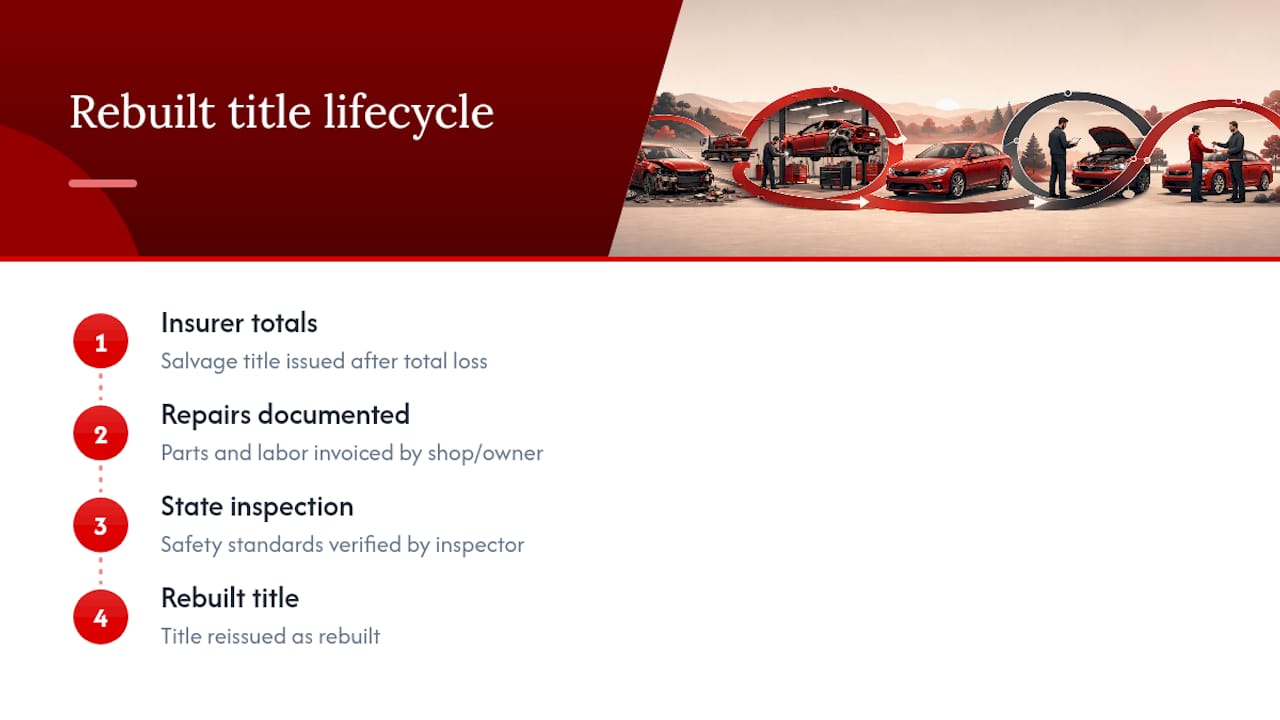
A vehicle earns a rebuilt title after moving through a specific sequence: an insurer declares it a total loss and issues a salvage title, a repair shop or private owner fixes it, and a state-authorized inspector confirms it meets safety standards before the title gets reissued as "rebuilt."
Collisions are the most common cause, but flood damage, theft recovery, fire, and lemon-law buybacks all lead here too. The cause matters more than most buyers realize. Hail damage is cosmetic and low-risk. Flood damage can hide corrosion in wiring harnesses for years. Some states use different labels for the same concept. You'll see "rebuilt salvage" or "reconstructed" on titles depending on where the car was registered, but the underlying rebuilt title lifecycle is consistent.
How Does a Car Move From Salvage to Rebuilt Title?
Repairs have to address whatever caused the total-loss declaration, and that work needs to be documented, not just done. A shop replacing a bent frame rail or a flooded wiring harness should generate invoices listing parts, labor, and dates.
Once repairs are finished, the vehicle goes through a state inspection covering safety systems, anti-theft verification, and in some states, emissions. A state agency, not the repair shop, issues the rebuilt title after reviewing the salvage title, repair invoices, and inspection results. If you're shopping for one of these vehicles, ask to see all three documents together. A seller who can't produce them is asking you to buy blind.
Rebuilt vs Salvage vs Clean Title: What's the Real Difference?
A clean title means no total-loss history. A salvage title means the vehicle was declared a total loss and has not been repaired or inspected; it's typically not legal to drive on public roads. A rebuilt title sits in between: repaired, inspected, and legally driveable, but permanently flagged as having once been totaled.
That flag follows the car everywhere. Registration offices, insurers, and future buyers all see it. The tricky part is that states name these brands differently, and a car sold across state lines can arrive with a title that looks cleaner than its actual history. That's exactly why a VIN check matters more than the paperwork in your hand.
What Risks Come With Buying a Rebuilt Title Vehicle?
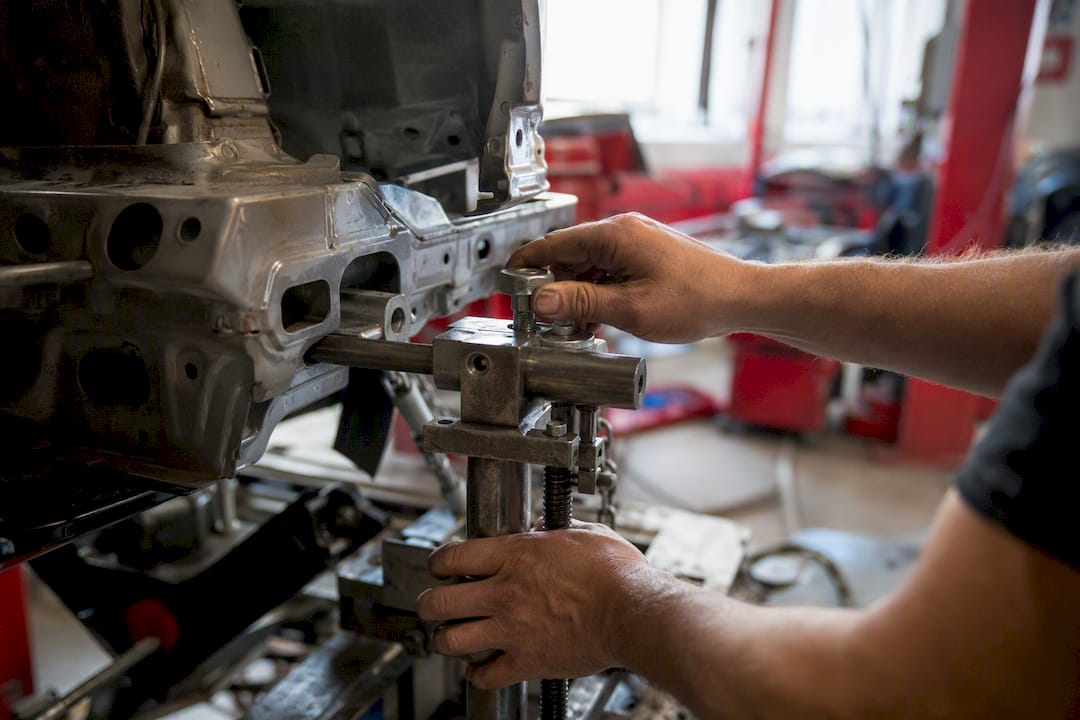
Structural damage doesn't always announce itself at the test drive. A frame that was straightened rather than replaced can develop alignment issues, uneven tire wear, or door gaps that show up months later. Electrical and sensor failures are a bigger concern with flood-damaged vehicles, since corrosion inside wiring and modules can take time to surface, and modern cars packed with ADAS sensors make those repairs both costly and easy to botch.
Title washing is the risk buyers underestimate most. Moving a salvage vehicle to a state with looser disclosure rules can scrub its history clean on paper, even though nothing about the car actually changed. Consumer Reports' Steve Elek has cautioned that rebuilt-title damage ranges wildly, from a car that's genuinely fine to one hiding serious frame or flood damage underneath a fresh paint job. Warranties often don't survive the total-loss event either, and outstanding recalls can complicate an already murky repair history.
Pro Tip: Ask specifically whether the vehicle's recall history was addressed after the rebuild, not before. A pre-total-loss recall fix means nothing if the same part was damaged and reinstalled during repairs.
How Do Rebuilt Titles Affect Insurance, Financing, and Resale?
Lenders treat rebuilt titles as a red flag. Banks frequently decline these loans outright, and when financing is available, it often comes with higher interest rates, bigger down payments, or coverage that excludes comprehensive and collision protection.
Insurance follows a similar pattern: some insurers limit coverage options or charge more, since a documented total-loss history raises their own risk exposure. Resale is where the discount really shows up. Many dealerships won't accept rebuilt-title trade-ins and send them straight to auction instead, which narrows your exit options to specialty buyers. Registration can also get complicated, since some states require additional inspections at renewal time that clean-title vehicles skip entirely.
How Do You Verify a Rebuilt Title Before Buying?
Verification isn't optional here, it's the entire point. Run these checks before you get emotionally attached to any specific car:
- Pull a report through NMVTIS and run a free NICB VINCheck to confirm salvage or theft history tied to the VIN.
- Order a full Carfax or AutoCheck vehicle history report to see the total-loss event and prior ownership timeline.
- Request the original salvage title, itemized repair invoices, and the post-repair inspection certificate together, not piecemeal.
- Hire an independent mechanic with frame and ADAS experience, and insist on a written inspection report before you commit.
- Watch for mismatched dates, vague invoice descriptions, or a seller who's reluctant to produce any single document. Those are classic signs of title washing or incomplete repairs.
What Should You Ask a Seller Before Buying a Rebuilt-Title Car?
Walk into the negotiation with a short, specific list. Skipping any of these questions puts you at a real disadvantage.
- What exactly caused the total loss, and does that match the damage you can see and what the report shows?
- Who performed the repairs, a certified shop or an independent seller, and were original manufacturer parts used?
- Can you provide itemized repair invoices along with the post-repair inspection certificate?
- Do you have the original salvage title available for review?
- Were any outstanding safety recalls addressed after the repair work was completed?
A seller who answers all five without hesitation is worth taking seriously. One who dodges even one deserves more scrutiny.
What Should You Pay for a Rebuilt-Title Vehicle?
Rebuilt-title cars typically sell below clean-title comparables, and how much below depends on the cause of loss, the quality of repairs, and the vehicle's age. A car totaled by hail with cosmetic repairs justifies a smaller discount than one that suffered flood or frame damage. Original manufacturer parts versus salvage-yard components also shift the math, since aftermarket or reused parts tend to fail sooner.
Build your offer around the real cost of ownership, not just the sticker price. Factor in the financing premium lenders may charge, any insurance limitations, and the resale ceiling you'll eventually hit. Use the repair invoices and mechanic's inspection report as leverage. If the paperwork shows gaps or the inspection turns up unresolved issues, that's your case for a lower number, not a reason to walk away entirely.
What Should a Trustworthy Rebuilt-Title Sales Process Look Like?
A dealer worth trusting inspects safety systems, frame integrity, and electronics, and documents every result. Elmwoodautosalesri applies that same standard: full disclosure of salvage history, itemized repair records, and tailored financing options built for a range of credit profiles, so you're never guessing what you're buying.

Where to Verify VIN History and State Title Rules
Start with NICB VINCheck for free salvage and theft history, then pull a full report through the Vehiclehistory portal for NMVTIS records. Check your state DMV directly for titling and inspection rules, since requirements vary. WalletHub's rebuilt title guide and FrenzyCars' buyer's guide are both useful for understanding the risks before you shop.
Why Case-by-Case Judgment Beats Blanket Rules on Rebuilt Titles
The conventional advice on rebuilt titles tends toward two extremes: avoid them completely, or treat the discount as free money. Both miss the point. The research here supports a narrower conclusion: a rebuilt title is a documented history, not a verdict. A car totaled by hail and properly repaired is a fundamentally different purchase than one that sat in floodwater, even though both wear the same title brand.
What gets overlooked is that a rebuilt title, done right, can actually be more transparent than a clean-titled car with an undisclosed fender-bender in its past. You have paperwork to check. A "clean" title on a car that was quietly repaired off the books gives you nothing to verify at all.
Prioritize the inspection certificate and repair invoices over the sticker price. If a seller can't produce both, that tells you more than any VIN check will. Price second, verify first.
Frequently Asked Questions
What does rebuilt title mean in simple terms? It means a car was declared a total loss by an insurer, then repaired and inspected by state authorities before being legally retitled as roadworthy again.
Is a rebuilt title bad? Not automatically. Risk depends heavily on the cause of the total loss and the quality of repairs. Flood and frame damage carry more hidden risk than cosmetic damage like hail.
Can I get insurance on a rebuilt title car? Yes, but some insurers limit coverage options or charge higher premiums given the documented total-loss history.
Is financing harder for rebuilt title vehicles? Generally, yes. Some lenders decline these loans entirely, and those that approve them often require higher rates or larger down payments.
How much less is a rebuilt title car worth? There's no fixed percentage since it depends on cause, age, and repair quality, but rebuilt-title vehicles consistently sell below comparable clean-title cars and face resale hurdles later.
Sources
- SoFi: Loans for rebuilt title cars
- TorqueNews coverage of Consumer Reports' rebuilt title warning
- TxDMV: Rebuilt vehicles
- NICB VINCheck
- WalletHub: What is a rebuilt title? (2026 guide)