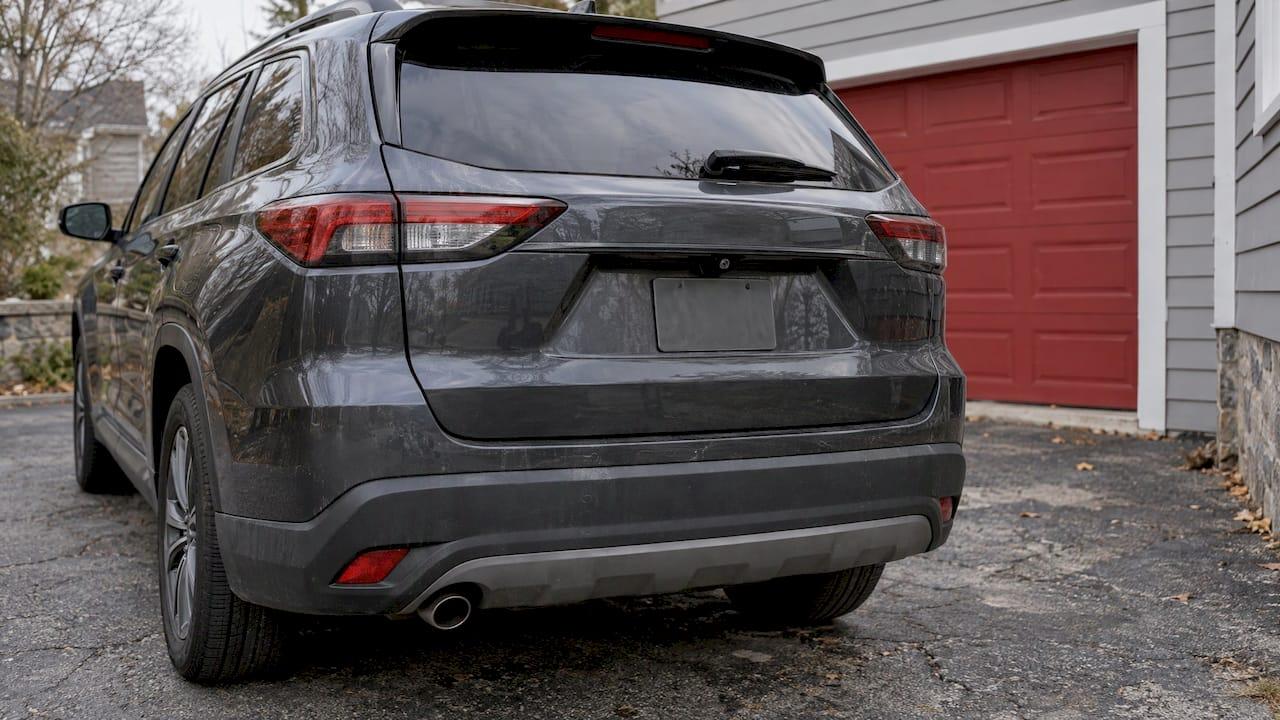
The federal backup camera requirement applies to every new passenger vehicle, light truck and van under 10,000 pounds built on or after May 1, 2018. NHTSA announced the final rule on March 31, 2014, and automakers had four years to get there. If you are shopping for a used car, the date that matters is the build date. A vehicle built before May 2018 may have a camera, but the law did not require one. We put this guide together so you can tell, before you sign anything, what a particular vehicle has.
TL;DR
- Full compliance with the federal rear visibility rule began for vehicles manufactured on or after May 1, 2018.
- The final rule was announced in March 2014 and published in the Federal Register in April 2014, with a phase-in that started May 1, 2016.
- The rule applies when a vehicle is built, not when it is sold, so used vehicles from earlier years can legally be sold without a camera.
- Many 2012 to 2017 models still have a camera, either standard or as an option, so check each vehicle rather than assuming.
- A compliant system must show a 10-foot by 20-foot zone behind the vehicle, so judge the picture itself and not just whether a screen lights up.
Table of Contents
- What year did the U.S. require backup cameras?
- When did backup cameras become standard on cars?
- Do 2015 cars have backup cameras?
- Do used cars have to have backup cameras?
- What does the federal rule actually require the camera to do?
- Why does the camera matter beyond the law?
- How do you check a used vehicle for a backup camera?
- Which model years should you look at if a camera is a must?
- Does a backup camera affect financing, warranty or trade-in value?
- Our view: the build date is the first filter, the test drive is the second
- Ready to see which vehicles fit?
- FAQ
- Sources
What year did the U.S. require backup cameras?
The short answer is 2018, but the timeline has three dates worth knowing.
- March 31, 2014: the U.S. Department of Transportation and NHTSA announced the final rule requiring rear visibility technology in vehicles under 10,000 pounds.
- May 1, 2016: the Federal Register final rule, published April 7, 2014, took effect June 6, 2014 and began a phase-in. Compliance started on May 1, 2016.
- May 1, 2018: full compliance. Every covered vehicle manufactured on or after this date must meet the standard.
During the phase-in, only a percentage of each manufacturer's production had to comply. The federal regulation text, 49 CFR 571.111, sets out the schedule for passenger cars manufactured between May 1, 2016 and April 30, 2018. That is why a 2017 model can have a camera while a sibling built the same year on a different line does not.
The rule exists because of the Cameron Gulbransen Kids Transportation Safety Act of 2007, which directed the government to improve rear visibility. According to ABC News reporting, the rule sat for years in White House regulatory review until a March 2014 lawsuit from advocacy groups pushed it forward and led to the May 1, 2018 deadline.
When did backup cameras become standard on cars?
People often say "standard since 2018" and "standard since 2014" interchangeably. Neither is quite how it played out.
Rear cameras first appeared on a few vehicles in model year 2002. Industry research from the Highway Loss Data Institute shows how slowly they spread: by model year 2007 a rear camera was standard on 2% and optional on 14% of vehicle series, and by model year 2013 standard on 23% and optional on 59%. So by the time the rule was written, a camera was already something many buyers could get, often on higher trim levels or in option packages.

NHTSA also helped nudge the market. It added rearview video systems to its New Car Assessment Program list of recommended technologies in 2013, and notes on its Car Safety Ratings page that the feature would be standard in all vehicles by 2018.
For a shopper, that produces a practical rule of thumb:
- Built May 2018 or later: a compliant rearview camera is required.
- Built May 2016 to April 2018: a good chance of a camera, but not guaranteed, because of the phase-in.
- Built before May 2016: depends entirely on the model, trim and options.
Do 2015 cars have backup cameras?
Some do, and some do not. A 2015 model year vehicle was built before the phase-in began, so no federal rule required a camera. Whether it has one comes down to the trim level and whether the first owner chose the option package.
This is the question we hear most from first-time buyers and from families shopping for an SUV. The answer is to treat the camera as a feature to confirm on the specific vehicle, the same way you would confirm leather seats or a third row. Two things help:
- Look at the vehicle. Put it in reverse (with the parking brake set and the vehicle on a safe, level surface with the engine running) and see whether an image appears on the dash screen or rearview mirror display.
- Read the build and trim details. Window stickers, trim names and the vehicle history report tell you more than the model year alone. Our guide to reading a Carfax report walks through the VIN and recall checks that go with it.
If you shop at our lot in Providence, you can see this firsthand. Browse the used cars, trucks, SUVs and vans and ask to see the camera work on any vehicle you are considering.
Do used cars have to have backup cameras?
No. The requirement attaches to the vehicle when it is manufactured, not when it is bought and sold. A June 2026 legal explainer puts it plainly: vehicles built before May 1, 2018 are not required to be retrofitted and can legally be sold without a camera.
In other words, there is no used-car version of the rule. A 2014 Honda CR-V without a camera is legal to own, drive and sell. A 2019 model that left the factory without one would not have met the standard.
That matters most if you are buying for a household with small children. Child-safety group Kids and Car Safety points out that most older-model vehicles do not have rearview cameras, and that the risk of backover crashes is a real reason to put rear visibility on your checklist. Our used SUV buying checklist for families lists what else belongs on that list.
What does the federal rule actually require the camera to do?
The rule is not just "a camera exists." It sets performance requirements, and these are useful when you are sitting in a car deciding whether the system is good enough for you.
| Requirement | What it means in practice |
|---|---|
| Field of view | The image must cover a 10-foot by 20-foot zone directly behind the vehicle |
| Image size | Test objects in that zone must appear large enough to be recognized |
| Response time | The image must appear quickly after shifting into reverse (the rule sets a 2-second limit, according to a legal summary of the standard) |
| Linger time | The image stays on for a set period after you leave reverse |
| Durability | The system has to keep working across lighting and temperature conditions |
| Deactivation | The rule specifies when the display switches off |
A July 2025 Federal Register notice still describes the 2014 standard this way, including the 10-by-20-foot field of view with test objects fully visible. The core requirement has not been replaced.
Which vehicles are covered?
The rule covers passenger cars, trucks, multipurpose passenger vehicles (the category most SUVs and minivans fall under), buses and low-speed vehicles with a gross vehicle weight rating of 10,000 pounds or less, as described in the Federal Register final rule. The agency explained it could not exempt any vehicle type, because data showed all of them have significant rear blind zones. A full-size pickup is covered just like a compact sedan.
Why does the camera matter beyond the law?
The rule was written to prevent backover crashes, which often involve children and pedestrians who are hard to see from the driver's seat. NHTSA's own evaluation of the standard, published in a crash statistics report, cites Insurance Institute for Highway Safety research finding that rearview image systems reduce police-reported backing crashes by 17 percent. The same report notes that a 2019 study found vehicles with a rearview camera plus rear parking assist and rear automatic braking had 78 percent lower backing-crash involvement rates.
Two takeaways for a used-car shopper:
- A camera helps most when the image is clear, wide and fast. That is why the performance requirements above are worth checking on any vehicle.
- A camera is one layer. Many newer vehicles pair it with other driver aids. Our explainer on blind spot monitoring covers one of the most common.
The government's estimate of the cost shows why automakers could add the technology broadly: a DOT evaluation puts the mandate's cost at $43 to $142 per vehicle.
How do you check a used vehicle for a backup camera?
A quick walkthrough on the lot takes five minutes and tells you more than a listing does.
- Confirm the build date, not just the model year. A vehicle sold as a 2018 model could have been built before May 1, 2018. The requirement follows the manufacture date.
- Test it in reverse. The image should appear within a couple of seconds. A long delay or a blank screen is worth noting.
- Check the picture. Look for a wide view of the area behind the bumper, a clean lens and a clear image in both bright light and shade. Test it again in the evening if you can.
- Look at the guidelines and extras. Some systems add moving guidelines, a wider angle, a 360-degree view or rear parking sensors.
- Pair it with the rest of the inspection. A working camera should sit alongside a clean history report, a checked odometer and a documented inspection. Our guide to spotting odometer rollback covers that part, and our piece on what to expect at a used car dealership covers the rest of the visit.
If you are comparing vehicles across model years, this is how the camera question usually plays out in practice:
| Build period | Camera status | What to do |
|---|---|---|
| Before 2016 | Not required; varies by trim and options | Confirm on the vehicle |
| May 2016 to April 2018 | Phased in; many have one | Confirm on the vehicle |
| May 1, 2018 and later | Required by federal rule | Confirm it works and the image is clear |
Which model years should you look at if a camera is a must?
If a camera is non-negotiable, the simplest filter is a 2018 or later build date. That cuts your options but gives you a legal guarantee that a compliant system was installed at the factory.
If your budget points to earlier models, you have more choices than the law suggests. Because about half of model year 2012 vehicles, and a growing share each year after, offered a camera as standard or optional equipment, many 2013 to 2017 SUVs and trucks have one. Right now our Providence inventory includes vehicles across that range, from a 2017 Toyota RAV4 to a 2019 Toyota Highlander and a 2019 Ram 1500 Classic Crew Cab, plus several Honda CR-Vs from 2013 to 2016. Inventory turns over, so check the listings for what is on the lot now, and look at the camera on any vehicle that interests you.
If you want a specific feature set and do not see it, our Car Finder is built for exactly that kind of search.

Does a backup camera affect financing, warranty or trade-in value?
It affects the vehicle you choose, and that in turn shapes the numbers.
- Financing: lenders look at the vehicle's age, mileage and price along with your credit profile. A newer vehicle usually costs more, which changes the loan amount. We offer tailored financing for a range of credit histories, including buy here, pay here, so you can see what fits before you pick a model year.
- Warranty: newer vehicles are more likely to have remaining coverage and more likely to be eligible for extended plans. Our used car warranty types guide explains the options.
- Trade-in: if you are trading in a vehicle built after May 2018, its factory camera is part of what a buyer expects. Our trade-in page explains how to get an offer.
Our view: the build date is the first filter, the test drive is the second
We think the backup camera rule is a good example of a law that tells you less than you would hope. It says what had to be built into new vehicles from May 1, 2018. It says nothing about the used vehicle in front of you, which could be from any year.
That is why we do not sell on slogans about model years. Every vehicle we offer is inspected, and we want you to walk around it, sit in it and put it in reverse. We do not work on commission, so nobody on our lot has a reason to push you toward a trim level or a year you do not need.
If you have a family, a camera belongs on your list next to seat count, cargo space and a clean history report. If you are a first-time buyer on a budget, it is one feature to weigh against price, mileage and payment. In both cases, we would rather you ask every question now than wonder later.
Elmwood
Ready to see which vehicles fit?
If rear visibility is on your list, start with the inventory and the financing application. At Elmwood Auto Sales in Providence, you can look through used cars, trucks, SUVs and vans, get a financing option tailored to your credit profile, and trade in your current vehicle in the same visit. Our buying process is low-pressure and commission-free.
You can apply for used car financing online or browse the current inventory and ask us to show you the camera on any vehicle you like. If you are not sure what you want yet, the return guarantee guide for first-time buyers explains what to look for in the paperwork.
FAQ
What year were backup cameras required in the U.S.?
Full compliance began for vehicles manufactured on or after May 1, 2018. The rule was announced in March 2014, and a phase-in started on May 1, 2016. The key date for a used car is when it was built, not its model year.
When did backup cameras become standard?
They became standard across the market in 2018 because of the federal rule. Before that, they spread gradually from model year 2002, and by model year 2013 they were standard on 23% of vehicle series and optional on 59%. Many 2013 to 2017 vehicles have one, but it varies by trim.
Is there a federal backup camera law for used cars?
No. The law applies at the point of manufacture, so vehicles built before May 1, 2018 can be legally sold without a camera. If you want one, confirm it on the specific vehicle before you buy.
What does a backup camera have to show under federal rules?
The image must cover a 10-foot by 20-foot area directly behind the vehicle. The system also has to meet requirements for image size, response time, how long the image stays on, durability and deactivation. These requirements are set out in the federal vehicle safety standard 49 CFR 571.111.
Do trucks and SUVs need backup cameras too?
Yes. The rule covers passenger cars, trucks, multipurpose passenger vehicles such as most SUVs and minivans, buses and low-speed vehicles with a gross weight rating of 10,000 pounds or less. Heavier commercial trucks above that weight are outside the rule.
Sources
- NHTSA Announces Final Rule Requiring Rear Visibility Technology (U.S. DOT)
- Federal Register, April 7, 2014: final rule on rear visibility
- eCFR, 49 CFR 571.111, Standard No. 111; Rear visibility
- Federal Register, July 29, 2025 notice
- NHTSA Car Safety Ratings
- DOT ITS Deployment Evaluation: rear-visibility mandate
- NHTSA crash statistics: Evaluation of the FMVSS No. 111 Rearview Image Requirements
- HLDI Bulletin: Predicted Availability of Safety Features
- ABC News: All new cars in US now required to have backup cameras
- Kids and Car Safety: Backover facts
- Are Backup Cameras Required by Law in the U.S?