
Used car dealer certifications matter most when they are backed by the original manufacturer, not just a dealer's marketing label. Manufacturer-backed certified pre-owned (CPO) vehicles go through 100–200 checkpoint inspections and carry warranties honored at franchised dealerships nationwide. CPO vehicles show approximately 14% fewer mechanical problems than standard used cars. That gap in reliability is the core reason why certification status should be one of your first filters when shopping for a used vehicle.
1. What makes used car dealer certifications matter?
Dealer certification is the industry term for a formal quality assurance process applied to used vehicles before sale. The phrase "certified pre-owned" is the recognized standard label for manufacturer-backed programs. Not every dealer uses the term correctly. Dealer in-house certifications often use "certified" as a marketing tactic without delivering rigorous checks or manufacturer warranty support.
The critical distinction is who stands behind the certification. A manufacturer CPO program is administered by the automaker itself, with standardized inspection checklists and warranty policies. A dealer-certified vehicle may have passed a basic safety check, but the warranty is typically limited and the inspection process varies widely. Buyers who understand this difference make far better purchasing decisions.
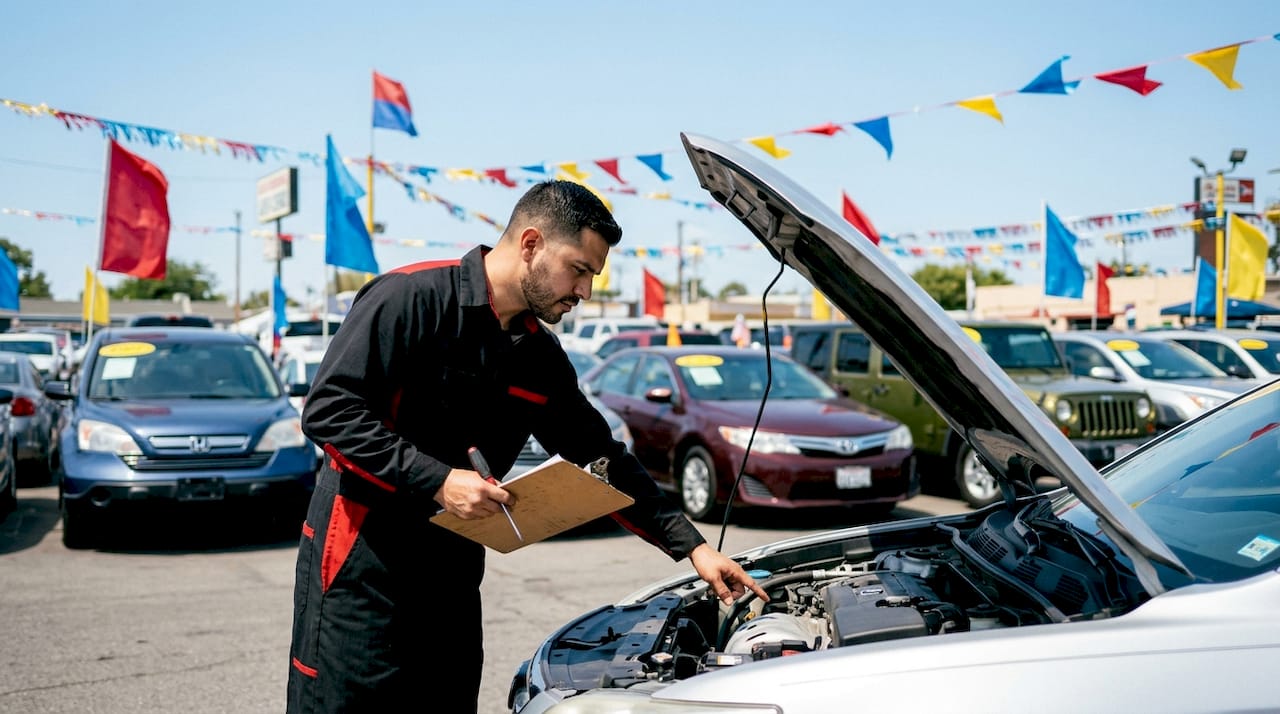
2. What separates a legitimate certification from a marketing label?
Genuine manufacturer CPO programs follow strict eligibility rules. Vehicles must typically be within a set age and mileage range, carry a clean title, and pass a multi-point inspection covering 100–200 checkpoints set by the automaker. Manufacturer CPO programs include stringent vehicle eligibility screening, such as clean title validation to exclude salvaged or flood-damaged cars.
The warranty is the clearest test of legitimacy. A real CPO warranty is backed by the automaker and honored at any franchised dealership in the country. Dealer or third-party certifications often route warranty claims through separate administrators with restricted repair networks. The difference in usability is significant.
Key criteria that define a legitimate certification:
- A signed, detailed multi-point inspection checklist from a certified technician
- An automaker-backed warranty, not a third-party service contract
- Clean title verification with no salvage, flood, or rebuilt history
- Vehicle age and mileage limits set by the manufacturer
- Warranty transferability to a future buyer
Pro Tip: Ask the dealer to hand you the signed inspection checklist before you discuss price. If they cannot produce one, the certification is likely a marketing label, not a manufacturer program.
3. Six benefits of buying a manufacturer-certified pre-owned vehicle
Manufacturer certification delivers measurable advantages that go beyond a sticker on the windshield. Each benefit below connects directly to lower ownership risk and stronger long-term value.
-
Fewer mechanical problems. CPO vehicles average 14% fewer mechanical issues than comparable non-certified used cars. That reduction translates to fewer repair bills and less time in the shop during the first years of ownership.
-
Extended factory-backed warranty. CPO warranties typically include a powertrain warranty lasting several years plus limited bumper-to-bumper coverage. They often activate after the original factory warranty expires, giving buyers a continuous layer of protection.
-
Roadside assistance. Most manufacturer CPO programs include roadside assistance as part of the warranty package. This benefit alone can offset hundreds of dollars in potential towing or emergency service costs.
-
Nationwide repair network. Because the warranty is backed by the automaker, you can use any franchised dealership in the country for covered repairs. That flexibility matters if you travel or relocate.
-
Stronger resale value. CPO vehicles hold value better than non-certified used cars because the certification history is documented and transferable. Some programs allow the remaining warranty to transfer to the next owner, which is a selling point when you eventually trade up.
-
Lower risk of hidden damage. Manufacturer eligibility screening excludes salvaged, flood-damaged, and rebuilt-title vehicles from CPO programs. That screening removes a category of risk that catches many used car buyers off guard.
"Certified Pre-Owned programs offer a balance between new car assurance and used car pricing, but buyers must read the warranty fine print to avoid surprises." — Yahoo Autos
4. Red flags and pitfalls to watch for in dealer certifications
"Certified" is an unregulated term. Any dealer can apply it to any vehicle without meeting a defined standard. Verification steps include requesting the signed multi-point inspection checklist and warranty certificate before purchase. If a dealer resists providing either document, treat that as a clear warning sign.
Third-party warranty administrators present another common problem. Third-party administrators often limit repair facilities and complicate claims processing, resulting in reduced warranty usability. A warranty that only covers repairs at one or two local shops is far less valuable than a manufacturer-backed program honored at thousands of dealerships.
Watch for these specific red flags:
- No signed inspection checklist from a named technician
- Warranty administered by a third-party company, not the automaker
- Coverage limited to a single repair facility or small regional network
- A price premium that exceeds the actual warranty and inspection value
- Verbal assurances of certification with no written documentation
Pro Tip: Cross-reference any certification claim against the automaker's official CPO program page. Every major manufacturer publishes its CPO eligibility rules and warranty terms online. If the dealer's offer does not match, ask why.
5. How certification status affects pricing and buyer negotiations
Manufacturer-certified vehicles carry a real price premium. CPO vehicles cost approximately 1.8% more than comparable non-certified used cars. On a $25,000 vehicle, that premium equals roughly $450. The question is whether the warranty coverage and inspection rigor justify that cost for your specific situation.
The table below compares key pricing and value factors between manufacturer CPO vehicles and standard used cars.
| Factor | Manufacturer CPO | Standard used car |
|---|---|---|
| Average price premium | ~1.8% above market | No premium |
| Inspection depth | 100–200 checkpoint process | Varies; often minimal |
| Warranty backing | Automaker, nationwide | None or third-party only |
| Mechanical problem rate | ~14% lower | Baseline |
| Resale value | Higher with transferable warranty | Lower without documentation |
Certification warranty pricing is sometimes negotiable. Dealers may bundle extended warranty add-ons into the CPO price. You can ask for those add-ons to be itemized and priced separately. The core CPO certification itself is set by the manufacturer, but dealer-added products around it are fair game for negotiation.
Buyers on a tight budget should weigh the upfront premium against the cost of a single major repair. A transmission replacement on a non-certified vehicle can easily exceed $3,000. For buyers without a trusted independent mechanic, the CPO premium often pays for itself within the first two years of ownership.
6. When certification matters most and when it might be optional
Certification delivers the most value in specific buying situations. First-time used car buyers benefit the most, since they are less likely to recognize mechanical warning signs during a test drive. Buyers purchasing vehicles from brands with variable reliability ratings also gain meaningful protection from a manufacturer CPO program.
Situations where certification strongly matters:
- You are buying your first used vehicle and lack mechanical knowledge
- You do not have access to a trusted independent mechanic for a pre-purchase inspection
- The vehicle brand has a mixed reliability record in independent ratings
- You plan to keep the vehicle for five or more years
- You want warranty coverage that travels with you across state lines
Experienced buyers who know how to assess a vehicle and have access to a reliable mechanic may reasonably skip certification to save cost. Checking model-specific reliability alongside certification status gives you the most complete picture. Steven Elek of Consumer Reports recommends examining model reliability ratings alongside certification, since some models carry lower reliability scores even within CPO programs.
Age and mileage thresholds also apply. Most manufacturer CPO programs cap vehicle eligibility at five to six years old and 60,000–80,000 miles. Vehicles outside those limits cannot qualify for manufacturer certification, regardless of condition.
Key takeaways
Manufacturer-backed CPO certification is the most reliable indicator of used car quality because it combines a standardized 100–200 point inspection with an automaker-honored warranty that is valid nationwide.
| Point | Details |
|---|---|
| Certification legitimacy | Only manufacturer CPO programs guarantee standardized inspections and automaker-backed warranties. |
| Reliability advantage | CPO vehicles average 14% fewer mechanical problems than non-certified used cars. |
| Price premium | Expect to pay roughly 1.8% more for a certified vehicle; weigh that against repair cost risk. |
| Red flag to avoid | No signed inspection checklist means the certification is likely a marketing label, not a real program. |
| When to prioritize it | First-time buyers and those without mechanic access benefit most from manufacturer certification. |
My honest assessment of what certification actually buys you
I have seen buyers walk onto a lot, spot the word "certified" on a window sticker, and immediately relax. That reaction is understandable, but it is also where things go wrong. The word itself means nothing without documentation. What actually protects you is the signed inspection checklist, the warranty certificate with the automaker's name on it, and the ability to take that vehicle to any franchised dealer in the country for covered repairs.
The buyers I have watched make the best decisions are the ones who ask two questions before anything else: "Who backs this warranty?" and "Can I see the inspection checklist?" Those two questions separate real certification from a marketing label faster than any amount of research. If a dealer hesitates on either answer, that hesitation is the answer.
Certification also does not eliminate the need to check model-specific reliability. A CPO badge on a model with a poor reliability record still carries more risk than a non-certified vehicle from a brand known for durability. Use certification as one filter, not the only one. The buyers who combine certification verification with independent reliability data consistently report higher satisfaction with their purchases over time.
— Elmwood
Certified vehicles at Elmwoodautosalesri: transparency from the first conversation
At Elmwoodautosalesri, every certified vehicle comes with full inspection documentation and clear warranty paperwork so you know exactly what you are buying before you sign anything.
Elmwoodautosalesri operates without commission-based sales tactics, which means the team focuses on matching you with the right vehicle rather than pushing a higher price point. Buyers can review the multi-point inspection checklist for any certified vehicle on the lot and ask warranty questions directly with no pressure. Flexible financing options are available for a range of credit histories, including buy here, pay here programs. Elmwoodautosalesri is rated among the best dealers in Providence, RI, and that reputation is built on honest documentation and quality assurance you can verify in writing.
FAQ
What is a manufacturer-certified pre-owned vehicle?
A manufacturer-certified pre-owned vehicle is a used car that has passed a 100–200 point inspection set by the automaker and carries a warranty backed and honored by that manufacturer at franchised dealerships nationwide.
Is "certified" a legally protected term for used cars?
No. "Certified" is an unregulated term that any dealer can apply to any vehicle. Only genuine manufacturer CPO programs meet standardized inspection and warranty requirements.
How much more does a certified used car cost?
CPO vehicles cost approximately 1.8% more than comparable non-certified used cars. On a $25,000 vehicle, that equals roughly $450 above market price.
What documents should I request before buying a certified used car?
Request the signed multi-point inspection checklist from the technician and the warranty certificate showing the automaker as the warranty administrator. If either document is unavailable, the certification may not be legitimate.
Do CPO warranties transfer to the next owner?
Many manufacturer CPO programs allow the remaining warranty to transfer to a subsequent buyer, which improves resale value. Warranty transferability terms vary by brand, so confirm the policy in writing before purchase.