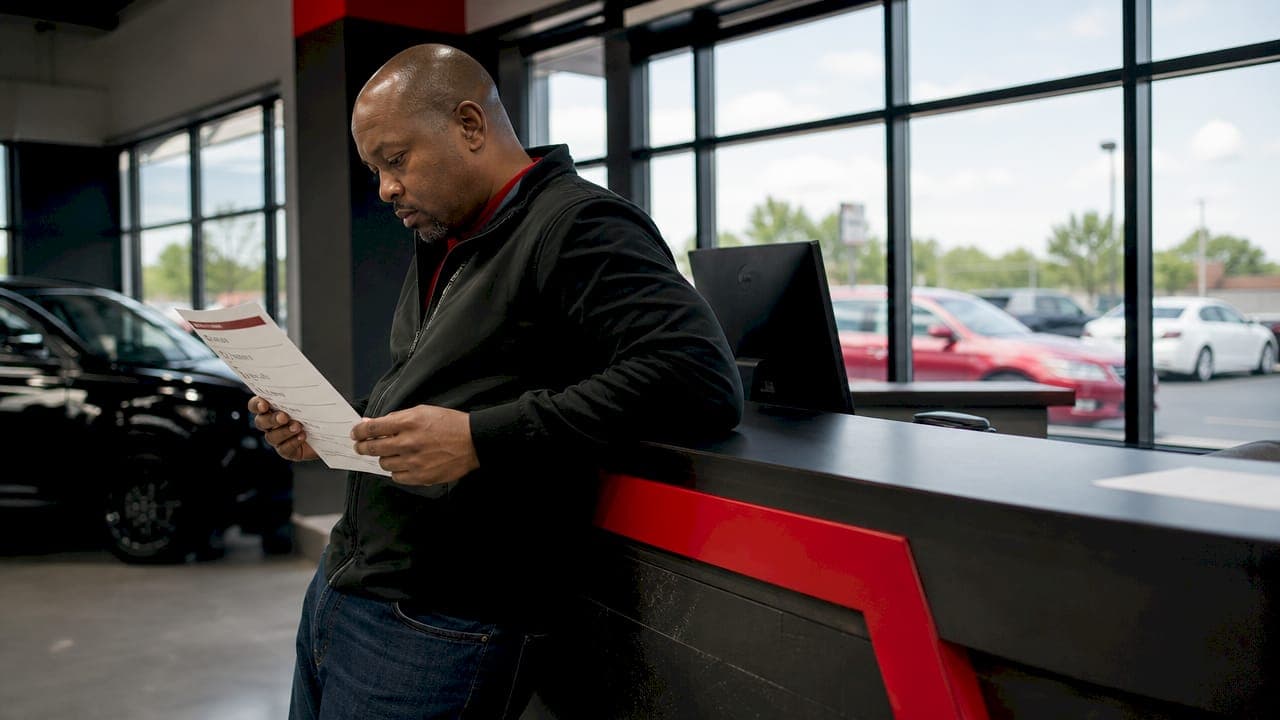
Dealer certification is defined as a program in which a used vehicle has been inspected and approved under standards set either by the manufacturer or by the selling dealership, typically accompanied by a warranty that extends coverage beyond a standard used car sale. The industry term for the most recognized version of this is Certified Pre-Owned, or CPO. Car and Driver confirms that most major brands offer manufacturer-backed CPO programs, while dealer-created certification programs vary significantly in rigor and warranty backing. Understanding what does dealer certification mean is the difference between buying with confidence and buying blind. Programs from Toyota CPO, BMW CPO, and similar manufacturer-backed sources follow strict, brand-specific checklists. Dealer-only programs follow no universal standard, which makes knowing the distinction critical before you sign anything.
What does dealer certification mean vs. manufacturer CPO?
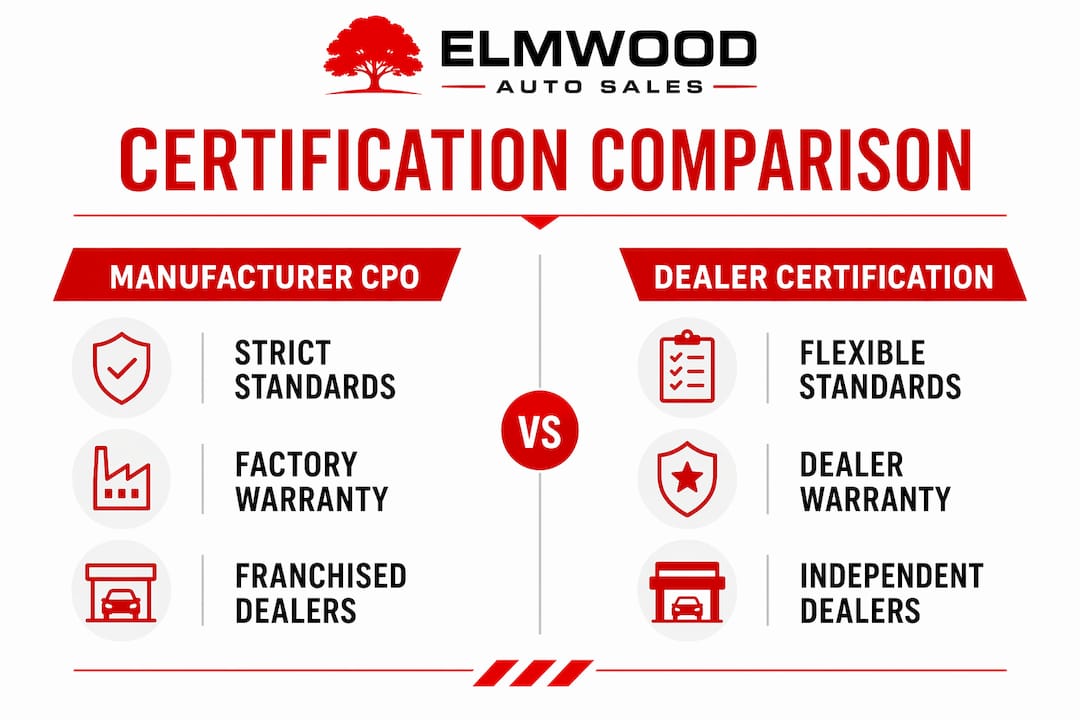
Manufacturer-backed CPO programs are brand-specific and sold exclusively through franchised dealers. Inspection standards commonly range from 100 to over 300 checkpoints, covering everything from engine compression to interior electronics. That level of scrutiny means a Toyota CPO vehicle passes the same checklist in Providence, RI as it does in Portland, OR. The consistency is the point.
Dealer certification programs are independent by design. A dealership creates its own checklist, sets its own standards, and often backs the warranty through a third-party insurer rather than a factory. No universal CPO standard exists across dealer-created programs, which means the label "certified" can mean a 50-point visual inspection at one lot and a 200-point mechanical review at another. That gap matters enormously when you are deciding whether to trust a vehicle with 60,000 miles on it.

The warranty structure is where the two programs diverge most sharply. Manufacturer-backed CPOs provide factory warranty coverage that is honored nationwide through any franchised dealer in that brand's network. A dealer-certified warranty, by contrast, may only be honored at the selling dealership or within a restricted network of repair shops. If you move or travel, that restriction becomes a real problem.
Pro Tip: Ask the dealer to show you the actual warranty contract before you agree to anything. The word "certified" on a window sticker is a marketing label. The warranty document is the legal commitment.
| Feature | Manufacturer CPO | Dealer Certification |
|---|---|---|
| Inspection standard | 100 to 300+ checkpoints, brand-defined | Varies by dealership, no universal standard |
| Warranty backing | Factory warranty, nationwide coverage | Third-party insurer or dealer-backed, often local |
| Repair network | Any franchised dealer in the brand network | Often restricted to selling dealer or select shops |
| Eligibility restrictions | Age and mileage limits set by manufacturer | Set by individual dealer, varies widely |
| Cost premium | Typically a few thousand dollars above market | Generally lower than manufacturer CPO |
What does the dealer certification process typically involve?
The dealer certification process covers two separate concepts that buyers frequently confuse. The first is vehicle certification, which is the inspection and approval of a specific car. The second is dealer licensing, which is a state regulatory requirement for a business to legally sell vehicles. Ohio and Maryland dealer licensing involves surety bonds, training requirements, and site inspections. None of that certifies the condition of any individual vehicle on the lot. A licensed dealer can sell uncertified cars. These are entirely different things.
For vehicle certification specifically, the process at a dealer-run program typically includes the following steps:
- A multi-point mechanical inspection covering the engine, transmission, brakes, suspension, and steering components
- An exterior and interior condition review checking for body damage, upholstery wear, and electronics function
- A vehicle history report pull from services like Carfax or AutoCheck to identify prior accidents, title issues, or odometer discrepancies
- A review of maintenance records to confirm the car has been serviced at appropriate intervals
- Reconditioning work to address any deficiencies found during inspection before the vehicle is listed as certified
- Documentation of the inspection results, which the buyer should be able to request and review before purchase
The variability in this process is significant. Verification of certification should always include reviewing the specific multi-point inspection checklist and the warranty contract terms. A dealer who cannot or will not produce that documentation is a dealer whose certification label carries little weight. Treat the paperwork as part of the product.
Warranty structures under dealer certification programs also differ from manufacturer programs in how claims are processed. Third-party backed warranties often require pre-authorization before repairs, and some restrict which mechanics can perform covered work. These details are buried in the fine print, which is exactly where buyers need to look first.
What are the benefits and limitations of buying a dealer-certified vehicle?
Dealer-certified vehicles offer real advantages, particularly for buyers who want more protection than a standard used car sale provides but are not set on a specific brand's CPO program. CPO vehicles generally cost more than comparable non-certified used cars, often by a few thousand dollars, but dealer-certified programs typically price below manufacturer CPO while still offering some warranty coverage. For budget-conscious buyers, that middle ground can make sense.
The limitations are real and worth naming directly. Consider the following before committing to a dealer-certified purchase:
- Warranty coverage scope is often narrower than manufacturer CPO, excluding certain components or capping repair costs at lower thresholds.
- Deductibles on dealer-certified warranties vary and can reduce the practical value of coverage on smaller repairs.
- Repair location restrictions mean you may be required to return to the selling dealer for covered work, which is inconvenient if you live far away or the dealer closes.
- Warranty claim restrictions can include pre-authorization requirements that delay repairs and add administrative friction.
- Transferability varies. Some dealer-certified warranties transfer to a new owner if you sell the car; many do not.
On the benefit side, dealer-certified vehicles do retain value better than non-certified used cars in the same condition. The inspection process, even when less rigorous than a manufacturer program, typically catches major mechanical issues before the car reaches the lot. That reconditioning work has real value.
Pro Tip: Request the vehicle history report and the inspection checklist as a package before negotiating price. If either document is incomplete or unavailable, factor that uncertainty into your offer or walk away.
The significance of dealer certification ultimately depends on the specific program behind the label. A thorough dealer certification from a reputable dealership with a clear warranty contract is meaningfully better than buying a used car with no inspection documentation at all. The gap between a strong dealer program and a weak one, though, can be just as wide.
How do you verify dealer certification when buying a used car?
Verification is the step most buyers skip, and it is the step that determines whether the certification label actually protects you. Buyers should confirm exact warranty details and limitations before signing, not after. The following checklist gives you a practical framework for evaluating any dealer-certified vehicle:
- Confirm who backs the warranty. Ask directly whether coverage comes from the manufacturer, the dealership itself, or a third-party insurer. Each carries different reliability and claim processes.
- Request the full multi-point inspection checklist with results noted for each item. A legitimate program produces this document without hesitation.
- Pull a vehicle history report independently using Carfax or AutoCheck. Do not rely solely on the dealer's copy.
- Review the warranty contract for deductible amounts, coverage exclusions, repair location requirements, and transferability terms.
- Ask whether the vehicle must be serviced at a franchised dealer to maintain warranty validity. Manufacturer CPO coverage often requires brand-schedule maintenance at franchised dealers, and missing a service interval can void coverage.
- Consider an independent pre-purchase inspection from a licensed mechanic not affiliated with the selling dealer. This costs roughly $100 to $200 and provides an unbiased second opinion on the vehicle's condition.
- Compare the dealer-certified option against any available manufacturer CPO vehicles in the same price range. The price difference may be smaller than expected, and the warranty difference may be substantial.
The dealer certification process at its best is a genuine quality filter. At its worst, it is a marketing badge applied to a vehicle that received a cursory visual check. Your job as a buyer is to determine which one you are looking at before money changes hands.
Key takeaways
Dealer certification is only as reliable as the inspection documentation and warranty contract behind it. Buyers who verify both are protected; buyers who trust the badge alone are not.
| Point | Details |
|---|---|
| Certification type matters | Manufacturer-backed CPO programs follow strict, brand-defined standards; dealer programs vary widely. |
| Warranty backing is the key factor | Factory warranties cover repairs nationwide; dealer-certified warranties may be local or third-party restricted. |
| Documentation is non-negotiable | Always request the inspection checklist and warranty contract before agreeing to purchase. |
| Dealer licensing is not vehicle certification | A state-licensed dealer is legally authorized to sell cars, not to certify their condition. |
| Independent inspection adds confidence | A pre-purchase inspection from an outside mechanic costs little and confirms what the certification claims. |
What I've learned about certification labels after years in this business
Buyers walk in all the time holding a window sticker that says "certified" as if it settles every question about the car. It does not. The label tells you a program exists. The paperwork tells you whether that program is worth anything.
The most common misconception I see is that certification equals a guarantee of reliability. It does not. Certification is a claim supported by programs of variable rigor, and the only way to know what you are actually getting is to read the warranty contract and the inspection checklist side by side. A buyer who does that is in a completely different position than one who takes the badge at face value.
What I prioritize when evaluating a certified used vehicle is simple: who backs the warranty, what does it actually cover, and where can repairs be done. Those three questions cut through most of the noise. If a dealer cannot answer all three clearly and in writing, that tells you something important about how the program operates.
The other thing worth saying plainly is that a strong dealer-certified program from a transparent, reputable dealership can be a genuinely good option. It is not automatically inferior to manufacturer CPO. The difference is that you have to do more verification work to confirm the quality. With manufacturer CPO from Toyota or BMW, the program structure does much of that work for you. With dealer certification, you are the quality control.
— Elmwood
Find certified used vehicles you can trust at Elmwoodautosalesri
At Elmwoodautosalesri, every used vehicle goes through a thorough inspection before it reaches the lot. There are no commission-based sales tactics here, which means the conversation stays focused on what actually fits your needs and budget.
Elmwoodautosalesri serves buyers across Providence, RI with transparent warranty information, vehicle history reports on request, and financing options that work for a range of credit histories, including buy here, pay here solutions. Whether you are comparing dealer-certified options or want help understanding what coverage actually applies to a specific vehicle, the team at Elmwoodautosalesri walks you through it without pressure. Browse the current inventory and get the documentation you need to buy with confidence.
FAQ
What is dealer certification in simple terms?
Dealer certification means a used vehicle has been inspected under a program created either by the manufacturer or the selling dealership, and typically comes with a warranty that provides coverage beyond a standard used car sale.
Is dealer certification the same as manufacturer CPO?
No. Manufacturer CPO programs like Toyota CPO or BMW CPO follow strict, brand-defined inspection standards and provide factory warranty coverage nationwide. Dealer certification programs are independent, vary in inspection rigor, and often use third-party warranty backing with more restrictions.
What should I ask before buying a dealer-certified car?
Ask who backs the warranty, what the coverage terms and exclusions are, where repairs can be performed, and request the full inspection checklist. An independent pre-purchase inspection from a licensed mechanic outside the dealership adds an additional layer of verification.
Does dealer certification affect the price of a used car?
Yes. CPO vehicles typically cost more than comparable non-certified used cars, often by several thousand dollars. Dealer-certified vehicles generally price below manufacturer CPO programs but above non-certified equivalents in similar condition.
Can a dealer-certified warranty be used at any repair shop?
Not always. Dealer-certified warranties may restrict covered repairs to the selling dealership or a defined network of shops, unlike manufacturer CPO warranties that are honored at any franchised dealer in the brand's national network.