
A certified pre-owned car is a used vehicle that has passed a manufacturer's detailed inspection and comes with a warranty, giving buyers more protection than a standard used car. The certified pre-owned vs used car decision comes down to three factors: warranty coverage, inspection rigor, and upfront cost. All CPO vehicles are used cars, but not all used cars are certified. Brands like Toyota, BMW, and Honda run their own CPO programs with distinct standards. Understanding the difference between certified and used before you buy can save you thousands of dollars and a lot of frustration.
What inspection and warranty protections do certified pre-owned cars offer?
CPO vehicles carry manufacturer-backed warranties covering powertrain and, in many cases, bumper-to-bumper components. These warranties often extend or supplement the original factory warranty and may include roadside assistance and loaner vehicles. That combination of coverage is rarely available on a standard used car without purchasing a separate plan.
The inspection process behind a CPO vehicle is structured and documented. Manufacturers require dealers to run a multi-point checklist, often covering 100 to 200 inspection points depending on the brand. A regular used car may receive a basic state inspection or a dealer lot check, but neither carries the same depth or accountability.
One detail buyers frequently overlook is warranty start dates. Some CPO warranties begin at the original purchase date, not the CPO sale date. That distinction can significantly reduce the coverage period you actually receive. Car and Driver advises buyers to read the full warranty contract and confirm coverage periods and mileage limits before signing.
- CPO vehicles include a manufacturer-backed limited warranty on powertrain and major systems.
- Many CPO programs add roadside assistance, rental car coverage, and loaner vehicles.
- Inspection checklists are brand-specific and documented, tied to the vehicle's VIN.
- Regular used cars may have no program warranty and rely on third-party coverage instead.
- Warranty claim processes for CPO vehicles are handled through authorized dealerships, reducing disputes.
Pro Tip: Ask the dealer to hand you the actual CPO inspection report tied to the vehicle's VIN, not just a summary sheet. That document tells you exactly what was checked and what was repaired.
Used cars without certification can still be solid purchases, but the buyer carries more of the risk. Third-party warranties are available, but claim process complexities such as pre-authorization requirements, repair location restrictions, and documentation rules can make them harder to use. Knowing those rules upfront reduces disputes and protects your investment.
How do prices and long-term ownership costs compare?
CPO vehicles typically cost $1,000 to $3,000 more than comparable non-certified used cars. That premium reflects the cost of the inspection, reconditioning, and warranty backing. The gap varies by brand and vehicle segment, with luxury brands like BMW and Mercedes-Benz often sitting at the higher end of that range.

| Factor | Certified pre-owned | Regular used car |
|---|---|---|
| Upfront price | Higher by $1,000–$3,000 | Lower |
| Warranty coverage | Manufacturer-backed | None or third-party |
| Inspection documentation | Multi-point, VIN-specific | Variable or minimal |
| Repair cost risk | Lower during warranty period | Higher, fully out of pocket |
| Financing rates | Often competitive through dealers | Varies by lender |
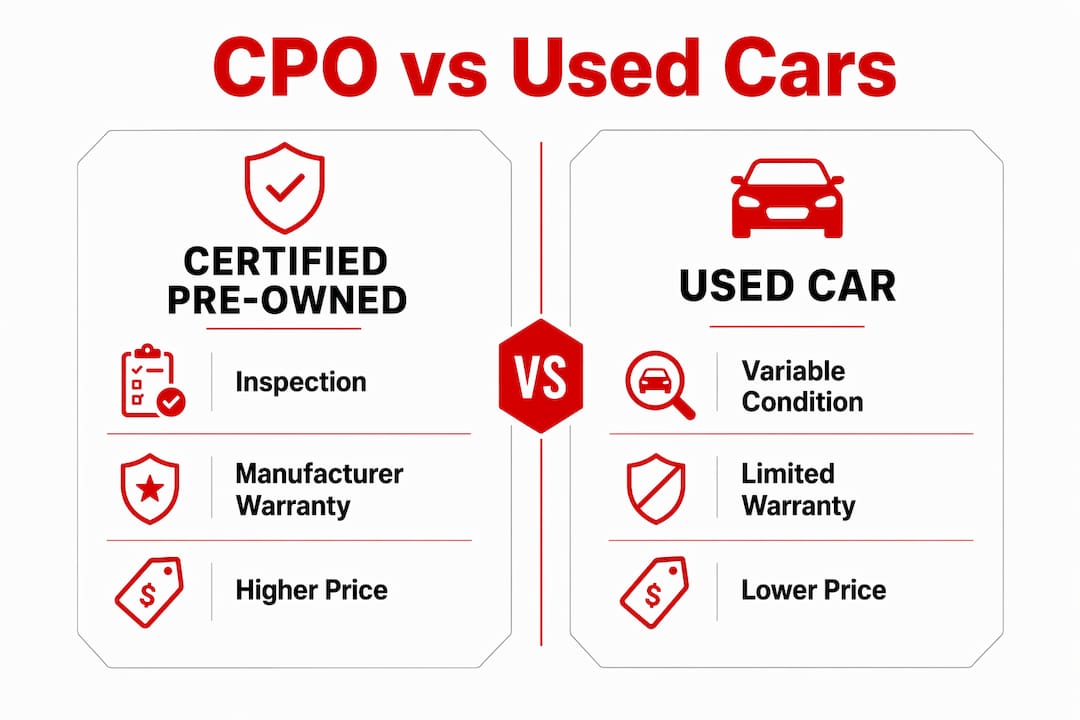
The premium is best understood as an insurance calculation. If a major repair during your ownership period would cost more than the CPO premium, the certification pays for itself. A transmission replacement on a mid-size sedan can run $3,000 to $5,000 out of pocket. Against that exposure, a $1,500 CPO premium looks reasonable.
Financing also plays a role. Many manufacturers offer lower interest rates on CPO vehicles compared to standard used cars. That rate difference can offset part of the sticker premium over the life of a loan. Buyers focused on monthly payment rather than total cost should run both scenarios before deciding.
Third-party warranties on regular used cars can close some of the gap, but warranty usability depends heavily on the contract terms. Coverage that looks strong on paper can be difficult to use if the claims process requires pre-authorization or limits you to specific repair shops. A manufacturer CPO warranty processed through an authorized dealer is generally more straightforward.
What reliability and risk factors should buyers weigh?
CPO cars are late-model, inspected vehicles that occupy a middle ground between new and used. Consumer Reports frames the choice as a risk-reliability tradeoff. CPO reduces uncertainty. Regular used cars trade that certainty for a lower price and a wider selection of makes, models, and years.
The used car market offers vehicles that CPO programs simply do not cover. Older models, higher-mileage vehicles, and less common brands fall outside most manufacturer CPO eligibility requirements. If your budget is under $10,000 or you need a specific older model, a used car buying guide focused on due diligence becomes your primary tool.
- Run a vehicle history report through Carfax or AutoCheck on any used car before purchase.
- Review the maintenance history for consistent oil changes and scheduled service.
- Arrange a pre-purchase inspection with an independent mechanic, not the selling dealer.
- Test drive the vehicle under real conditions, including highway speeds and hard braking.
- Check model-specific reliability ratings from Consumer Reports or J.D. Power before shortlisting.
Pro Tip: For used cars without CPO status, align three things before buying: a clean vehicle history report, a positive independent inspection, and strong reliability ratings for that specific model year. All three together reduce your risk significantly.
CPO program values vary widely by brand. There is no universal standard for what "certified pre-owned" means. Toyota's CPO program, for example, includes a 12-month or 12,000-mile comprehensive warranty plus a 7-year or 100,000-mile powertrain warranty from the original sale date. BMW's program offers different terms. Comparing programs side by side matters as much as comparing vehicles.
How can you decide which option fits your needs and budget?
The right choice depends on how long you plan to keep the vehicle and how much repair risk you can absorb. Buyers who keep cars for five or more years benefit most from CPO coverage during the early ownership period when major systems are most likely to need attention. Buyers planning to hold a vehicle for two years or fewer may find the CPO premium harder to justify.
Work through these four steps before committing:
- Estimate your ownership period. Longer ownership increases the value of warranty coverage. Shorter ownership reduces it.
- Compare worst-case repair costs to the CPO premium. If a likely repair exceeds the premium, CPO wins on value. This is the same math you apply to any insurance decision.
- Review the specific brand's CPO program terms. Request the exact inspection paperwork and warranty contract tied to the VIN, not a generic brochure.
- Assess your budget flexibility. If the CPO premium stretches your budget uncomfortably, a well-inspected used car with a clean history report is a legitimate alternative.
Budget-conscious buyers who do their homework on a regular used car can find excellent value. Risk-averse buyers, first-time car owners, or anyone without a trusted mechanic on call will find the CPO structure worth the extra cost. The difference between certified and used is ultimately a question of how much certainty you need and what you are willing to pay for it.
Key Takeaways
Certified pre-owned cars cost more upfront but deliver manufacturer-backed warranty coverage, structured inspections, and lower repair risk that regular used cars cannot match without additional investment.
| Point | Details |
|---|---|
| CPO definition | A CPO vehicle is a manufacturer-inspected used car with a backed warranty, not just a dealer label. |
| Price premium | CPO vehicles typically cost $1,000 to $3,000 more than comparable non-certified used cars. |
| Warranty nuance | Confirm whether the CPO warranty starts at original purchase or CPO sale date before signing. |
| Used car due diligence | Run a vehicle history report, get an independent inspection, and verify model reliability ratings. |
| Decision framework | Compare worst-case repair costs against the CPO premium to determine which option delivers better value. |
What I've learned from watching buyers choose between CPO and used
Most buyers focus on the sticker price and stop there. That is the wrong place to stop. The real question is what happens six months after you drive off the lot. A $2,000 CPO premium feels significant at signing. A $4,000 transmission repair on a non-certified car feels catastrophic.
That said, I have seen buyers overpay for CPO coverage they never needed. A well-maintained, lower-mileage used car from a brand with strong reliability ratings, backed by a clean Carfax report and a positive independent inspection, can be just as sound a purchase. The CPO label is not magic. It is a structured process, and you can replicate much of that process yourself with the right steps.
What I tell buyers consistently: do not trust the CPO label alone. Ask for the VIN-specific inspection report. Read the warranty contract. Confirm the start date and mileage limits. A CPO badge on a vehicle with a warranty that started three years ago at the original sale date may offer you very little remaining coverage. That is not a deal. That is a marketing label.
The buyers who come out ahead are the ones who treat this like a business decision. Compare the warranty terms, estimate your repair exposure, and price both options honestly. Whether you go CPO or standard used, the work you do before purchase determines the outcome far more than the label on the window sticker.
— Elmwood
How Elmwoodautosalesri supports your car buying decision
Elmwoodautosalesri serves buyers across Providence, RI, with a no-pressure approach and transparent vehicle information on every car in inventory.
Every vehicle at Elmwoodautosalesri goes through a thorough inspection before it reaches the lot, so you know what you are buying. The team does not work on commission, which means the advice you get is focused on your needs, not a sales target. Financing options include tailored solutions for a range of credit histories, including buy here, pay here programs. Whether you are weighing a certified pre-owned purchase or a quality used car, browse the inventory and financing options at Elmwoodautosalesri to find a vehicle that fits your budget and your standards.
FAQ
What is the main difference between certified pre-owned and used cars?
A certified pre-owned vehicle is a used car that has passed a manufacturer's multi-point inspection and comes with a backed warranty. A regular used car may have no program warranty and no standardized inspection.
Is a certified pre-owned car worth the extra cost?
CPO is worth the premium when the warranty coverage exceeds your likely out-of-pocket repair costs during ownership. Buyers keeping a vehicle for several years or those without a trusted mechanic benefit most from CPO protection.
How do I verify what a CPO warranty actually covers?
Request the VIN-specific warranty contract and inspection report from the dealer before purchase. Confirm the warranty start date, mileage limits, and which components are covered.
Can I negotiate the price of a certified pre-owned car?
Yes. The CPO premium is not fixed. Dealers have flexibility on pricing, and you can negotiate based on comparable non-certified vehicles, market conditions, and the remaining warranty coverage period.
What should I check when buying a used car without CPO status?
Run a vehicle history report through Carfax or AutoCheck, arrange an independent pre-purchase inspection, and review used car warranty types to understand your coverage options before signing.