
Dealer reputation is defined as the collective public perception of a dealership's trustworthiness, service quality, and ethical business practices, formed through customer reviews, complaint records, and industry recognition. This perception directly shapes your buying experience before you ever set foot on a lot. 84% of car buyers report that reviews influence their dealership choice, rising to 93% among Gen Z shoppers. That figure confirms what experienced buyers already know: what does dealer reputation mean is not an abstract question. It is the most reliable filter you have for avoiding a bad deal.
What does dealer reputation mean and what builds it?
Dealer reputation is the industry term for how a dealership is perceived across every touchpoint a customer encounters. It is not a single star rating. It is the sum of online reviews, pricing transparency, post-sale service, complaint handling, and community standing.
Online reviews carry the most visible weight. The content of a review matters more than its star count. A detailed account of how a dealer handled a financing dispute tells you far more than a generic five-star comment. Review content and dealer responses to complaints improve assessment accuracy more than aggregate scores alone.

Transparent pricing and honest communication are the next layer. A dealer with a strong reputation lists accurate inventory, discloses vehicle history reports upfront, and does not add surprise fees at the signing table. Evasive answers about a vehicle's condition or financing terms are a direct signal of poor reputation, regardless of how many stars appear on a review platform.
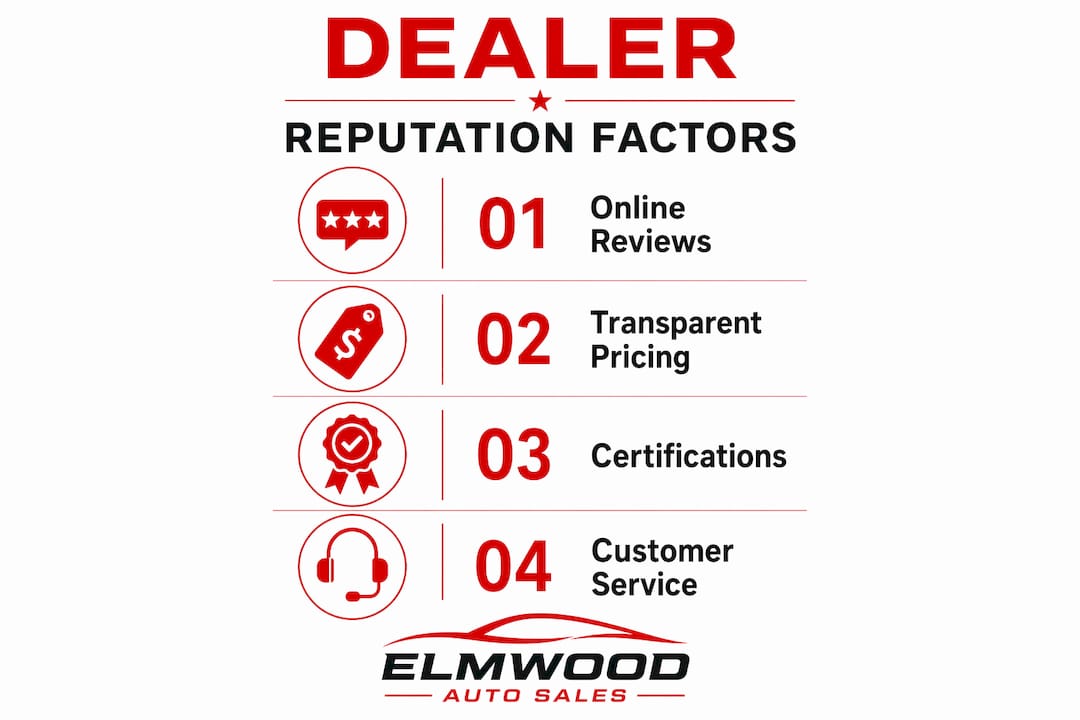
Certifications and manufacturer authorization add a third dimension. Membership in organizations like NADA (National Automobile Dealers Association) or NIADA (National Independent Automobile Dealers Association) signals that a dealer meets defined professional standards. Dealer certifications contribute directly to consumer confidence because they represent external accountability.
Customer service quality before, during, and after the purchase rounds out the picture. A dealer's reputation for post-sale support, including warranty follow-through and service department responsiveness, is often where long-term trust is won or lost. Elmwoodautosalesri, for example, builds its reputation on thorough vehicle inspections and a no-commission sales model that removes pressure from every interaction.
Pro Tip: Check a dealer's BBB complaint history alongside Google reviews. The BBB records how complaints were resolved, not just that they existed. A dealer who resolves complaints formally scores higher on accountability than one with no complaints but no verifiable record.
How does dealer reputation affect your buying experience?
Dealer reputation shapes the entire arc of a vehicle purchase, from the first online search to years of post-sale service. 48% of car buyers pay more at a dealer they trust. That willingness to pay a premium reflects a rational calculation: a trustworthy dealer reduces the risk of hidden problems, unfair financing, and poor after-sale support.
The financial impact on dealers is equally clear. Improving a dealership's average rating by one star can raise revenue by 5–9%, and increasing a reputation score by 150 points can boost sales by 10%. Those numbers show that reputation is not a soft metric. It is a direct driver of business performance, which means dealers with strong reputations have a financial incentive to maintain their standards.
"Trust, not just satisfaction, is the key metric for customer loyalty. 86% of satisfied customers report higher trust in a company after a great experience. Satisfaction fades; trust compounds."
The psychological dimension matters too. Buying a vehicle is one of the largest financial decisions most people make. A dealer with a documented record of honest communication and fair dealing lowers the anxiety that comes with that decision. 88% of buyers say that service experience impacts their likelihood of returning for future purchases. Reputation, then, is not just about the first sale. It is the foundation of a long-term relationship.
Dealer reputation has also risen from a marketing concern to an operational priority, influencing CSI (Customer Satisfaction Index) scores and local search visibility. A dealer who ranks well in local search is often one who has earned consistent positive feedback across multiple platforms.
How can you assess and verify a dealership's reputation?
Assessing dealer reputation requires checking multiple sources, not just one platform. Here is a practical process you can follow before visiting any lot.
-
Search Google, the BBB, and any manufacturer-specific review portals. Cross-referencing these sources reveals whether a dealer's reputation is consistent or whether one platform is masking problems visible on another. Discrepancies between platforms can reveal underlying dealer issues that a single high score conceals.
-
Read the text of reviews, not just the star average. Look for recurring themes. Multiple buyers mentioning unexpected fees, pressure tactics, or unresolved service issues is a pattern, not an outlier.
-
Check how the dealer responds to negative reviews. Professional responses to 1-star reviews indicate accountability and a problem-solving culture. A dealer who ignores criticism or responds defensively is showing you exactly how they handle conflict.
-
Verify certifications and accreditations. Confirm NADA or NIADA membership directly on those organizations' websites. Manufacturer-authorized dealers are also listed on brand websites, which removes any ambiguity about claimed credentials.
-
Research local complaint records. State Attorney General offices and the BBB maintain complaint histories that go beyond star ratings. Local complaint patterns provide sharper insights than online ratings alone because they document formal disputes and resolutions.
-
Look for community involvement. Dealers with long-standing ties to their local area, sponsorships, charitable partnerships, and consistent community presence, tend to have more stable reputations than those relying on national advertising campaigns.
| Assessment method | What it reveals |
|---|---|
| Google and BBB cross-check | Consistency of reputation across platforms |
| Review text analysis | Recurring service or pricing issues |
| Dealer response to complaints | Accountability and conflict resolution culture |
| NADA or NIADA verification | Professional standards compliance |
| State AG complaint records | Formal dispute history and resolution outcomes |
Pro Tip: When you visit a dealer, ask directly for a vehicle history report and a written breakdown of all fees before negotiating price. A reputable dealer provides both without hesitation. Reluctance to share either document is a red flag worth taking seriously.
What are common misconceptions about dealer reputation?
Several widely held beliefs about dealer reputation lead buyers to make poorly informed decisions. Recognizing these misconceptions protects you from avoidable mistakes.
-
High star ratings guarantee a good experience. They do not. High star ratings alone can be misleading; expert buyers look for documented integrity signals such as clear contracts and transparent sales practices. A 4.8-star average built on brief, unverified reviews carries less weight than a 4.3-star average with detailed, verified accounts of resolved problems.
-
One negative review disqualifies a dealer. A single complaint is not a verdict. What matters is how the dealer responded. A dealer who acknowledges an error, apologizes publicly, and documents the resolution is demonstrating exactly the kind of accountability you want in a business partner.
-
National advertising signals trustworthiness. Large ad budgets reflect marketing spend, not integrity. Local involvement and complaint history provide more stable reputation indicators than national advertising. A well-known brand name on a dealership sign does not transfer the manufacturer's reputation to the dealer's actual customer service practices.
-
Brand reputation equals dealer reputation. These are separate things. A dealer selling a highly rated vehicle brand can still have poor customer service, opaque financing, and a history of unresolved complaints. Always evaluate the dealer independently of the vehicles they sell.
-
Pressure tactics are just aggressive sales. They are not. Pressure tactics, unclear documentation, and evasive answers about financing terms are direct indicators of poor dealer reputation. Transparent contracts and willingness to answer questions are the baseline integrity signals that separate trustworthy dealers from those who prioritize closing a deal over serving a customer.
Pro Tip: If a dealer rushes you through paperwork or discourages you from reading a contract carefully, leave. No legitimate dealer with a strong reputation will object to giving you time to review what you are signing.
Key Takeaways
Dealer reputation is the single most reliable indicator of whether a dealership will treat you fairly, and verifying it across multiple sources before you buy is the most effective way to protect your investment.
| Point | Details |
|---|---|
| Reputation is multi-dimensional | It combines reviews, pricing transparency, certifications, and complaint history, not just star ratings. |
| Trust drives financial decisions | 48% of buyers pay more at a trusted dealer, showing reputation has direct monetary value. |
| Cross-platform verification matters | Checking Google, BBB, and state complaint records together reveals what any single source hides. |
| Negative reviews are not disqualifying | Professional dealer responses to complaints signal accountability and a strong service culture. |
| Brand and dealer reputation are separate | Always evaluate the dealer's own record independently of the vehicle brand they sell. |
What I have learned about dealer reputation after years in this market
The buyers who get the best outcomes are not always the ones who negotiate the hardest on price. They are the ones who spend time verifying who they are buying from before they ever discuss numbers.
What I have seen repeatedly at Elmwoodautosalesri is that buyers who arrive having done their reputation research are calmer, more confident, and more satisfied with their final decision. They ask better questions. They spot red flags faster. And they are far less likely to feel regret after signing.
The digital review landscape in 2026 gives buyers more information than any previous generation of car shoppers has had. The challenge is knowing how to read it. A dealer with 200 reviews averaging 4.6 stars, where the dealer personally responds to every complaint and documents resolutions, is a stronger choice than one with 4.9 stars and 30 reviews that all read identically.
My honest advice: trust your instincts when something feels off. If a dealer is evasive about fees, rushes you through paperwork, or cannot clearly explain financing terms, that behavior is the reputation. The reviews just confirm it. Prioritize transparency and accountability over price alone, and you will rarely make a wrong call.
— Elmwood
Elmwoodautosalesri: a trusted starting point for Providence car buyers
Elmwoodautosalesri has built its reputation in Providence, RI, on the principles this article describes: transparent pricing, thorough vehicle inspections, and a no-commission sales model that puts your needs ahead of closing a deal.
Every vehicle on the Elmwoodautosalesri lot passes a rigorous state inspection before it is listed, and the team provides vehicle history reports upfront. Financing options, including buy here, pay here solutions, are available for buyers across a range of credit histories. If you want to understand how BBB ratings work for dealers before you visit, that resource is available on the Elmwoodautosalesri blog. Buying a used car in Providence does not have to feel uncertain. Elmwoodautosalesri gives you the transparency and accountability that a strong dealer reputation is built on.
FAQ
What does dealer reputation mean in simple terms?
Dealer reputation is the overall measure of how trustworthy and reliable a dealership is, based on customer reviews, service quality, pricing transparency, and complaint history. It reflects how consistently a dealer delivers honest, fair treatment to buyers.
Why does dealer reputation matter when buying a used car?
Dealer reputation directly affects your risk as a buyer. 48% of car buyers pay more at a dealer they trust, which shows that reputation has real financial value beyond just peace of mind.
How do I check a dealer's reputation before visiting?
Cross-check Google reviews, BBB complaint records, and any manufacturer-specific portals. Read review text for recurring themes and check how the dealer responds to negative feedback, since professional responses to complaints indicate genuine accountability.
Can a dealer with negative reviews still be trustworthy?
Yes. A single negative review is not disqualifying. What matters is whether the dealer responds professionally and resolves the issue. A documented pattern of resolution is a stronger trust signal than a perfect score with no verifiable complaint history.
What are the biggest red flags in dealer reputation?
Pressure tactics, evasive answers about fees, reluctance to provide vehicle history reports, and unsigned or unclear contracts are the clearest red flags. Transparent contracts and honest communication are the baseline standards every reputable dealer meets.