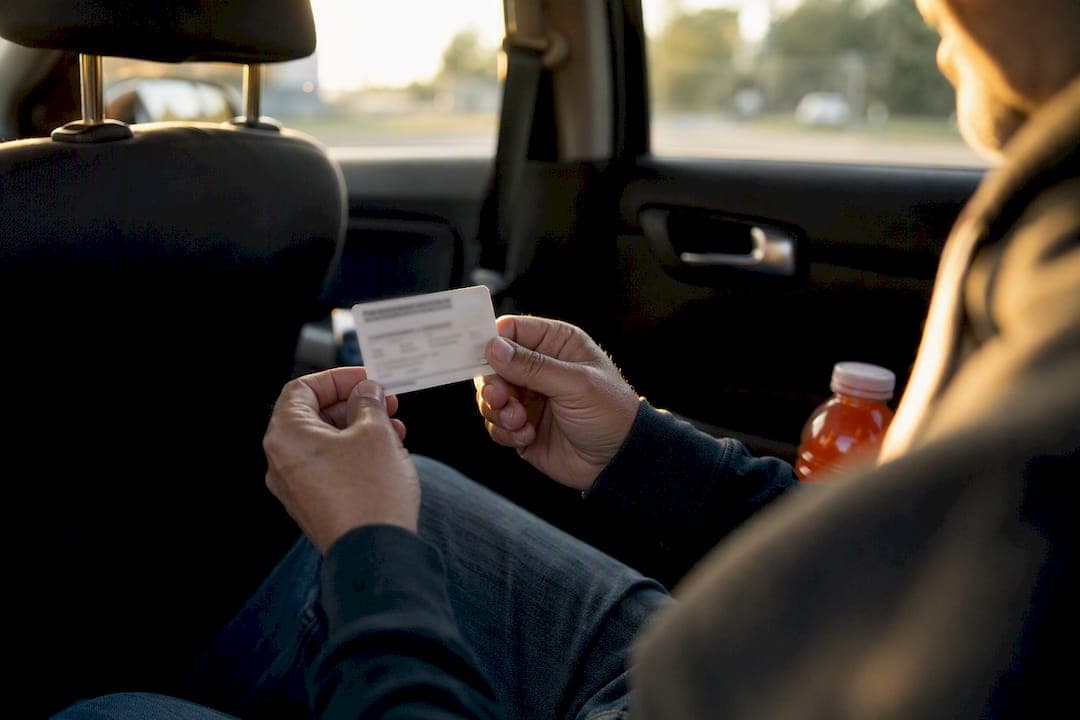
Your insurer's ID card, or an insurer-issued binder or certificate, is valid proof of car insurance. In nearly every U.S. state, a digital insurance card displayed on your phone works just as well as a paper copy. What matters most: you need to be able to show your insurer's name, your policy number, and the dates your coverage is active. If you just bought a car and haven't received your card yet, ask your agent for a binder immediately.
- Insurer-issued ID card or declarations page — the standard, DMV-recognized proof
- Binder — temporary proof while your permanent policy documents process
- SR-22 or FR-44 certificate — required for certain high-risk or court-ordered situations
Nearly every state accepts digital insurance cards, but a small handful have quirks worth knowing before you rely on your phone alone.
Key Takeaways
Valid proof of car insurance means an insurer-issued ID card, binder, or certificate showing active coverage, and digital versions work in nearly every state if you also keep a printed backup.
| Point | Details |
|---|---|
| Carry two formats | Keep a digital ID card on your phone and a printed copy in the glove compartment. |
| Know your state's quirks | Check local rules since states like New Mexico and Massachusetts handle digital proof differently. |
| Request a binder fast | Ask your agent for a binder immediately if your policy is new and cards haven't arrived. |
| Confirm lender minimums early | Verify coverage types and VIN match before your dealership closing appointment. |
| Act quickly if ticketed | Submit proof to the court or DMV within your state's allowed window to avoid fines. |
Table of Contents
- What Documents Count as Proof of Insurance Car Coverage?
- When Will You Actually Be Asked to Show It?
- Does Your State Accept a Digital Insurance Card?
- How Do You Get Proof of Insurance Right Now?
- Why Do Lenders and Dealers Ask for More Than the Minimum?
- What Should You Do If You Don't Have Proof Right Now?
- How Elmwood Auto Sales Handles Insurance at Closing
- What This Guide Gets Right That Most Advice Misses
- Where to Verify These Rules Yourself
- Sources
What Documents Count as Proof of Insurance Car Coverage?
An insurance ID card is the document most people picture. It lists your policy number, the coverage effective and expiration dates, your vehicle's year, make, model, and often the VIN, plus your insurer's name and claims phone number. This card is what officers, dealers, and DMV clerks check first.
A declarations page goes further. It spells out your coverage limits, deductibles, and the specific vehicles and drivers on your policy. Some lenders and dealerships ask for this instead of the ID card because it shows the actual coverage types, not just proof that a policy exists.
Binders and certificates fill different gaps. A binder is a short-term document, usually valid for 30 to 90 days, that insurers issue as temporary proof while your official card is being mailed or generated. An SR-22 or FR-44 isn't standard coverage proof at all. It's a certificate your insurer files with the state confirming you carry required minimums, typically after a serious violation.
| Document | What It Shows | When You'd Use It |
|---|---|---|
| ID card | Policy number, dates, vehicle info | Traffic stops, dealer visits |
| Declarations page | Coverage limits, deductibles | Loan applications, disputes |
| Binder | Temporary active coverage | Right after buying a policy |
| SR-22/FR-44 | State-filed compliance certificate | Post-violation requirements |
When Will You Actually Be Asked to Show It?
You'll need proof of insurance in a handful of predictable situations, and knowing them ahead of time means you're never scrambling.
- Traffic stops. An officer will ask for your license, registration, and insurance together. Some states let you provide proof later within a set window if you don't have it on hand, but that's not guaranteed everywhere.
- After an accident. You'll exchange insurance information with the other driver and often show it to responding police, following the same steps the Insurance Information Institute recommends for documenting a crash scene.
- Vehicle registration. Your state DMV typically verifies active coverage before issuing or renewing plates.
- Dealer delivery and loan closing. You can't drive off the lot in a financed vehicle without proof the policy is active and lists the correct VIN.
Skip any of these moments without proof, and you're looking at fines, a delayed registration, or a dealership that simply won't hand over the keys.
Does Your State Accept a Digital Insurance Card?
Yes, in nearly every case. Digital proof of insurance is accepted in 49 states plus Washington, D.C., so pulling up an app on your phone is a legitimate way to satisfy an officer or DMV clerk in almost the entire country.
A few states carry real nuances worth knowing. New Mexico treats digital proof conditionally rather than as an automatic blanket acceptance, so local rules matter more there than elsewhere. Massachusetts takes a different approach entirely: your registration itself already includes insurer information, which changes how proof gets checked during a stop. Rhode Island's own administrative code spells out that evidence of financial responsibility can be shown in paper or electronic format, including a display on your device, giving drivers here explicit legal footing for using a phone screen as proof.
Digital proof has practical weak points, though. A dead battery, no signal, an app that won't load, or a login you forgot at the worst possible moment can all leave you empty-handed. WalletHub's consumer guidance recommends keeping a physical copy in the glove compartment even if you normally rely on your phone, and it's worth adding a saved screenshot as a second layer since screenshots don't need service to open.
- Screenshot your ID card the day you get it, not the day you need it
- Keep one printed copy in the car at all times
- Check your state DMV's website before assuming digital-only is enough for registration, since some counter transactions still expect a printed document
How Do You Get Proof of Insurance Right Now?
Getting your hands on proof usually takes minutes, not days.
- Open your insurer's app or website. Most companies generate a digital ID card the moment your policy is active, often before any paperwork arrives by mail.
- Check your email. Many insurers automatically send a PDF of your card or declarations page at purchase, which you can download and print immediately.
- Call your agent for a binder. If you just bought a policy and nothing has generated yet, ask for a binder. Have your VIN and purchase date ready, since the agent will need both to issue it fast.
- Save an offline copy. Screenshot the app screen or save the PDF to your phone's photos so you're not depending on a live connection.
Pro Tip: Request your binder before you leave the insurance office or hang up the phone, not after. Dealerships often need it the same day, and same-day requests can take longer once you're already standing at the finance desk.
Why Do Lenders and Dealers Ask for More Than the Minimum?
Financed vehicles almost always require more than your state's minimum liability coverage. Lenders typically insist on collision and comprehensive too, because the car is collateral and they want it protected against damage, not just protected against claims you cause to others. Drop those coverages during your loan term and your lender can force-place its own insurance on your behalf, usually at a much higher cost than a policy you'd choose yourself.
At closing, dealerships verify three things: the policy's effective date, the VIN listed on your coverage, and whether your coverage types meet the lender's minimums, similar to the legal checklist of car sale paperwork in Singapore that outlines key documentation needed in dealer transactions. A binder, a digital ID card, or an emailed declarations page all typically satisfy this, according to Kelley Blue Book's guidance on buying with financing.
- Confirm your policy's effective date matches your purchase date
- Double-check the VIN on your insurance matches the vehicle you're buying
- Ask your lender directly what coverage minimums they require before you show up
Our guide on financing a car walks through more of what lenders expect before releasing funds.
What Should You Do If You Don't Have Proof Right Now?
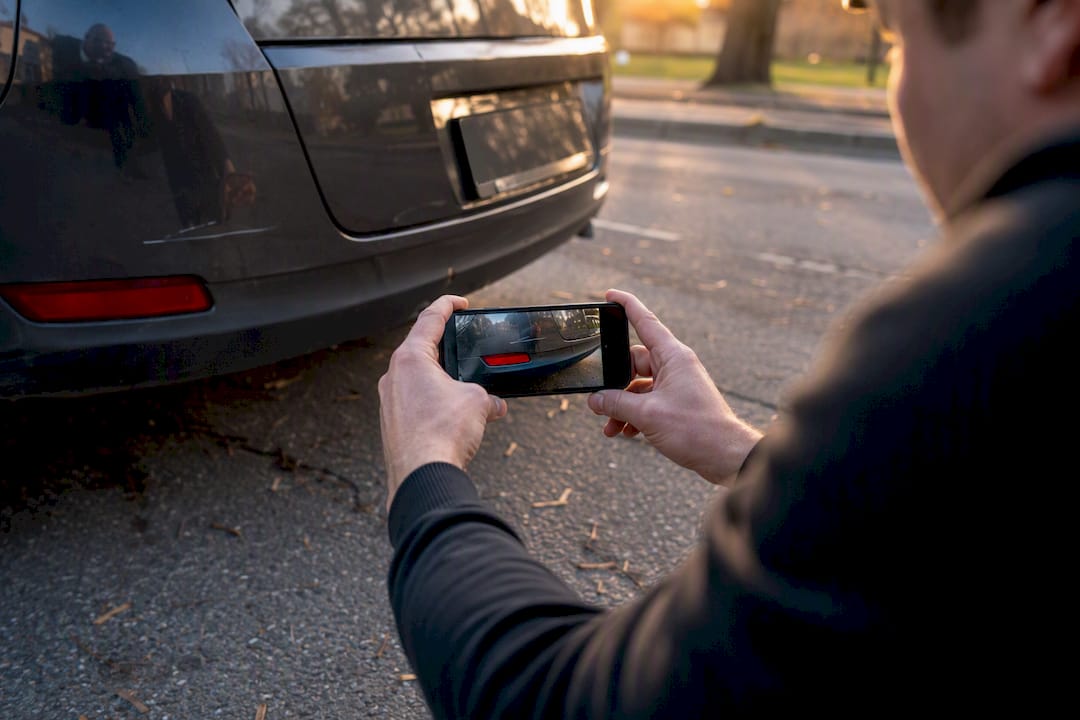
At a stop, stay cooperative, hand over your license and registration, and ask the officer whether your state allows submitting proof later. Many do, within a set window. After an accident, exchange insurer names and contact details with the other driver and photograph the scene, then follow up with your own insurer to pull the documentation you need. If you're ticketed, most states let you present proof to the court or DMV afterward to get the citation dismissed, though the deadline to do so varies by state.
How Elmwood Auto Sales Handles Insurance at Closing
Before we release keys on any financed vehicle, we verify your policy's effective date, confirm the VIN matches your coverage, and check that your coverage types meet your lender's requirements. Buyers who show up with proof ready move through closing noticeably faster.
Bring your insurer's phone number, a printed or digital ID card, and confirmation of your financing company's coverage minimums to your appointment. It's the single fastest way to avoid a delay at the finance desk.
- Confirm coverage requirements with your lender before your visit
- Have both a digital and printed copy on hand
- Ask your agent for a binder in advance if your policy is brand new
Our post on what to expect at a used car dealership covers the rest of the paperwork you'll want ready.
What This Guide Gets Right That Most Advice Misses
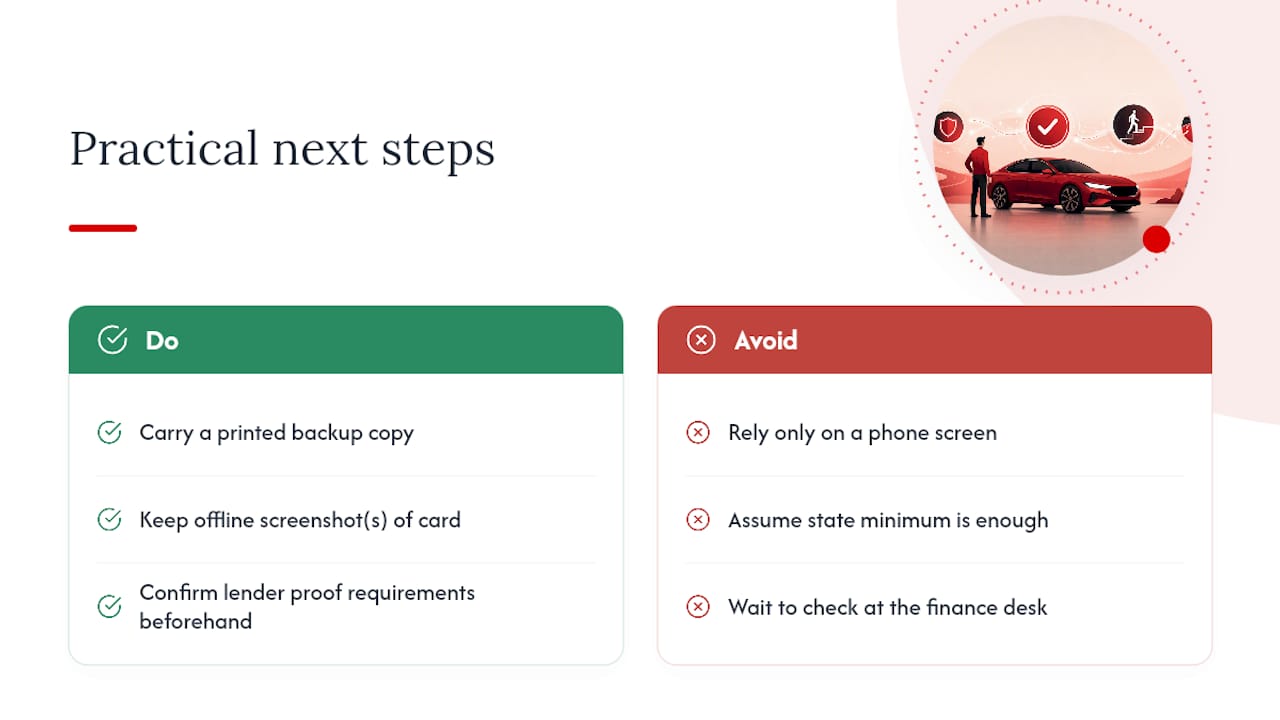
Most articles on this topic treat "digital cards are accepted" as the whole story and stop there. That's incomplete. The real risk isn't whether your state accepts a phone screen, it's what happens the one time your phone doesn't cooperate: dead battery at a 6 a.m. stop, no signal in a parking garage, an app that decides to update itself at the worst moment. A printed backup isn't old-fashioned caution, it's the difference between a two-minute stop and a citation you have to fight later.
The other gap: most guides ignore dealerships entirely and focus only on police stops. But financing a car is where proof requirements get strictest, because your lender has its own coverage minimums layered on top of state law. If you walk into a dealership assuming your state's minimum liability is enough, you'll likely hit a wall at the finance desk. Confirm lender requirements before your appointment, not during it. That single step prevents more delays than any app or screenshot ever will.
— Elmwood
Where to Verify These Rules Yourself
- WalletHub's proof of insurance guide covers state-by-state acceptance patterns
- Progressive's proof of insurance page explains binders and digital ID cards
- Experian's breakdown of lender coverage requirements
- Check your own state DMV site for exact registration and stop requirements
Ready to find your next vehicle? Schedule a test drive with Elmwood Auto Sales and we'll walk you through exactly what insurance documentation you'll need before you drive home.
Sources
- What is proof of insurance? — Experian
- Proof of insurance guide — WalletHub
- How to get proof of insurance — Progressive
- Rhode Island administrative policies — LII / Cornell Law