Proof of residence for an auto loan is a document that shows your name and current address, dated within the last several weeks. Lenders typically accept a utility bill, a lease or mortgage statement, a bank or credit card statement, or a current government-issued ID that lists your address. The address on file needs to match what's on your loan application, and most lenders want something recent enough to confirm you actually live there now, not six months ago.
Before you head to the dealership, gather a few of these:
- A utility bill (electric, gas, water, or cable) dated recently
- A lease agreement or mortgage statement with your name on it
- A bank or credit card statement showing your current address
- A valid driver's license or state ID with your current address
- An auto or homeowner's insurance bill or policy declaration page
- A recent pay stub that lists your home address
Key Takeaways
Proof of residence for an auto loan requires a recent, name-matched document (utility bill, lease, bank statement, or ID) dated recently that aligns with your credit report and application.
| Point | Details |
|---|---|
| Recency matters most | Bring a document dated within the last several weeks to avoid delays. |
| Address alignment prevents holdups | Match your ID, credit report, and bank records before applying. |
| No traditional bill? You have options | Use a landlord letter, pay stub, or insurance mail instead. |
| P.O. boxes don't count | Lenders require a street address, with exceptions for military APO/FPO. |
| Dealer financing offers flexibility | In-house programs often accommodate buyers without standard bills. |
Table of Contents
- What Is Proof of Residence for an Auto Loan, and Why Do Lenders Require It?
- Which Documents Do Lenders Accept as Proof of Residence?
- What If I Don't Have Traditional Proof of Residence?
- How Do Lenders Verify Your Address, and What Trips People Up?
- Proof of Residence Checklist: What to Bring to the Dealership
- What Experts Say About Address Verification and Loan Approval
- Ready to Bring Your Documents In?
- Why the Standard Advice on Proof of Residence Falls Short
- Frequently Asked Questions
- Sources
What Is Proof of Residence for an Auto Loan, and Why Do Lenders Require It?
Lenders ask for proof of residence for one practical reason: they need to know who you are, where to reach you, and whether you're a stable credit risk. Your address also determines how much sales tax gets calculated into your loan, since sales tax is based on your state of residence rather than the dealership's location. If you live in a neighboring state and buy from a dealership across the border, the tax rate applied to your loan follows your home address, not the lot's zip code.
If a buyer in one state purchases a vehicle from a dealership in another, the tax calculation and title paperwork are built around the buyer's home address. Get that address wrong on the application, and the numbers on your contract won't match reality.
Residency also plays into risk assessment. Lenders view a permanent address as a sign of financial stability, and some subprime lenders will look for at least one year at your current address before approving certain terms.
Which Documents Do Lenders Accept as Proof of Residence?
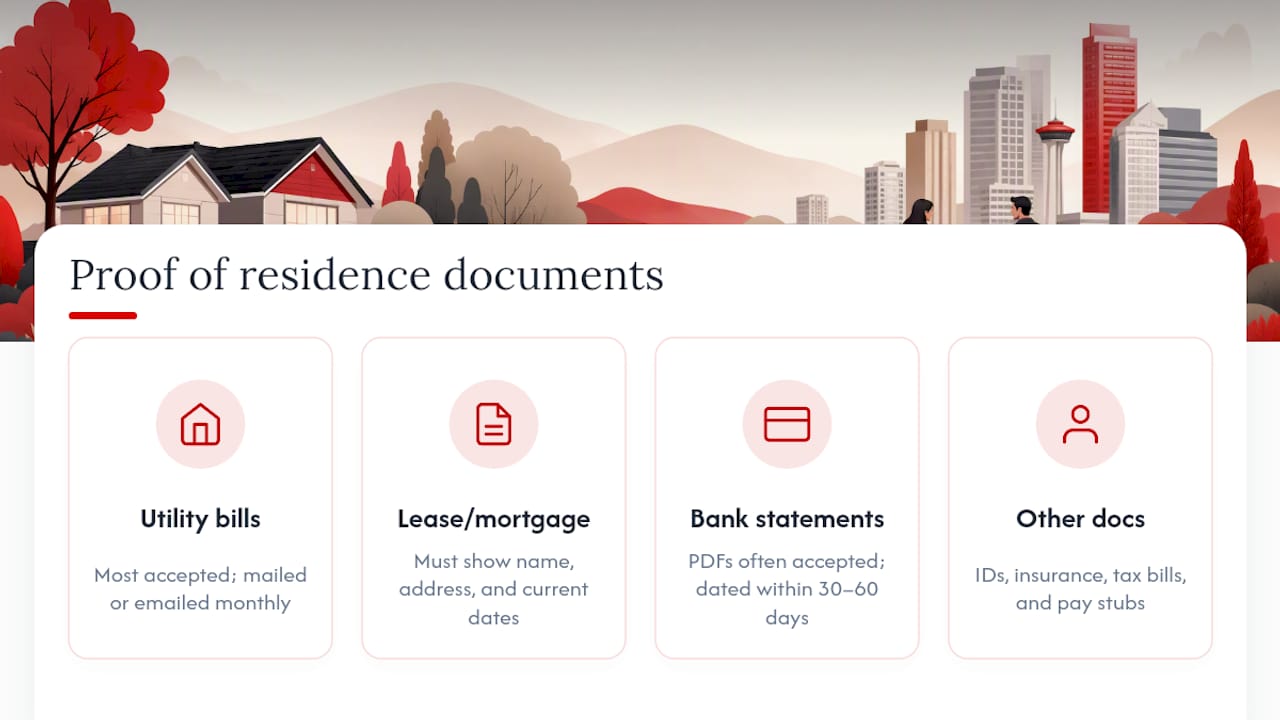
Lenders aren't picky about the exact document type, but they are picky about what's on it. Every acceptable document needs your full legal name, your complete street address, and a date recent enough to prove you live there today.
Utility bills (electric, gas, water, internet, or cable) are the most commonly accepted option because they're mailed or emailed monthly and tied to a specific service address. A cell phone bill works too, as long as it lists a home address rather than just a billing account number.
Lease or rental agreements need to show your name, the property address, and the current lease dates. An expired lease from two years ago won't cut it. If you just signed a new lease, bring the signed copy along with your first utility bill or a landlord letter to bridge the gap.

Mortgage statements work the same way. Lenders want to see your name, the property address, and a statement date within the acceptable window.
Bank or credit card statements are widely accepted and often easy to pull as a PDF the same day you apply. Some lenders will take a digital statement downloaded from your online banking portal; others prefer a paper copy mailed to your home.
Driver's licenses and state IDs double as both identification and proof of residence, provided the address on the card is current. This is often the fastest option because you're already bringing your license to verify identity anyway.
Insurance bills or policy pages, whether for auto or homeowner's coverage, list your address and are frequently accepted since insurers require accurate mailing information by law.
Property tax bills and recent pay stubs round out the list. A pay stub works especially well if your employer mails it or your payroll system lists your home address on the document.
According to Bankrate's documentation checklist, acceptable proof generally falls into these same categories: utility bills, lease or mortgage statements, and bank or credit card statements dated within 30 to 60 days.
Pro Tip: Keep a folder of PDFs saved on your phone, including your most recent utility bill and bank statement, so you're not scrambling for paperwork the morning you walk into the dealership.
What If I Don't Have Traditional Proof of Residence?
Not everyone has a utility bill in their name. Recent movers, students, people living with family, and military members often hit this wall, and there are workable paths around it.
- A landlord letter or notarized residency affidavit confirming you live at the address
- A pay stub listing your current address, even without a separate utility bill
- Insurance mail (auto or health) showing your name and address
- Voter registration confirmation
- A school enrollment letter for students living in dorms or off-campus housing
- Military members can generally use an APO or FPO address, an exception to the usual P.O. box rule
Dealerships offering in-house or "buy here, pay here" financing tend to have more flexibility here, since they're evaluating the whole borrower rather than running a strict document checklist against a third-party underwriter. If you're weighing that route, our guide to buy here, pay here financing breaks down how it works.
Some lenders skip the paperwork entirely and verify your address electronically once your ID and credit report line up.
Pro Tip: If you move often or live with family, ask your bank to mail a paper statement to your current address at least once. A single dated statement in hand solves most residency questions before they come up.
How Do Lenders Verify Your Address, and What Trips People Up?
Lenders usually verify residency one of three ways: matching your driver's license against your credit report, running an electronic address check, or manually reviewing the documents you bring in. When your ID address matches your credit report, many lenders skip the physical paperwork altogether.
Here's where applications get stuck:
- Using a P.O. box instead of a street address (not accepted except for military APO/FPO)
- Bringing a bill with an old address that doesn't match your ID or credit report
- Submitting a statement postmarked months ago
- Handing over a bill that doesn't have your name on it
Fix these before you apply, not after:
- Update your driver's license if you've moved in the last few months
- Pull a fresh, dated bank or credit card statement the week of your appointment
- If your name isn't on any household bill, get a notarized letter from the homeowner or lease holder
If a lender asks for additional proof mid-application, don't panic. It usually means one document didn't fully match, and a second dated statement or a quick phone call from your landlord typically resolves it.
Proof of Residence Checklist: What to Bring to the Dealership
Print this or save it to your phone before your appointment:
- Valid driver's license or state ID with current address
- One utility bill or bank statement dated within the last 60 days
- Proof of income (recent pay stub or two)
- Insurance card or policy page
- Social Security number or card
- Trade-in title, if applicable
If you're missing a traditional document, bring a landlord letter or lease agreement instead. Originals are preferred when possible, but printed or emailed PDFs generally work if the date and address are clear.
What Experts Say About Address Verification and Loan Approval
Address accuracy affects more than paperwork speed. It touches your tax calculation, your approval odds, and sometimes your interest rate.
Lenders treat a stable, verifiable address as a signal of financial reliability, and that perception can influence both approval speed and the terms a lender is willing to offer.
A few things worth doing before you apply:
- Confirm your driver's license, credit report, and bank records all list the same address, since mismatches are the most common reason lenders request extra documentation
- Review the CFPB's guidance on loan application information if you want the full regulatory picture
- If you're financing with a dealer directly, ask about their documentation flexibility upfront
Elmwood Auto Sales works with buyers across a range of credit histories, and our team walks you through exactly what's needed before you sit down to sign anything. If you want to understand your financing options ahead of time, our preapproval guide covers the process step by step.
Ready to Bring Your Documents In?
Once you've gathered your ID, a recent bill or bank statement, and proof of income, the fastest next step is putting a vehicle in front of you. Elmwood Auto Sales inspects every car on our lot before it goes up for sale, and our finance team reviews your paperwork the same day, without the pressure tactics you'll find at bigger dealerships. If you're ready to see what's available, schedule a test drive and bring your documents with you. We'll walk through financing options, including in-house solutions for buyers with limited credit history, right there on the lot.
Why the Standard Advice on Proof of Residence Falls Short
Most guides treat proof of residence like a box to check, listing four document types and moving on. That misses the real issue: address mismatches, not missing documents, cause most of the delays we see. A buyer might have a perfectly valid utility bill, but if the address doesn't match their driver's license or credit report, the application stalls anyway.
The fix isn't gathering more paperwork. It's alignment. Update your license before you apply. Pull one current bank statement. Confirm your credit report reflects where you actually live. That single step resolves more approval delays than any stack of extra documents ever will.
We'd also push back on the idea that renters or people living with family are somehow disadvantaged here. Dealerships offering in-house financing, including our own, routinely work with buyers who don't have a utility bill in their name. The paperwork exists to confirm you are who you say you are, not to punish nontraditional living situations. Bring what you have, be upfront about gaps, and let the finance team guide you from there.
Frequently Asked Questions
What is proof of residence for an auto loan, exactly? It's any document proving your name and current address, such as a utility bill, lease, bank statement, or valid ID, dated within the last several weeks.
How recent does my proof of residence need to be? Most lenders want documents dated within 30 to 60 days, though some accept slightly older paperwork if your address hasn't changed.
Can I use a P.O. box as my address on a car loan application? No. Lenders require a physical street address, with the exception of military APO/FPO addresses.
What if I don't have any bills in my name? A notarized landlord letter, a pay stub listing your address, or insurance mail can often substitute for a traditional utility bill.
Do dealerships verify my address electronically? Many do. If your driver's license address matches your credit report, some lenders skip physical documentation entirely.
This article is general information, not a substitute for advice from a qualified financial advisor. Consult a qualified financial professional about your own circumstances before acting on anything here.
Sources
- Auto Loan Documentation Checklist | Bankrate
- Why Does a Car Lender Need My Address? | Auto Credit Express
- Auto loan documentation checklist | LendingTree
- What information do I need to provide to get a loan? | CFPB
Recommended
- Paystub Requirement for Car Financing: What You Need
- Unlocking Financial Access: How Elmwood Auto Sales is Financing Everyone and Getting You Approved Today - Elmwood Auto Sales
- Car Loan Preapproval Explained: Your 2026 Buyer's Guide
- Unlocking Financial Access: How Elmwood Auto Sales is Financing Everyone Across Massachusetts and Getting You Approved Today - Elmwood Auto Sales d