Buying a flood-damaged car is a gamble most buyers should not take, unless you are working with a qualified independent mechanic, running a full vehicle-history check, and getting complete disclosure from the seller. Before you even consider a deal, pull the VIN, run it through a vehicle-history service, and insist on an independent inspection. If a seller resists any of those three steps, walk away.
TL;DR:
- Conduct a VIN check through NMVTIS and NICB before negotiating to identify potential flood damage that might not be obvious on the surface.
- Get an independent mechanic inspection focused on the electrical system, underbody, HVAC, and hidden cavities to catch less visible flood signs.
- Be aware that flood-damaged cars can be resold with altered titles through state title washing, making paper records unreliable for revealing past flood exposure.
- Avoid starting or running a suspected flood vehicle, especially electric or hybrid models, due to high-voltage risks and potential fires.
- Prioritize inspection results over paper documents, as even a vehicle that passes initial tests could still harbor hidden damage requiring costly repairs.
Table of Contents
- Why Flood Damage Cars Carry Hidden Safety and Resale Risks
- How to Spot Flood Damage Before You Sign Anything
- How Flood-Damaged Cars Slip Back Into the Market
- Your Pre-Purchase Checklist: What to Verify Before You Buy
- Why You Should Never Start a Suspected Flood Car, and What Insurance Says
- Elmwood's View on Transparent Flood-Risk Disclosure
- What Repairing a Flooded Car Actually Involves
- The Checklist Beats the Theory Every Time
- Book a Test Drive With an Already-Inspected Vehicle
- Official Resources Worth Bookmarking
- Sources
Why Flood Damage Cars Carry Hidden Safety and Resale Risks
Water does more damage to a car than most buyers expect, and much of it stays hidden until months later. Engines can seize from water ingestion. Brake systems corrode from the inside out. Airbag control modules, which sit low in the vehicle to save weight, are often among the first electronics submerged and the least likely to be replaced.
Electric and hybrid vehicles carry an added layer of risk. Flooded high-voltage battery packs can develop internal shorts that lead to shocks or fires, sometimes days or weeks after the water recedes, which is why the National Highway Traffic Safety Administration warns against starting a vehicle suspected of flood exposure until a qualified technician has inspected it.
The damage that does not show up on day one is often the damage that costs the most later:
- Corroded wiring harnesses that cause intermittent electrical failures for years
- Mold growth inside HVAC ducts and upholstery padding that no amount of cleaning fully removes
- Silt and sediment trapped in wiring looms and connectors, accelerating corrosion over time
- Rusted fuel and brake lines that fail well after the sale
Pro Tip: A flood car can pass a test drive with flying colors and still fail catastrophically later, because corrosion is a slow process, not an instant one.
How to Spot Flood Damage Before You Sign Anything
Most flood damage signs hide in places sellers do not think to clean. A musty smell that lingers after the windows have been open for an hour is one of the strongest tells there is, especially if it is paired with air fresheners working overtime to mask it.
Start with the obvious and work toward the obscure:
- Sniff the cabin. Mildew odor, especially under the carpet or seats, rarely comes out with detailing.
- Check for mismatched upholstery. New carpet or seat fabric in an otherwise worn interior is a red flag.
- Look for waterlines. A faint horizontal discoloration on interior panels, seat belts, or the underside of the dashboard often marks how high water rose.
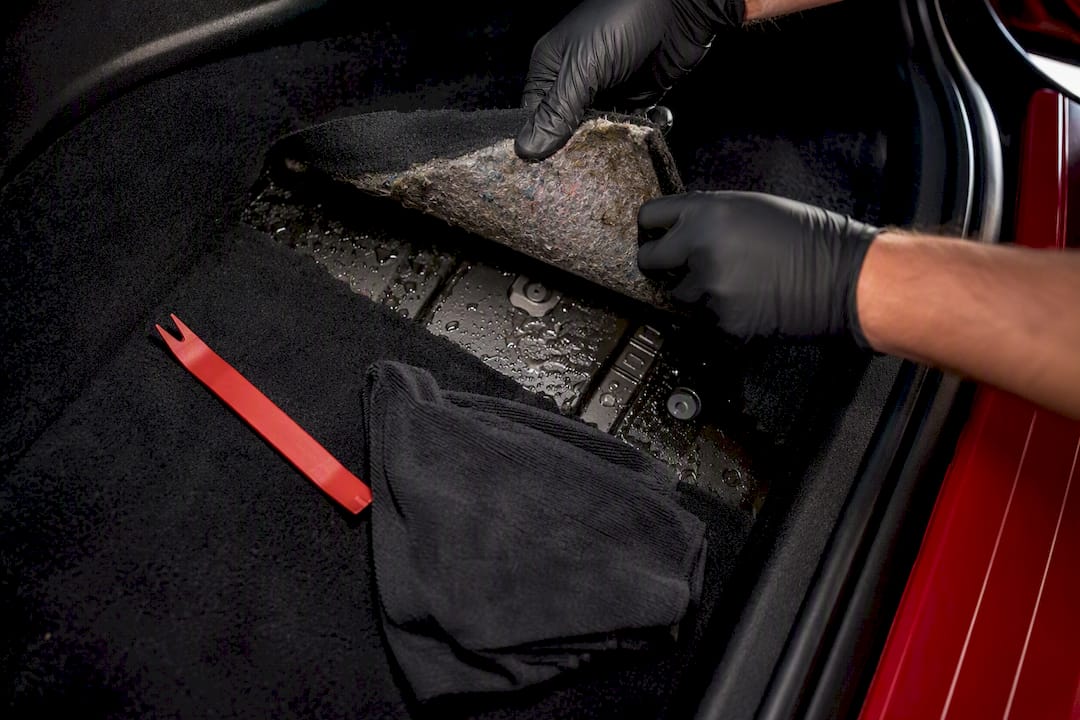
- Pull back carpet edges. Silt or fine grit under the carpet is hard to clean out completely.
- Open the trunk and check the spare-tire well. This is one of the last places anyone thinks to clean, and it often still holds silt or a waterline.
- Inspect light housings. Fogging or a visible waterline inside headlight or taillight lenses is a strong sign the car sat in standing water.
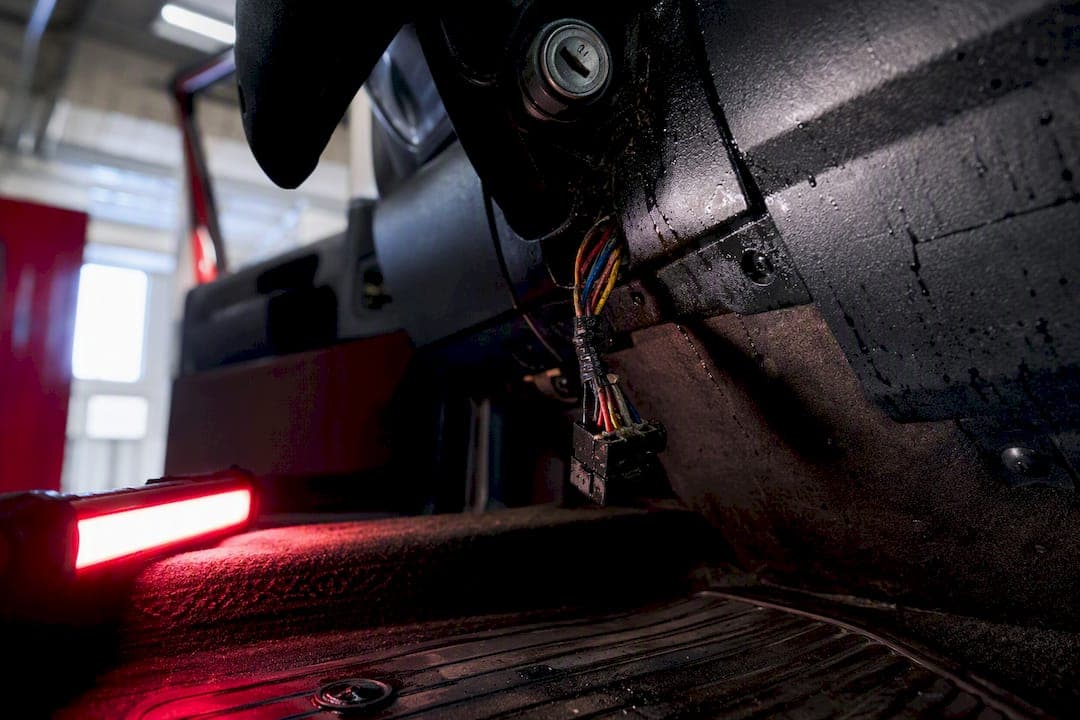
- Check under the dash and inside the fuse box. Corrosion, rust streaks, or a chalky white or green residue on connectors points to water exposure.
- Listen for odd engine behavior. Rough idling, warning lights that come and go, or electronics that work sometimes and not others often trace back to flood-damaged wiring.
Pro Tip: Bring a flashlight and get on your knees to look under the dash and inside the trunk spare-well. Sellers clean the seats and carpets first. They almost never think about the spare-tire well.
How Flood-Damaged Cars Slip Back Into the Market
A flooded car does not vanish after a storm. It usually gets totaled by the insurer, sold at a salvage auction, and either parted out or bought by a rebuilder who repairs it for resale. States vary widely in how they brand these titles, and that inconsistency is exactly what makes "title washing" possible.
Title washing happens when a salvage or flood title gets re-registered in a state with looser branding rules, effectively scrubbing the car's history on paper even though the damage never went away. A car flooded in one region can turn up for sale hundreds of miles away with a clean-looking title. That is why state consumer protection agencies warn that vehicle history reports can miss unreported flood events entirely.
A few realities worth knowing about how this pipeline works:
- Salvage auctions sell flood vehicles to licensed rebuilders, exporters, and parts dealers, often within days of a total-loss declaration.
- Some states require a "flood" brand specifically, while others lump it under a generic "salvage" or "rebuilt" designation.
- Interstate shipping means a flood car totaled after a hurricane can legally be resold thousands of miles from where it flooded.
Running a rebuilt title check before you negotiate price tells you far more than the seller's word ever will.
Your Pre-Purchase Checklist: What to Verify Before You Buy
Treat this checklist as a sequence, not a menu. Skipping steps early makes the later ones less reliable.
- Get the VIN and run it through NMVTIS. This is the only federally backed vehicle-history database that pulls from insurers, salvage yards, and junk yards directly, and it is where title brands like salvage, flood, or rebuilt show up first.
- Check NICB VINCheck. It flags vehicles reported as flood damaged or stolen, free of charge, and takes about a minute.
- Book an independent mechanic inspection, not one arranged by the seller. Ask specifically for an electrical system check, underbody inspection, HVAC test, and a scan for pending trouble codes that have not yet triggered a warning light.
- Verify the paper title matches the VIN stamped on the dash and door jamb, and check for recent title transfers that suggest the car changed hands quickly after a storm season.
- Cross-check the odometer reading against service records for consistency.
Pro Tip: Ask the mechanic to pull trim panels around the console and trunk if the inspection allows it. Corrosion often shows up in cavities long before it reaches a wire you can see without disassembly.
Certain red flags should end the conversation immediately: a seller who refuses any independent inspection, an interior that smells strongly of cleaning product or air freshener with no clear reason, or visible water residue in a car the seller insists has "always been garage kept."
Why You Should Never Start a Suspected Flood Car, and What Insurance Says
If you already own or are looking at a vehicle you suspect flooded, do not turn the key. The NHTSA is explicit that flooded vehicles can develop high-voltage shorts that pose a shock or fire risk, and that risk climbs sharply with EVs and hybrids because their battery packs hold far more energy than a standard 12-volt system.
On the insurance side, flood damage very often results in a total-loss declaration, which triggers a salvage or flood title and sends the car toward auction rather than repair. That has knock-on effects for buyers:
- A car with a flood-branded title is harder, sometimes impossible, to insure comprehensively at standard rates.
- Some insurers decline coverage outright on branded titles or require a specialized policy.
- If you suspect a vehicle you already own was flooded, document everything with photos, contact your insurer promptly, and preserve records before any repairs begin.
Elmwood's View on Transparent Flood-Risk Disclosure
Every vehicle that comes through Elmwood Auto Sales gets a documented pre-sale inspection before it ever reaches the lot, along with a free vehicle-history report so buyers can see the paper trail for themselves. That is the standard we hold ourselves to, and it is the standard worth demanding from any dealer you visit.
When a car shows signs of prior flood exposure that raise safety concerns, we do not retail it. We would rather lose a sale than sell a vehicle we would not put a family member in. Buyers can ask to see our inspection process directly, and we encourage it. A dealer who hesitates to show you that paperwork is telling you something.
What Repairing a Flooded Car Actually Involves
Restoring a flood-damaged vehicle to genuine safety, not just cosmetic normalcy, is a far bigger job than most buyers picture. A proper restoration starts with removing every seat, carpet layer, and interior panel to dry the structure completely, since trapped moisture under padding can take weeks to fully evaporate on its own.
From there, a legitimate rebuild replaces the wiring harness sections that show corrosion rather than just cleaning connectors, flushes and replaces brake and fuel lines that were submerged, and swaps out control modules that sit low in the chassis, including the airbag control unit in most vehicles. Engines that ingested water usually need a full teardown to check for bent rods or scored cylinder walls, not just an oil change and a prayer.
The problem is that this kind of restoration is expensive and time-consuming, which means a lot of vehicles labeled "repaired" on paper only received a light detail and a wiring patch. AAA's guidance on flood-damaged vehicles notes that electrical systems and enclosed components are genuinely difficult to dry and clean fully, which is exactly why a scan-tool check for pending trouble codes matters more than a visual inspection alone. A car that looks and drives fine in a five-minute test can still be hiding a rebuild that cut corners.
The Checklist Beats the Theory Every Time
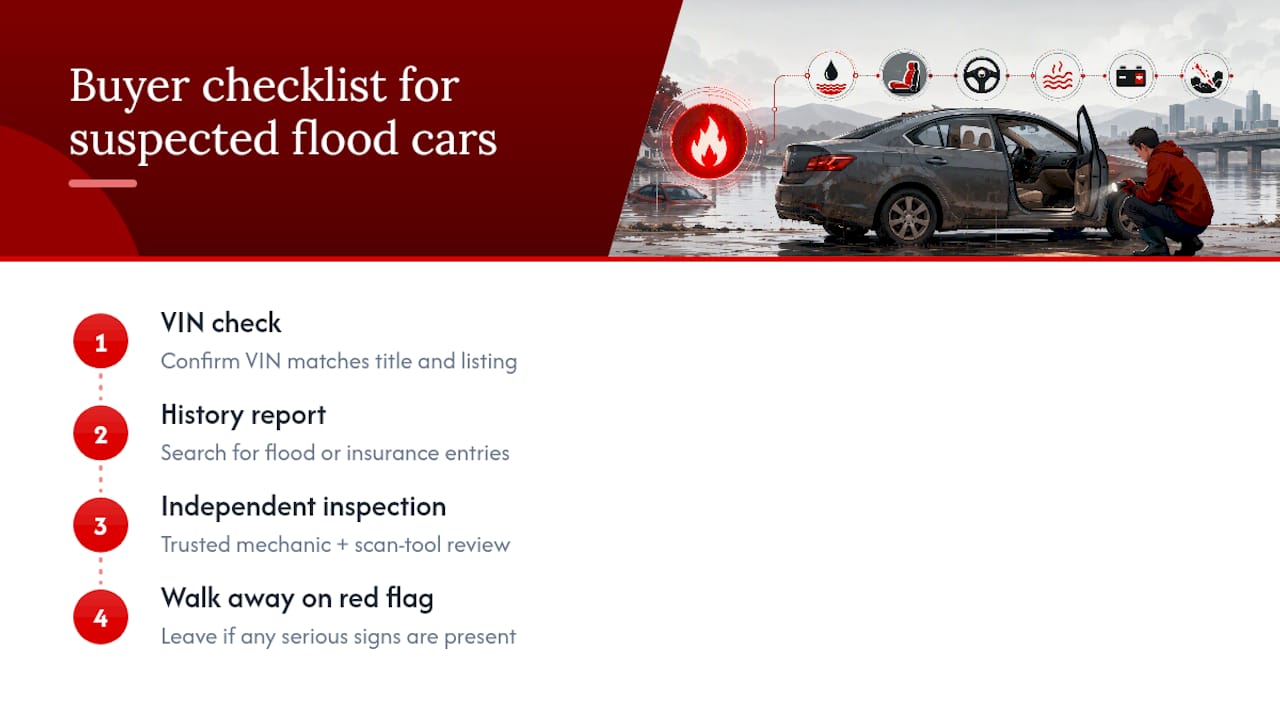
The conventional advice on flood cars leans heavily on technical detail: explaining electrolysis, corrosion chemistry, and control-module architecture. That knowledge is not wrong, but it is not what protects a buyer standing in a parking lot on a Saturday afternoon. What protects that buyer is a sequence they can actually execute: VIN check, history report, independent inspection, walk away at the first red flag.
The gap in most flood-car advice is that it treats detection as an intellectual exercise instead of a habit. History reports catch a fraction of flood events because plenty of damage never gets reported to an insurer in the first place. That is not a reason to skip the check. It is a reason to treat the independent mechanic's eyes and a scan tool as your real backstop, not the history report.
If you take one thing from all of this, prioritize the inspection over everything else. A clean title with no mechanic's sign-off tells you less than a branded title that a trusted shop has actually looked over in person.
— Elmwood
Book a Test Drive With an Already-Inspected Vehicle
Elmwood Auto Sales is the alternative to guessing your way through a private-party listing or an unfamiliar dealer's lot: every vehicle we sell has already been through a documented pre-sale inspection, and every buyer gets a free vehicle-history report before they ever discuss price.
We also offer tailored financing, including buy-here-pay-here options for buyers with a range of credit histories so a thorough inspection does not come at the cost of flexibility. If our inspection turns up a safety concern on any vehicle, we will tell you plainly rather than push the sale. That is the whole point of a low-pressure dealership. When you are ready to see an inspected vehicle in person, schedule a test drive and bring your questions with you.
Official Resources Worth Bookmarking
Run every VIN through NMVTIS before you negotiate. Review NHTSA's flood vehicle guidance for safety warnings, check FEMA's flood resources for regional flood context, and consult KBB's inspection checklist for field-ready detection steps.
Sources
- Hurricane- and Flood-Damaged Vehicles — NHTSA
- Michigan
- Flood-Damaged Cars: How to Spot and Avoid Them — Kelley Blue Book
- Flood damaged cars — AAA Automotive
- What to do if your car has flood damage — State Farm