
A dealer appraisal is a professional evaluation where a dealership inspects your vehicle, checks its history, and consults live market data to determine what they will pay for it, either as a trade-in credit toward another car or as a direct cash purchase. The process combines three core elements: a physical inspection of the car's condition, a market data lookup using tools like Kelley Blue Book (KBB), NADA Guides, or Edmunds, and a reconditioning cost estimate that the dealer subtracts before arriving at a final offer.
Here is what that means in practice for you as the owner:
- What inspectors look at: Exterior condition, tires, interior wear, mechanical systems, electronics, fluid levels, and odometer reading, documented with photos.
- What market data is used: Live retail comparables, recent auction results, and regional demand for your specific make, model, trim, and mileage band.
- The typical outcome: A written offer presented as either a trade-in credit applied to your next purchase or, at some dealerships, a standalone cash buy offer. You can accept, decline, or negotiate.
Many consumers research their trade-in value before visiting a dealer, which means most buyers arrive with a number in mind. Understanding how dealers actually build their offer helps you evaluate whether what you receive is fair.
Table of Contents
- What does the dealer appraisal process mean, step by step?
- What factors does a dealer use to set your car's value?
- How long does a dealer appraisal typically take?
- What happens after the dealer presents their offer?
- What red flags do appraisers look for?
- How do dealers calculate the offer?
- How can you prepare your car for a better appraisal result?
- What does a trustworthy, consultative appraisal look like?
- Key Takeaways
- The case for transparency in every appraisal
- Get a transparent trade-in appraisal at Elmwoodautosalesri
- Trusted sources for verifying your vehicle's value
What does the dealer appraisal process mean, step by step?
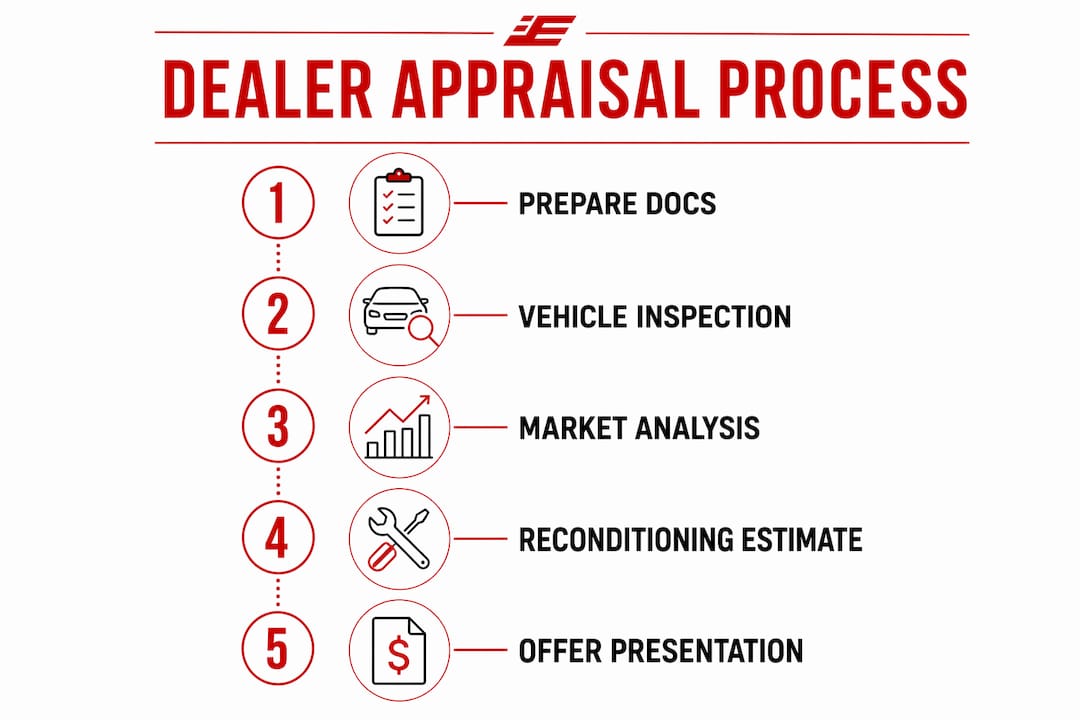
A typical trade-in appraisal runs from a short briefing to a longer process depending on recon complexity and documentation requirements. Here is the sequence most dealerships follow:
- Intake and VIN capture. The appraiser records your vehicle identification number (VIN), confirms the odometer reading, and pulls the title and registration details. This is also when a Carfax or AutoCheck vehicle history report is run to flag accidents, title brands, or odometer discrepancies.
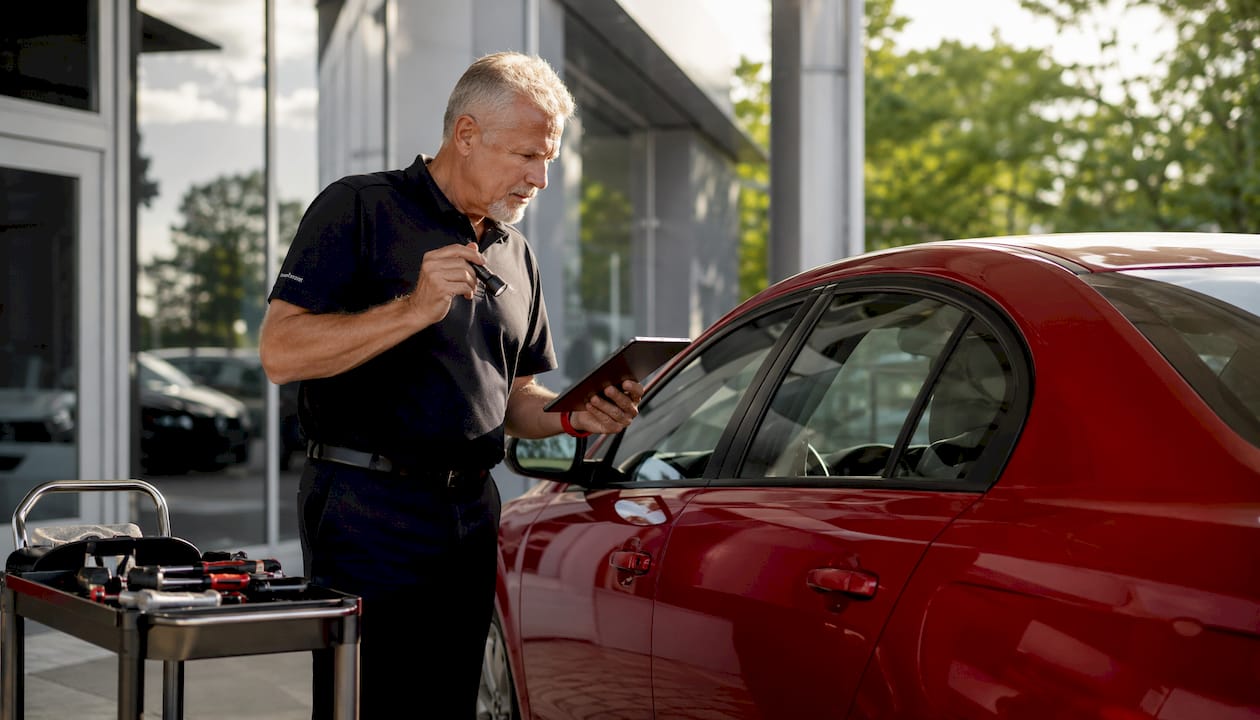
- Exterior walkaround and photo documentation. The appraiser walks the vehicle clockwise, noting dents, scratches, rust, mismatched paint, wheel damage, and glass cracks. Top-performing dealerships capture 20–40 photos per trade-in, covering key areas such as the odometer, engine bay, undercarriage, and each corner.
- Multi-point condition assessment. This covers tires (tread depth), interior wear, electronics (infotainment, cameras, Bluetooth, A/C), under-hood red flags (fluid leaks, worn belts, warning lights), and a brief test drive when feasible.
- Market data lookup. The appraiser pulls KBB trade-in value, NADA, and recent auction results for your exact spec. Live market data produces more defensible offers than static book values alone.
- Reconditioning estimate. The service department or appraiser calculates the cost to bring the car to retail-ready condition. This figure is subtracted directly from the offer.
- Manager review and approval. Most stores require a used-car manager to sign off before the offer is finalized.
- Offer presentation. The appraiser presents the number, ideally with a breakdown showing market comps, recon deductions, and the resulting buy value.
Inspection checkpoints at a glance:
- Exterior: paint, panels, glass, wheels, rust
- Tires: tread depth, condition, age
- Interior: seats, trim, smell, electronics
- Mechanical: fluids, belts, warning lights, engine bay
- Test drive: transmission response, brakes, steering
Pro Tip: Bring your title, current registration, any service records, and your loan payoff statement if you still owe money on the car. Having these at intake prevents delays and signals to the appraiser that you are a prepared, organized seller.

What factors does a dealer use to set your car's value?
The offer you receive reflects a specific set of variables, not a gut feeling. Here is what moves the number and why each factor matters to the dealer:
- Mileage. Higher mileage shortens the car's retail life and increases the probability of mechanical issues. A significant mileage gap between two otherwise similar vehicles can translate to thousands of dollars in wholesale value difference.
- Mechanical condition. Any issue found during the multi-point inspection becomes a line item in the recon estimate. Dealers subtract those costs before making an offer.
- Cosmetic condition. Dents, scratches, and interior damage require body shop or detailing work. Each repair has a cost that comes directly out of the dealer's margin.
- Title and accident history. A clean title commands a higher offer than a salvage, rebuilt, or branded title. Accident history on a Carfax report raises questions about structural integrity and reduces auction resale value.
- Service and maintenance records. Documented oil changes, tire rotations, and scheduled maintenance tell the dealer the car was cared for. Missing records introduce uncertainty, and dealers price uncertainty conservatively.
- Trim level, options, and packages. Higher trims with desirable packages (leather, sunroof, advanced safety tech) retail faster and at higher prices, which supports a stronger buy offer.
- Local market demand. A dealer prices based on what they can sell in their market. A truck in Rhode Island may carry different demand than the same truck in a rural market. Live auction and retail comparables reflect that local reality.
- Color and seasonality. Neutral colors (white, silver, black, gray) sell faster and broader. Convertibles move better in spring; four-wheel-drive SUVs move better heading into winter.
Three factors that typically shift value the most: a major mechanical issue (engine, transmission, or A/C failure), a salvage or branded title history, and weak local demand for that specific model and trim. Any one of these can reduce an offer by several thousand dollars.
How long does a dealer appraisal typically take?
| Appraisal Type | Typical Time Range | What Drives It |
|---|---|---|
| Streamlined / express appraisal | 15–20 minutes | Organized records, clean vehicle, integrated software |
| Traditional full appraisal | 30–90 minutes | Complex recon, incomplete records, manager queue |
| High-volume dealership visit | Up to 90 minutes | Wait time, multiple approvals, heavy documentation |
High-performing stores target a streamlined appraisal process completed in 15–20 minutes to improve deal closure rates and customer satisfaction. Speed matters because a customer who waits an hour for an offer is far more likely to leave without deciding.
Factors that lengthen your visit:
- Incomplete or missing title and service records
- Visible damage requiring detailed recon estimates
- A check-engine light that needs diagnosis
- High dealership traffic requiring a manager queue
- An existing loan with a payoff that must be confirmed
Arriving prepared with your documents and a clean vehicle is the single most reliable way to keep your appraisal on the shorter end of that range.
What happens after the dealer presents their offer?
Once the appraiser presents the number, you have four clear choices:
- Accept as trade-in credit. The offer is applied toward the purchase price of your next vehicle. In most U.S. states, trade-in credit reduces the taxable sale price of the new vehicle, which can lower your sales tax liability. Check your state's specific rules, as this benefit varies.
- Accept as a cash purchase. Some dealerships will buy your car outright without requiring you to purchase another vehicle. Not all stores offer this, so confirm before your visit.
- Decline and shop the offer. You are never obligated to accept. Dealers typically record declined appraisals for follow-up, so the offer may remain open for a short window.
- Negotiate. If you have documentation (a competing offer, a recent service receipt, or a KBB private-party estimate), present it. A well-documented counter is more persuasive than a verbal objection. For practical negotiation tactics, the guide on how to negotiate a trade-in offer walks through specific phrasing and approaches.
Paperwork basics: If you accept, the dealer will handle the title transfer and, if you have an outstanding loan, contact your lender directly to obtain a payoff quote. Any equity above the payoff is applied to your deal; any negative equity (owing more than the offer) is typically rolled into your new financing. Request a written breakdown of the recon items and market comps used, especially if the offer is lower than your research suggested.
What red flags do appraisers look for?
Certain conditions trigger immediate recon cost additions or, in serious cases, cause a dealer to decline the trade entirely. Knowing these in advance lets you disclose them proactively rather than have them surface as a surprise deduction.
- Check-engine light. A lit CEL requires a diagnostic scan before the dealer can estimate repair costs. It signals an unknown expense, and dealers price unknown expenses conservatively.
- Fluid leaks. Oil, coolant, or transmission fluid leaks suggest engine or gasket issues. Repair costs vary widely, and dealers subtract a worst-case estimate.
- Frame damage or salvage history. Structural repairs are expensive, and many lenders will not finance a vehicle with a salvage title. This limits the dealer's retail options and often pushes the car to auction.
- Mismatched body panels. Panels that don't align or show different paint depth indicate prior accident repair, even without a Carfax record. Dealers treat undisclosed repairs as a liability.
- Odometer discrepancies. A mismatch between the odometer reading and service records or the vehicle history report is a legal disclosure issue and can void a trade entirely.
- Major rust or corrosion. Structural rust, particularly on the frame or rocker panels, is expensive to address and limits resale in most markets.
Pro Tip: If your car has a known issue, disclose it before the walkaround begins. Appraisers who discover problems themselves tend to estimate repair costs on the high end. When you name the issue and provide a repair quote, you anchor the conversation to a real number rather than a worst-case assumption.
How do dealers calculate the offer?
The math behind a dealer's offer follows a straightforward formula:
Retail comparable (or wholesale baseline) minus reconditioning estimate minus dealer margin = buy offer.
Here is a conceptual example to illustrate the difference between the three value benchmarks you will encounter:
| Value Type | What It Represents | Typical Use |
|---|---|---|
| KBB private-party value | What a private buyer might pay | Your ceiling as a seller |
| Dealer trade-in / buy value | What the dealer offers | The appraisal outcome |
| Auction / wholesale value | What the car brings at auction | The dealer's floor |
The gap between private-party value and the dealer's offer is not arbitrary. Estimating reconditioning costs at the appraisal stage prevents $300–$800 per-unit surprise expenses after the car is acquired. That recon line, combined with the dealer's required margin to cover overhead and profit, explains most of the difference. A dealer who skips a thorough recon estimate is guessing, and guessing usually means a lower offer to protect against the unknown.
Live market data from current retail listings and recent auction results replaces static book values and produces offers that reflect what your car is actually worth in today's market, not last quarter's.
How can you prepare your car for a better appraisal result?
Preparation before your visit is the most cost-effective way to improve your outcome. Work through this checklist:
- Clean and detail the vehicle. A clean car signals care. Dealers visually assess condition first, and a dirty car creates a negative first impression that can color the entire appraisal.
- Collect and organize service records. Oil change receipts, tire rotation records, and any major repair invoices document that the car was maintained. A complete maintenance log reduces the uncertainty that leads to conservative offers.
- Fix low-cost safety items. Replace burned-out bulbs, top off fluids, and inflate tires to the correct pressure. These take minutes and remove easy deductions.
- Address minor cosmetic issues selectively. A small dent repair or paint touch-up that costs $150 and removes a $400 deduction is worth doing. A $2,000 transmission repair on a car you plan to trade is almost never worth it — disclose the issue and let the dealer price it in.
- Clear personal items. A cluttered interior reads as neglect. Remove everything and vacuum the seats and floor.
- Take your own photos before you go. Timestamped photos of the exterior and interior give you a reference point if the appraiser's condition rating differs from yours.
Pro Tip: Timing small repairs strategically matters. A set of new wiper blades and a cabin air filter costs under $40 and takes 20 minutes. Those items won't dramatically change the offer, but they contribute to an overall impression of a well-maintained vehicle. Save your money on anything that costs more than the deduction it would remove.
For a deeper comparison of whether to repair and sell privately or trade in, the sell vs. trade-in comparison guide lays out the decision clearly.
What does a trustworthy, consultative appraisal look like?
Not every appraisal is the same. A transparent, consultative process looks different from a quick number handed to you at the desk with no explanation.
Best practices you should expect from a fair appraiser:
- An active walkaround where you are invited to observe and ask questions
- A test drive, or at minimum a thorough under-hood and electronics check
- Photo documentation shared with you, not just kept internally
- A line-item recon estimate showing specific costs (tires, paint, mechanical)
- Market comparables presented alongside the offer so you can see the baseline
Transparent appraisals presented as a consultative conversation win more trades because they replace the perception of a lowball offer with a documented explanation. When you can see the math, the offer becomes a starting point for a conversation rather than a take-it-or-leave-it verdict.
Elmwoodautosalesri's multi-point inspection process reflects this standard, with documented inspection steps and a clear presentation of findings.
Pro Tip: Ask the appraiser three specific questions: (1) Which market comparables did you use, and what is the current retail range for my vehicle? (2) Can you show me the recon estimate line by line? (3) How long is this offer guaranteed? These questions surface the calculation behind the number and signal that you are an informed seller.
Key Takeaways
A dealer appraisal combines physical inspection, live market data, and a reconditioning estimate to produce a buy offer, and preparation on your end directly influences the outcome.
| Point | Details |
|---|---|
| Appraisal definition | A dealer appraisal sets a buy value using inspection, vehicle history, market comps, and recon costs. |
| Biggest value drivers | Major mechanical issues, salvage title history, and local market demand shift the offer the most. |
| Typical timeline | Streamlined appraisals run 15–20 minutes; traditional workflows take 30–90 minutes. |
| Post-offer choices | You can accept as trade credit, accept as cash, decline, or negotiate with documentation. |
| Elmwoodautosalesri | Offers a consultative, multi-point appraisal with transparent recon breakdowns and a low-pressure trade-in process in Providence, RI. |
The case for transparency in every appraisal
Most of the frustration buyers feel after a trade-in appraisal comes from the same source: the number arrived without an explanation. When a dealer hands you a figure and offers nothing behind it, the natural reaction is suspicion, even when the offer is genuinely fair.
The dealers who earn trust are the ones who show their work. A line-item recon estimate, a printed set of market comparables, and a walkaround you participated in change the entire dynamic. You may still disagree with the number, but you understand it. That understanding is what makes negotiation productive rather than adversarial.
The conventional wisdom says to "get multiple offers." That is reasonable advice, but it misses the more useful question: are the offers you are getting explained? An unexplained offer from three dealers tells you very little. A single, well-documented offer tells you exactly where the value went and gives you something to work with.
Get a transparent trade-in appraisal at Elmwoodautosalesri
Elmwoodautosalesri handles trade-in appraisals the way this guide describes them: a thorough multi-point inspection, a documented recon breakdown, and a clear presentation of the market comparables behind the offer. There are no commission-based pressure tactics and no mystery numbers handed across a desk.
Every vehicle in the Elmwoodautosalesri inventory goes through the same inspection standard, which means the appraisal process reflects what the car will actually cost to bring to retail-ready condition. For buyers in Providence, RI and surrounding areas, that consistency matters whether you are trading in, financing, or simply exploring your options.
Schedule a test drive or appraisal online and bring your title, service records, and any questions about the process. The team at Elmwoodautosalesri will walk you through every line of the offer before you make any decision.
Trusted sources for verifying your vehicle's value
Use these resources before and after your appraisal visit to check values, run history reports, and compare benchmarks:
- Kelley Blue Book (KBB) — Use the trade-in and private-party tools to establish a realistic value range for your specific year, make, model, trim, mileage, and condition. This is your best starting benchmark before any dealer visit.
- NADA Guides — Particularly useful for trucks, RVs, and older vehicles. NADA values are widely used by lenders and dealers, so knowing the NADA trade-in range helps you contextualize a dealer's offer.
- Edmunds — Edmunds' True Market Value (TMV) tool provides both trade-in and private-party estimates and includes a condition-adjustment calculator.
- Carfax / AutoCheck — Run a VIN history report to see accident records, title brands, odometer readings, and ownership history before your appraisal. Knowing what the dealer will find prevents surprises.
- National Motor Vehicle Title Information System (NMVTIS) — A federal database that aggregates title and brand information from state DMVs, insurance companies, and salvage yards. Use it to verify title status independently.
- Edmunds Appraisal Tool — Provides an instant online trade-in estimate based on your vehicle's details. Treat it as a directional figure, not a guaranteed offer, since condition adjustments happen in person.