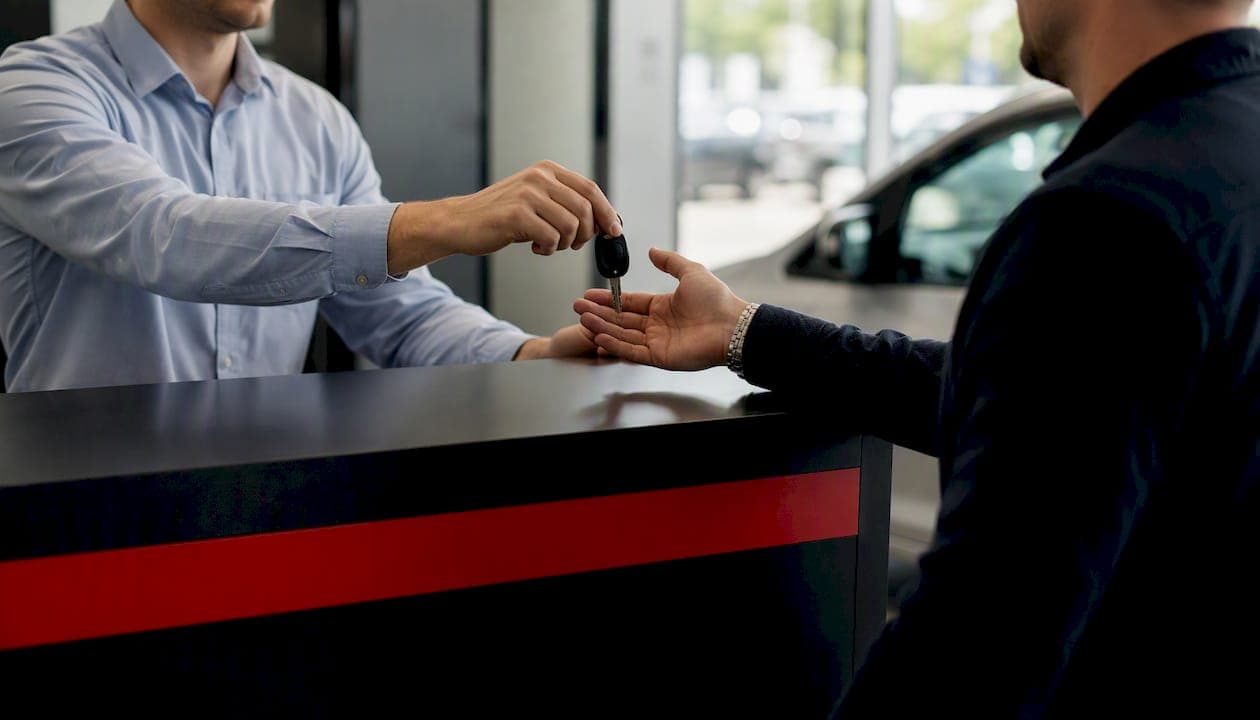
Buy here, pay here (BHPH) means the dealership sells you the car and also funds the loan — you make payments directly to the dealer, not a bank or credit union. According to the Consumer Financial Protection Bureau, these dealers typically advertise to buyers with poor or no credit and handle all underwriting in-house. The trade-off is real: approval is often easier, but interest rates run higher than traditional loans, repossession can happen faster, and credit-building is not guaranteed. If you need a car now and other financing options have failed, BHPH may be a workable path. If you can wait or qualify elsewhere, it usually costs less to do so.
Key Takeaways
Buy here, pay here financing gives buyers with poor credit access to a vehicle, but the higher APR, repossession risk, and uncertain credit-reporting outcomes make it a last-resort option that requires careful contract review before signing.
| Point | Details |
|---|---|
| BHPH definition | The dealer funds the loan and collects payments directly, with no bank or credit union involved. |
| Credit reporting risk | Some dealers report only negative items; get a written promise naming specific bureaus before signing. |
| Repossession timeline | Dealers can act after a single missed payment; confirm the cure period in writing before you commit. |
| Payment allocation | Ask for the exact allocation order in writing; misapplied payments can accelerate delinquency per CFPB findings. |
| Elmwoodautosalesri | Offers inspected vehicles and documented in-house financing in Providence, RI, with written APR and reporting terms. |
Table of Contents
- What does buy here pay here mean and how does the process work?
- Who typically uses BHPH and when does it make sense?
- What do BHPH loans typically cost?
- Does BHPH actually rebuild your credit?
- What are the real risks, including repossession?
- How do you evaluate a BHPH dealer before signing?
- What are the practical alternatives to BHPH?
- What a BHPH deal looks like at Elmwoodautosalesri
- Elmwood's perspective on BHPH and buyer protection
- Elmwood Auto Sales offers transparent in-house financing in Providence, RI
- Sources
What does buy here pay here mean and how does the process work?
With a traditional auto loan, a bank or credit union reviews your application, funds the loan, and collects your payments. BHPH flips that model: the dealer is the lender. That single fact changes almost everything about the contract you sign.
Here is how the process typically unfolds:
- Pick a vehicle from the dealer's inventory, which often skews toward older, higher-mileage cars priced to fit subprime budgets.
- Negotiate the price and terms directly with the dealer, who sets the interest rate, down payment requirement, and payment schedule without a third-party lender involved.
- Pay a down payment at signing. BHPH dealers frequently require larger up-front amounts than traditional lenders to reduce their exposure on a high-risk loan.
- Sign an in-house loan agreement that spells out the APR, total amount financed, payment schedule, and the dealer's security interest in the vehicle.
- Make payments directly to the dealer on a weekly or biweekly schedule in many cases, though some dealers offer monthly terms.
Because the dealer both sells and services the loan, repossession rights and servicing decisions rest with the same entity that set your original terms. Investopedia notes this dynamic directly: the seller is also the creditor, which changes enforcement compared to a third-party lender. Read the dealer financing guide for a deeper look at how in-house loan mechanics differ from bank-arranged financing.
Pro Tip: Before you sign, ask the dealer in writing which credit bureaus they report to and whether they furnish positive payment history, not just negative items. Get the answer in writing, not verbally.
Who typically uses BHPH and when does it make sense?
Experian describes BHPH as a "method of last resort," and that framing is accurate for most buyers who end up there. The typical BHPH customer has a credit score too low to qualify for a bank or credit-union loan, has no established credit history at all, or has recent credit damage from a bankruptcy, repossession, or string of late payments.
Situations where BHPH can be a reasonable option include needing immediate transportation to keep or start a job, having already been turned down by multiple traditional lenders, and having no cosigner available. If any of those boxes are checked and the alternative is losing income, BHPH may justify its higher cost.
BHPH is not a good fit when you can afford to wait three to six months and improve your credit score, when a family member or trusted friend can cosign a traditional loan, or when the primary concern is total cost of ownership. A higher APR compounded over a two or three-year loan adds up to a meaningful difference in what you pay for the same car.
What do BHPH loans typically cost?
Higher interest rates are the defining financial feature of in-house financing. BHPH dealers charge significantly more than banks or credit unions because they take on borrowers that conventional lenders reject, and the dealer's revenue model depends partly on interest income. Chase's overview of BHPH financing warns that dealer-funded loans can also include bundled fees and optional products that raise the effective cost beyond the stated APR.
Common up-front and ongoing costs include:
- Required down payment: Often a significant down payment of the vehicle price, sometimes more, is required.
- Origination or documentation fees: Charged at signing and sometimes rolled into the loan balance.
- Mandatory add-ons: Extended warranties, GPS tracking subscriptions, or debt-cancellation products that some dealers require as a condition of financing.
- Weekly or biweekly payments: More frequent payment schedules mean less time between missed-payment consequences and can raise the annualized cost compared to a monthly payment structure.
That $2,100 gap is the real price of in-house financing, before any add-on fees.
Watch for bundled add-ons. Some BHPH dealers present extended warranties or GPS subscriptions as required, not optional. Ask for each add-on to be itemized separately in the contract, and ask whether you can decline it. If a dealer refuses to itemize or says the add-on is non-negotiable, that is worth noting before you sign.
Refuse any add-on you do not want, and document your refusal or consent in writing on the contract itself.
Does BHPH actually rebuild your credit?
Not automatically, and sometimes not at all. The CFPB's guidance is direct on this point: some BHPH dealers report only negative payment information to credit bureaus, meaning a late payment shows up on your report but on-time payments do not. A dealer can market "credit rebuilding" while furnishing only the data that hurts you.
Before signing, run through this checklist:
- Ask the dealer which credit bureaus they report to (Equifax, Experian, TransUnion, or a combination).
- Ask whether they report positive payment history, not just delinquencies.
- Get the reporting promise in writing as part of the contract or as a signed addendum.
- After your first payment posts, pull your credit reports at AnnualCreditReport.com and confirm a tradeline appears.
If a dealer cannot confirm in writing that they report positive payment history to at least one major bureau, the credit-building benefit they advertise is not guaranteed.
Pro Tip: Set a calendar reminder for 45 days after your first payment. Pull your free credit report and look for the BHPH account. If it does not appear, contact the dealer in writing and request confirmation of their reporting practices.
What are the real risks, including repossession?
Repossession is faster with BHPH than with most traditional lenders. Because the dealer controls both the loan and the vehicle's security interest, they can act quickly after a missed payment. Some dealers begin the repossession process after a single missed or late payment, particularly when the contract does not specify a cure period.
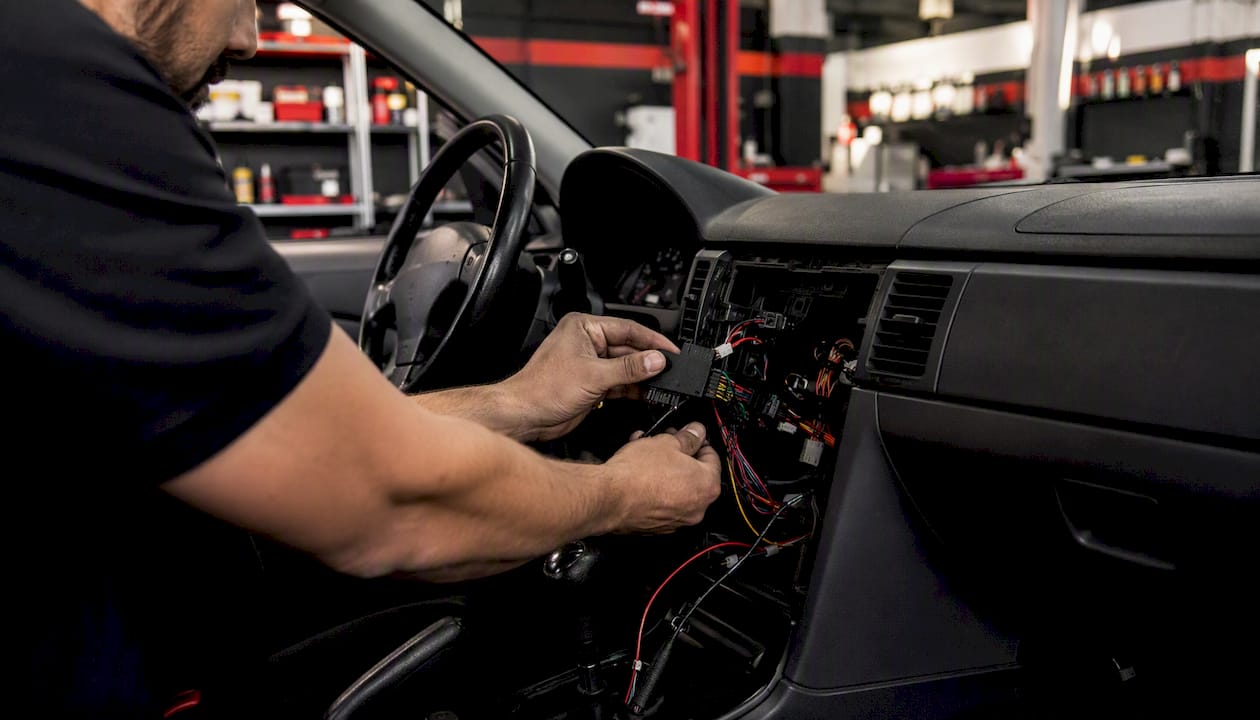
The Car Connection reports that dealers can act very quickly on missed payments, and Investopedia confirms that some BHPH dealers install GPS tracking devices or starter-interrupt systems in vehicles to make repossession easier. A starter-interrupt device can prevent the car from starting if a payment is missed, sometimes without advance notice beyond what is disclosed in the contract.
Payment allocation is a less visible but equally serious risk. The CFPB's compliance bulletin on repossession practices documents supervisory findings where servicers applied partial payments to late fees first rather than to principal and interest as disclosed, making consumers appear more delinquent than they actually were and accelerating repossession.
If you miss a payment, contact the dealer immediately in writing. Keep copies of every payment receipt, every text or email, and every contract page. If your payment is applied differently than the contract states, those records are your evidence.
How do you evaluate a BHPH dealer before signing?
Not all BHPH dealers operate the same way. Asking the right questions and reviewing the right documents separates a transparent dealer from one that relies on confusing terms to its advantage. Use the checklist below before you commit.
Questions to ask the dealer:
- Which credit bureaus do you report to, and do you report positive payment history?
- What is the exact payment-allocation order (principal, interest, fees)?
- What is the repossession policy after a missed payment, and is there a cure period?
- Are any add-ons (warranty, GPS, insurance) required, and can they be itemized separately?
- Is there a starter-interrupt or tracking device in the vehicle, and where is that disclosed in the contract?
Documents to demand before signing:
- Full written contract with APR, total amount financed, and payment schedule clearly stated.
- Itemized list of all fees and add-ons with opt-in or opt-out confirmation.
- Down payment receipt dated and signed.
- Written reporting promise naming specific credit bureaus.
- Repossession and cure-period terms in plain language.
- Vehicle inspection report and title status confirmation.
Red flags to watch for:
- Verbal-only promises about credit reporting or repossession timelines.
- Add-ons presented as mandatory but not itemized in the contract.
- No amortization schedule provided with frequent payment terms.
- Starter-interrupt disclosure buried in fine print with no verbal explanation.
- Pressure to sign the same day without time to review the full contract.
Run a VIN check through the National Motor Vehicle Title Information System (NMVTIS) or a similar public-access tool to verify title status and check for prior salvage or flood designations. A car comparison checklist can also help you organize what to verify across multiple vehicles before you commit to one.
What are the practical alternatives to BHPH?
BHPH is not the only option for buyers with damaged credit. Several alternatives carry lower costs or better credit outcomes, depending on your situation.
| Alternative | Best for | Key trade-off |
|---|---|---|
| Credit union auto loan | Buyers with a score above 550 | Lower APR, but requires membership and credit check |
| Bank auto loan | Buyers with established banking history | Competitive rates, stricter approval standards |
| Cosigned loan | Buyers with a willing, creditworthy cosigner | Lower rate, but cosigner shares liability |
| Credit-builder loan | Buyers who can delay purchase 6–12 months | Builds credit with no vehicle, requires patience |
| Personal loan | Buyers who need flexibility on vehicle choice | Higher rate than auto loans, no collateral required |
The role of your credit score in auto financing is significant: even moving from a 550 to a 620 score can open credit-union loan options that cost substantially less than BHPH. If you can delay the purchase and use a secured credit card or credit-builder loan for six months, the savings on a subsequent auto loan often outweigh the cost of waiting.
If you need a car immediately and every traditional option has been exhausted, BHPH may be the only path. Go in with clear expectations about cost, and use the evaluation checklist above to choose the most transparent dealer available. For a broader look at all your financing routes, the car financing options guide covers each category in detail.
What a BHPH deal looks like at Elmwoodautosalesri
Elmwood Auto Sales in Providence, RI offers in-house financing with documented terms, which means every loan agreement includes a written payment schedule, a clear APR, and an itemized list of any add-ons. Here is a straightforward example of how a BHPH loan might look with transparent terms:
At those terms, the biweekly payment is approximately $155, and total interest paid over 24 months is roughly $1,720. Total cost of the vehicle, including interest and the down payment, comes to approximately $11,220. Listing these numbers clearly before signing is what separates a trustworthy dealer from one that obscures the real cost.
Elmwood's process includes a state inspection and a vehicle history review before any car goes on the lot, so buyers are not financing a vehicle with undisclosed mechanical problems. The dealership buying experience guide walks through what to expect at each step, from test drive to paperwork.
What to get in writing from any BHPH dealer:
- The exact APR and total interest cost over the loan life.
- The payment-allocation order (principal first, or fees first).
- A named credit bureau reporting commitment.
- Signed consent for any add-on product, with the option to decline.
- Repossession notice terms and any cure period.
A test drive checklist is also worth reviewing before you visit, so you know what to inspect on the vehicle itself before the financing conversation begins.
Elmwood's perspective on BHPH and buyer protection
BHPH is a financing tool, not a trap — but it can become one when dealers use it without transparency. At Elmwoodautosalesri, we recommend in-house financing only when a buyer has genuinely exhausted other options and needs reliable transportation to maintain their livelihood. We do not push it as a first choice.
What makes the difference is documentation. Every buyer who finances through Elmwood receives a written loan agreement with the APR stated clearly, a payment schedule they can follow, and a written confirmation of our credit-reporting practices. We report positive payment history, and we tell buyers exactly which bureaus receive that data.
Even with a dealer you trust, you should still read every line of the contract before signing. Ask about the starter-interrupt policy if one is present. Confirm the repossession cure period in writing. No reputable dealer will object to those questions, and any dealer who does is telling you something important.
Elmwood Auto Sales offers transparent in-house financing in Providence, RI
Buyers with poor or limited credit often face a difficult choice: pay more for in-house financing or go without a vehicle. Elmwoodautosalesri offers a third option — in-house financing built around documented terms, inspected vehicles, and honest conversations about cost.
Every vehicle on the Elmwood lot goes through a state inspection before it is offered for sale. Financing terms are presented in writing, with the APR, payment schedule, and reporting commitment spelled out before you sign anything. There are no commission-based sales tactics pushing you toward a deal that does not fit your budget. If in-house financing is the right path for you, Elmwood structures it so you know exactly what you are paying and why.
Schedule a test drive at Elmwood Auto Sales in Providence and talk through your financing options with no pressure and no surprises.
Sources
The following sources informed this article and are worth reviewing directly if you want deeper research before visiting a dealer.
Consumer protection and industry sources:
- What is a “no credit check” or “buy here, pay here” auto loan or dealership? | Consumer Financial Protection Bureau
- Buy Here, Pay Here (BHPH) Car Dealership: Meaning, How It Works
- Compliance Bulletin regarding repossession of vehicles, and the potential for violations of sections 1031 and 1036 of the Dodd-Frank Wall Street Reform and Consumer Protection Act’s (Dodd-Frank Act’s) prohibition on engaging in unfair, deceptive, or abusive acts or practices (collectively, UDAAPs) when repossessing vehicles.
Elmwood Auto Sales resources:
This article is general information, not a substitute for advice from a qualified financial advisor. Consult a qualified financial professional about your own circumstances before acting on anything here.