
Car loan preapproval is a formal conditional financing offer from a lender that specifies your maximum loan amount, interest rate, and repayment term before you set foot in a dealership. It differs from prequalification, which uses a soft credit inquiry and delivers only estimated terms with no guarantee. Preapproval requires a hard credit inquiry and verified financial data, giving you a concrete borrowing ceiling and real negotiating power. Most preapproval offers expire within 30 to 60 days, so timing your car search matters. Knowing what is car loan preapproval before you apply puts you firmly in control of the buying process.
What is the car loan preapproval process?
The preapproval process follows six clear steps, and most buyers can complete it within a single day. Understanding each step removes the guesswork and helps you walk into any dealership with confidence.
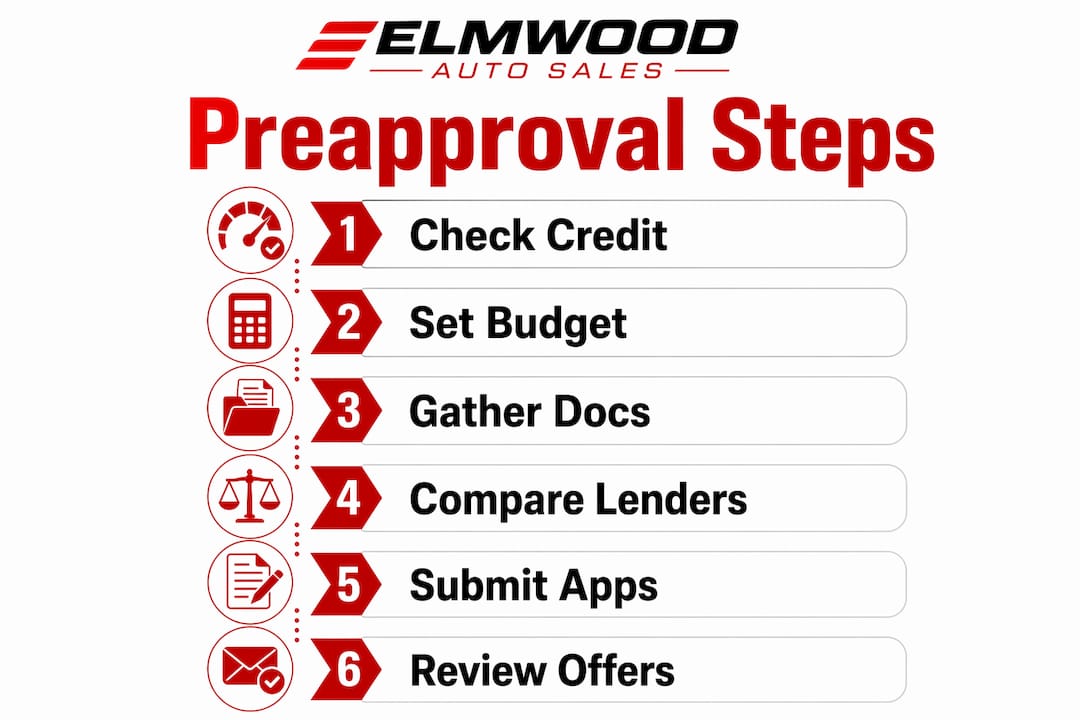
Step 1: Check your credit score. Pull your credit report from the three major credit bureaus, Equifax, Experian, and TransUnion, before any lender does. Errors on your report can cost you a better interest rate, so dispute inaccuracies first.

Step 2: Set your budget. Decide how much you can afford monthly, then work backward to a total vehicle price. Factor in insurance, registration, and maintenance alongside the loan payment.
Step 3: Gather your documents. Lenders require a standard set of financial records. These typically include a government-issued ID, recent pay stubs or tax returns as proof of income, proof of residence such as a utility bill, and employment verification details.
Step 4: Compare lenders. Credit unions, banks, and online lenders each offer different rates and terms. Comparing at least three options gives you a realistic picture of the market before you commit.
Step 5: Submit your applications. Apply to your chosen lenders and let them run their hard credit inquiries. The 14-day application window is critical here. Credit scoring models treat multiple auto loan inquiries within roughly 14 days as a single inquiry, so your score takes only one small hit regardless of how many lenders you approach.
Step 6: Review your offers. Compare the annual percentage rate, loan term, and any fees across each offer. Choose the best terms, then take that preapproval letter to the dealership.
Pro Tip: Apply to multiple lenders on the same day or within a few days of each other. This keeps all hard inquiries inside the 14-day window and protects your credit score while maximizing your rate options.
How does car loan preapproval differ from prequalification?
Prequalification and preapproval are not the same thing, and confusing them can lead to surprises at the dealership. Prequalification uses a soft credit inquiry, which means your credit score is not affected. It produces estimated terms based on self-reported financial information, and it carries no guarantee of actual loan approval.
Preapproval goes further. It involves a hard credit pull, verified income and employment data, and a conditional formal offer from the lender. That conditionality matters. The lender is saying, "Based on your verified profile, we will lend you up to this amount at this rate," subject to final underwriting on the specific vehicle you choose.
| Feature | Prequalification | Preapproval |
|---|---|---|
| Credit check type | Soft inquiry (no score impact) | Hard inquiry (minor score impact) |
| Data used | Self-reported estimates | Verified financial documents |
| Accuracy of terms | Estimated, not guaranteed | Conditional but much more reliable |
| Guarantee of approval | None | Conditional on vehicle and underwriting |
| Best use case | Early research and rate browsing | Active vehicle shopping and negotiation |
The practical takeaway is straightforward. Use prequalification when you are months away from buying and want a rough sense of your borrowing power. Use preapproval when you are ready to shop, because it gives you a real number to negotiate with.
What are the main benefits of car loan preapproval?
Preapproval delivers three concrete advantages that change how you experience the car-buying process.
- Negotiation leverage. A preapproval letter positions you as a cash buyer in the eyes of the dealer. Preapproval separates the financing negotiation from the vehicle price negotiation entirely. Dealers cannot steer the conversation toward monthly payments when you already have your financing locked in. You negotiate the car's price on its own merits.
- Protection from dealer rate markups. Dealerships that arrange financing in-house often add a markup to the lender's base rate. Getting preapproved for a car loan lets you compare any dealer financing offer directly against your preapproved rate. If the dealer cannot beat your rate, you use your own lender. That comparison alone can save you hundreds of dollars over the life of a loan.
- Budget clarity before you shop. Preapproval confirms your exact borrowing ceiling. You walk onto the lot knowing the maximum vehicle price you can finance, which prevents emotional overspending or pressure buying.
"Preapproval makes the buyer a 'cash buyer' in negotiation settings. That psychological shift increases confidence and bargaining power in ways that most buyers do not anticipate until they experience it firsthand." — Investopedia on buyer psychology
A preapproval letter also signals to the dealership that you are a serious, prepared buyer. Dealerships view preapproved buyers as lower-risk customers, which often translates to better service and less aggressive sales pressure. That shift in dynamic is real and worth pursuing.
Pro Tip: Bring your preapproval letter to the dealership but do not reveal it immediately. Negotiate the vehicle price first, then introduce your financing terms. This sequence keeps the dealer focused on the car's price rather than structuring a payment plan that obscures the true cost.
What practical tips help you maximize your preapproval?
Getting preapproved is only half the work. Using that preapproval effectively requires a few deliberate habits.
- Apply within the 14-day window. Multiple applications submitted within roughly 14 days count as one inquiry with most credit scoring models. Apply to three or more lenders in a tight timeframe to compare rates without compounding the credit impact.
- Treat your rate as an estimate, not a guarantee. Preapproved rates are conditional and can change at the final underwriting stage based on the specific vehicle you select, its age, mileage, or loan-to-value ratio. Budget with your preapproved rate in mind, but stay flexible.
- Watch the expiration date. Most preapproval letters are valid for 30 to 60 days. Start your vehicle search promptly after receiving your letter so you do not need to reapply and trigger another hard inquiry.
- Use the letter as a negotiating tool, not a commitment. You are not locked into the lender who preapproved you. If the dealership offers a lower rate through its own financing, take it. Preapproval letters serve as leverage to compare and negotiate, not as binding contracts.
- Check your credit score impact in context. A hard inquiry from a preapproval typically causes a minor, temporary dip in your credit score. The long-term savings from securing a competitive interest rate far outweigh that short-term impact. Do not let fear of a small score dip stop you from shopping for the best rate.
For buyers navigating tighter credit situations, reviewing car financing options for low-income buyers before applying can help set realistic expectations and identify lenders who specialize in your credit profile.
Key Takeaways
Car loan preapproval is the single most effective step a buyer can take before visiting a dealership, because it converts financing from a dealer-controlled variable into a buyer-controlled advantage.
| Point | Details |
|---|---|
| Preapproval vs. prequalification | Preapproval uses a hard credit inquiry and verified data; prequalification uses a soft inquiry with estimated terms only. |
| 14-day application window | Submit all lender applications within 14 days so credit bureaus count them as one inquiry. |
| Negotiation leverage | A preapproval letter lets you negotiate vehicle price separately from financing, removing dealer payment-based tactics. |
| Conditional offer | Preapproved rates are not final. The actual rate may shift at underwriting based on the vehicle chosen. |
| Expiration timing | Most preapproval letters expire in 30 to 60 days, so begin your vehicle search promptly after receiving one. |
What I've learned from watching buyers use preapproval
Most buyers arrive at a dealership focused on the monthly payment. That single habit hands the dealer enormous control over the total cost of the transaction. When a buyer walks in with a preapproval letter, the entire dynamic changes. The conversation shifts to vehicle price, which is the number that actually matters.
At Elmwoodautosalesri, we see this play out regularly. Buyers with preapproval letters ask sharper questions, spend less time in the finance office, and leave with more confidence in their purchase. The ones who skip preapproval often realize afterward that they paid more in interest than they needed to.
The most common mistake I see is buyers assuming preapproval locks them into one lender. It does not. The letter is a floor, not a ceiling. Use it to push the dealer's financing offer lower, or simply use your own lender if the dealer cannot compete. Either way, you win.
One more thing worth saying plainly: the hard inquiry from preapproval is not something to fear. A temporary, minor credit score dip is a small price for the clarity and leverage that a real preapproval offer provides. The math almost always favors getting preapproved.
— Elmwood
Financing support at Elmwoodautosalesri
Elmwoodautosalesri works with buyers across a wide range of credit histories to find financing that fits their actual budget. Whether you are arriving with a preapproval letter in hand or need help understanding your options before you apply, the team at Elmwoodautosalesri provides transparent guidance with no commission-based pressure. Every vehicle on the lot has passed a thorough inspection, so you are financing a car you can trust. Visit Elmwoodautosalesri to explore current inventory and connect with a financing specialist who can walk you through your preapproval options. Buyers who want to understand how dealer financing works before they shop will find that knowledge makes every conversation at the dealership more productive.
FAQ
What is car loan preapproval in simple terms?
Car loan preapproval is a conditional offer from a lender stating the maximum amount they will lend you, along with the interest rate and term, based on a review of your verified financial information and a hard credit inquiry.
How long does a preapproval letter last?
Most preapproval letters are valid for 30 to 60 days. Start shopping for your vehicle promptly after receiving one to avoid reapplying and triggering another hard credit inquiry.
Does getting preapproved hurt my credit score?
Preapproval requires a hard credit inquiry, which causes a minor, temporary score dip. Submitting multiple applications within a 14-day window limits the impact, as credit bureaus treat them as a single inquiry.
Am I required to use the lender who preapproved me?
No. A preapproval letter is a tool for negotiation, not a binding commitment. You can use it to compare the dealer's financing offer and choose whichever option gives you the better rate and terms.
What documents do I need to get preapproved for a car loan?
Lenders typically require a government-issued ID, proof of income such as pay stubs or tax returns, proof of residence, and employment verification details.