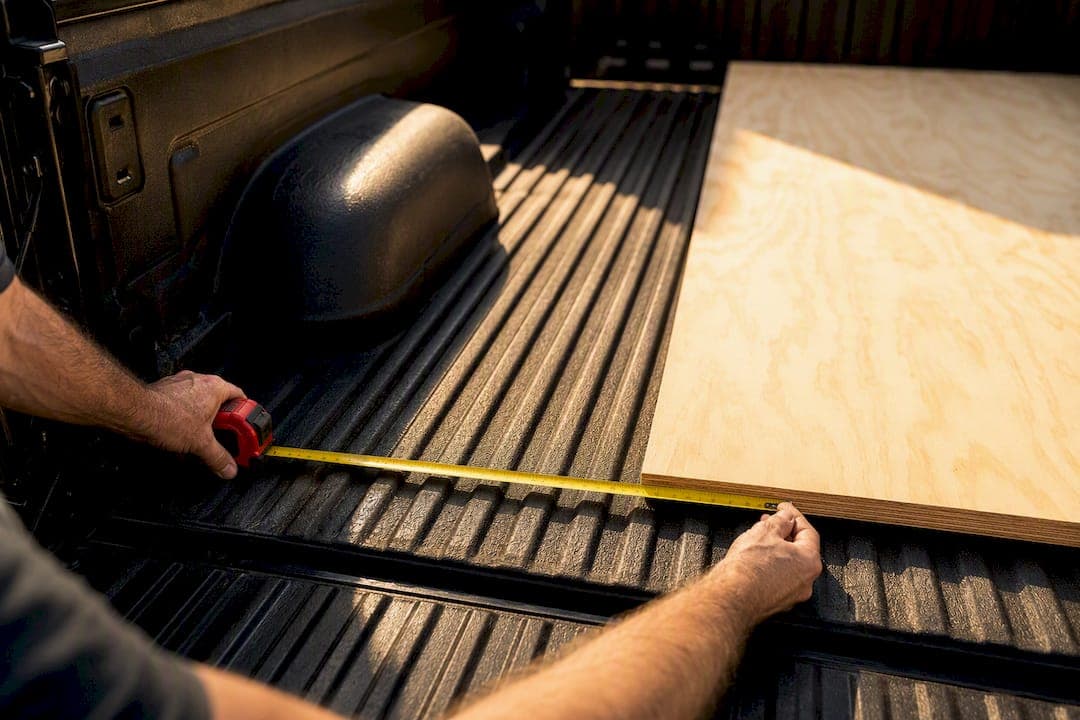
That last figure matters most in practice: an 8-foot bed is the only size that swallows a full 4x8 sheet of plywood with the tailgate closed. Everything shorter means leaving the tailgate down, buying an extender, or picking a different truck. Exact inches shift by make and model, so measuring your own bed still beats trusting the sticker.
TL;DR:
- A full 4x8 sheet of plywood fits flat in an 8-foot bed with the tailgate closed, but shorter beds often require a tailgate down or an extender.
- Actual bed lengths vary by make and model, with 5.5-foot beds measuring roughly 60–67 inches and 8-foot beds around 96–98 inches, depending on specific vehicle details.
- Proper measurement before accessory purchase is crucial, focusing on bed floor length, width between wheelhouses, overall width, and depth, not just the nominal size.
- Short beds excel for daily driving and parking but are limited for long cargo; standard beds balance usability and maneuverability, while long beds are best for hauling full sheet goods and building materials.
- Towing a fifth-wheel with a short bed often requires a slider hitch for clearance, whereas long-bed trucks generally do not, making bed size a key consideration for towing needs.
Table of Contents
- Truck Bed Length Options: What Short, Standard, and Long Actually Mean
- How to Measure a Truck Bed the Right Way
- Real Truck Bed Measurements Across Popular Models
- Short Bed vs Long Bed: Which One Actually Fits Your Life
- Getting Accessories to Actually Fit: A Buyer's Checklist
- What Elmwood Auto Sales Checks Before a Used Truck Leaves the Lot
- Buy the Bed You'll Actually Use, Not the One That Sounds Impressive
- Find the Right Bed Size at Elmwood Auto Sales
- Sources
- FAQ
Truck Bed Length Options: What Short, Standard, and Long Actually Mean
Dealers and manufacturers talk in feet. Your tape measure talks in inches. That gap causes more accessory-fitment headaches than almost anything else in the used truck world.
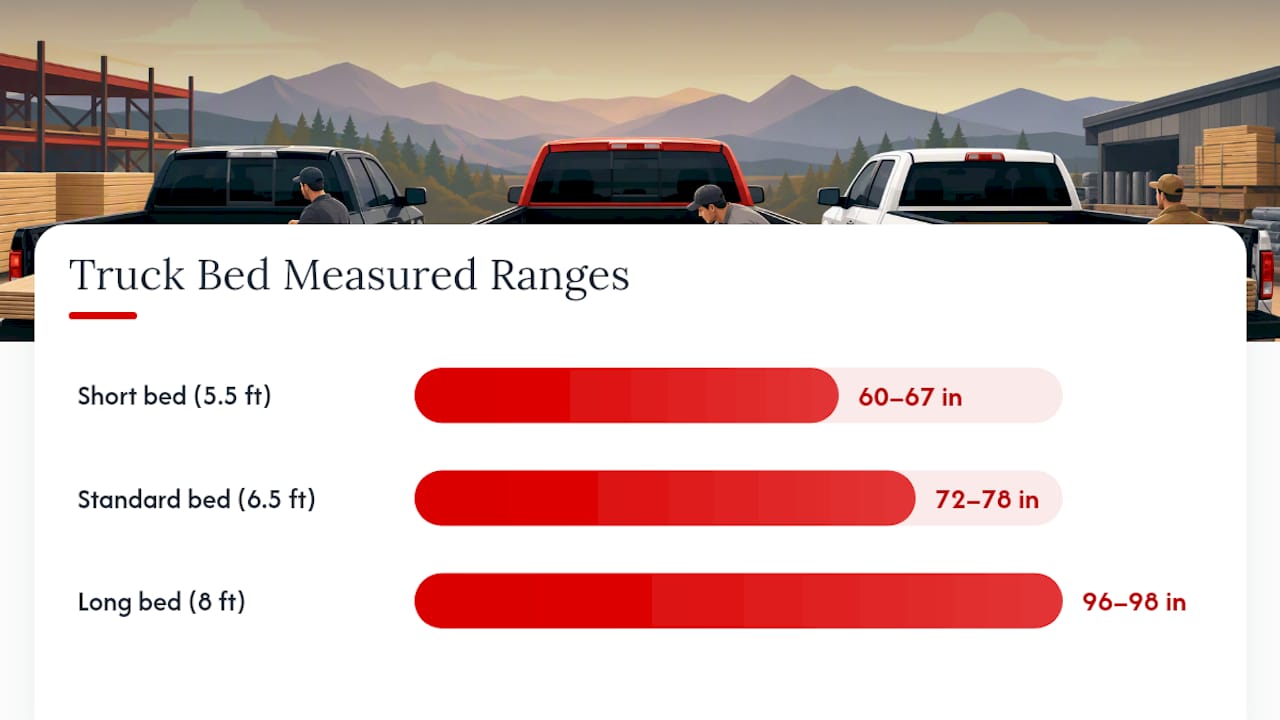
A "5.5-foot bed" doesn't measure 66 inches on the nose. It typically falls between 60 and 67 inches once you account for how each automaker rounds and where they start the measurement. A "6.5-foot bed," the one most crew-cab trucks ship with, generally runs 72 to 78 inches. The "8-foot bed," reserved mostly for regular and extended cabs on full-size trucks, measures out around 96 to 98 inches, according to AmericanTrucks' truck bed dimensions guide.
Why the spread? Bed floor length depends on exactly where the manufacturer starts and stops the measurement, plus small variations in bulkhead design and tailgate thickness from one model year to the next. A Ford and a Chevy both marketed as "6.5-foot beds" won't measure identically. Neither will two different model years of the same truck.
Here's how the three standard categories break down in practical terms:
| Nominal size | Typical measured range | What it comfortably hauls |
|---|---|---|
| Short bed (5.5 ft) | 60–67 in | Recycling bins, small furniture, weekend hardware runs |
| Standard bed (6.5 ft) | 72–78 in | Mulch, appliances, most home improvement loads |
| Long bed (8 ft) | 96–98 in | 4x8 plywood/drywall sheets, full lumber lengths, ATVs |
The short bed is the daily-driver favorite for a reason: it turns tighter in parking lots and garages, and most owners never haul anything longer than a couch. The standard bed is the compromise pick, long enough for most home projects without sacrificing much maneuverability. The long bed exists for one job in particular, hauling full sheet goods, and it does that job better than either of the other two sizes ever will.
If a listing only gives you the nominal foot measurement, treat it as a rough category, not a spec you can build accessory purchases around.
How to Measure a Truck Bed the Right Way
Skip the tape measure step and you're gambling on whether a tonneau cover, cap, or liner actually fits. It's a five-minute job that saves you a return shipping label.
- Measure floor length first. Run the tape from the inside of the front bulkhead (the wall behind the cab) to the inside of the tailgate. Keep the tailgate closed for this reading, since that's the number accessory makers design around, per RealTruck's measuring guide.
- Measure width between the wheelhouses. This inner width, not the outer rail-to-rail width, is what determines whether a 4x8 sheet lies flat. Most full-size trucks measure around 50 inches here.
- Measure overall width at the top of the bed rails. Cap and tonneau vendors often want this figure separately from the wheelhouse width.
- Measure depth. Run the tape vertically from the bed floor to the top edge of the bedside. This number matters for liner selection and for figuring out how much gear you can stack before it's visible over the rails.
- Write down the year, make, model, and cab configuration alongside your numbers. Bed dimensions can shift between trim levels and model years even on the same nameplate.
Different accessories care about different numbers. A tonneau cover vendor typically wants your rail-to-rail width and overall floor length. A spray-in liner installer needs the floor length and wheelhouse width to the tenth of an inch. A cap or topper company wants floor length and the rail profile, since caps mount differently across brands.
The most common mistake is measuring with the tailgate down, which adds several inches and throws off every accessory order that follows. The second most common mistake: assuming last year's truck matches this year's, when a mid-cycle refresh quietly changed the bed altogether.
Pro Tip: Take a photo of your tape measure laid across the bed floor, wheelhouse to wheelhouse, before you shop for accessories online. Vendors and forums can spot fitment problems from that single picture faster than from any spec sheet.
Real Truck Bed Measurements Across Popular Models
Advertised sizes are a starting point, not gospel. Two trucks marketed with the same nominal bed length can differ by an inch or two once you put a tape measure on them.
- Ford F-150: short bed floors run about 67.1 inches, standard beds around 78.9 inches, and the long bed measures roughly 97.6 inches, according to CURT's measuring guide for towing setups.
- Chevrolet Silverado 1500: comparable configurations measure closer to 69.9 inches, 79.44 inches, and 98.18 inches for short, standard, and long beds respectively.
- Compact and midsize trucks (think smaller pickups built for city use) typically top out around 74 inches even on their longest bed option, since these platforms rarely offer a true 8-foot configuration.
- Heavy-duty trucks built for commercial and towing work often reserve the 8-foot bed for regular-cab or extended-cab models only. Crew cabs on the same platform frequently max out at the standard length because the longer cab eats into overall wheelbase.
Cab configuration drives more of this than most shoppers expect. Manufacturers build trucks around a fixed overall wheelbase range, so adding cab length usually means subtracting bed length. That's why you'll rarely find an 8-foot bed paired with a crew cab. If you need both the extra bed length and four full-size doors, your options narrow fast, and it's worth understanding how cab configurations differ before you commit to a search.
One more caveat worth repeating: model-year changes happen. A mid-cycle refresh, a new frame, or a trim-specific bed can quietly shift these numbers by an inch or more. Confirm the exact figure for your specific year before ordering a cover, cap, or liner.
Short Bed vs Long Bed: Which One Actually Fits Your Life
The right bed size comes down to what you haul most often, not what you might haul once a year. Experts generally agree the "best" size is whichever one matches your routine use case rather than your occasional one, according to CarParts' truck bed sizes guide.
Short beds win on daily livability. They're easier to park, tighter to turn, and less likely to clip a curb backing into a driveway. The tradeoff shows up the moment you need to haul something long. Sheet goods and lumber either ride with the tailgate down (weather exposure, security risk) or require a bed extender.
Standard beds split the difference. You get enough floor length for most home-improvement hauls, appliance deliveries, and yard work without giving up much in the way of parking-lot maneuverability. For a huge share of buyers, this is the size that never feels like a compromise once they've lived with it.
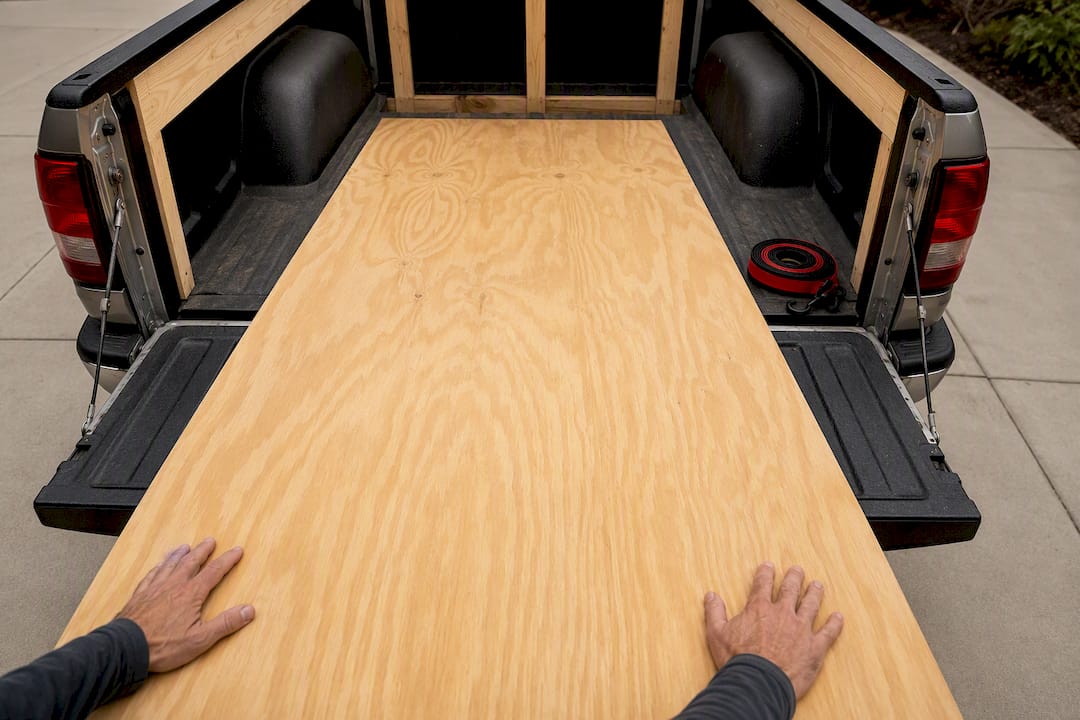
Long beds exist for one job: full 4x8 sheet goods and long lumber runs with the tailgate closed, per CarCovers' pickup bed size guide. If you're a contractor, a serious DIYer, or someone who regularly hauls building materials, this is the only size that does the job cleanly every time.
An 8-foot bed with the tailgate closed is currently the only bed size that fully accommodates a 4x8 sheet without hanging cargo off the back.
Towing adds another wrinkle. Fifth-wheel and gooseneck trailers need clearance for the trailer to turn without the nose striking the truck's cab. Short-bed trucks can absolutely tow fifth-wheels, but they generally require a slider hitch or a careful geometry check first, according to CURT's guidance on measuring for fifth-wheel and gooseneck clearance. Long-bed trucks usually clear this without extra hardware. If towing a fifth-wheel is part of your plan, that clearance question belongs on your checklist before you fall in love with a short-bed truck, and it's worth running the towing capacity math alongside it.
- Short bed: best daily driving and parking, weakest for long cargo without a tailgate-down workaround.
- Standard bed: the compromise pick for most homeowners and casual haulers.
- Long bed: necessary for full sheet goods and long lumber, best fifth-wheel clearance, worst for tight parking.
Getting Accessories to Actually Fit: A Buyer's Checklist
Every accessory category cares about a different measurement, and mixing them up is the single biggest reason bed covers and liners get returned.
Tonneau covers are built around rail-level measurements: overall width across the top of the bedsides and the floor length from bulkhead to tailgate. Bed liners, especially drop-in styles, are built around floor-level dimensions and the wheelhouse width, since a liner that's even half an inch off won't seat flush. Caps and toppers need both floor length and rail profile, since mounting hardware varies by rail style. Bed racks care most about wheelhouse clearance and rail width, since the crossbars need to clear the wheel wells without fouling cargo space.
Run through this before you buy anything:
- Measure the bed floor length and width yourself, don't rely on the spec sheet.
- Note whether your rails are stock stamped steel, factory-installed utility rails, or an aftermarket add-on, since mounting hardware differs across all three.
- Check wheelhouse intrusion if you're installing a rack or a slide-out cargo system.
- Confirm whether your tailgate is a standard swing-down, a multi-function tailgate, or a power tailgate, since some accessory hardware doesn't clear the newer designs.
Spray-in liners and aftermarket bed rails both change your usable dimensions slightly, typically shaving a small amount off interior width. If you're buying a used truck that already has a spray-in liner or custom rails installed, factor that into your own measurements rather than assuming factory spec still applies.
What Elmwood Auto Sales Checks Before a Used Truck Leaves the Lot
Advertised bed specs tell you what the truck was supposed to measure the day it left the factory. They don't tell you about the ten years of hauling gravel, firewood, or job site debris that followed. Every used truck at Elmwood Auto Sales gets a bed inspection that covers floor rust, prior body repairs, rail damage, liner type and condition, and whether the drain holes and seams are still sealed properly. We also check that the bed floor sits flat and level, since frame damage often shows up first as an uneven bed.
Specs on a window sticker can't tell you any of that. That's why we measure and inspect every truck bed in person before it's listed, rather than leaning on factory paperwork alone. If you're shopping for a specific bed length, our team can walk you through what we found and help confirm it matches what you actually need to haul.
Buy the Bed You'll Actually Use, Not the One That Sounds Impressive
Most shoppers overbuy bed length. They picture the one home renovation project that needs an 8-foot bed and ignore the three hundred trips to the grocery store, the daily commute through tight city streets, and the parking garage that barely fits a standard-length truck as it is.
The smarter approach: pick the shortest bed that safely and routinely handles what you actually haul, according to CarParts' analysis of truck bed sizing. A bed extender or a tailgate-down workaround costs you nothing most of the year and solves the occasional oversized load. Before you commit to any truck, confirm the payload rating still supports what you plan to carry, check hitch geometry if towing is in the picture, and verify accessory fit against your own tape measure, not the sticker in the window.
— Elmwood
Find the Right Bed Size at Elmwood Auto Sales
You can find trucks matched to your hauling needs, with the confidence that each used truck has been inspected for bed floor, rails, and liner condition before being listed.

Each truck goes through an inspection that helps reveal issues like hidden rust under the bed liner, which many private sellers and dealerships may overlook. If you know the bed length you need, a Car Finder tool can help narrow inventory to trucks matching hauling and parking requirements. Bring your measurement checklist when you visit, or ask for photos and measurements if shopping remotely. Ready to see what's on the lot? Browse our current inventory or apply for financing online before you come in, so approval is one less thing standing between you and the right truck.
Sources
- Truck Bed Dimensions Guide — AmericanTrucks
- How to measure your truck bed — RealTruck
- How to measure truck bed for 5th wheel & gooseneck clearance — CURT
FAQ
What trucks have a 5.5-foot bed?
Crew cab configurations on full-size trucks like the Ford F-150 and Chevrolet Silverado 1500 commonly offer a 5.5-foot bed, which measures roughly 60 to 67 inches in actual floor length depending on the model.
What truck has a 72-inch bed?
A 72-inch floor length typically falls into the standard bed category, common on extended or crew cab configurations across most full-size trucks; exact figures vary by make and model year, so measure before buying accessories.
Are 1500 and 2500 truck beds the same size?
Not always. While many 1500 trucks share bed length options like 5.5, 6.5, and 8 feet, the actual floor dimensions and wheelhouse widths can differ slightly because the heavier-duty frame and suspension change the bed's structure.
Which trucks have 8-foot beds?
Regular cab and extended cab configurations on full-size and heavy-duty trucks most often offer the 8-foot long bed, since crew cab versions typically use that extra length for passenger space instead.
Do I need a slider hitch for a short bed truck towing a fifth-wheel?
Often, yes. Short beds frequently require a slider hitch or careful clearance geometry to prevent the trailer from striking the cab during sharp turns, while long beds usually clear without extra hardware.