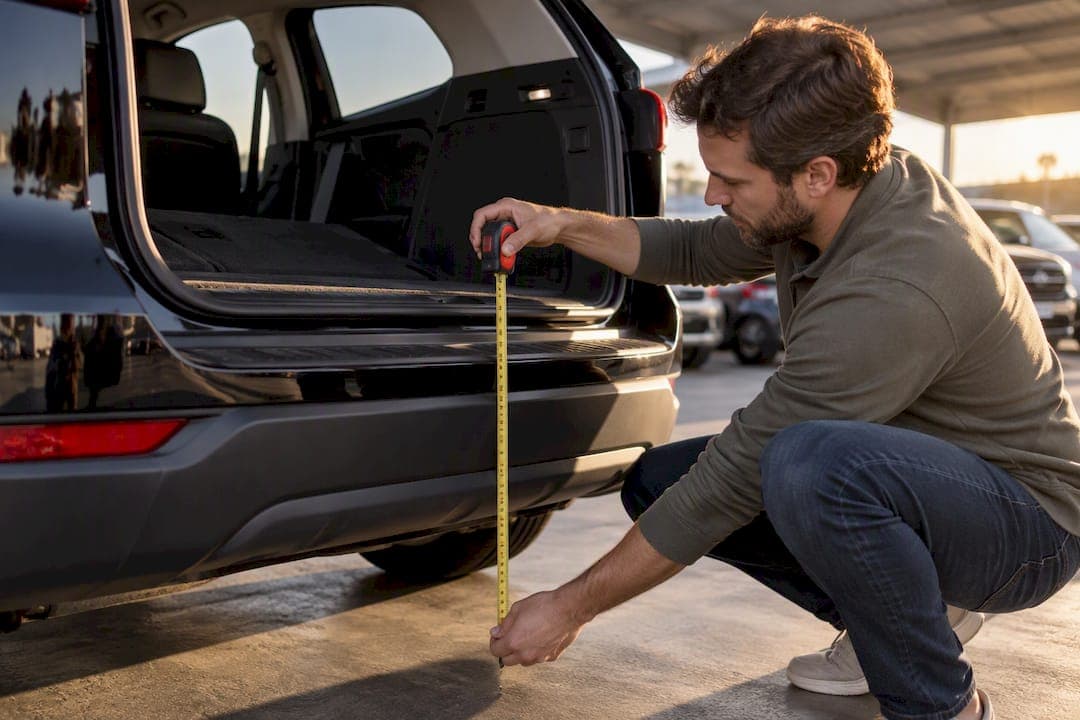
Cubic feet alone don't tell you whether an SUV will fit your stroller, suitcases, or sheets of plywood. Usable dimensions and load shape do that job instead. The most reliable checks are the space behind the third row, the width between the wheel wells, and the height of the load floor, with vehicles like the GMC Yukon XL and the Subaru Outback showing how differently those numbers can play out. The sections below cover the measurements, model comparisons, and a testing checklist you can bring to any dealer lot.
TL;DR:
- Width between the wheel wells and the load floor height are crucial for determining if bulky items or strollers will sit flat and be easy to load.
- Manufacturer maximum cargo volume often differs from measured usable space, especially when considering trim level features or measurement methods.
- Comparing cargo space requires checking physical measurements and testing with actual items rather than relying solely on specification sheets.
- Features like fold-flat seats, under-floor storage, and wide, vertical tailgate openings significantly enhance real-world cargo usability.
- For accurate assessments, bring your own large items to test cargo fit in person and verify the foldability and operation of seats and latches.
Table of Contents
- How manufacturers report cargo volume vs. measured space
- The key physical metrics that determine usable cargo room
- Sample model-by-model cargo figures across segments
- How to test cargo fit in person: a dealer checklist
- Features and design details that turn volume into usable storage
- Which kinds of SUVs suit different cargo needs
- Impact of roof rails and crossbars on cargo capacity and usability
- Elmwood's perspective: how we evaluate used SUVs for cargo usability
- How Elmwood can help you find a used SUV with the cargo space you need
- Sources
- FAQ
How manufacturers report cargo volume vs. measured space
Automakers publish a maximum cargo volume figure, usually the space available with every seat behind the front row folded flat. The Society of Automotive Engineers offers measurement guidance, but following it is not required, so two brands can measure similar spaces in different ways and land on different numbers for a similar-looking cargo bay.
That inconsistency is why independent testers measure things themselves. Consumer Reports measures cargo room by fitting the largest rectangular box that will pass through the tailgate opening and sit inside the cargo bay with the rear seats folded, which produces more realistic usable-space numbers than many manufacturer specs. Cars.com follows a similar philosophy: its measured approach notes that manufacturer maxima and measured figures are not always comparable, since its own numbers aim to reflect how people actually load a vehicle rather than how much air the space could theoretically hold.

Two common pitfalls trip up shoppers comparing spec sheets. Some manufacturers measure to the roof, others to the top of the seatback, so a taller number does not automatically mean a taller opening. Trim level matters too: a panoramic sunroof, a subwoofer enclosure, or a power liftgate motor can quietly shrink the cargo bay on one trim compared to another of the same model. Reading the fine print under a spec sheet's cargo number is worth the extra minute before you assume two SUVs are directly comparable.
The key physical metrics that determine usable cargo room
Two cargo numbers show up on most spec sheets: space behind the second row and space behind the third row. For anyone who regularly drives with a full house of passengers, the third-row figure matters far more, since that's the space actually available on a typical grocery run or family trip when all three rows are occupied.
Beyond those two headline numbers, a few physical measurements decide whether cargo actually fits:
- Wheel-well width is the narrowest point between the rear wheel housings, and it determines whether a cooler, a car seat box, or a stack of bins will sit flat.
- Tailgate opening width and height control what can physically pass through the back of the vehicle, regardless of how much room exists once an item is inside.
- Load-floor height affects how easily you can lift heavy items in and out, and a floor that sits low to the ground is easier on your back over years of ownership.
Features can shift usability even when the raw volume stays the same. Power-folding second and third rows create a flatter load floor with less effort, under-floor storage bins add hidden space for small items, and built-in tie-down anchors keep loose cargo from sliding during a drive.
Pro Tip: Measure the width between your rear wheel wells before you shop. It's the single number that tells you whether large bins or a stroller will sit flat instead of wedged at an angle.

Sample model-by-model cargo figures across segments
Cargo numbers vary widely by segment, and even within a segment the gap between two SUVs can be significant. The figures below mix manufacturer maximum volumes with measured figures where available, so treat the metric label as part of the comparison.
| Model | Segment | Cargo metric | Volume |
|---|---|---|---|
| GMC Yukon XL | Full-size extended | Maximum volume, rows folded | Up to 144.5 cubic feet |
| Chevrolet Suburban | Full-size | Maximum volume, rows folded | Listed among top full-size volume leaders by U.S. News |
| Chevrolet Traverse | Midsize three-row | Maximum volume, both rear rows folded | Up to 97.6 cubic feet |
| Subaru Outback | Compact/utility | Total cargo volume | 80.5 cubic feet |
| Ford Escape | Small SUV | Total cargo volume | 65.4 cubic feet |
These numbers are useful for narrowing a shortlist, not for making a final decision. Trim-level options like power liftgates or third-row sunroofs can shrink a cargo bay slightly compared to the base trim used for the published figure, and a manufacturer's maximum volume is measured differently from a magazine's or review site's measured-box test. Treat the table as a starting point for comparison shopping, then verify the specific trim you're considering in person.
How to test cargo fit in person: a dealer checklist
Numbers on a spec sheet only get you so far. The most reliable way to know whether an SUV fits your life is to bring your own items and measure the space yourself, which is exactly the approach Cars.com recommends for judging real-world fit.
- Measure the usable box behind the row you'll load most often: length, wheel-well width, and height to the window line.
- Bring a suitcase, a stroller, or whatever you load most often and physically place it in the cargo bay.
- Fold the rear seats and check whether the floor sits flat or leaves a step or slope.
- Open and close the tailgate fully to confirm the opening height and that the latch operates smoothly.
- Write down every measurement so you can compare it against the next SUV on your list.
Bring a tape measure, one bulky item you actually own, and a strip of tape to mark reference points on the floor. Ask the dealer whether the seats fold flat without removing headrests and whether any cargo accessories, like a cargo net or a false floor, come with the vehicle.
Watch for warning signs while you test: a seat that binds or won't lock flat, a load floor noticeably higher than the bumper, or a cargo liner with tears or water staining underneath. Any of those issues is a reasonable point to negotiate the price or walk away entirely.
Pro Tip: Take a photo of your measurements on your phone. It's easy to forget exact numbers after visiting three or four lots in one afternoon.
Features and design details that turn volume into usable storage
A boxy cargo area almost always outperforms a sloped one for bulky loads, even when the sloped SUV claims a higher cubic-foot number. Reviewers note that a wide, square tailgate opening paired with vertical side walls handles moving boxes, coolers, and stacked bins better than a sleeker roofline that trims usable height near the rear glass.
A handful of design details separate a merely large cargo area from a genuinely practical one:
- Two-level cargo floors let you drop the floor for tall items or raise it for a flat load surface flush with folded seats.
- Under-floor storage bins hide small, loose items like tools or a first-aid kit without eating into the main cargo bay.
- Tie-down anchors and cargo nets keep groceries or gear from sliding around during turns and stops.
- Removable center seats or console sections in some three-row SUVs add width for bulky single items.
Load-floor height brings a trade-off worth knowing: a lower floor is easier to lift into, but it usually comes at the cost of some ground clearance, so off-road-oriented SUVs often sit higher and load a bit less conveniently as a result.
Which kinds of SUVs suit different cargo needs
Matching an SUV to your actual cargo habits matters more than chasing the highest number on a spec sheet.
- Moving furniture or hauling long items: look at extended-length full-size SUVs or large two-row models, and confirm the interior length and whether the second row folds fully flat before assuming a 4x8 sheet of plywood will lie flat inside.
- Family travel with every seat filled: prioritize the luggage capacity behind a raised third row over the maximum folded-flat number, since that's the space you'll actually use on a road trip, and check that the tailgate opening is wide enough for multiple suitcases at once.
- Everyday errands and groceries: favor a low load-floor height and easy-access under-floor storage over raw volume, since daily lifting and organization matter more than theoretical maximum capacity.
Buyers considering a long-bed truck instead of a large SUV for hauling should weigh the trade-offs covered in our guide to best used trucks for family hauling, since an open bed solves some cargo problems an enclosed SUV cannot.
Impact of roof rails and crossbars on cargo capacity and usability
Roof rails and crossbars don't add interior cargo room, but they expand what an SUV can carry overall. Adding a rooftop cargo box or a bike rack lets a family keep the interior cabin clear for passengers while moving bulky, weatherproof gear to the roof, which matters most on long trips when every seat is filled and the trunk alone can't handle everything.

The trade-off is fuel economy and wind noise, both of which increase with a loaded roof box, along with a small but real limit on total roof-rated weight that varies by model. Rails also affect vehicle height, which matters for parking garages and low-clearance drive-throughs, something easy to forget until you're stuck at the entrance with a full roof box.
For SUVs with genuinely tight interior cargo space, rails and crossbars are often the practical fix rather than trading in for a bigger vehicle. Buyers weighing this option can find more detail in our piece on why roof rails matter for everyday SUV ownership. Just remember that a roof box adds bulk you'll need to store somewhere when it's not in use, which is worth factoring into the decision alongside interior cargo numbers.
Elmwood's perspective: how we evaluate used SUVs for cargo usability
Every used SUV that comes through our lot gets checked for the details a spec sheet never mentions: whether the seats fold and lock properly, whether the under-floor liner shows signs of rust or water intrusion, and whether the tailgate latch operates smoothly every time.
The most common cargo-related issues we find on used SUVs are broken seat-fold latches, torn or missing cargo liners, and tie-down anchors that have snapped or gone missing entirely. None of those show up in a cubic-foot number, but all of them affect whether the cargo area actually works day to day. We'd suggest bringing the measurement checklist from this article to any test drive, on our lot or elsewhere, so you can verify usable space yourself before signing anything.
— Elmwood
How Elmwood can help you find a used SUV with the cargo space you need
Finding an SUV with the right cargo space shouldn't mean guessing from a spec sheet or hoping the seats fold the way a brochure promises. Used SUVs typically undergo inspections for seat-fold, tailgate, and under-floor conditions to help reduce issues after purchase.
If you know the cargo dimensions you need but haven't found the right match, our Car Finder service can help track one down. A few ways to make your visit count:
- Bring the measurement checklist from this article and we'll help you verify the cargo area on any SUV you're considering.
- Ask about Used Car Financing options tailored to a range of credit histories, including buy here pay here.
- Have a trade-in? Get it appraised through our vehicle appraisal process before you commit to your next SUV.
Ready to see the cargo area in person? Schedule a test drive and bring your tape measure.
Sources
- Cargo Room for SUVs and Minivans as Measured by Consumer Reports
- Cars
- Does your next SUV have enough cargo space? 3 things specs don't tell you - HowToGeek
FAQ
Which SUV is the roomiest inside?
Roominess depends on the metric: for maximum folded volume, extended full-size SUVs like the GMC Yukon XL lead the pack, while compact options like the Subaru Outback punch above their segment. The right answer depends on whether you need maximum volume or a specific usable dimension like third-row luggage space.
What is the typical trunk width of an SUV?
Trunk, or cargo bay, width varies significantly by model and is narrowest at the wheel wells rather than at the tailgate opening. Measuring the wheel-well-to-wheel-well width yourself is more useful than relying on a published figure, since that narrow point determines whether bins and coolers sit flat.
Which compact SUV has the most cargo space?
Among compact and small SUVs, the Subaru Outback stands out with a total cargo volume that outpaces many competitors in its segment. Shoppers comparing compact SUVs should still check load-floor height and wheel-well width, since those details affect usability more than the headline number.
What are the worst mistakes SUV shoppers make with cargo space?
The most common mistake is trusting a manufacturer's maximum cubic-foot figure without checking measured or usable numbers behind the row you'll actually load. A close second is skipping an in-person test with your own bulky items, which is the only way to confirm fit before you buy.
How much cargo space do I actually need?
That depends entirely on how you use the vehicle: families with all three rows filled should prioritize luggage capacity behind the third row, while occasional movers or gear haulers benefit more from a boxy shape and a flat-folding second row. Bringing your typical cargo items to a test drive is the most reliable way to find your real number.