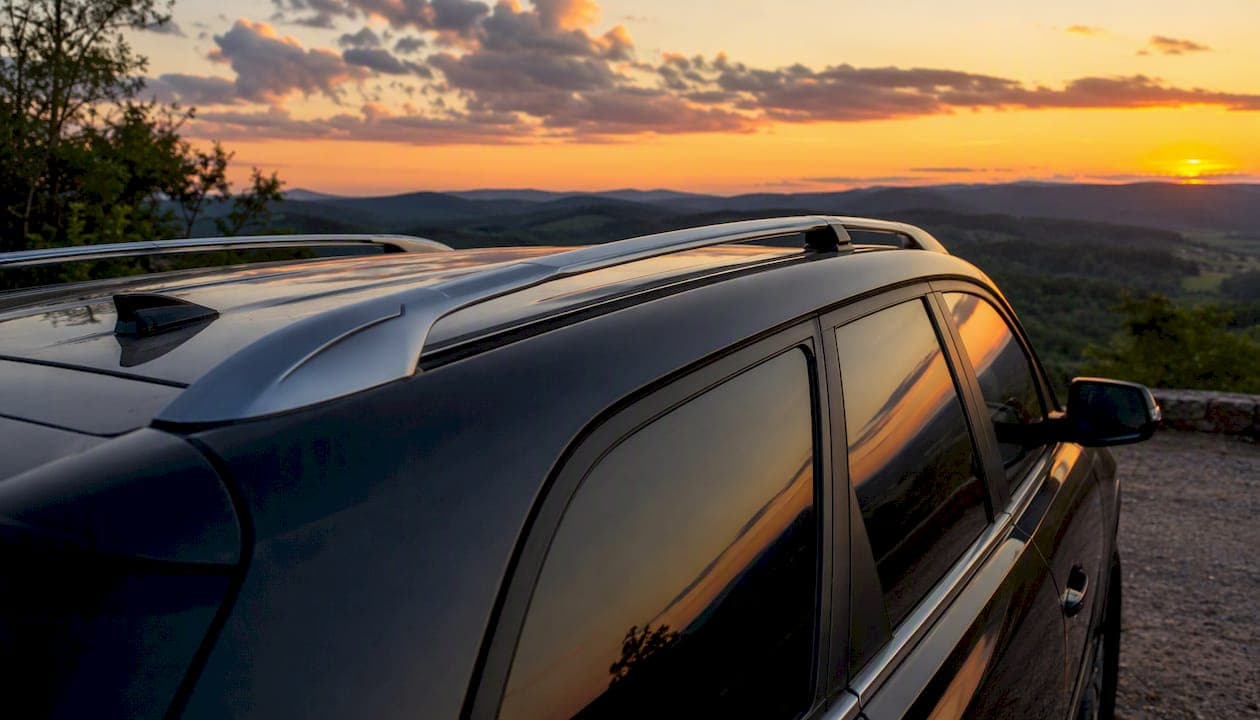
Roof rails are worth having on an SUV if you regularly carry gear that won't fit inside the vehicle. For road trips, seasonal sports, camping, or moving bulky items like lumber or kayaks, rails give you a reliable mounting base that turns your SUV's roof into usable cargo space. Before you load anything up top, check your owner's manual for the manufacturer's rooftop load limit — that number is non-negotiable.
The situations where roof rails deliver real value:
- Long road trips where interior space is already claimed by passengers and luggage
- Seasonal outdoor sports: ski and snowboard transport in winter, bikes or kayaks in summer
- Moving oversized items that can't fit through the tailgate
- Families who need to carry strollers, sports equipment, or camping gear simultaneously
- Contractors or tradespeople who occasionally haul long, flat materials
If you drive solo in the city and rarely leave pavement, rails may add little beyond appearance.
Key Takeaways
Roof rails matter most for SUV owners who regularly carry gear that won't fit inside the vehicle — and the system only works safely when crossbars, load limits, and proper securement are all in place.
| Point | Details |
|---|---|
| Rails are mounting points, not load-bearers | Always add rated crossbars before attaching cargo; rails alone are not designed to carry weight. |
| Check the owner's manual first | Rooftop load limits vary by model; exceeding them affects handling and voids safety compliance. |
| Fuel economy drops with cargo | Roof-mounted gear increases aerodynamic drag, with a measurable penalty at highway speeds. |
| Factory rails outperform aftermarket clamps | OEM-fit crossbars reduce vibration, noise, and wear for frequent or heavy use. |
| Inspect rails on any used SUV | Check for loose mounts, paint damage, and rust before assuming the system is load-ready. |
Table of Contents
- What are roof rails, crossbars, and roof racks — and how do they differ?
- Why roof rails genuinely benefit SUV owners
- What are the real trade-offs of roof-mounted cargo?
- How do you load a roof system safely?
- What types of roof rails does your SUV have?
- Which accessories can you attach, and what does each carry best?
- How much does a roof-rail and crossbar setup cost?
- How do you maintain rails and protect your roof?
- What U.S. legal and safety rules apply to roof loads?
- Elmwood's used-SUV roof-rail inspection checklist
- When would I choose an SUV with roof rails?
- Sources
What are roof rails, crossbars, and roof racks — and how do they differ?
These three terms get used interchangeably, but they describe different parts of a roof-cargo system. Getting them straight saves you from buying the wrong accessory or, worse, overloading a component that wasn't designed for the job.
Roof rails are the longitudinal bars that run front-to-back along the sides of your SUV's roof. According to Subaru Parts Plus, rails are the primary mounting base for crossbars and cargo accessories — they are generally not designed to support cargo weight by themselves. Think of them as the structural chassis of the whole system, not the cargo platform.
Crossbars are the transverse bars that span across the roof between the two rails. They create the actual load-bearing surface. A roof box, bike mount, or kayak saddle attaches to the crossbars, not directly to the rails. Without crossbars, most accessories have nothing rated to clamp onto.
A roof rack is typically a full platform or basket system that mounts on top of crossbars, adding a flat surface for cargo nets, gear bags, or loose items. Some racks integrate crossbars and a platform into one unit.
How the system stacks together: rails anchor to the roof → crossbars lock onto the rails → accessories or a rack platform attach to the crossbars. Each layer has its own weight rating, and the lowest rating in the chain is the one that governs.
- Rails: structural mounting points, not load-bearing alone
- Crossbars: the actual cargo-support layer
- Roof rack or platform: optional third layer for loose or bulky loads
- Accessories (bike mounts, cargo boxes, kayak saddles): attach to crossbars or rack
Pro Tip: When shopping for crossbars, confirm they are rated for your specific rail type. Incorrectly fastening cargo directly to rails — skipping crossbars — can cause load shifting and roof damage on the road.
Why roof rails genuinely benefit SUV owners
The practical case for roof rails comes down to one thing: they multiply your SUV's cargo capacity without shrinking the passenger cabin. GOBI Racks notes that side rails increase cargo capacity and accommodate accessories like cargo baskets, ski racks, and roof boxes, adding real versatility for travelers and outdoor users.
For families, that means the back seat stays clear for kids and car seats while the roof handles the stroller, the soccer gear, and the weekend bags. For outdoor enthusiasts, it means a single SUV can carry mountain bikes on Saturday and skis the following weekend, swapping accessories in minutes rather than renting a trailer.
Key benefits worth knowing:
- Cargo capacity: Adds usable load space above the vehicle without reducing interior room
- Versatility: One set of rails supports multiple accessory types across seasons
- Modularity: Crossbars and accessories can be swapped, removed, or upgraded independently
- Resale signal: Factory-fitted rails are a visible feature that buyers notice on used SUVs
- Occasional-use flexibility: You don't need a truck to move a ladder or a long piece of trim board
The versatility point deserves emphasis. A family that camps in summer, skis in winter, and bikes on weekends would otherwise need three separate cargo solutions. Rails with a compatible crossbar set reduce that to one base system with interchangeable accessories.
What are the real trade-offs of roof-mounted cargo?
Roof rails and the gear you mount on them come with genuine costs. Knowing them upfront helps you decide whether the feature is worth prioritizing on your next purchase.
Fuel economy and wind noise. Empty rails have a minimal effect on fuel economy, but once crossbars and cargo are added, the aerodynamic drag penalty becomes measurable. Research from Lawrence Berkeley National Laboratory confirms that roof-mounted gear increases aerodynamic drag and can reduce fuel efficiency, particularly at highway speeds. Consumer guides estimate small drops with empty crossbars and larger penalties with a loaded cargo box or basket.
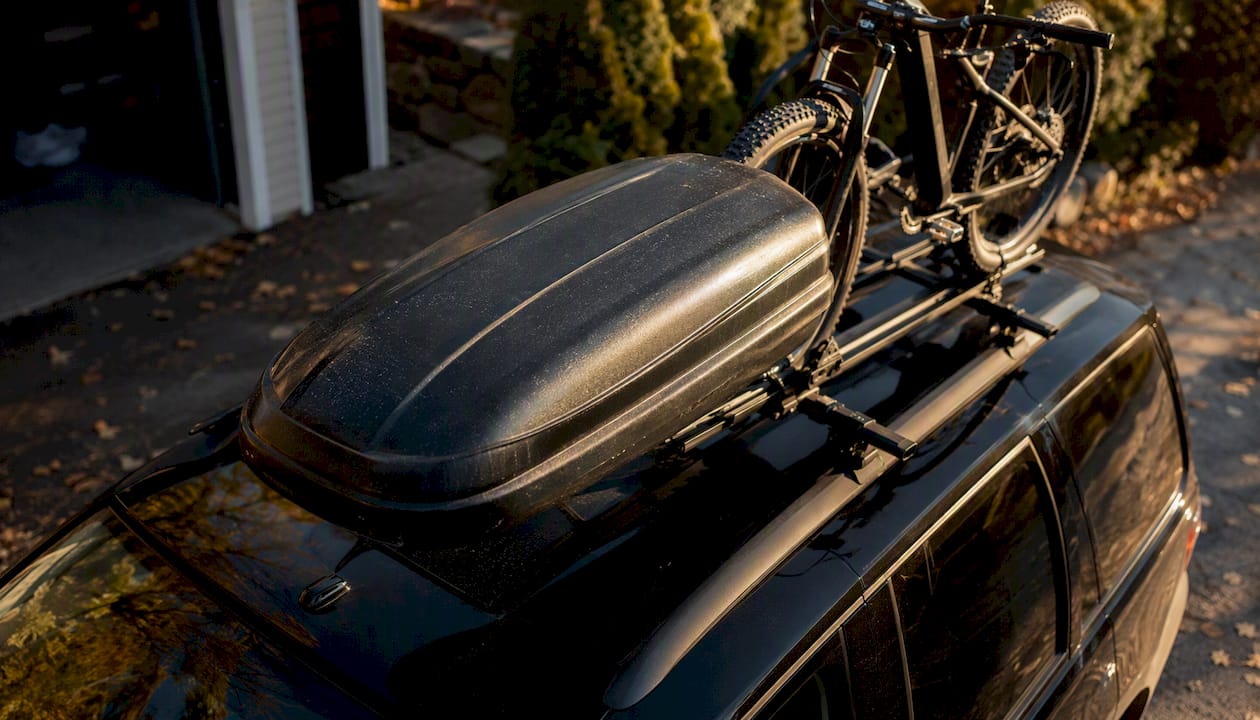
Weight limits and handling. Every SUV has a rooftop static load limit and a dynamic load limit, and they are not the same number. Adding weight up high raises the vehicle's center of gravity, which affects cornering and braking. Always observe the combined roof and accessory weight limits, and test the vehicle with a moderate load before any long-distance drive.
Risk of roof damage. Improperly installed clamps, overtightened hardware, or accessories that shift in transit can scratch paint, crack trim, or, in the worst cases, allow water to enter around mounting points. This risk is highest with aftermarket clamp-on systems on vehicles without factory mounting points.
Underuse. On some trims, factory rails are decorative rather than structural. If you never add crossbars or accessories, rails contribute little beyond aesthetics and a modest aerodynamic penalty.
How do you load a roof system safely?
Follow this checklist the first time you load your SUV's roof, and repeat it any time you change accessories or cargo.
- Check the owner's manual. Locate the rooftop static and dynamic load limits before anything else. Nissan Parts advises always consulting the owner's manual and manufacturer-specified limits before hauling anything on the roof. The manual also identifies your rail type and compatible crossbar systems.
- Add rated crossbars. Install crossbars or a rack that is rated for your specific rail mounting system. Model-specific crossbars reduce vibration and noise compared with universal clamp-on alternatives.
- Weigh and center the load. Weigh your cargo before loading. Place heavier items low and centered over the vehicle's midpoint. Keep the load as close to the roof surface as possible to minimize the center-of-gravity shift.
- Use rated tie-downs. Secure cargo with tie-down straps rated for the load weight. Spread tie points across multiple anchor locations rather than concentrating tension in one spot. If using a cargo box or bag, confirm the cover or lid is fully latched.
- Do a short test drive. Drive around the block at low speed, then stop and recheck every fastener, strap, and latch. Highway vibration can loosen connections that felt tight in the driveway.
- Reduce speed with tall or wide loads. A loaded roof raises wind resistance significantly. Keep highway speeds moderate with large cargo boxes or open baskets, and check mirrors frequently for shifting.
Pro Tip: At every fuel stop on a long trip, take 60 seconds to press each strap and check each clamp. A strap that loosened over 200 miles of highway is far easier to fix at a rest stop than after a load shifts at speed.
What types of roof rails does your SUV have?
Not all rails work the same way, and the type your SUV has determines which crossbars and accessories are compatible. Chase's guide to car roof rails describes the main configurations and their mounting interfaces.
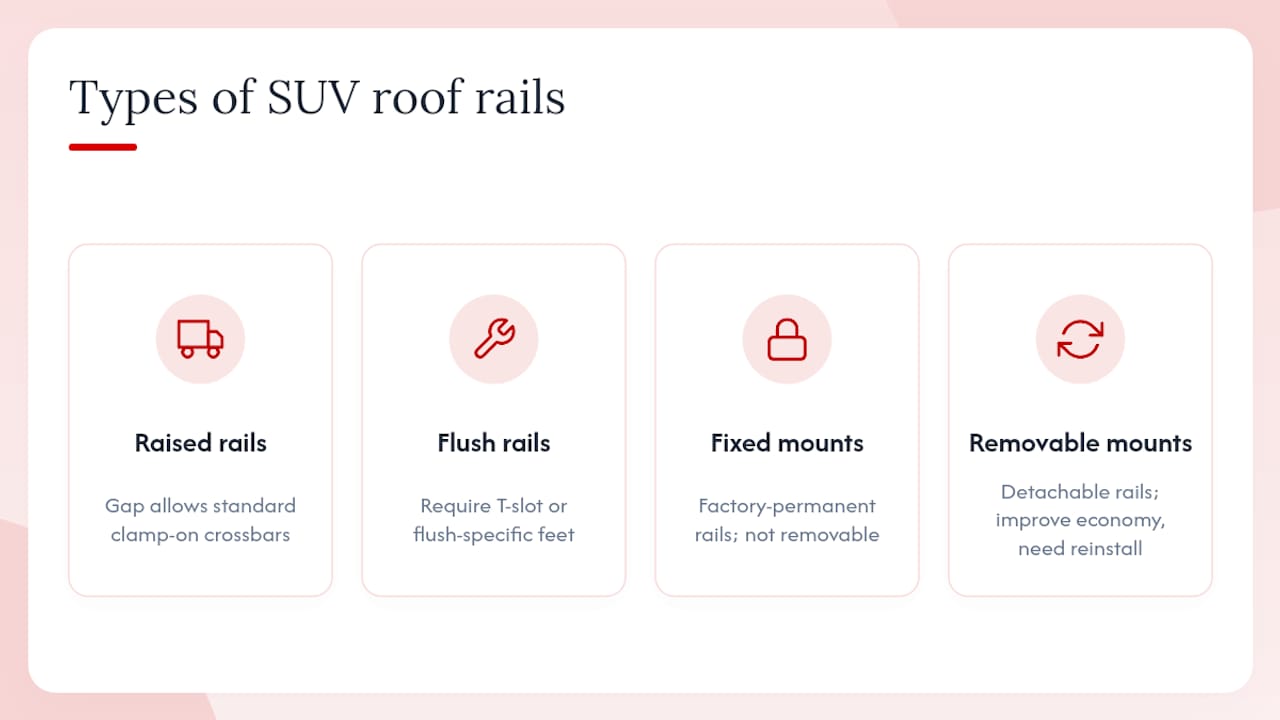
Raised rails sit elevated above the roof surface, creating a gap between the bar and the roof. This gap allows crossbar feet to slide underneath and clamp on, making accessory installation straightforward. Raised rails are common on mid-size and full-size SUVs.
Flush (integrated) rails sit nearly flat against the roof, creating a cleaner profile. They typically require crossbar feet designed specifically for flush mounting, often using a T-slot channel built into the rail. Universal clamp-on crossbars usually don't fit flush rails without an adapter.
Fixed vs. removable mounts. Some rails are permanently attached at the factory; others use removable mounting points that allow the rails themselves to come off when not in use. Removable systems are better for fuel economy but require reinstallation before each use.
When a vehicle has no factory rails or mounting points, aftermarket clamp-on systems attach to the door frame or roof edge. They work, but model-specific crossbars with factory mounting hardware reduce vibration, noise, and wear over time.
Which accessories can you attach, and what does each carry best?
Once crossbars are in place, the accessory options are broad. GOBI Racks explains that a rails-plus-crossbars setup is the most versatile configuration, supporting a full range of seasonal accessories from a single base system.
- Cargo boxes (roof boxes): Enclosed, lockable containers for luggage, ski gear, or camping supplies. Best for items that need weather protection. Require crossbars with a T-slot or square-bar profile.
- Bike racks: Upright or fork-mount designs that carry one to four bikes. Confirm the rack's weight rating per bike and total load against your crossbar limit.
- Kayak saddles and J-cradles: Cradle-style mounts that hold one or two kayaks on their side or flat. J-cradles save roof width when carrying two boats.
- Ski and snowboard carriers: Locking clamp systems that hold skis or boards flat. Most fit standard crossbar profiles and lock with a key.
- Cargo baskets: Open-frame platforms for bulky, weather-tolerant gear like coolers, firewood, or duffel bags. Pair with a cargo net to prevent items from shifting.
- Rooftop tents: Heavy, fold-out tents that mount directly to crossbars. Verify your combined roof load limit carefully — rooftop tents are among the heaviest accessories available.
A practical seasonal rotation: bike racks in spring and summer, ski carriers in winter, cargo box for family road trips year-round. Swapping accessories takes 10–20 minutes with the right crossbar system.
How much does a roof-rail and crossbar setup cost?
Costs vary widely depending on whether rails are already on the vehicle, how you source crossbars, and what accessories you add.
- Factory-fitted rails (already on the SUV): No additional cost. If crossbars weren't included, OEM crossbars from the manufacturer typically run $150–$400 depending on the model.
- Dealer-installed crossbars: Dealers often sell model-specific crossbar kits. Expect to pay OEM prices plus a modest installation fee, usually $50–$100 for the labor.
- Aftermarket model-specific crossbars: Brands that make vehicle-specific fit kits generally price crossbars in the $100–$300 range. These reduce noise and vibration compared with universal systems.
- Universal clamp-on systems: Budget-friendly entry point, often $60–$150. They work on a wide range of vehicles but may produce more wind noise and require more careful installation.
- Cargo boxes: Entry-level boxes start around $200; larger, lockable, aerodynamic models from established brands run $400–$800 or more.
- Bike racks and ski carriers: $80–$300 depending on capacity and locking features.
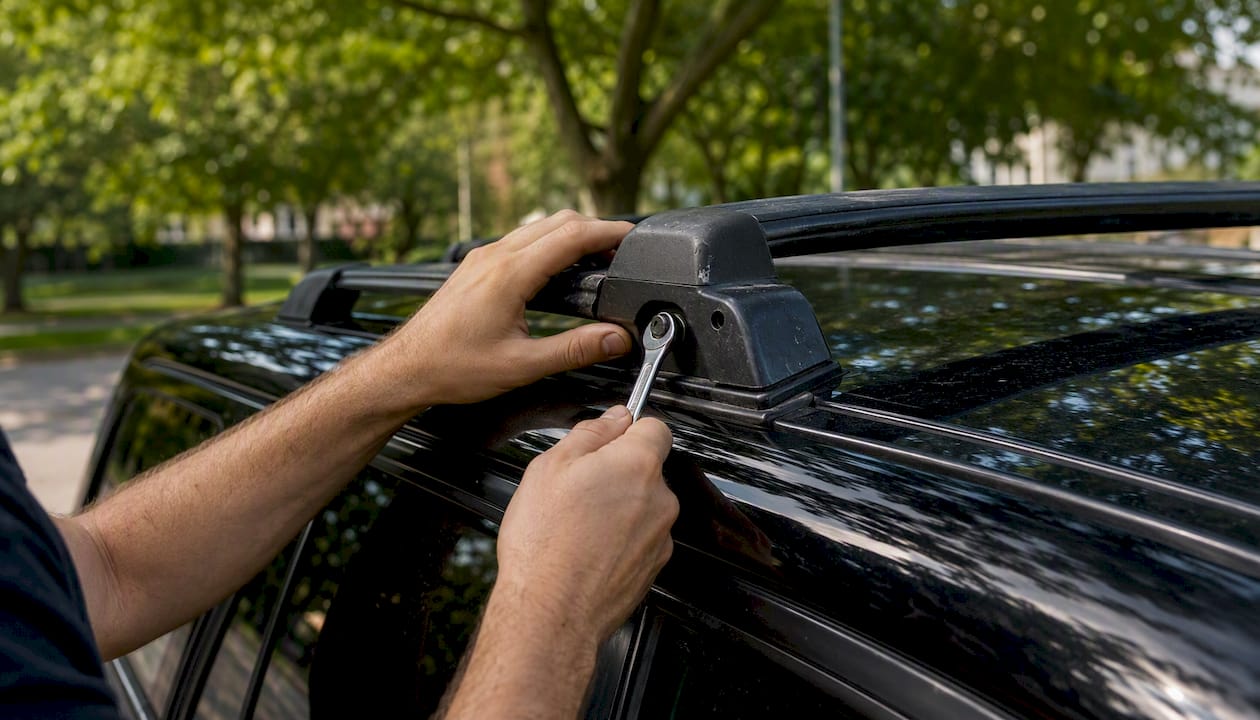
DIY installation of crossbars is straightforward on most SUVs with raised rails — the manufacturer's instructions and basic hand tools are all you need. Flush-rail or factory-anchor systems can require more precision, and dealer installation is worth the cost if you're unsure.
How do you maintain rails and protect your roof?
A roof-rail system that's ignored between uses will corrode, loosen, and eventually damage the roof surface. A short maintenance routine keeps everything reliable.
- Clean mounting hardware after each season. Road salt, dirt, and moisture accumulate in rail channels and clamp feet. Rinse with fresh water, dry thoroughly, and apply a light lubricant to metal contact points.
- Inspect fasteners regularly. Check that all bolts, end caps, and clamp screws are tight. Loose fasteners vibrate against the roof and can scratch paint or allow water intrusion.
- Remove crossbars when not in use. Empty crossbars still create aerodynamic drag and wind noise. Removing them between trips saves fuel and reduces wear on the mounting hardware.
- Store cargo boxes properly. Keep boxes clean and dry before storage. Leave the lid slightly open in storage to prevent moisture buildup inside.
- Use roof-protection pads when loading by hand. Sliding a kayak or ladder onto the roof without padding scratches paint and can dent the roof surface. Foam pads or a towel under the load protect the finish.
Pro Tip: After any winter season, remove the crossbars and inspect the rail channels for rust or salt deposits. A few minutes with a stiff brush and a rust-inhibiting spray can prevent corrosion that would otherwise require panel repair.
Quick post-winter inspection checklist: check end caps for cracks, look for rust at mounting points, test each fastener for tightness, and examine the roof surface around mounts for paint chips or bubbling.
What U.S. legal and safety rules apply to roof loads?
Roof cargo is subject to federal and state regulations, and an improperly secured load creates both safety and liability risks.
- State overhang rules vary. Most U.S. states permit rear overhang up to 4 feet beyond the rear bumper without a flag or light, but some states set lower limits. Check your state's Department of Transportation rules before hauling long items.
- Federal cargo securement principles apply. The Federal Motor Carrier Safety Administration (FMCSA) sets securement standards for commercial vehicles, but the underlying principles — rated tie-downs, multiple anchor points, no loose ends — apply to personal vehicles as well.
- Reduce speed with tall or wide loads. A loaded cargo box or open basket significantly increases wind resistance and the risk of load shift at highway speeds. Staying below 65 mph with a heavy roof load is a widely recommended precaution.
- Check mirrors and recheck straps. After the first 30–50 miles of highway driving, pull over and verify that all straps and clamps remain tight. Wind and vibration can loosen connections that felt secure at departure.
- Insurance and liability. A load that falls from your vehicle and causes damage or injury can affect your auto insurance claim and expose you to personal liability. Proper securement is both a legal and financial protection.
Always confirm current state rules with your state DOT before a trip. This article provides general information, not legal advice.
Elmwood's used-SUV roof-rail inspection checklist
When you're evaluating a used SUV at a dealership lot or during a test drive, the roof rails deserve a closer look than most buyers give them. At Elmwoodautosalesri, the team recommends this quick inspection before you commit.
- Press each rail firmly. A properly mounted rail should feel solid with no flex or movement. Any wobble suggests loose fasteners or compromised mounting points.
- Inspect end caps and mounting hardware. Cracked or missing end caps expose the rail interior to moisture. Check visible fasteners for rust or stripped heads.
- Look for paint damage around mounts. Bubbling, chipping, or discoloration near mounting points can indicate water intrusion or corrosion underneath the surface.
- Bring a flashlight. Check the underside of the rail channel and the area around each mount. Hidden rust is common on vehicles that spent winters in salt-heavy climates like Rhode Island.
- Confirm rail type and crossbar compatibility. Ask whether the vehicle came with factory crossbars or whether aftermarket hardware was added. Aftermarket clamps installed incorrectly can damage the roof over time.
- Ask for service records. Request documentation of any roof-rail or crossbar installation. A dealer like Elmwoodautosalesri can pull service history and confirm whether accessories were included from the factory or added later.
Many factory rails on lower trims are cosmetic rather than structural, so confirming the rail type before assuming load capacity is worth the extra minute. For a broader used-SUV evaluation, the used SUV buying checklist for families covers additional inspection points beyond the roof system.
Pro Tip: A small magnet can help you identify areas where body filler has been applied near roof mounts — a sign of prior damage or a poorly repaired installation. A magnet won't stick to filler the way it sticks to bare metal.
When would I choose an SUV with roof rails?
From Elmwood's perspective, roof rails move from a nice-to-have to a genuine priority based on one question: how often will you carry gear that won't fit inside the vehicle?
For an outdoor-focused family — camping trips, ski weekends, youth sports leagues — factory-fitted rails are worth prioritizing from the start. The best used SUVs for families tend to include rails on mid-level trims and above, so the feature is often available without paying for the top trim. A city commuter who drives solo most of the year and rarely leaves the metro area will likely never use rails, and the aerodynamic penalty on a bare crossbar setup is a small but real cost for nothing in return.
The trickier case is the buyer who doesn't need rails today but might in the next few years. Buying a used SUV without rails and adding an aftermarket system later is a reasonable path, particularly if the vehicle has factory mounting points. The used SUV vs new SUV comparison is worth reading if you're weighing whether factory-fitted features like rails justify a newer model.
If heavy or frequent roof use is likely, prioritize a vehicle with factory-fitted rails. OEM systems are engineered to the vehicle's specific load limits and mounting geometry, which reduces noise, vibration, and the risk of damage compared with aftermarket alternatives.
Sources
- Roof rails vs crossbars - need to carry gear
- Roof rails, crossbars or roof rack - Nissan Parts
- The importance of side rails: Do you need them on your vehicle?
- Guide to car roof rails - Chase
- How roof racks affect drag and fuel economy - LBL News Center