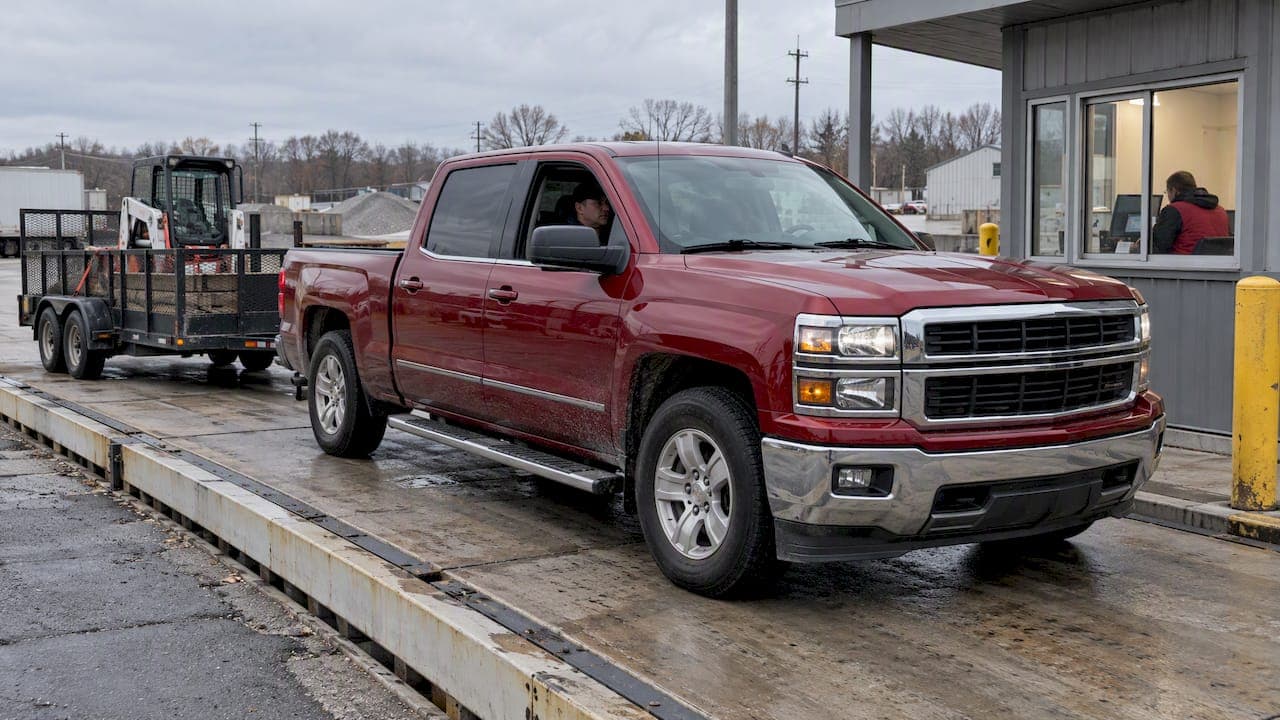
Payload is what your vehicle carries inside and on top of it; towing capacity is what it can pull behind it, and the two numbers are never interchangeable. Exceed either one, whether by overloading the cab and bed or hitching a trailer heavier than the rating allows, and you compromise braking, steering, and structural limits the manufacturer built the vehicle around. The safety rule is simple: never let your loaded weight, with or without a trailer, exceed the vehicle's GVWR or its rated towing capacity.
TL;DR:
- Exceeding vehicle's GVWR, GCWR, or towing capacity increases safety risks by compromising braking, steering, and structural integrity.
- Properly checking exact rated numbers requires referring to the vehicle’s door-jamb label, owner's manual, or manufacturer’s towing guide tailored to the specific build.
- Payload is the weight of passengers, cargo, and hitch load, which deducts from the vehicle’s maximum capacity and impacts towing limits.
- Weighing your vehicle and trailer separately before towing helps prevent unintentional overloads often caused by underestimated cargo or passenger weights.
- Maintaining a margin of at least 20% below GCWR helps account for fuel, additional passengers, or trailer sway, ensuring safer towing practices.
Table of Contents
- What do payload, towing capacity, and GVWR actually mean?
- Where do you find the real numbers for your vehicle?
- How do you calculate payload for a real trip?
- Why does payload cut into how much you can tow?
- What do federal safety rules say about these limits?
- What's your pre-tow checklist before hitting the road?
- How we think about payload and towing when selling used trucks and SUVs
- Ready to find a tow-capable used truck or SUV?
- FAQ
- Sources
What do payload, towing capacity, and GVWR actually mean?
Payload is the combined weight of passengers, cargo, accessories, and hitch or tongue weight that your vehicle itself carries. Towing capacity is the maximum weight of a loaded trailer the vehicle is rated to pull. These numbers interact through a handful of related terms that are worth knowing before you calculate anything.
- GVWR (Gross Vehicle Weight Rating): the maximum total weight of the vehicle, fully loaded, that the manufacturer certifies as safe.
- GCWR (Gross Combined Weight Rating): the maximum combined weight of the loaded tow vehicle and loaded trailer together.
- GAWR (Gross Axle Weight Rating): the maximum weight each axle can carry, front and rear, which matters because payload and tongue weight don't always distribute evenly.
- Curb weight: the vehicle's weight with standard equipment and fluids, but no passengers or cargo.
- Tongue or king-pin weight: the downward force the trailer places on the hitch, which counts against payload, not just towing capacity.
Where do you find the real numbers for your vehicle?
Generic ads and spec-sheet averages aren't reliable because towing and payload figures shift with cab size, drivetrain, engine, and optional packages. The numbers that matter are the ones certified for your specific vehicle, and they live in three places.
- The door-jamb certification label: lists GVWR, GAWR for front and rear axles, and sometimes tire specifications, all specific to that exact vehicle as built.
- OCCC or CCC labels: found on RVs and some trucks, these state the occupant and cargo carrying capacity directly, which simplifies the payload math.
- The owner's manual and manufacturer towing guides: these show towing capacity by configuration and often include a towing selector tool for matching trim, engine, and axle ratio to a specific rating.
NHTSA requires GVWR and load-carrying labeling to account for designated occupants and cargo, which is why the label on your specific vehicle, not a brochure number, is the figure to trust.
How do you calculate payload for a real trip?
Payload math is straightforward once you have two numbers: GVWR and curb weight, both from your vehicle's own documentation.
- Find GVWR and curb weight. Subtract curb weight from GVWR to get the vehicle's maximum payload.
- Subtract real-world loads. Deduct the weight of passengers, cargo, roof or bed accessories, and any hitch or tongue weight to find usable payload for the trip.
- Check the result against GVWR, not just the payload sticker, since a fully loaded cab and bed can hit GVWR even before you add a trailer.
A mid-size SUV's payload rating typically falls in a moderate range that can diminish quickly when carrying four adults and luggage. A half-ton truck usually has a higher payload capacity, giving more room to work with, but a loaded truck bed plus a heavy fifth wheel hitch can still substantially reduce available capacity. Tongue weight typically runs about 10% of trailer weight for conventional trailers and closer to 15% to 20% for fifth-wheel and gooseneck setups, and that weight comes out of payload, not towing capacity. For more on how cab size and passenger load change the math, see our breakdown of how truck cab configurations differ by passengers and cargo.
Pro Tip: Weigh your loaded vehicle at a public scale before a long tow. Guessing at cargo and passenger weight is the most common source of overloading.

Why does payload cut into how much you can tow?
Towing capacity numbers assume a baseline setup, usually just a driver and a light load in the vehicle itself. Add passengers, gear, and tongue weight, and you're using up payload that the towing figure already assumed would be mostly free. That's why a vehicle rated to tow 10,000 pounds can still be over its limits with a trailer that light, if the cab and bed are packed.
- GCWR caps the total. Combined vehicle and trailer weight can't exceed GCWR, even if each one individually falls under its own rating.
- The 10% tongue weight guideline helps you estimate how much of your payload a conventional trailer will consume before you even load the truck.
- Weight-distributing hitches spread tongue weight across both axles and the trailer, which helps when tongue weight pushes close to rated limits.
- A practical 80% margin, keeping actual loaded weight under 80% of GCWR, gives a buffer for fuel, passengers added mid-trip, or trailer sway.
Ford's towing guide notes that maximum towing figures assume specific driver and passenger weights, and that GCWR, tongue weight percentage, and tow package equipment all factor into the real-world number for a given configuration.
What do federal safety rules say about these limits?
GVWR and the occupant and cargo carrying capacity on OCCC/CCC labels aren't marketing figures, they're safety boundaries set by federal vehicle safety standards. NHTSA's interpretation guidance explains that these labels are designed so a vehicle loaded to its stated capacity will not exceed GVWR, and that overloading creates a genuine safety risk, not just a technical violation.
- Manufacturers must assign GVWR consistent with unloaded vehicle weight plus rated occupant and cargo weight, not an arbitrary round number.
- Exceeding GVWR affects braking distance, steering response, and structural stress, regardless of how capable the vehicle feels while driving.
- Aftermarket air bags or helper springs change ride quality but don't raise GVWR or GAWR. A firmer suspension can mask overloading without correcting it.
What's your pre-tow checklist before hitting the road?
Running through these steps before a tow catches the overload mistakes that specs alone won't reveal.
- Weigh the vehicle and trailer separately, ideally at a certified scale, to get front axle, rear axle, and total weights.
- Measure tongue or king-pin weight with a hitch scale rather than estimating it.
- Compare your actual gross vehicle weight (GVW) to GVWR, and combined weight to GCWR, not just to the towing capacity number.
- Confirm hitch class, weight-distributing hardware, trailer brake function, and tire pressure match the load you're carrying.
- If you're over any limit, offload cargo, redistribute weight toward the trailer axles, or step up to a vehicle or trailer with higher ratings rather than pushing past the number.
Pro Tip: Check tire pressure against the door-jamb placard for loaded conditions, not the sidewall maximum, since towing changes the correct pressure. For more detail on measuring and checking before a tow, see our towing capacity math guide.
How we think about payload and towing when selling used trucks and SUVs
When we inspect a used truck or SUV, we check the door-jamb label and owner's documentation so the payload and towing figures we discuss with you match that specific vehicle, not a generic trim average. We'd rather walk you through the numbers on the lot, including a scale weigh-in if you're planning to tow, than leave you guessing after the sale. That's part of why we built a low-pressure buying process without commission-driven sales tactics.
— Elmwood
Ready to find a tow-capable used truck or SUV?
We stock inspected used trucks, SUVs, and vans, and every vehicle we sell comes with documentation you can verify against payload and towing math, not just a sales sheet. If you're shopping for something that needs to tow a trailer, boat, or camper, we can review the specific configuration's ratings with you before you buy.
- Shop our current inventory of inspected trucks, SUVs, and vans at Elmwood Auto Sales.
- Apply for financing, including buy here pay here options for a range of credit histories, through our financing application.
- Schedule a test drive to check fit, towing setup, and loaded handling before you commit, using our test drive scheduler.
If you're still deciding what size truck fits your hauling needs, our guide to best used trucks for family hauling is a useful next stop, and our Car Finder tool can help narrow the search before you visit.
FAQ
Is payload more important than towing capacity?
Neither number is more important; they govern different risks and both must be respected at the same time. A vehicle can be within its towing capacity and still be overloaded on payload if the cab and bed are packed with passengers and gear.
What does 10,000 lb payload mean?
A payload rating that high would be unusual for most consumer trucks and SUVs, so always confirm the figure on your specific vehicle's door-jamb label rather than assuming a round number. Payload typically refers to the total weight your vehicle itself carries, including passengers, cargo, and hitch weight, not the trailer behind it.
If my trailer's GVWR is 7,000 lbs, how much weight can I tow with my vehicle?
Your actual towing limit depends on your vehicle's rated towing capacity and GCWR, not the trailer's own GVWR alone. Check your door-jamb label and owner's manual for your vehicle's specific towing rating, since manufacturer towing guides show that the number varies by configuration, tow package, and GCWR.
What is the 80% rule for towing?
It's not a regulatory requirement, but it leaves room for fuel, added passengers, or trailer sway that the rated maximum doesn't account for.