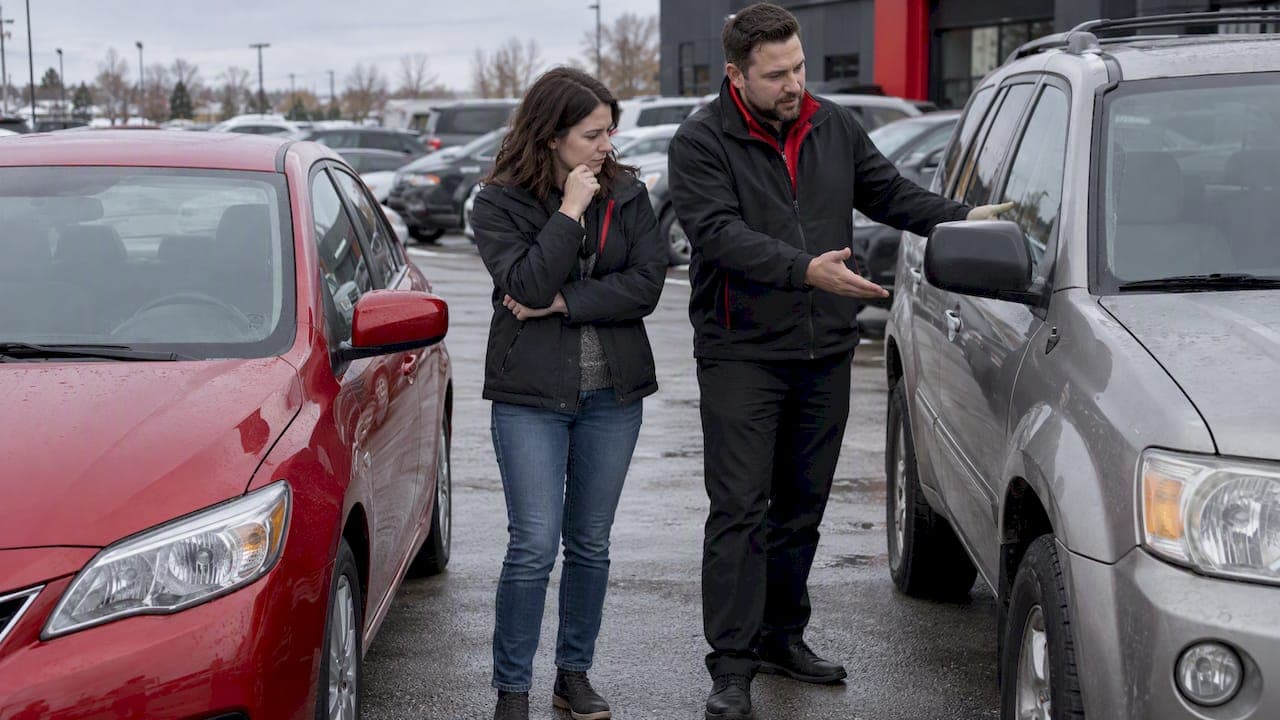
Neither number always wins on its own. Condition and documented maintenance usually matter more than mileage or age alone, so treat both figures as clues, not verdicts. As a quick rule of thumb: favor newer, higher-mileage cars when you plan to own short-term or want modern safety features, and favor older, low-mileage cars when they come with strong upkeep records and you want long-term value. The checklist below walks through exactly how to tell the difference.
TL;DR:
- High mileage cars can still be reliable if they have a strong maintenance history, especially if driven mainly on highways with less engine stress.
- Age-related issues such as cracked rubber parts and rust are common in older cars and may not be visible in a quick walk-around.
- A vehicle history report, recall status, and a thorough independent inspection provide more reliable information than odometer readings alone.
- Buying short-term favors newer, high-mileage vehicles with current safety features, while long-term ownership benefits from focusing on service records and overall condition.
- Regional factors and parts availability can significantly influence the long-term viability of an older vehicle, especially if it is out of production or a discontinued model.
Table of Contents
- What mileage and age each tell you about a car
- How to read mileage benchmarks and spot red flags
- How to evaluate age and when it outweighs mileage
- Your pre-purchase checklist before you buy
- What reputable dealers document and how Elmwood Auto Sales applies these standards
- How ownership horizon should shape your decision
- Why Elmwood Auto Sales makes this easier to get right
- Sources
- FAQ
What mileage and age each tell you about a car
Mileage is mostly a story about wear. Higher miles mean more cycles on the engine, transmission, brakes, and suspension, and more chances that routine service items like belts, fluids, and tires are due. Age tells a different story: time itself breaks down rubber hoses, gaskets, and seals, and it causes corrosion even on vehicles that rarely left the driveway.
That's why the two numbers point to different risks:
- Mileage-driven problems tend to show up as mechanical wear: worn brake pads, a transmission nearing rebuild territory, or a timing belt that's overdue.
- Age-driven problems tend to show up as material failure: cracked rubber, dried-out gaskets, and rust in places a visual check might miss.
- Age also affects features, not just parts. A car's model year determines which safety systems it shipped with, and missing tech like automatic emergency braking or a backup camera can matter more to some buyers than an extra 20,000 miles would.
Consumer Reports notes there's no strict rule here. The advice is to check maintenance and repair history directly rather than letting either number make the decision for you, since newer vehicles can carry safety and fuel-economy advances that shift the balance toward age for some buyers.
How to read mileage benchmarks and spot red flags
Start with a simple yardstick. The typical range is about 12,000 to 15,000 miles driven per year, according to Kelley Blue Book, which uses that benchmark to flag odometer readings that look unusually high or low for a car's age. A car sitting far above that range isn't automatically a bad buy, and one sitting far below it isn't automatically a good one.
The type of miles matters as much as the count. A seller's claim of "mostly highway miles" is worth asking about, since steady highway driving puts less stress on an engine and transmission than frequent short trips and cold starts, per KBB's own used car guidance.
To verify what you're being told:
- Compare the current odometer reading against service records and past inspection stickers to check the numbers line up over time.
- Pull the title history and look for inconsistencies in mileage reported across sales.
- Run a vehicle history report and cross-check it against the seller's story for gaps or jumps.
Pro Tip: Ask for dated service receipts going back as far as the seller has them. A consistent paper trail says more than the odometer number alone.
How to evaluate age and when it outweighs mileage
Age-related wear often hides in places a quick walk-around won't catch. Before you focus on the odometer, look for signs that time, not driving, has taken a toll:
- Dry, cracked rubber on hoses, belts, and window seals, which happens even on cars with very few miles.
- Rust or corrosion around wheel wells, the undercarriage, and the frame, especially in cars from regions with road salt.
- Faded or sun-damaged interior plastics and dashboards, a sign of long-term sun exposure.
- Outdated safety equipment compared to newer model years, since federal safety requirements and standard features change over time.
Older vehicles also carry a practical risk beyond wear: parts availability. Once a model is discontinued or a generation ages out of common use, finding replacement parts can take longer and cost more.
That said, an older low-mileage car can still be the smarter buy. It can work well for collectors, for buyers who only need a car for a short stretch, or for anyone on a tight budget who gets a clean inspection and a clear history report before signing anything.

Your pre-purchase checklist before you buy
A number on a sticker won't tell you what you need to know. These steps will:
- Order a vehicle history report through NMVTIS, which can reveal title problems, salvage status, and odometer inconsistencies, though it won't tell you about mechanical condition.
- Run the car's 17-character VIN through NHTSA's recall search and ask the seller for documentation that any open recalls were completed.
- Schedule an independent pre-purchase inspection with a mechanic who has no stake in the sale. A solid inspection report covers the engine, transmission, brakes, suspension, and frame, not just a quick glance under the hood.
- Take a real test drive and pay attention to unusual noises, how the transmission shifts, brake responsiveness, HVAC performance, and whether electrical systems like windows and lights all work. Worn pedal pads, a sagging driver's seat, or uneven tire wear can hint at true usage that doesn't match the odometer.
- Ask for the FTC Buyers Guide sticker required on used cars, and get any seller promises about repairs or warranty coverage in writing.
Pro Tip: Treat the history report and the inspection as two different tools. One checks the paperwork, the other checks the metal.
What reputable dealers document and how Elmwood Auto Sales applies these standards
A trustworthy seller should be able to show you proof, not just tell you a car is sound. At Elmwood Auto Sales, every vehicle goes through a thorough inspection before it reaches the lot, and the sales process is built to be low-pressure rather than driven by commission targets.
Here's what buyers should expect to see documented, whether at Elmwood or anywhere else:
- Brake, tire, and suspension condition noted in writing, not just mentioned verbally.
- Fluid levels and belt or hose condition checked and recorded.
- VIN-based recall status confirmed, with proof of any completed repairs.
- Safety system function, including lights, airbags, and seatbelts, verified before sale.
For buyers with less-than-perfect credit, Elmwood also offers tailored financing, including buy-here-pay-here options, which can make a well-inspected car accessible without the risk of an undocumented private sale.
How ownership horizon should shape your decision

Match the trade-off to how long you'll actually keep the car. If you're buying short-term, lean toward a newer vehicle even with higher mileage, since you'll benefit more from current safety tech than you'll suffer from the extra miles. If you're buying for the long haul, prioritize maintenance records and overall condition over either number, since unexplained high mileage becomes a bigger risk the longer you plan to keep driving. On a tight budget, an older low-mileage car can work, provided the inspection and parts availability both check out.
Why Elmwood Auto Sales makes this easier to get right
Checking history reports, recall status, and inspection documentation on your own takes time, and not every seller makes it easy to get straight answers. Some dealerships build that verification into the process before a car reaches the lot, so you're not starting from zero.
When you visit, ask to see the inspection report, recall-repair receipts, and the required Buyers Guide, and expect straightforward answers without pressure to decide on the spot. From there:
- Browse current inventory to see what's available now.
- Use the Car Finder if you have a specific vehicle in mind.
- Schedule a test drive once you've narrowed down a few options.
If you're also looking to sell or trade in your current vehicle, Elmwood's trade-in program and appraisal process can factor into your next purchase.
Sources
Lean on official resources rather than seller claims alone. NMVTIS covers title and salvage history, NHTSA's recall search confirms open safety recalls by VIN, and the FTC's used car guidance explains your rights under the Buyers Guide rule. Consumer Reports and Kelley Blue Book are useful for researching how a specific model tends to hold up over time.
- NMVTIS vehicle history / buying tips
- NHTSA vehicle safety recalls
- Is age or mileage more important when buying a used vehicle? - Consumer Reports
- Buying Older, Used Cars in 2026 - Kelley Blue Book
FAQ
Is age or mileage more important?
Neither consistently wins. Consumer Reports advises checking maintenance and repair history directly, since a well-maintained higher-mileage car can outlast a neglected low-mileage one.
Is 50,000 miles on a 2 year old car bad?
That works out to annual mileage well above the typical 12,000 to 15,000 mile benchmark. It isn't automatically a problem if the miles are mostly highway driving and the service history is clean, but it's worth asking directly how the car was used.
Is a 20 year old car with 100,000 miles good?
That averages to annual mileage well under the typical benchmark, which can mean lighter mechanical wear but more age-related issues like dried rubber seals and corrosion. An independent inspection is the only reliable way to know which risk applies.
Is it a good idea to buy a 10-year-old car with low miles?
It can be, provided the inspection confirms age hasn't caused hidden problems like cracked hoses, worn seals, or rust that low mileage alone wouldn't prevent. Check parts availability for the model too, since older vehicles can be harder to source replacement components for.
— Elmwood