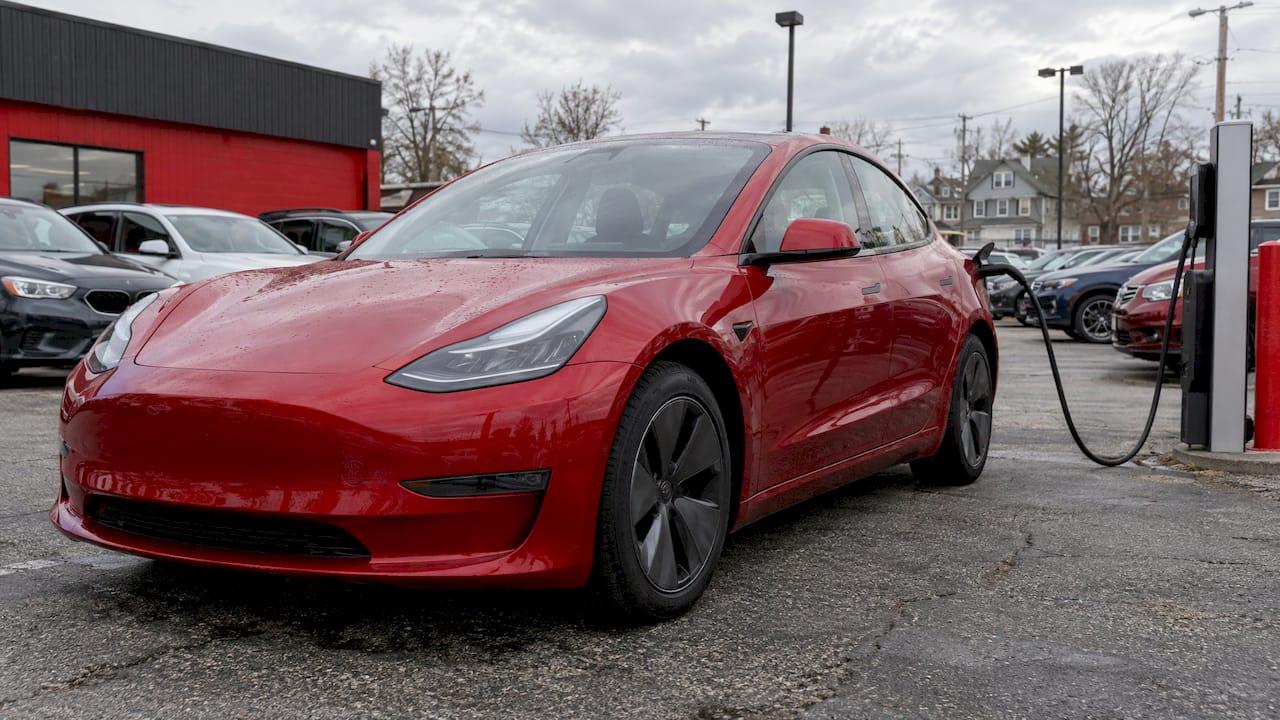
A used EV can be a smart buy if you can charge at home, your daily driving fits the car's range, and the battery checks out before you sign. The savings are real: cheaper fuel, lighter maintenance and steep early depreciation. The risks are also real: battery wear, slower charging on older models and a thinner pool of reliable history. This guide gives you both sides in plain numbers, then a short checklist you can use on any used vehicle you are considering.
TL;DR
- Used EVs often cost less to run: AAA found used EVs saved nearly $7,000 over five years in fuel and at least 20% in maintenance, repair and tires compared with gas vehicles.
- Battery health is the biggest value factor. Ask for a state-of-health reading, not just mileage, and confirm the battery warranty transfers to you.
- Older EVs can charge slowly and some use ports that most fast chargers do not support, so match the car to how and where you charge.
- Without home charging, a used hybrid or gas vehicle may suit you better, and the same inspection and warranty questions apply.
- If you are financing, get your approval sorted before you shop so you can compare cars on monthly payment.
Table of Contents
- What are the main pros of buying a used EV?
- What are the cons of buying a used EV?
- How long do EV batteries last, and what wears them out?
- How do you check the battery health of a used EV?
- What does the "80% rule" mean for used EVs?
- What is the best used EV for your situation?
- What will a used EV really cost to own?
- How does financing change the decision?
- Where Elmwood fits in your search
- Our perspective
- FAQ
- Sources
What are the main pros of buying a used EV?
Lower fuel and maintenance costs
EVs have no spark plugs, oil changes or timing chains, and regenerative braking (the motor slows the car and recovers energy) reduces brake-pad wear. Edmunds reports that Ford estimates routine maintenance for the all-electric Mustang Mach-E at about $760 over five years or 75,000 miles, against nearly $1,600 for a similarly sized gas Escape.
AAA's Used EV Buyers Guide cites its 2022 Your Driving Costs study: used EVs saved nearly $7,000 over five years in fuel, plus at least 20% less in maintenance, repair and tires than comparable gas vehicles. Your own savings depend on local electricity rates and how much you drive, so run your own mileage through the math.
A lower price for a newer car
Consumer Reports notes that used EVs are among the most budget-friendly used cars, with some models well below $10,000. Because EVs tend to depreciate faster than gas or hybrid cars, you may get a newer, better-equipped EV for the price of a comparable gas model.
The gap varies by model and market. Motor Trend quotes an industry analyst saying used EVs averaged less than $2,000 below comparable gas vehicles in mid-2025, and that 43 percent of used EVs were priced under $25,000 in May 2025. Shop the specific model, not the category.

Lower mileage and fewer things to neglect
Many new EVs are leased with low annual mileage limits. Car and Driver says that means you can find three-year-old EVs with under 30,000 miles, sometimes under 15,000. Motor Trend's source adds that because EVs need little service, there are fewer maintenance items a previous owner could have skipped, which makes a used EV easier to verify than many used gas cars.
A battery warranty that may still be active
Nearly all EVs carry a battery warranty of 8 years or 100,000 miles, according to Consumer Reports. The sweet spot is an EV that is still inside that coverage but has already lost enough value to give you real savings.
Environmental payback
A Union of Concerned Scientists study, summarized by Edmunds, found battery electric cars make up for their higher manufacturing emissions within 18 months of driving, and sooner for shorter-range models.
What are the cons of buying a used EV?
Battery wear is the big unknown
The battery is the most important indicator of a used EV's value, says DEKRA's guide to used EV battery health. Out-of-warranty replacement is expensive: NPR reports roughly $5,000 to $20,000, and WIRED puts it between $5,000 and $16,000. That is why the checks below matter more than the sticker price.
Shorter range
AAA's guide cites U.S. Department of Energy data: the average 2021 model-year range was 403 miles for gasoline vehicles and 234 miles for all EVs, about 42% less. Older EVs and worn batteries reduce that further. Add up your longest regular round trip before you shop.
Slower or incompatible charging on older models
Consumer Reports says most older EVs accept a maximum of 50 kW, so they cannot take advantage of faster chargers. Its example: a 2017 Chevy Bolt adds about 2.9 miles of range per minute at a 350 kW charger, while a 2022 Hyundai Ioniq 5 adds up to 11.6.

Some models, including the Nissan Leaf, Kia Soul EV and Mitsubishi i-MiEV, use CHAdeMO ports, which most U.S. DC fast chargers do not support. Adapters can cost hundreds of dollars and may not work everywhere. Some 2017-and-earlier Leafs have a 3.3 kW onboard charger and took about 8 hours to charge from empty at home.
Home charging setup costs
Edmunds reports home-charging equipment runs from under $300 to over $1,000 before installation, and electrician work can range from a few hundred to several thousand dollars. If you rent or park on the street, charging becomes a daily logistics question.
Reliability is not yet on par with gas cars or hybrids
Consumer Reports says EV reliability does not yet match gas cars or hybrids, especially for EVs 10 years old or more. If you plan to keep a car a long time, weigh that against the savings. Our guide to hybrid battery replacement cost is useful if a used hybrid is on your shortlist too.
How long do EV batteries last, and what wears them out?
The U.S. Department of Energy's National Renewable Energy Laboratory says modern EV batteries last 12 to 15 years in moderate climates, as summarized by the California Clean Cars program, and operate for 100,000 to 200,000 miles. Real-world data is encouraging:
- AAA reports an average degradation rate of 2.3% per year from a 2025 study, and says fewer than 1% of EVs operating for 10 years have needed battery replacements, per Plug In America.
- NPR reports Recurrent data from more than 30,000 drivers: most brands keep 95% or more of expected range after three years, and only 8.5% of EVs 10 or more years old have had a battery replaced.
- Car and Driver reports a crowdsourced study of Tesla owners in the Netherlands showing about 5% degradation at 50,000 miles.
Habits and climate move the numbers. Geotab's 2025 fleet study, summarized by FleetOwner, found EVs that fast-charge more than 12% of the time degrade about 2.5% per year, against 1.5% for infrequent fast chargers. Hot climates (above 77°F more than 35% of the time) add about 0.4% a year. A peer-reviewed state-level modeling study estimated battery life to a 30% degradation limit at 5.2 years in Florida and 13.3 years in Alaska, so a car that spent its life in a hot state deserves a closer look than one from a cool one.
How do you check the battery health of a used EV?
DEKRA explains that State of Health (SoH) compares a battery's remaining capacity with its capacity when new. An 80 kWh battery at 80% SoH holds 64 kWh. DEKRA says a good SoH for a used EV generally falls between 80 and 100 percent, and that even a 75% battery can have several good years left, especially in city driving.
Here is a practical sequence:
- Do the range test. Car and Driver says to charge the car fully and compare its forecast range with the EPA rating. Within about 10 to 20 percent suggests the battery has plenty of life left.
- Record the dash numbers. WIRED recommends photographing the range estimate, temperature, odometer and efficiency reading so you can compare cars fairly.
- Test charging. Confirm the connector type (CHAdeMO, CCS or NACS) and check that charging time roughly matches the automaker's published 10 to 80% speeds. Much slower than advertised can point to a battery problem.
- Verify the warranty. WIRED and AAA both say to call the automaker with the VIN (vehicle identification number) to confirm the battery warranty transfers to you. The New Jersey DEP's used EV buyer's guide adds that some warranties cover only outright failure, not gradual capacity loss.
- Get a diagnostic. The same guide recommends an on-board diagnostics battery check.
- Check the whole car. Tires, suspension, brakes, cabin and body condition wear like any other vehicle, and a state inspection and vehicle history report still apply.
What does the "80% rule" mean for used EVs?
You will see it used two ways. The first is a charging habit: keeping daily charging between 20% and 80% is easier on the battery, and the New Jersey DEP guide gives the same advice, along with minimizing heat exposure and limiting DC fast charging. The second is a health benchmark: DEKRA's 80 to 100 percent range for a good used battery. Neither is a legal threshold, and warranty terms vary by automaker, so read the specific warranty for the car you are considering.
What is the best used EV for your situation?
A used EV tends to suit you when:
- You can charge at home or work overnight.
- Your regular trips fit comfortably within the car's real-world range.
- You are buying a car that is a few years old, still under its battery warranty.
- You plan to keep it long enough to collect the fuel and maintenance savings.
A used gas or hybrid vehicle may suit you better when you rely on public charging, take frequent long trips or tow, or need a spacious SUV or truck with the widest choice. Consumer Reports suggests thinking about how long you plan to keep the car and whether the savings justify the trade-off against a hybrid. For a deeper look at the numbers, see our comparison of used versus new maintenance costs.
What will a used EV really cost to own?
Build a simple five-year budget before you compare prices:
| Cost | What to include |
|---|---|
| Purchase | Price, taxes, fees, trade-in value |
| Financing | Rate and term, monthly payment |
| Energy | Home electricity plus any public fast charging |
| Charging setup | Equipment and electrician work, if you need it |
| Maintenance | Tires, brakes, cabin filters, inspections |
| Detailing and upkeep | Interior and exterior care; see what car detailing costs |
| Warranty | What remains, what transfers, what an extended plan would add |
Consumer Reports' ownership-cost analysis found that for six of nine EVs under $50,000, first-owner costs were lower than for all three comparable gas vehicles. Used buyers can often do better still, since the steepest depreciation has already happened. Whatever you choose, read how warranties work first: our used car warranty types guide and powertrain warranty explainer show what transfers to a new owner and what does not.
How does financing change the decision?
Price is only half the picture; the monthly payment is what you live with. A lower-priced used car with a clean inspection can beat a pricier one with a better badge. If your credit is thin, new, or bruised, line up financing before you fall for a particular car so you shop within a real budget. At Elmwood Auto Sales, our used car financing offers tailored in-house and third-party options for a range of credit profiles, including buy here, pay here.
Where Elmwood fits in your search
We are a used car dealership in Providence, RI, and our approach is low-pressure: our salespeople do not work on commission, and every vehicle goes through a thorough inspection. If you want help narrowing your options, our Car Finder is built for exactly that, and if you have a vehicle to move, you can trade in or sell your car to put its value toward the next one. You can browse our current used cars, trucks, SUVs and vans at any time.

Whether you land on an electric vehicle, a hybrid or a gas SUV for the family, the process should feel the same: clear information, no pressure and a car you have had properly checked.
Our perspective
Most shoppers who ask us about used EVs are really asking one question: can I trust what is under this car? The honest answer is the same for every vehicle. You trust what has been inspected, documented and explained to you in plain terms.
That is why we work without commission pressure and put every vehicle through a thorough inspection. When no one is paid to rush you, the conversation can be about whether the car fits your commute, your budget and your family, not about closing today.
The EV questions in this guide, battery health, warranty transfer and charging, are good questions for any used car purchase. Ask for the vehicle history report, ask what the warranty covers and ask what the monthly payment will be before you fall for a model. Our financing options are tailored to a range of credit histories, and our team can help you compare vehicles side by side so you can choose with confidence.
Elmwood
FAQ
Should I buy a used EV?
Buy one if you can charge at home, your routine fits its range, and the battery and warranty check out. If you rely on public charging or take frequent long trips, compare it against a used hybrid or gas vehicle at the same monthly payment before you decide.
Is a used EV cheaper than a used gas car?
Often the running costs are lower, and the purchase price can be as well, but it depends on the model. Motor Trend's source put the average used EV price less than $2,000 below comparable gas vehicles in mid-2025, so compare specific cars and your total five-year cost.
How much does a used EV battery check cost?
Independent battery health reports have been reported at roughly $50 to $200 by ok.com, citing providers of such reports. Prices vary, so confirm before booking. Also ask the seller for any dealer or manufacturer battery readout.
Does the battery warranty transfer to a second owner?
Often, but not always. AAA and WIRED both advise calling the automaker with the VIN to confirm the remaining coverage and whether it transfers. The New Jersey DEP also notes some warranties cover only failure, not degradation.
What state of health is good for a used EV battery?
DEKRA says a good SoH generally lies between 80 and 100 percent. At 75%, a car can still serve for several good years, particularly in city driving, but it may sell for less and have noticeably less range.
Sources
- Edmunds: The Pros and Cons of Buying a Used EV
- AAA: Used EV Buyers Guide 2023
- Consumer Reports: What to Know Before Buying a Used Electric Vehicle
- Motor Trend: Should You Buy a Used EV?
- Car and Driver: Your 2026 Guide to Buying a Used Electric Vehicle
- Car and Driver: Electric Car Battery Life
- WIRED: Here's How to Buy the Best Used EV
- DEKRA: Used Electric Cars, What about Battery Health?
- NPR: How long do electric vehicle batteries actually last?
- AAA: How Long Do EV Batteries Last?
- California Clean Cars: EV battery lifespan
- FleetOwner: EV battery degradation
- PMC: Predictive modeling of battery degradation
- New Jersey DEP: Used EV Buyers Guide
- ok.com: Battery Health Check Essential for Used EV Buyers