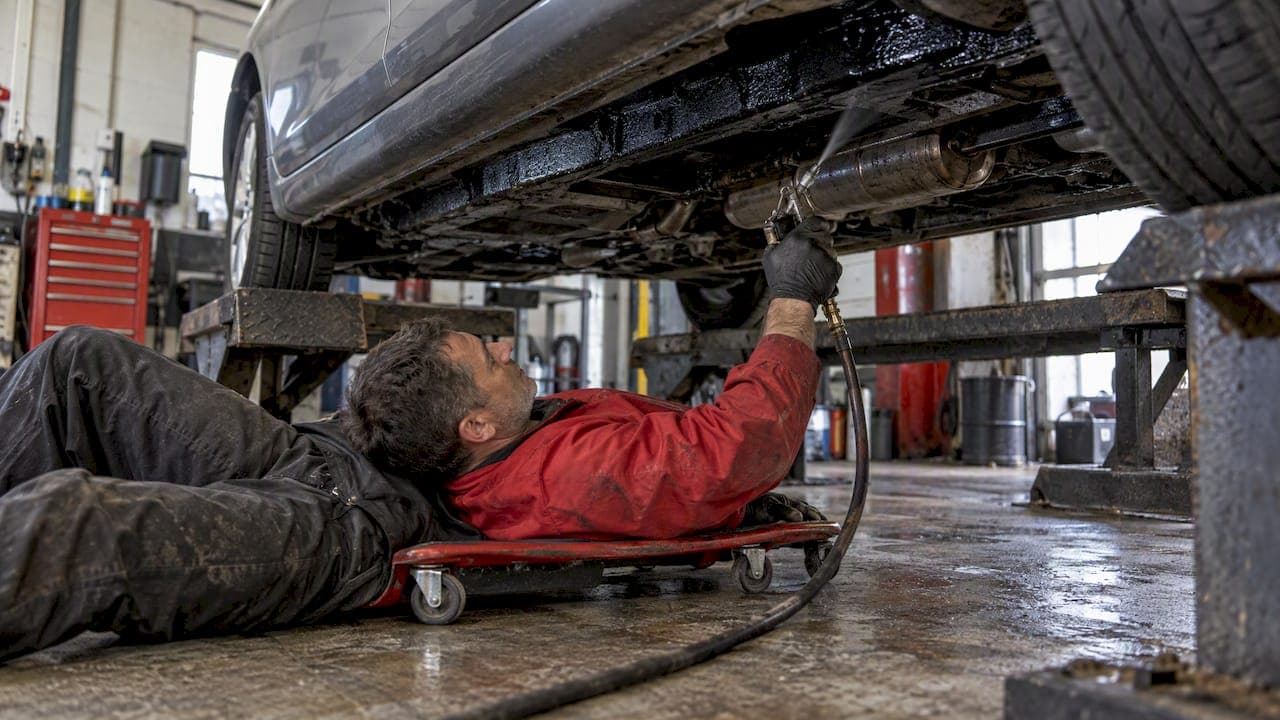
Undercoating can be worth adding to a used car that shows limited existing rust and spends winters on salted roads, especially if you plan to keep the vehicle for several years. It's usually unnecessary on a rust-free, newer used car bought for short-term ownership. The right call depends on three factors: how much corrosion is already visible, how much road salt and moisture the car sees, and how long you intend to own it. The sections below walk through coating types, costs, inspection steps, and when a DIY kit makes sense versus hiring a professional shop.
TL;DR:
- Undercoating is most effective on used cars with some existing rust and prolonged winter salt exposure, especially if the owner plans to keep the vehicle for years.
- It reduces moisture contact to slow rust but cannot repair existing corrosion or replace proper rust treatment.
- Proper application involves thorough inspection, cleaning, rust repair, multiple coats, and adequate curing time, typically best done professionally.
- DIY aerosol kits are suitable for surface rust prevention on clean, rust-free vehicles but are ineffective on heavily rusted or damaged panels.
- A fresh undercoating can hide previous repairs or rust, so buyers should systematically inspect for patchwork, overspray, or uneven texture during viewing.
Table of Contents
- What Undercoating Actually Does (and Doesn't Do)
- When Undercoating Pays Off on a Used Car
- Oil, Wax, Rubberized, or Specialty: Picking the Right Coating
- How a Proper Undercoating Job Gets Done
- What Undercoating Costs and How Often It Needs Attention
- DIY or Professional, and Where Never to Spray
- Hidden Repairs: What Fresh Undercoating Can Mask
- How We Think About Undercoating and Disclosure
- If You'd Rather Skip Aftermarket Coating and Buy Inspected
- FAQ
- Sources
What Undercoating Actually Does (and Doesn't Do)
Undercoating is a sealant or protective layer applied to a vehicle's underbody to slow moisture penetration and corrosion. It coats the metal surfaces underneath the car, the areas most exposed to road spray, salt, and standing water.
What it realistically does:
- Forms a moisture barrier that reduces direct contact between metal and water or salt
- Slows the pace of surface corrosion rather than stopping it outright
- Adds a layer of sound damping, reducing road noise and some vibration
- Provides minor cushioning against small stone chips and debris strikes
What it does not do: undercoating cannot repair structural rust that has already eaten through metal, and it is not a substitute for proper rust repair or panel replacement. Applying a coating over existing corrosion without addressing it first just traps the problem underneath a fresh layer.
When Undercoating Pays Off on a Used Car
Undercoating earns its cost on cars that face real exposure and real ownership time ahead. On a vehicle that already sees winter salt, a fresh coat slows the rate at which new rust forms along seams, wheel wells, and the underbody.
Where it helps most:
- Vehicles driven regularly in regions that salt roads in winter
- Cars with minimal existing rust where prevention still makes sense
- Owners planning to keep the vehicle for several more years
- Buyers who want the secondary benefit of a quieter cabin
Where it's low value: a car that's only a year or two old with a clean undercarriage, a vehicle you plan to flip within a year, or a buyer looking for a cosmetic upgrade rather than corrosion protection. In those cases, the coating is mostly a cost with little return.
Pro Tip: Ask to see the undercarriage before you decide. If it's already clean and rust-free, you may be paying for a treatment that adds little practical value.

Oil, Wax, Rubberized, or Specialty: Picking the Right Coating
Not all undercoating products behave the same way, and the right choice depends on climate, vehicle age, and how much maintenance you're willing to do.
- Oil-based coatings penetrate seams and crevices well but thin out over time, so they typically need reapplication every year or so.
- Wax-based coatings form a surface seal that resists moisture well in moderate climates but can soften in extreme heat and stiffen in deep cold.
- Rubberized or bitumen-based coatings add strong sound deadening and a thick protective layer, though they can trap moisture underneath if applied over existing rust or debris.
- Clear or specialty coatings are designed for specific OEM compatibility and sometimes carry warnings about use over certain factory-applied corrosion protection.
Matching the product to your climate and the car's existing coating matters more than picking the most expensive option on the shelf.
How a Proper Undercoating Job Gets Done
A good undercoating job follows a sequence, and skipping steps is usually what leads to trapped moisture or early failure.
- Inspect and document the undercarriage, noting existing rust, previous repairs, or areas of concern.
- Clean and degrease the surface thoroughly so the coating bonds instead of sealing in grime.
- Address corrosion first, removing loose rust or repairing badly corroded panels before any product goes on.
- Apply the coating in multiple passes. The 3M Undercoating technical data sheet recommends spraying from 8 to 12 inches with roughly 50% overlap and applying up to four coats for maximum protection, reaching about 10 mil of dry thickness.
- Allow cure time between coats. The same data sheet notes a single coat can dry in around 30 minutes under the conditions it specifies, though full cure for multiple coats takes longer.
Professional shops often take more time than a driveway job because they use spray booths, compressors, and may need to complete weld or panel repairs before coating even begins.
Pro Tip: If a shop quotes a same-day turnaround with no mention of prep or cure time, ask exactly what their process includes.
What Undercoating Costs and How Often It Needs Attention
Pricing varies widely depending on whether you choose a DIY aerosol kit or a professional application, and it's worth knowing both ends before agreeing to anything at a dealership.
- DIY aerosol undercoating kits are the lowest-cost option, suited to spot touch-ups or a full underbody job if you're comfortable with the prep work.
- Professional application costs more but includes proper surface prep, multiple coats, and often a warranty on the work.
- Dealership add-on rustproofing tends to run on the higher end of the range.
Consumer Reports has observed dealer rustproofing priced around $600 to $800, often presented as an add-on during financing paperwork rather than something the buyer requested. Reapplication or inspection is commonly recommended every one to three years depending on the product and how much salt exposure the car sees. Between coats, regular washing, especially underbody rinses after winter driving, and periodic spot checks for thinning areas help the coating last as long as it's rated for.
DIY or Professional, and Where Never to Spray
A DIY aerosol kit works fine for touch-ups, spot rust prevention, or a budget-conscious full application on a car with no existing structural corrosion. It's not the right call when there's already rust working through metal or when panel replacement is needed first.
- Never spray undercoating on or near exhaust components, sparks, flame, or other ignition sources, a safety note the 3M Undercoating technical data sheet specifically calls out.
- Avoid moving parts such as driveshafts, suspension joints, and brake components, where a coating can interfere with function.
- Skip fuel openings and fuel lines entirely.
- Hold off on heat shields and anything positioned close to the engine's heat sources.
When a used car has visible rust-through, cracked seams, or previous patch jobs, professional rust repair, including welding or panel replacement, needs to happen before any coating goes on. Covering unresolved corrosion just hides the problem rather than solving it.
Pro Tip: If you're unsure whether a used car needs repair before coating, an independent mobile inspection before purchase, like those listed by Onsite Los Angeles Mechanic, can catch issues a quick look under the car might miss.
Hidden Repairs: What Fresh Undercoating Can Mask

Fresh undercoating on a used car isn't always a selling point. Consumer Reports' used-car inspection guidance warns that a new coat can mask recent welding or replaced body sections, which matters if a seller is trying to hide collision or rust repair rather than disclose it.
Watch for these signs during a viewing:
- Coating that looks noticeably newer or glossier in one area than the rest of the undercarriage
- Overspray on brackets, bolts, or trim that wouldn't normally be coated
- Visible weld marks or patching peeking out from under the coating
- Uneven texture suggesting multiple coating jobs at different times
A short checklist on-site helps:
- Ask when the undercoating was applied and why.
- Compare texture and color consistency across the full underbody.
- Look closely at seams and wheel wells for patch lines.
- Request any service records tied to the coating or repair work.
Our 10 minute used car rust checklist walks through how to tell cosmetic surface rust from a structural problem, and our longer inspection guide covers what to request from a seller before you commit.
How We Think About Undercoating and Disclosure
When we evaluate a used car's undercarriage, we document its condition honestly rather than defaulting to a blanket coating recommendation. A car with a clean underbody doesn't need the same treatment as one that's spent years on salted roads, and we tell buyers which situation they're looking at.
Our advice to any used car buyer, whether you're shopping with us or elsewhere: ask the seller for undercarriage photographs, request service records, and don't take a shiny fresh coat at face value without knowing what's underneath it.
— Elmwood
If You'd Rather Skip Aftermarket Coating and Buy Inspected
We'd rather hand you a used car with a documented, inspected undercarriage than have you guess whether a fresh coat of undercoating is hiding something. We inspect every used car thoroughly before offering it to buyers, and we don't rely on commission-based sales tactics during the sales process.
- Browse our current inventory of used cars, trucks, SUVs, and vans
- Use our Car Finder to request a specific vehicle with documented condition
- Apply for financing, including options for a range of credit histories
- Get a trade-in appraisal if you're looking to put your current car toward something newer
If a clean, inspected used car sounds better than betting on aftermarket rustproofing, start with our inventory and let us walk you through what we found during inspection.
FAQ
Is it good to undercoat your car?
Undercoating is good for a used car with limited existing rust that faces regular road salt exposure, since it slows future corrosion. It offers little added value on a newer, rust-free car or one you plan to sell soon.
Where should you not spray undercoating?
Never spray undercoating on exhaust components, sparks, flame, or other ignition sources, a safety warning included in the 3M Undercoating technical data sheet. Also avoid moving parts like driveshafts and suspension joints, along with fuel lines and heat shields near the engine.
Is used motor oil good for undercoating a car?
Used motor oil is not a recommended undercoating product because it lacks the formulation, adhesion, and drying properties of purpose-built coatings. It can also drip, attract dirt, and create a mess rather than forming a stable protective layer.
Can I undercoat my truck myself?
Yes, a DIY aerosol kit works for a truck with no existing structural rust, as long as you clean and degrease the underbody first. If there's visible rust-through or prior patch work, address that repair before applying any coating yourself.