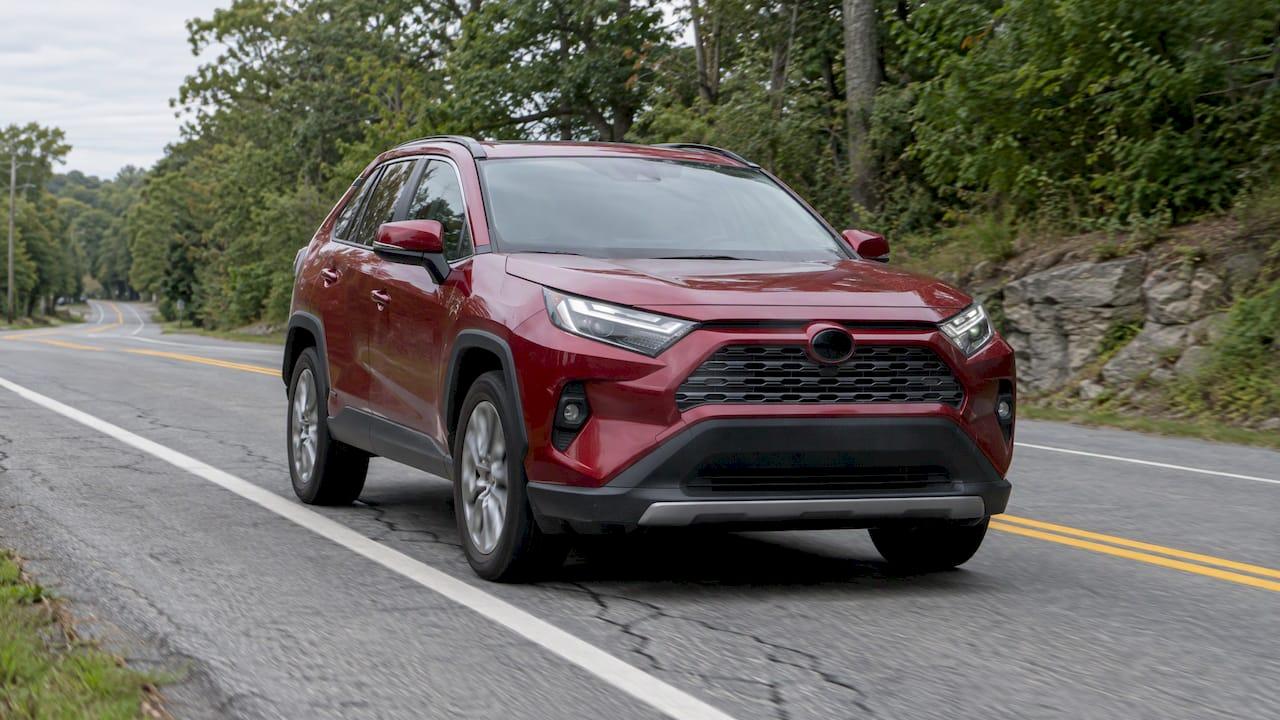
Lane departure warning (LDW) only tells you that you are drifting out of your lane. Lane keep assist (LKA) goes a step further and steers the car back. A third system, lane centering, steers continuously to hold you near the middle of the lane. NHTSA draws the same line: warning-only technology alerts the driver, while assist technology takes action. If you are shopping for a used car, knowing which of these a vehicle has helps you compare listings fairly and judge the car on a test drive.
TL;DR
- Lane departure warning alerts you with a beep, a vibration or a light. It does not steer.
- Lane keep assist adds a steering correction, or braking on one side, when you drift without signaling.
- Lane centering keeps steering all the time to hold the car near the middle of the lane, and many brands require adaptive cruise control to be on.
- Carmakers use different names for the same features, so read the owner's manual and feel the system work on a test drive.
- None of these systems drives the car for you. You stay responsible for steering and attention.
Table of Contents
- What does lane departure warning do?
- What does lane keep assist do?
- How is lane centering different from lane keep assist?
- Side-by-side: warning, assist and centering
- Does any of this mean the car drives itself?
- When can lane systems misread the road?
- What are the most common complaints about these systems?
- How do you tell which system a used car has?
- Which should you choose: warning, assist or centering?
- Our perspective
- Ready to find a used car with the features you want?
- FAQ
- Sources
What does lane departure warning do?
Lane departure warning is the simplest of the three. A forward-facing camera watches the painted lane lines, and when the car starts to cross one without the turn signal on, the system alerts you. NHTSA describes it as a system that monitors lane markings and alerts the driver, and it does not take action to avoid a crash.
The alert can take a few forms. Consumer Reports lists visual, audible and tactile warnings, such as a steering wheel or seat vibration. Many drivers find a vibration less annoying than a repeated beep. The same guide notes that these systems stay quiet when your turn signal is on, since the car assumes you are changing lanes on purpose.
The upside of a warning-only system is that you keep full control of the wheel. The car tells you something and you decide what to do. The downside is that it cannot help if you do not react.
What does lane keep assist do?
Lane keep assist uses the same camera and the same view of the lane lines, but it acts. NHTSA explains that lane keeping assistance detects an imminent unintentional departure and then corrects steering, or brakes or accelerates one or more wheels, to return the vehicle to its intended lane.
In everyday driving, this feels like a gentle nudge on the steering wheel as you approach the line. Autoblog notes that LKA can correct the path through steering, one-sided braking, or both, and that it is easily overridden by your own steering input. If you really do want to move over, you can simply steer through the nudge.
LKA reacts only when you are near or over a line. Consumer Reports' 2026 feature-name guide defines it as steering support that kicks in when the vehicle approaches or crosses a lane line or road edge. Between those moments, the car does not steer for you.
How is lane centering different from lane keep assist?
This is the question behind the second most common search on this topic, and it is the one that causes the most confusion. The easiest way to remember it: lane keep assist is a safety net at the edges, while lane centering is a steady hand in the middle.
NHTSA describes lane centering assistance as a camera-based system that monitors lane position and continuously applies steering inputs to keep the vehicle centered within its lane. Consumer Reports defines it as steering support for continuously keeping the vehicle at or near the center of the lane.
You may notice the difference on a long highway stretch. With LKA alone, you can drift toward one line, get corrected, then drift toward the other line. With lane centering active, the car works to hold a steadier path. Autoblog adds that lane centering behaves more like a semi-autonomous system than LKA does.

Lane centering is also tied to cruise control in many cars. The Consumer Reports guide says it is usually switched on with a steering-wheel button showing lane lines beside a steering wheel, and many brands need adaptive cruise control running before it works. If a listing mentions adaptive cruise, our adaptive cruise control explainer covers how that half of the pairing works.
Side-by-side: warning, assist and centering
| Feature | What it does | When it acts | Who steers |
|---|---|---|---|
| Lane departure warning | Alerts you with a sound, light or vibration | When you drift over a line without signaling | You |
| Lane keep assist | Nudges the car back toward the lane | When you approach or cross a line | You, with a correction from the car |
| Lane centering | Keeps the car near the middle of the lane | Continuously while switched on | Shared: the car steers, you supervise |
NHTSA's Vehicle Shopper's Guide sums up the same three functions: detect and warn, steer back when you drift, and provide continual steering to stay centered.
Does any of this mean the car drives itself?
No. Consumer Reports states that none of the three is designed to steer a car without the driver's input. When lane centering is paired with adaptive cruise control, Consumer Reports calls the combination active driving assistance, and the driver must supervise it constantly.
Consumer Reports' vehicle technology manager, Kelly Funkhouser, calls lane centering a convenience system that is no substitute for staying in control of the vehicle. That is the right way to think about all three features: they add a margin for error, and your attention is still what keeps you safe.
The safety case for them is real. The Insurance Institute for Highway Safety (IIHS) cites its research that 34% of drivers who crashed after drifting from their lanes were sleeping or otherwise incapacitated. It also reports that crashes with fixed objects after leaving the road accounted for 32% of passenger-vehicle occupant deaths in 2019. These systems exist to catch exactly those moments of drift.

When can lane systems misread the road?
All three rely on a camera reading the road, so they work best when markings are clear on both sides. Consumer Reports lists several conditions that can confuse them:
- Multiple sets of markings in construction zones
- Faded or snow-covered lane lines
- Markings that suddenly disappear or merge
- A camera lens blinded by direct sunlight
A 2025 academic study of production-vehicle lane keeping found that faded markings, low contrast between pavement and paint, and sharp curves were the main causes of malfunction, and that bad lighting, complex road geometry and bad weather together raised the chance of failure. A safety-systems overview filed with NHTSA adds that guard rails and barriers can be mistaken for lane lines, and that tar stripes, skid marks and high-contrast shadows can trigger false alerts.
That matters in Rhode Island, where winter salt, snow and patched pavement wear lane paint down. Treat the systems as a helper on well-marked roads and expect them to step back when markings fade.
What if the camera view is blocked or off?
The lane camera usually sits at the top of the windshield, so anything that changes its view can affect how the system behaves. If warnings seem wrong or the system keeps shutting off, there are symptoms that point to a misadjusted ADAS camera worth knowing about, since the camera's position and calibration shape how accurately it reads the lane. Mention any such behavior on a test drive and ask about it before you decide.
What are the most common complaints about these systems?
The most frequent complaint Consumer Reports hears about lane departure warning is false alerts when drivers cross a line on purpose, for example to give room to a cyclist or a runner. Some drivers find the beeps so frequent they turn the feature off. Consumer Reports' 2022 safety features article also notes that drivers generally prefer steering-wheel or seat vibration over beeps, and that some systems can feel too aggressive when you are deliberately crossing a line.
That is why the feel of the system matters as much as its presence. IIHS research found that lane keeping systems giving earlier and more frequent steering input were used more by drivers than systems with later, less frequent interventions. A system you are comfortable with is a system you will leave on.
How do you tell which system a used car has?
Names differ by brand, and NHTSA says so directly: manufacturers use different names for the same technologies, so the function matters more than the marketing label. Use this routine when you look at a used car:
- Read the feature list on the listing. Look for terms like lane departure warning, lane keeping assist, lane centering or a brand-specific name, and note whether adaptive cruise control is listed alongside.
- Check the owner's manual. NHTSA recommends it for learning how the specific technology works. The manual tells you whether the feature only warns or also steers, and what its limits are.
- Find the switch. Per Consumer Reports, LDW and LKA are often linked and on by default, with a button showing a car between lane lines or a menu setting to turn them off. Lane centering usually has a steering-wheel button.
- Know the model year. These features became common on newer vehicles, so a 2017 car and a 2024 car of the same model can differ a lot in what they offer.
- Test it on the road. Consumer Reports advises trying the systems on an extended test drive if you expect to use them.
What should you try on the test drive?
Drive on a road with clear lane lines and let the car drift slightly toward one line without signaling. Notice whether you get a beep, a vibration, a steering nudge, or nothing. Then signal and change lanes to confirm the system stays quiet. If the car has lane centering, try it on a highway with adaptive cruise on, keeping your hands on the wheel. Ask yourself whether the alerts feel helpful or distracting, because that decides whether you will keep them on.
You can book a time to drive a vehicle on our test drive page.
Which should you choose: warning, assist or centering?
For most first-time buyers and families, a car with lane departure warning plus lane keep assist is a solid, practical level of help. It adds a corrective layer without changing how you drive. If you commute on highways like I-95 or Route 146 and want less steering fatigue, lane centering with adaptive cruise control adds comfort, as long as you keep supervising.
A few practical points to weigh:
- Budget. Features vary by trim level and model year, and they are one of many things that shape a used car's price alongside mileage and condition.
- Family use. If you are comparing SUVs and trucks for a family, treat lane features as a bonus alongside seating, cargo space and safety ratings.
- Your driving style. If you dislike beeps, test how the system alerts you before you commit.
If you want a hand narrowing choices by feature, our Car Finder is built for matching you with a vehicle, and you can browse the current used inventory any time. Recent models such as a 2022 Honda Accord or a 2024 Honda CR-V Hybrid are examples of the newer vehicles in the range where you can compare feature lists directly on each listing.
Our perspective
Most buyers do not walk onto a lot asking about lane departure warning versus lane keep assist. They ask whether a car is reliable and whether they can afford it. Driver assistance features belong in that same conversation, because they affect how a car feels every day.
At Elmwood Auto Sales, we do not run on commission-based sales tactics, so there is no pressure to rush you past a feature you do not understand. Take the time you need on a test drive, try the lane systems, and ask us questions. Every vehicle we sell goes through a thorough inspection, and we want you to leave knowing exactly what you are buying.
We also know that a good car is only part of the decision. Our financing options, including buy here, pay here, are designed for a range of credit histories, so the car you want with the features you want can fit your budget.
Elmwood
Ready to find a used car with the features you want?
Elmwood Auto Sales in Providence, RI offers inspected used cars, SUVs, trucks and vans, along with financing for a range of credit profiles and trade-ins on your current vehicle. If you already know you want lane assistance, tell us, and we can help you look.
Start with our used car financing application to see your options, or use the trade-in page if you have a vehicle to put toward your next one.
FAQ
What is the difference between lane assist and lane departure warning?
Lane departure warning only alerts you, with a sound, light or vibration, when you drift over a lane line. Lane assist, usually called lane keep assist, also applies a steering correction or one-sided braking to bring the car back. Both stay quiet if your turn signal is on.
What is the difference between lane keep assist and lane centering?
Lane keep assist reacts only when you approach or cross a lane line. Lane centering steers continuously to hold the car near the middle of the lane. Lane centering usually has its own steering-wheel button, and many brands need adaptive cruise control on to use it.
Can lane keep assist be turned off?
Yes. Consumer Reports says LDW and LKA are often on by default, and can be switched off with a button showing a car between lane lines or through a menu setting. Check the owner's manual for the exact control in your vehicle, since layouts differ by brand.
Why does my lane system not work in some conditions?
The camera needs to see clear lane markings. Faded paint, snow, construction lines and strong sun glare can all confuse it. When markings are unclear, the system may switch off or give false alerts, so keep your hands on the wheel and eyes on the road.
Do these features make a car drive itself?
No. They assist with steering and alerts, but the driver remains responsible for control at all times. Consumer Reports notes that none of these systems is designed to steer a car without driver input.
Sources
- Driver Assistance Technologies, NHTSA
- Vehicle Shopper's Guide: Driver Assistance Technologies, NHTSA
- Lane Departure Warning & Lane Keeping Assist, Consumer Reports
- Clearing the Confusion About Advanced Car Safety Feature Names, Consumer Reports
- Lane-keeping assist and lane departure warning, Autoblog
- IIHS comment on NHTSA docket 2021-0002
- Empirical Performance Evaluation of Lane Keeping Assist, arXiv
- Safety Systems Challenging Scenarios Overview, NHTSA filing
- Symptômes d'un ADAS déréglé