
A safe, comfortable family road trip comes down to six non-negotiables confirmed before you leave: tires checked and inflated to the door-sticker PSI, battery tested or a portable jump starter packed, a spare tire and inflator on board, car seats properly installed and harness-fitted, a first-aid and emergency kit stocked and enough water and snacks to cover unexpected delays. Get those six right, and you've handled the most common reasons family trips go sideways. The rest of this guide, built around the same priorities AAA recommends for pre-trip preparation, walks you through every layer of a thorough family road trip vehicle checklist, from mechanical checks to cabin organization and child entertainment.
Quick pre-departure checklist:
- Tires inflated to door-sticker PSI and spare confirmed
- Battery tested or portable jump starter in the trunk
- All fluid levels topped off (oil, coolant, brake, washer fluid)
- Car seats installed snugly, harnesses at correct height
- First-aid kit stocked and emergency contacts saved
- Water and snacks accessible from the back seat
Pro Tip: If you spot a low tire, a warning light, or a fluid issue the morning of departure, don't guess. Add air, check the level, and if the problem persists, delay your start by an hour and visit a shop. Leaving with a known issue is the one decision that turns a minor inconvenience into a roadside breakdown with kids in the car.
Key Takeaways
A complete family road trip vehicle checklist covers mechanical safety, emergency gear, child passenger safety, and cabin organization in that priority order.
| Point | Details |
|---|---|
| Mechanical checks come first | Tires, battery, fluids, brakes, and lights should be confirmed before any packing begins. |
| Book a pro inspection early | Schedule a multi-point inspection within 14 days of departure to catch issues a DIY check misses. |
| Car seats need verification | Confirm correct seat type, snug installation, and harness fit; have a certified CPST check it when possible. |
| Organize by access frequency | Keep in-drive items in a front-of-trunk tote; pack luggage deepest so you're not unpacking at every stop. |
| Adapt the checklist to your trip | Adjust items for your children's ages, trip length, climate, and vehicle type before finalizing your list. |
Table of Contents
- What does a family road trip vehicle checklist cover mechanically?
- What should your roadside emergency kit include?
- Are your car seats installed correctly for a long trip?
- What documents and planning steps should you complete before leaving?
- How should you pack food, comfort items, and hygiene supplies?
- How do you keep devices charged and kids entertained on the road?
- How should you organize the cabin for a long family drive?
- Why should you book a professional inspection before a long trip?
- What's the 5-minute pre-departure checklist?
- Elmwood Auto Sales' perspective on family trip preparation
- Sources
What does a family road trip vehicle checklist cover mechanically?
A thorough mechanical check before a long drive reduces breakdown risk more than any single piece of gear you pack. Work through this list yourself or hand it to a shop, and you'll cover the systems most likely to strand a family.
- Tires: Check pressure against the PSI listed on the driver's door jamb sticker, not the number molded into the tire sidewall. A loaded vehicle with luggage, car seats, and passengers needs tires at the correct pressure for handling and fuel efficiency. Inspect tread visually using the quarter test: insert a quarter upside down into a tread groove; if you can see the top of Washington's head, the tread is low. Check the spare, too, including its pressure.
- Fluids: Pull the dipstick for engine oil and confirm it reads between the min and max marks. Check coolant in the overflow reservoir (never open a hot radiator cap), brake fluid in its reservoir under the hood, and windshield washer fluid. Low brake fluid can indicate worn pads and deserves a shop visit before departure.
- Battery: A battery older than three years warrants a free load test, available at most auto parts stores. If the vehicle cranks slowly or the battery terminals show white corrosion, address it before the trip. Alternatively, carry a compact portable jump starter with a built-in inflator, which Car & Driver's hands-on testers rate as one of the highest-value accessories for long family drives.
- Brakes, belts, and hoses: Look for cracked or glazed serpentine belts and hoses that feel soft or show bulging. Brake pads with less than 3mm of material need replacement. These are short visual checks; anything uncertain goes to a mechanic.
- Lights and wipers: Test headlights, brake lights, turn signals, and reverse lights with a helper. Replace wiper blades that streak or skip. Worn wipers in a summer rainstorm with kids in the car are a real visibility hazard.
A useful reference for maintenance timing comes from Honeydew's family vehicle-prep checklist, which groups intervals clearly:
| Item | Typical Interval | Notes |
|---|---|---|
| Engine oil change | Every 5,000 miles (synthetic) | Check owner's manual for your vehicle |
| Tire rotation | Every 5,000 miles | Rotate at every oil change as a habit |
| Wiper blade replacement | Every 6–12 months | Replace sooner if streaking appears |
| Air filter | Every 15,000–30,000 miles | Affects fuel economy on long drives |
A loaded family vehicle handles differently than an empty one. Pack heavy items low in the cargo area and centered between the axles. Roof cargo boxes raise the center of gravity and affect handling in crosswinds, so keep them as light as the trip allows.
Pro Tip: For car maintenance scheduling that saves money, align your pre-trip fluid check with your next scheduled oil change. You'll catch two items in one stop and avoid paying for a separate service visit.
What should your roadside emergency kit include?
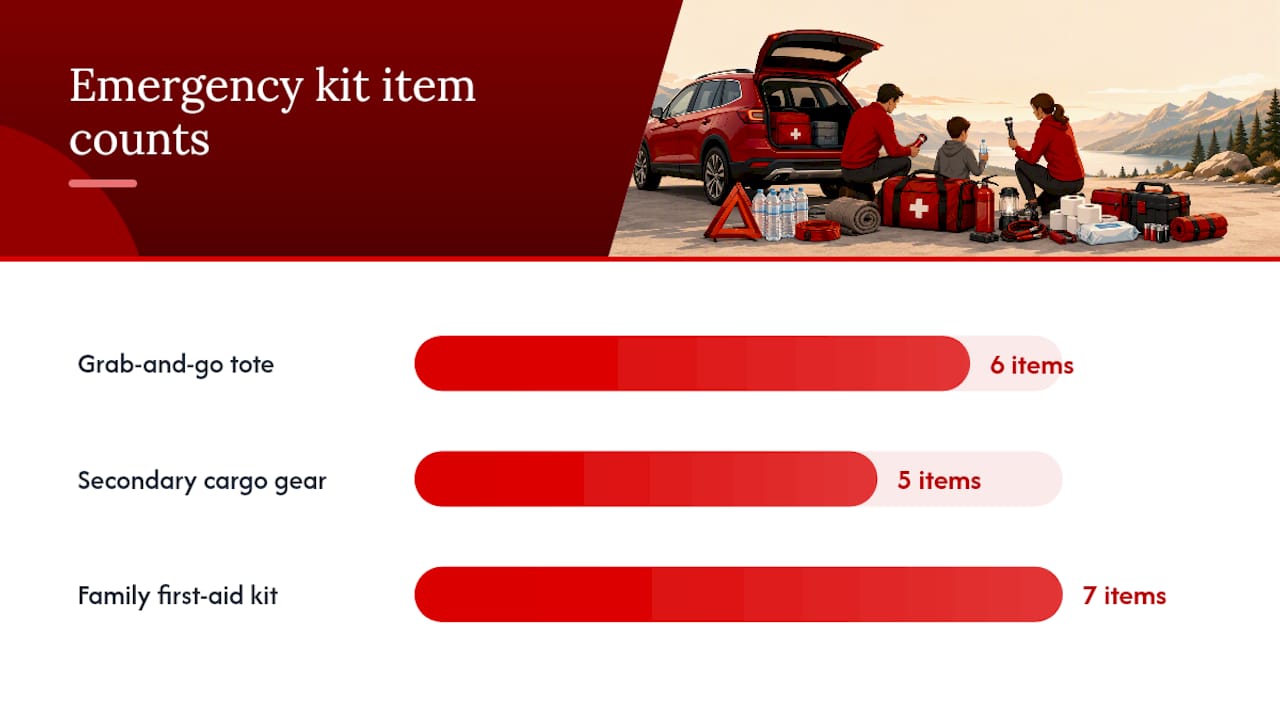
An emergency kit that's actually organized and accessible is worth far more than a bag of gear buried under luggage. Build it in two layers: a grab-and-go tote for the items you'll need fast, and a secondary set of heavier gear toward the back of the cargo area.
Grab-and-go tote (keep near the hatch):
- Portable jump starter with built-in tire inflator
- Flashlight with fresh batteries or a rechargeable model
- Reflective safety triangles or a collapsible safety cone
- Reflective vest (one per adult)
- Basic tool kit: screwdrivers, pliers, adjustable wrench
- Duct tape and zip ties
Secondary emergency gear (cargo area, heavier items):
- Full-size spare tire, jack, and lug wrench (confirm they're present and the spare is inflated)
- Tow strap
- Emergency blankets
- Two liters of water per person as a backup supply
- High-calorie snacks (granola bars, trail mix) for unexpected delays
Family-specific first-aid kit contents:
- Adhesive bandages in multiple sizes
- Antiseptic wipes and antibiotic ointment
- Children's acetaminophen or ibuprofen (age-appropriate dosing)
- Motion-sickness medication for children prone to car sickness
- Tweezers and medical tape
- Instant cold pack
- Any prescription medications your family takes daily
Check expiry dates on medications and antiseptics every six months. A kit that's been in the trunk since last summer may have expired children's acetaminophen when you need it most.
If you need to stop on the shoulder, place reflective triangles at least 100 feet behind the vehicle before opening doors. Keep children inside the car with seatbelts on until you've confirmed it's safe to exit, and always exit away from traffic.
Are your car seats installed correctly for a long trip?
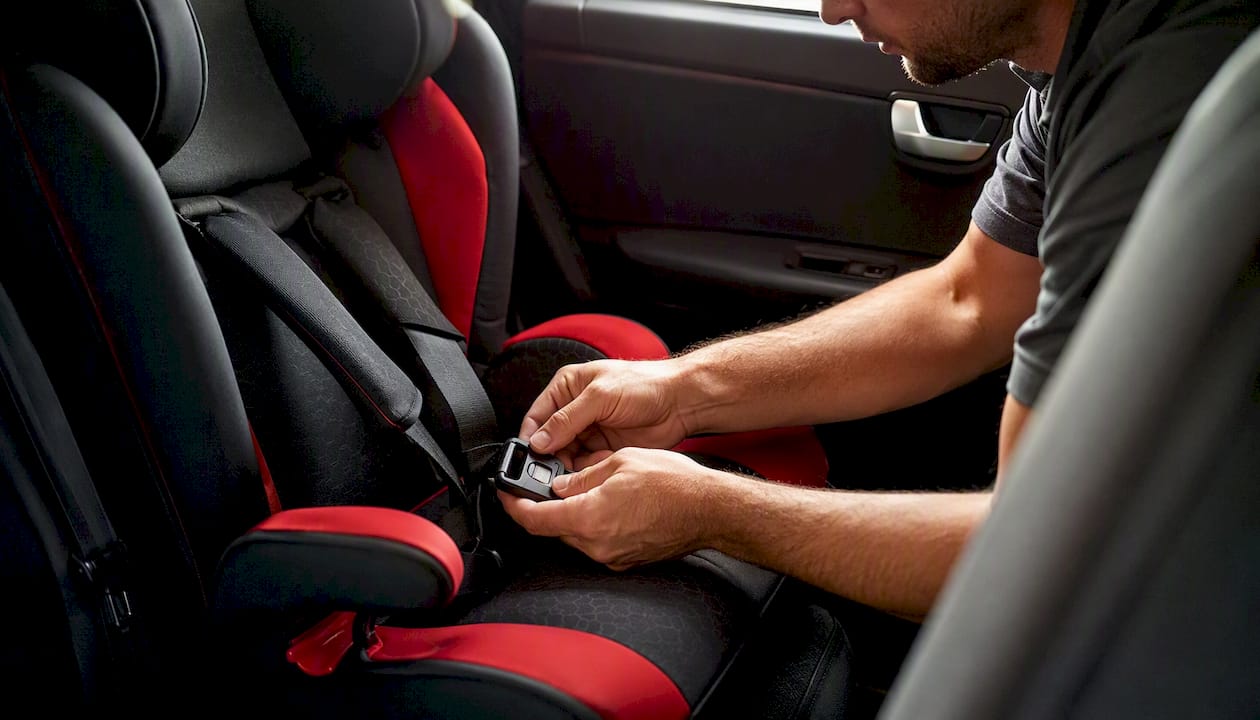
Car-seat errors are far more common than most parents expect. Safe Ride 4 Kids provides a focused checklist and recommends having installations verified by a certified child passenger safety technician (CPST) before a long trip whenever possible.
Car-seat pre-departure checklist:
- Correct seat type for your child's current age, weight, and height (rear-facing, forward-facing, or booster)
- Seat installed with less than one inch of movement at the belt path
- Harness straps at or below the shoulders for rear-facing; at or above for forward-facing
- Chest clip positioned at armpit level
- No bulky winter coats or thick padding under the harness
- Seat base firm against the vehicle seat, not resting on a gap
NHTSA data shows that car-seat misuse is widespread among American families, making pre-trip verification by a certified technician one of the most effective safety steps you can take before a long drive.
State laws on booster seat age and weight minimums vary. Rhode Island's requirements may differ from those in states you'll pass through. Check the specific rules for each state on your route before you leave.
Pro Tip: Find a certified CPST near you through the Safe Kids Worldwide inspection station locator. Many fire stations and hospitals offer free checks. A 15-minute appointment before a long trip is time well spent.
What documents and planning steps should you complete before leaving?
Documents and a simple pre-trip timeline are the organizational backbone of long drive preparation. Gather these before the car is packed.
Documents to keep accessible in the vehicle:
- Driver's license (all drivers on the trip)
- Vehicle registration
- Proof of insurance (digital or printed)
- Roadside assistance number (AAA, your insurer, or manufacturer's service)
- Emergency contacts list (printed, not only on your phone)
- Hotel and reservation confirmations
- Destination-specific information, such as national park entry passes if applicable
When to call whom in a roadside situation:
- Call 911 for any safety emergency, injury, or hazard to other drivers.
- Call roadside assistance for mechanical breakdowns, dead batteries, flat tires, and lockouts.
- Call a tow service directly if your roadside plan doesn't cover your location.
Pre-trip timeline:
- 14 days before: Schedule a professional multi-point inspection. Book early; shops fill up before holiday weekends.
- 7 days before: Confirm reservations, download offline maps, and check state car-seat laws for your route.
- 48 hours before: Top off all fluids, wash the windshield, and charge all devices and power banks.
- Morning of departure: Run the 5-minute pre-departure checklist (see the section below), confirm snacks and water are accessible, and hold a quick family meeting.
Assign tasks by person: one adult handles tires and fluids, the other packs snacks and charges devices. Splitting the list prevents both people from assuming the other covered something.
How should you pack food, comfort items, and hygiene supplies?
Packing for comfort and hygiene is where family travel essentials diverge most from solo road trips. The goal is fewer stops, less mess, and children who stay comfortable for hours at a time.
Food and hydration:
- A soft-sided cooler with ice packs for perishables and cold drinks
- Large reusable water bottles, one per person, filled before departure
- Individual snack packs portioned before the trip (no digging through a bag while driving)
- Napkins, paper towels, and a small pack of wet wipes within reach
- Hand sanitizer clipped to the back of the front seat
Comfort and clothing:
- Travel pillows and a lightweight blanket per child
- Window shades for rear side windows to block direct sun
- One change of clothes per child in an accessible bag, not buried in luggage
- Extra layers for AC-heavy stretches or cooler destinations
Hygiene supplies:
- Diaper bag or portable changing supplies if applicable
- Travel toothbrushes and toothpaste for overnight stops
- Sunscreen and insect repellent packed where you can reach them at rest stops
- Small towel or microfiber cloth
Forbes' road trip packing list highlights coolers, reusable water bottles, chargers, sanitizing wipes, and pre-packed snacks as the items that most reliably reduce stops and keep families comfortable. The BestRoadTrip packing guide adds climate-specific layering, which matters if your route crosses multiple climate zones.
Pro Tip: Pack a separate "hotel bag" with one night's essentials per person. Load it last so it comes out first. You won't need to unpack the entire trunk at every overnight stop.
How do you keep devices charged and kids entertained on the road?
Power management and entertainment planning prevent the two most common mid-trip complaints: dead devices and bored children.
- Phone mount for the driver: A windshield or vent-mounted holder keeps navigation visible and hands-free. Never hold a phone while driving.
- Multiport USB charger: A 4-port car charger handles phones, tablets, and a portable speaker simultaneously. Confirm it fits your vehicle's USB-C and USB-A ports.
- Power banks: Charge two power banks fully the night before. They cover tablets and headphones when the car charger ports are occupied.
- Car power inverter: If anyone needs a laptop, a 150W inverter plugged into the 12V outlet handles it without draining the battery at highway speeds.
- Kid headphones: Volume-limiting headphones (85 dB max) protect children's hearing on long drives. Each child with their own set eliminates audio conflicts.
- Pre-downloaded content: Download shows, audiobooks, and games to devices before leaving. Cellular dead zones are common on rural routes.
- Activity kits and a boredom bag: A small bag of new, inexpensive surprises (a coloring book, a small puzzle, sticker sheets) opened one at a time extends engagement for hours.
- Offline maps: Download your full route in Google Maps or Apple Maps before departure. Keep a printed copy of key turns as a backup.
Pro Tip: Gather all charging cables into a single seatbelt-secured organizer on the center console or front-seat back pocket. Loose cables on the floor get stepped on, tangled, and lost within the first hour.
How should you organize the cabin for a long family drive?
A well-organized cabin reduces the number of times you stop, the amount of mess you manage, and the frustration of not finding something when a child needs it immediately.
What each seat zone should hold:
- Driver zone: Phone mount, one cup of water, sunglasses, and nothing else on the floor or seat.
- Front passenger zone: Navigation backup, snack bag for distribution, wipes, and the accessible emergency tote within reach.
- Back-seat pockets (seatback organizers): Tablets in padded sleeves, individual snack packs, a small water bottle per child, wipes, and a small trash bag hooked to the headrest.
- Trunk/cargo area: Luggage loaded deepest, hotel bag loaded last, emergency kit tote near the hatch, and heavy items low and centered.
A small sealed trash bin with a lid prevents odors from building up on multi-day trips. Bring spare liners so you can swap it at rest stops without searching for a bag.
The AAA road trip checklist reinforces keeping in-drive items accessible and separating them from luggage that stays packed until arrival. Car & Driver's testers also recommend seat organizers as high-value accessories for family trips, specifically for keeping tablets and snacks within reach without creating floor clutter.
Why should you book a professional inspection before a long trip?
A professional multi-point inspection within 14 days of departure is the most reliable way to catch the mechanical issues a family shouldn't discover at highway speed. A quick visual check at home won't reveal a battery that's borderline, a belt that's cracking from the inside, or brake pads that are close to the wear indicator.
A thorough shop inspection typically covers the engine, cooling system, battery and charging system, belts and hoses, brakes, tires (pressure and tread depth), suspension, and AC. For a family trip in summer, AC is not optional; a failed compressor on a hot day with children in the car is a genuine health concern, not just a comfort issue.
A pre-trip inspection gives you documented evidence of your vehicle's condition before you leave. If something fails on the road, that paperwork helps with warranty claims, roadside assistance disputes, and insurance conversations.
Elmwoodautosalesri's multi-point inspection process follows the same comprehensive standard, and every vehicle on the lot goes through it before sale. If you're considering a vehicle purchase before a big trip, the dealership inspection process page explains what that covers in detail.
Pro Tip: Ask the shop for a printed copy of the inspection checklist and photograph any items flagged as "monitor" or "recommend repair." That record tells you exactly what to watch for on the road and what to address when you return.
What's the 5-minute pre-departure checklist?
Run through this list while the family is loading up. It takes five minutes and catches the last-minute items that are easy to overlook.
- Windows and locks: All doors closed and locked, windows up or set as intended.
- Tire pressure glance: Walk around the vehicle. Any tire that looks visibly low gets checked with a gauge before you pull out.
- Fuel level: Fill up before leaving, not at the first highway exit. Starting full gives you flexibility.
- Phone charged and mount secured: Driver's phone at 100%, navigation app open, mount locked in position.
- Snacks and water accessible: Confirm the back-seat snack bag and water bottles are within reach without unbuckling.
Family meeting prompt (say this before you pull out of the driveway):
- "We'll stop every two hours or when someone needs a restroom. Ask before we hit the highway."
- "Devices stay on headphones. If you need something from the snack bag, ask the front passenger."
- "Seatbelts stay on the whole time we're moving. No exceptions."
Before closing the trunk, do a final sweep for loose items that could shift during braking: grocery bags, sports equipment, anything that isn't secured. A heavy bag sliding forward in a hard stop is a hazard. Make sure every child has their comfort item (stuffed animal, blanket, favorite book) within reach so you're not stopping five minutes after departure.
Elmwood Auto Sales' perspective on family trip preparation
At Elmwoodautosalesri, we see families come in regularly after a long trip revealed that their vehicle wasn't quite ready for it. A worn tire, an aging battery, or a cooling system running close to its limit are the kinds of issues a pre-trip inspection catches before they become a breakdown story. Every vehicle we sell goes through a thorough multi-point inspection precisely because we know that reliability isn't a nice bonus for families; it's the baseline expectation.
If you're planning a significant trip and have doubts about your current vehicle's condition, or if you're thinking about upgrading to something with more cargo space and better reliability before the summer, we'd encourage you to browse our family-friendly SUV inventory or schedule a test drive at our Providence location. No pressure, no commission-based sales tactics. Just honest information about what's on the lot and whether it fits your family's needs.
Sources
The checklist in this guide draws from the following sources. Each is worth bookmarking for further reading or verification.
- AAA - Roadside safety & trip prep
- Car and Driver - Road-Trip Essentials Checklist (2026)
- Honeydew - Family Road Trip Vehicle Prep Checklist (2026)
For car-seat laws by state: Visit your state's DMV website or the NHTSA car seats page for current requirements. Laws on booster seat minimums vary by state, and the rules in your destination state may differ from your home state. To find a certified child passenger safety technician near you, use the inspection station locator at Safe Kids Worldwide.