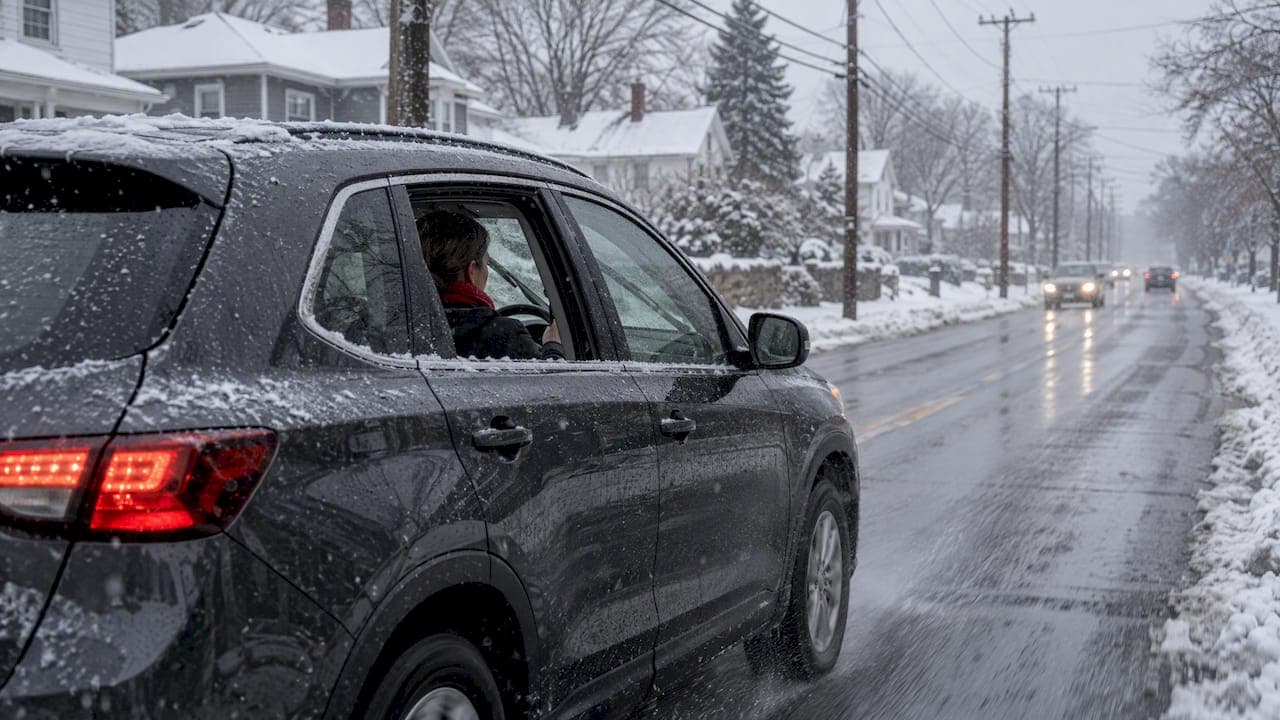
Before you drive anywhere in a Rhode Island winter storm, clear snow and ice from your entire vehicle, including the roof, lights, and plates, top off your fuel tank, and turn your headlights on whenever your wipers are running. These steps satisfy both DMV RI rules and basic safety sense. What follows covers the checklist, the legal fine print, vehicle prep, on-road technique, and what to do if you get stranded.
TL;DR:
- Drivers must clear snow and ice from the entire vehicle, including the roof and license plates, to comply with Rhode Island law and prevent hazards.
- Maintaining at least half a tank of fuel, checking tire pressure and tread, and carrying winter-rated supplies significantly reduces the risk of breakdowns or accidents.
- Slowing down, increasing following distance, and avoiding cruise control are essential to safely navigate snowy or icy roads, especially on bridges and ramps.
- If stranded, staying with the vehicle, running the engine in short cycles, and signaling help with hazard lights or visible markers improve rescue chances.
- Checking weather and road conditions before departure helps prevent getting caught in storms or unsafe driving situations.
Table of Contents
- Quick winter-driving checklist before you leave
- Rhode Island laws and common fines you should know
- Vehicle prep: seasonal maintenance checklist and the emergency kit
- On-road techniques for snow, ice, and low visibility
- If you get stuck or stranded: what to do immediately
- Where to check official road and weather conditions
- Our take on winter-ready used vehicles
- How we help Rhode Island drivers get winter-ready
- FAQ
- Sources
Quick winter-driving checklist before you leave
Rhode Island winters punish drivers who skip the basics. Before you pull out of the driveway, run through this list.
- Clear snow and ice from the roof, hood, trunk, headlights, taillights, mirrors, and license plates, not just the windshield.
- Check wipers, brakes, battery, and antifreeze, and keep the tank at least half full.
- Pack an emergency kit with a flashlight, shovel, warm clothing, blankets, snacks, a tow rope, booster cables, and an ice scraper, as Rhode Island State Police recommend.
- Check tire tread and pressure, and consider winter tires if you commute daily through snow.
- Turn headlights on whenever wipers are running, switch off cruise control, and stow your phone before you start driving.
Pro Tip: Keep your scraper and gloves inside the car, not the trunk. A scraper buried under cargo does you no good at 6 AM with a frozen windshield.
Rhode Island laws and common fines you should know
Rhode Island law puts the responsibility for a clear, visible vehicle squarely on the driver. Under R.I.G.L. § 31-23-16, you're required to remove snow and ice that obstructs your view or could fly off and endanger other drivers. The same DMV guidance requires headlights whenever your wipers are on, whenever visibility drops below 500 feet, or any time between sunset and sunrise.
Enforcement is real. Citations for driving with heavy snow or ice still on a vehicle are commonly reported as moderate fines, and troopers watch for this especially after a storm clears and traffic resumes, according to reporting on state snow-removal laws.
Before you leave, clear:
- The entire roof, not just a porthole on the windshield.
- Headlights, taillights, and turn signals.
- Front and rear license plates.
- Mirrors and all windows, including rear and side glass.
If you're due for a state inspection soon, our guide to Rhode Island's inspection rules covers what inspectors check, including lights and wipers that matter most in winter.
Vehicle prep: seasonal maintenance checklist and the emergency kit
RIDOT recommends a fall tune-up before the first storm hits. Work through this order, either yourself or with a mechanic:
- Test the battery; cold weather drops output fast, and a weak battery that survives October often dies in January.
- Check antifreeze levels and confirm the mixture is rated for the coldest temperatures your area sees.
- Inspect brakes for wear, since stopping distances already stretch on snow and ice.
- Confirm the heater and defroster work, and check the exhaust system for leaks or blockage.
- Replace worn wiper blades and top off washer fluid rated for freezing temperatures.
- Check tire tread depth and inflation, since cold air drops tire pressure.
Winter tires outperform all-season tires on snow and ice, according to NHTSA guidance, which also recommends replacing any tire worn down to 2/32 inch of tread. If winter tires aren't in the budget, at minimum carry a good ice scraper and winter-rated washer fluid, and consider an underbody rinse through the season to fight salt corrosion, a tip covered in more detail in this guide to protecting your car from winter damage.
Pack an emergency kit and keep it accessible in the trunk, not buried under cargo:
- Flashlight and extra batteries.
- Shovel, ice scraper, and a bag of sand or road salt for traction.
- Blankets, warm clothing, and non-perishable snacks.
- Booster cables, a tow rope, and a charged cell phone or portable charger.
Pro Tip: Test your booster cables and flashlight before the season starts. A dead flashlight in a kit does nothing for you at midnight on Route 95.
On-road techniques for snow, ice, and low visibility
Slow down and open up your following distance well beyond the usual three or four seconds. Stopping distances on snow and ice stretch dramatically, and the extra space is your only buffer when the car ahead brakes suddenly.
Braking technique depends on your car. In a vehicle with antilock brakes, press and hold the brake pedal firmly and let the system pulse for you. In a vehicle without ABS, pump the brakes gently in short bursts. In either case, avoid sudden steering corrections if you start to skid; ease off the gas and steer gently toward where you want to go, according to DMV guidance on inclement weather driving.

Never use cruise control on wet, icy, or snowy roads. If your tires lose contact with the pavement, cruise control can keep accelerating into a skid instead of letting you react.
Watch for black ice on bridges, overpasses, ramps, and shaded stretches of road, since these spots freeze first and often look deceptively wet rather than icy, per the same DMV guidance.
- Slow down well before bridges and ramps, not while crossing them.
- Watch for a sudden loss of road noise, a common sign your tires have lost grip.
- Avoid braking or steering sharply once you're on a suspected icy patch.
Staying at least five car lengths behind a plow truck and never passing on the right reduces your crash risk substantially, since Rhode Island State Police note the path directly behind a plow is typically the safest surface available during an active storm.
If you get stuck or stranded: what to do immediately
Getting stuck during a storm is stressful, but a clear sequence of steps keeps you safe while you wait for help.
- Stay with your vehicle unless you're in immediate danger; it's easier for rescuers to find a car than a person on foot in a storm.
- Run the engine in short cycles, about 10 minutes per hour, for heat, keeping the exhaust pipe clear of snow and cracking a window slightly to avoid carbon monoxide buildup.
- Turn on hazard lights, tie a bright cloth to your antenna or side mirror, and use flares if you have them.
- Conserve your phone battery and give dispatchers your exact location, nearest mile marker, or cross street when you call for help.
- Call 911 for a medical emergency or immediate danger; call roadside assistance for a simple breakdown or stuck vehicle.
If you must leave the vehicle, mark your path with something visible and pace yourself. Overexertion shoveling or walking in deep snow raises your risk of injury more than most drivers expect.
Where to check official road and weather conditions
Check conditions before you leave, not after you're already stuck. RIDOT's winter travel page posts road status and advises delaying travel when plowing is still underway, since clearing a storm takes multiple passes.
- Check National Weather Service county-level Winter Storm Warnings and Cold Weather Advisories before heading out.
- Review RIDOT and DMV winter driving pages for current tips and posted advisories.
- A Winter Storm Warning or travel advisory is a real signal to delay a non-essential trip, not just a suggestion.
Our take on winter-ready used vehicles
A car that looks fine in October can leave you stranded in January. Vehicles are inspected for batteries, brakes, tires, and heater systems to ensure winter reliability, as cold-weather breakdowns often involve these components. Buying a vehicle that's already been checked for winter reliability beats discovering a weak battery during the season's first real cold snap.
— Elmwood
How we help Rhode Island drivers get winter-ready
Used cars offered undergo thorough inspections before sale to help ensure winter readiness. If you're shopping for a more winter-capable vehicle, options are available to fit your needs without pressure tactics or commission-driven sales pitches.
- Browse our current inventory of inspected used cars, trucks, SUVs, and vans.
- Apply for tailored financing, including options for buyers with a range of credit histories.
- Use our Car Finder tool if you have a specific winter-ready vehicle in mind.
- Trade in or sell your car if you're ready to upgrade before the next storm.
Ready to see what's available? Schedule a test drive and we'll walk you through the inspection history on any vehicle you're considering.
FAQ
Do I need winter tires in Rhode Island?
Winter tires aren't legally required in Rhode Island, but they provide noticeably better traction on snow and ice than all-season tires, according to NHTSA. If you drive daily through snowy conditions, they're a worthwhile upgrade for stopping distance and control.
How cold is too cold for driving a car?
There's no single temperature that makes driving unsafe on its own; road conditions matter more than the thermometer. Watch for black ice on bridges and shaded areas even when the air temperature is near or just above freezing, since those spots freeze first.
Is it illegal to eat while driving in Rhode Island?
Rhode Island law doesn't specifically ban eating while driving, but any activity that takes your attention off the road becomes a problem in winter conditions where reaction time matters more. Distracted driving citations can still apply if eating causes you to drive unsafely.
When driving in the winter, you should?
Clear all snow and ice from your vehicle, including the roof and lights, before you drive, since Rhode Island law requires it under R.I.G.L. § 31-23-16. Slow down, increase your following distance, turn off cruise control, and keep headlights on whenever your wipers are running.
What should I keep in a winter emergency car kit?
A solid kit includes a flashlight, shovel, ice scraper, blankets, warm clothing, snacks, booster cables, and a tow rope, as recommended by Rhode Island State Police. Keep it accessible in the trunk rather than buried under other cargo.
Sources
- Laws You Must Know | RI Division of Motor Vehicles
- Winter driving tips | Rhode Island State Police
- Winter Driving Tips - Rhode Island Department of Transportation
- Watches, Warnings & Advisories - NWS